REVIEW · 2024-05-23
Duck Detective: The Secret Salami
Reading a cozy de-duck-tion mystery, and where its verdict splits
Introduction
You play a down-on-his-luck duck detective chasing an absurdly low-stakes case: a colleague's stolen lunch. You inspect evidence with a magnifying glass and slot gathered words into fill-in-the-blank sentences to build a "de-duck-tion." A 2.5D observation-and-deduction adventure, made and published in May 2024 by Germany's Happy Broccoli Games.
I write this from the Steam review pool. The label is 'Overwhelmingly Positive,' 95% of 6,483 reviews across all languages (6,163 positive / 320 negative, snapshot 2026-07-13). The last 30 days sit at 'Very Positive,' 90% — the number barely moves. By the count, the praise looks unanimous.
Yet the developer's store pitch bills it as "Aggretsuko meets Return of the Obra Dinn." Between that borrowed name — Obra Dinn — and what the reviews actually describe, there's a gap worth reading. This piece works from comparison to fill it in.
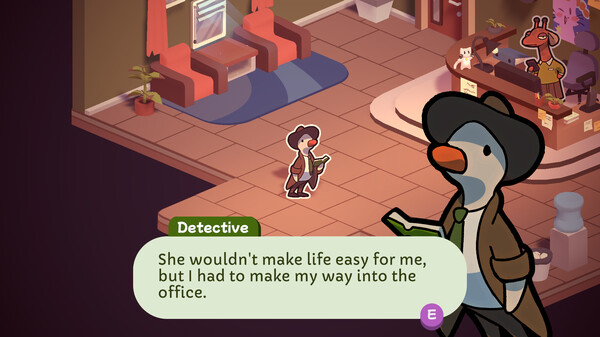 The down-on-his-luck duck and the office where the case unfolds — Steam store
First Impressions
The first thing the top helpful positive reviews mention isn't the case or the logic — it's the voice. Full voice acting, the duck's hard-boiled monologue, a barrage of puns. "Charming," "funny," "cozy" come up from nearly everyone. The dry narration and pop 2.5D color grab you in the first few minutes.
In Puzzlebyrinth terms this is about observation resolution. What the player first observes in high detail isn't the mystery but faces and delivery. The case — a stolen lunch — is deliberately anticlimactic, and reviewers don't take it seriously either. The developer's entryway is atmosphere, not deduction.
So first impressions don't split. Even negative reviews usually open with "the art and voice are great." The split comes later, once the fill-in-the-blank grammar reaches the second half. The pool tells you this in advance.
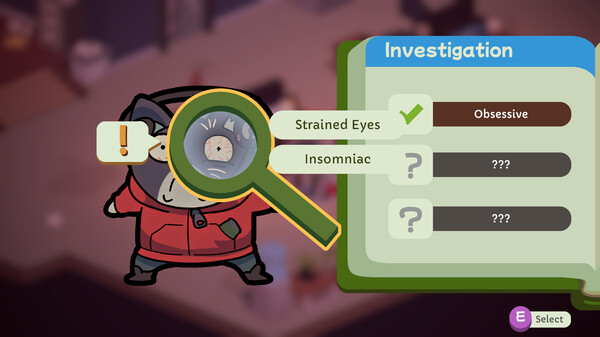 Fully voiced characters and pop 2.5D color — Steam store
The Feel of the Story
Read the pool in order and a shared story arc appears. In the first half, chasing the stolen lunch, clues connect cleanly and many reviewers feel they "solved it by logic." Then, around a birthday-party scene, the case balloons into smuggling, kidnapping, and blackmail — and "the logic falls apart in the second half" recurs in both negative and some positive reviews.
Forum voices are more specific: a safe code (misreading "OO" as "00"), the missing motive for stealing the lunch, suspects who commit crimes yet walk free. "I brute-forced this part" appears again and again. Not being able to replay dialogue comes up as a way missed clues can't be recovered.
Read it as a resolution problem. The first half keeps observation resolution high with look-and-you'll-see clues; the second half lets the plot leap outside what you can observe, so your evidence stops matching the conclusion. Where Obra Dinn holds observe-then-confirm all the way through, this game drops that resolution in the very half its pitch invokes. The lightness of the story isn't the flaw; the placement is.
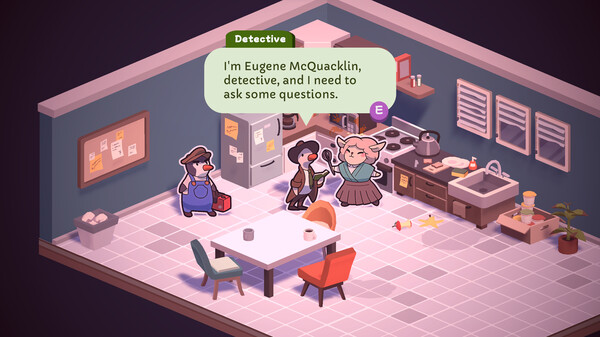 A stolen lunch that widens into smuggling and kidnapping — Steam store
Putting the Mechanics into Words
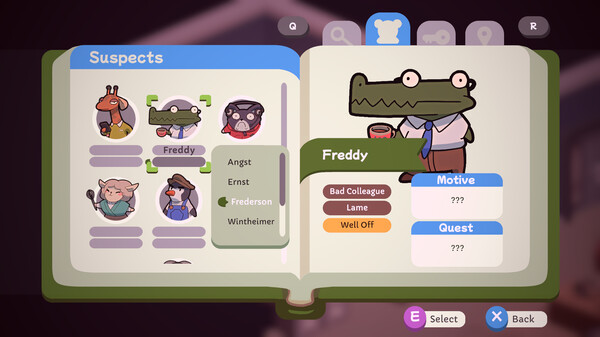
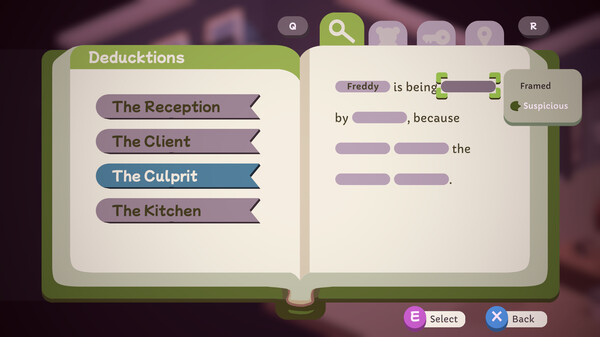
The core has two verbs: peer through the magnifying glass to "observe" details, then "slot" the gathered nouns, verbs, and adjectives into fill-in-the-blank sentences. Both the press and the top helpful reviews name this as the lineage of 2022's The Case of the Golden Idol. The grammar of fixing a sentence by dropping in words is the same skeleton.
But this game shrinks the vocabulary. Each close-up holds only three details, usually just one relevant; each blank offers few candidate words. In Puzzlebyrinth terms this is subtraction of verbs — a deliberate refusal to trigger combinatorial explosion. Where Golden Idol made you sweat over interacting blanks, this game keeps each sentence light and quick.
The positive side welcomes that lightness as "smooth, never stuck"; the negative side calls it "solved before you think." The same subtraction reads as kindness to one and thinness to the other. Not a matter of who's right, but of where the developer set the density — a question of design range. One question per character keeps that density low, too.
 Peering at details with the magnifying glass to gather clue words — Steam store
Pacing
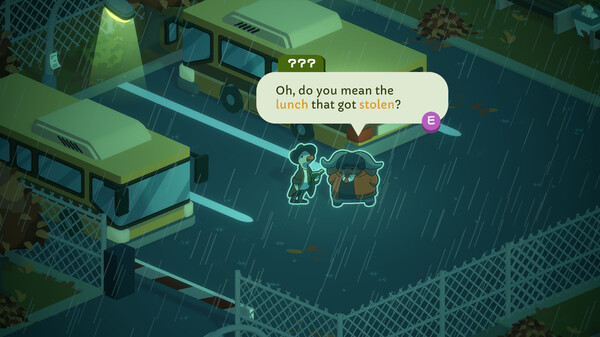
Length is the pool's most frequent topic. A run is 2–3 hours (some forum voices say just over 4). Against a $9.99 list price, "too short" and "wanted more" appear on both sides. Yet many positive reviews write that same complaint as inverted praise: "so good I didn't want it to end."
Difficulty follows the same shape. It's easy throughout, and the blanks can be brute-forced using the "number incorrect" readout — which the negative side calls a lack of resistance and the positive side calls comfortable, never-stuck flow. On the learning curve, this game is nearly flat: it turns no beginner away, but keeps the peak of achievement low too.
Shortness and ease read as consistent results of subtraction here. Solve a light mystery with light verbs in 2–3 hours — as long as it's faithful to that, length and difficulty aren't deficits but a narrow range. As Unpacking stood on pacing rather than length, the pool is settling on judging this by density, not duration.
 A compact case solved in 2–3 hours — Steam store
Reviews Consulted
This piece was written by reading the user reviews on the Steam store page as of 2026-07-13. No review text is quoted directly; typical claims are reconstructed.
- Steam: Duck Detective: The Secret Salami (Overwhelmingly Positive, 95% of 6,483 reviews across all languages)
- Read via WebFetch: the top helpful positive reviews, representative negative complaints, and recent reviews (last 30 days = 90%), plus a discussion thread on the official store forum.
- Press: GameSkinny, "All Style, Little Substance", plus Bloomberg and GameLuster (10/10).
Closing
Steam reads 95% positive; my design-critique score is 7.0 — same direction, some distance. The thorough subtraction, the full voice acting, and the observation entryway are simply good. The marks come off where it drops the Obra Dinn-grade observe-then-confirm it invoked, letting the second half leap and the blanks be brute-forced.
The gap between 95% and 7.0 is, I think, most reviewers correctly rating "a short, light, good game." They aren't measuring it by Obra Dinn's yardstick. I measure it by the pitch's, so I dock one notch. Want Golden Idol's heavy blanks or Unpacking's quiet narrative and you're outside its range; want a two-to-three-hour observation comedy you can laugh through, and the pool's verdict — "buy it on sale, then wait for the sequel" — is right.
 Slotting gathered words into the fill-in-the-blank finish — Steam store
Where are you with this game?
Press one and the game goes on your shelf. You can see it on your account page.
Reactions (no login)
Anonymous • one of each per visitor per day
Read next

Related reviews
The Rise of the Golden Idol
A 2D deduction adventure where you click through frozen crime scenes and drop harvested words into blanks to reconstruct who did what, why, and in what order. A standalone sequel to The Case of the Golden Idol, set across twenty linked cases in the 1970s.
The Case of the Golden Idol
A deduction game: examine frozen crime-scene tableaus, gather words from the evidence, and fill in the blanks to reconstruct each murder across an 18th-century mystery.
Arranger
A grid puzzle-adventure where taking one step moves everything sharing your row or column, and the board loops at its edges. No sword or keys — you shove the things on the floor to open the way. The debut from Furniture & Mattress, folding movement, combat, and exploration into a single verb.


