TAG
#difficulty-design
0 reviews · 5 essays
Related essays
Dygert & Jarosz: People who repair a misread sentence also solve insight puzzles — Fukai Reads
A paper by Sarah K. C. Dygert and Andrew F. Jarosz on insight and sentence comprehension. Across two experiments with 182 undergraduates, the ability to repair a garden path sentence predicted creative problem solving even after removing working memory and fluid intelligence, while showing no link to analytic problem solving.
Tsumiki Design Roundup — 2026-08-22
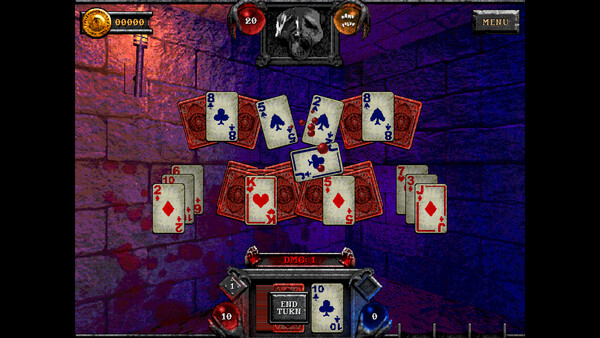
One piece today: an August 17, 2026 Game Developer article on how the 90s-horror-styled solitaire game Forbidden Solitaire became an unexpected hit. Developer Grey Alien Games' Jake Birkett traces the design back through a lineage of earlier titles — the switch to tri-peaks/golf rules, and shops, RPG combat, and elemental spells layered on one game at a time.
"Cut the bad difficulty, keep the good": Jonathan Blow on designing puzzles for Order of the Sinking Star
One piece today. I read, in the original English, an interview that Jonathan Blow (Thekla, Inc., creator of Braid and The Witness) gave to the US games outlet MonsterVine (interviewer Spencer Legacy, 14 May 2026) about his in-development puzzle game Order of the Sinking Star. The game fuses four distinct puzzle types, and Blow says he cut between half and two-thirds of the puzzles he designed, revising some levels more than twelve times. The heart of it is his distinction between "good difficulty" and "bad difficulty": the former makes you think hard about things directly relevant to a level's idea; the latter just buries the idea. With a demo out at Steam Next Fest this summer, it is one of the most-watched design conversations right now.
Jonathan Blow on Puzzle Design: Difficulty That Reaches the Player vs. Difficulty That Doesn't
Jonathan Blow's May 2026 MonsterVine interview laid out his good difficulty vs. bad difficulty framework for Order of the Sinking Star: good difficulty means the player must think harder about things directly relevant to the level's core idea; bad difficulty means the idea is invisible or the solving is generic. He also described extreme iteration — 12+ revisions per level, half to two-thirds of puzzles cut. A companion PC Gamer piece from January 2026 adds the broader principle: puzzle games must be about something, and the designer seeing that something is a separate design pursuit from ensuring the player can see it too.
Designing the player's cognitive load — a two-layer combat-puzzle structure, and tuning the difficulty curve
Two highlights today. Game Developer's interview with the team behind Capcom's Pragmata explains how they made a 'two-layer' design work, stacking a real-time Snake-style hacking puzzle on top of third-person combat. The second is PurpleSloth's devlog on difficulty design, recounting how lessons from their previous game Chronescher fed into their next title TRAILS. Both answer the same question — how to manage the player's cognitive load — from opposite directions.