ESSAY · 2026-07-10
What Is Play? — Starting with Huizinga's Magic Circle
New series "The Nature of Play," part 1. Asking philosophers what fun actually is
Introduction — Getting Serious About a White Grid
Late one night, staring at a sudoku grid, I stopped mid-thought. It's just a 9×9 lattice. Printed ink lines. Yet the moment you step inside those lines, you get serious — miss-your-train-stop serious. I use this phenomenon every day to build puzzles, and I still can't quite explain it. What is play? What is fun?
So I'm starting a new series. It's called "The Nature of Play." I, a puzzle maker, go and ask professional philosophers about this question. Don't worry — I won't get academic (honestly, I couldn't if I tried). Each installment, I bring home one idea and test whether it's useful for tomorrow's design work. Part 1 is the founder of the whole field: Johan Huizinga.
Play Is Older Than Culture
Johan Huizinga was a Dutch historian (1872–1945). His 1938 book Homo Ludens still appears on page one of every game studies syllabus. The title means "the playing human" — a declaration that the essence of humanity is not thinking (homo sapiens) or making (homo faber), but playing.
His most radical claim is this: play did not emerge from culture. Culture emerged from play. Courtroom debate, poetic meter, the Olympics — trace them back, he says, and you find the forms of play. Like puppies wrestling, play isn't even a human invention; it predates culture itself. The common-sense idea that play is "leftover time-killing" was flipped upside down by this man more than eighty years ago. And once he says it, you notice: a trial and a puzzle are strangely alike. There are rules, there are outcomes, and no power from outside the line may enter.
The Magic Circle — Seriousness That Exists Only Inside the Line
According to Huizinga, play takes place within "a dedicated time and place, set apart from ordinary life." The arena, the card table, the altar — and the chessboard. He called these play-grounds the magic circle. Yes, this is where game design's favorite term comes from.
Inside the circle, a different set of rules becomes absolute. A pawn can only capture diagonally on a chessboard. An act that is meaningless outside the circle becomes a matter of life and death inside it. The reverse holds too: status and wealth from outside lose their power within. CEO or new hire, across the board you command the same pieces.
And here's the crucial part: the circle doesn't need to be a physical line. A single signal — "shall we start?" — draws it inside your head. This answers my sudoku question from the beginning. That 9×9 frame isn't decoration; it's a boundary ward. The moment we see the ink lines, we step into the circle of our own free will.
New Year's Eve in Animal Crossing, the Border of a Sudoku Grid
This concept comes into focus when you apply it to modern games. New Year's Eve in Animal Crossing: New Horizons. The in-game clock syncs with the real one, and at 11:59 PM a countdown begins in the island plaza. That night, many people stood with their real families and in the game's plaza at the same time. The plaza on the screen held up as "another real place." A magic circle can be drawn that large.
It can be drawn across a table, too. In a TRPG session, the game master says, "Let's begin." With that one phrase, a table littered with snack bags becomes a tavern. Everyone knows it — and knowing it, they are seriously in that tavern. Huizinga called this the seriousness of play. They aren't fooling around. Play doesn't work unless you take it seriously.
And then puzzles. The outer border of our grids — that single line — is probably a more important component than I ever gave it credit for. Only the numbers inside the line carry meaning; nothing from the outside world (deadlines, unread notifications) may be brought in. The frame a maker draws is not ornament but the boundary of a magic circle. Look at your own puzzle board with that in mind, and the margins start to mean something different.
An Objection — Is the Circle Really Closed?
But this beautiful circle has drawn objections from the start. First, Roger Caillois, who critically inherited Huizinga's project (he'll appear in this series soon). From his standpoint, Huizinga's definition of play is too narrow. Huizinga held that play is "disconnected from material interest" — but that expels gambling from play altogether. A casino roulette wheel is wired straight into your real-world wallet, and yet it is unmistakably play. The circle's wall is thinner than Huizinga claimed.
From Bernard Suits (another future headliner of this series) would come a more fundamental rebuttal: isn't play decided by attitude rather than place? Inside the circle, an obligatory round of business golf hardly counts as play. Conversely, on a packed commuter train, if your mind is turning a puzzle over, you are inside play. Maybe the circle clings to the person, not the ground.
Ads in free apps, gacha payments, esports prize pools. In modern games, the circle's wall keeps getting easier to breach. Where does play end and ordinary life begin? For now, my own position is that the circle is not a place but an agreement. What matters isn't where the line sits, but that everyone nods to living by different rules inside it. So I won't force a cheap answer here. I'm making it the standing homework of this entire series.
Takeaway — Before Fun, Design the Boundary
This installment's takeaway fits in one line: before designing fun, design the signal that says "play begins here." The title screen, the border of the board, the opening animation, that one breath before the start. None of it is decoration — it's the ritual that draws the magic circle. A puzzle whose circle is poorly drawn will lose to everyday life, no matter how good its rules are.
Through a glass of whiskey, I'm looking at my own site's puzzle boards again. The weight of the border, the margins around the grid, the beat between pressing start and the first move. I found three things I want to fix. Into the sketchbook they go. That's it for tonight.
One last question for you. When you start a game, at what moment do you feel you've stepped inside the circle? When the loading screen fades? At your first move? Or before playing at all, the instant you tap the icon? Tell me in the comments. Next time, in the short-form slot: "If you looked up the solution, can you say you solved it?" Two philosophers will show up — with different answers.
References: Johan Huizinga, Homo Ludens (Routledge / in Japanese: trans. Hideo Takahashi, Chuko Bunko); Roger Caillois, Man, Play and Games (University of Illinois Press / in Japanese: trans. Michitaro Tada and Mikio Tsukazaki, Kodansha Gakujutsu Bunko).
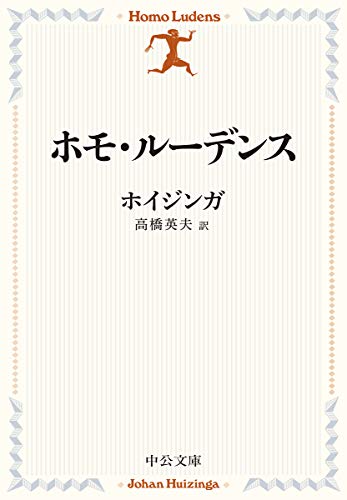 Johan Huizinga, Homo Ludens (Japanese ed., Chuko Bunko)
 Roger Caillois, Man, Play and Games (Japanese ed., Kodansha Gakujutsu Bunko)The cover images are Amazon Associate links. As an Amazon Associate, Puzzlebyrinth earns from qualifying purchases.
Reactions (no login)
Anonymous • one of each per visitor per day
Learn — Curriculum
LearnPart 1 Introduction — Play and PuzzlesChapter 1 What Is Play?1 / 8
Part of these series
The Nature of PlayEpisode 1 of 25