ESSAY · 2026-07-10
Reading 'Homo Ludens' Chapter by Chapter — The Order and Tension Play Creates
New series 'The Nature of Play,' reading edition #1. Chapter 1 of Huizinga, read through a maker's eyes
The textbook, one chapter at a time
At night I was looking at the new puzzles I'd lined up on my site. The rules work. No bugs. And yet, somehow, they feel thin. My fingers don't reach for them. Not knowing what that thinness actually is, I've drawn the same diagram in my notebook for three days now.
Last time I wrote about Huizinga's 'magic circle' - that strange thing where people get dead serious inside a mere drawn line. After I finished, I realized: the magic circle is only the entrance to what he says about play. Earlier than that, he lays down, all at once, a whole definition of what play even is.
So from now on I'm going to read his 'Homo Ludens' one chapter at a time, with a maker's eyes. I won't chase all of it like a scholar. I read carrying only one question: 'Can I use this on tomorrow's board?' Today, Chapter 1. The bare skeleton of play.
Just so it's clear, I'm not a games scholar. I'm just a maker who sits here every night fiddling with boards. So I only carry theory home in the amount I can chew down into something usable. Nothing beyond that.
Huizinga's 'definition of play'
In Chapter 1, Huizinga fences play in from many angles and finally gathers it into a single definition. In summary: play is a free activity, a time that stands 'outside' ordinary life and is 'not serious,' yet it absorbs the player utterly. It proceeds within limits of time and place, under rules freely accepted but absolutely binding, and its aim lies not outside but within the play itself.
Folded into that one sentence are several of the formal characteristics he lists. That it is free. That it is not ordinary life. That it is limited in time and place. And - here is the part I didn't cover last time - that it creates order, and that it carries tension.
Last time's magic circle was about being 'limited.' Today I read the two pillars right beside it: order and tension. For a maker, these two probably hit more directly. Less as theory, more as a matter of the board I'll be tweaking tomorrow.
Incidentally, Huizinga doesn't blurt this definition out all at once; he lets it simmer down slowly, all the way to the end of the chapter. Today I'll scoop just two pillars out of that broth and carry them home. The rest, in a later chapter.
'Play' is not the opposite of 'seriousness'
There's one more thing Huizinga insists on, over and over, in Chapter 1: that play is not the opposite of 'seriousness.' We're quick to split the world in two - play means fooling around, seriousness means work. But Huizinga says that line can't be trusted. Just look at a child at play, he says: isn't it the one playing who wears the most terribly serious face of all?
As a maker, this was the passage that gave me the most courage. It pushes me from behind: it's fine to make 'just a puzzle' in dead earnest. When a player knits their brow and groans in front of the screen for a few minutes, they aren't fooling around. Inside the magic circle, play becomes the most serious work there is. So if the maker cuts even one corner, it's an insult to that seriousness.
In fact, Tetris has a world championship (the Classic Tetris World Championship, started 2010). To a falling-block puzzle from forty years ago, people who pour hundreds of hours of their lives still gather. Seen from outside, 'just blocks.' But to the person who has stepped inside the circle, it's a real contest where your heart leaps over where to drop a single row.
The lightness of play and the depth of seriousness don't contradict. Rather, I think Huizinga's reading is that only when the two come as a set does it become play. Light, yet you can go all in. That twisted coexistence is probably the breeding ground of 'fun' itself.
Play makes order - or rather, is order
Huizinga writes that play creates order - no, that play is order itself. Into the world of play, a limited but perfect order is brought. And the slightest deviation - a broken rule, a disrupted rhythm - wrecks that whole world. That feeling of a game being 'spoiled' isn't a matter of mood; it means the order has been broken.
What's striking is how he ties this order to beauty. Play is full of harmony and rhythm, and it wants to become beautiful. Come to think of it, that's true. A well-made board somehow looks 'pretty' before you even solve it. That 'pretty' isn't decoration - it's order made visible.
I think of Tetris (Alexey Pajitnov, 1984). It is, in essence, a game of taking the chaos falling from above, stacking it without gaps and clearing it, turning it into order again and again. The instant thrill of a line clearing sounds like order restored. Conversely, the unease when you've made a weird step in the stack - that, I think, is exactly Huizinga's 'slightest deviation of order.'
Put into design terms, it's this: the moment a player feels 'that's satisfying' usually coincides with the moment order has recovered a notch. So where you break order and where you let it recover - that arrangement is the very rhythm of fun.
And then, tension
The other pillar is tension. Huizinga says play always comes with tension - uncertainty, a wager, the razor's edge of whether it will come off. He goes as far as to write that tension is what gives play even a kind of ethical value, because the player, within fair rules, has their powers tested to the very end.
Tetris again. That design where the speed keeps rising was a device that made keeping order gradually harder and cranked the tension up. Order and tension aren't separate things; each makes the other taste better. Because there's order, the tension of it nearly collapsing bites. Because there's tension, the instant you hold the order becomes a thrill.
Here the true nature of my puzzles' 'thinness' came a little into view. The rules did create order. But I hadn't planted, anywhere, the tension of that order nearly collapsing. Pretty, but no wager. A board that's merely safely tidy. That's why my fingers didn't reach for it.
Come to think of it, the work I'd been calling 'making it harder' was probably half 'adding tension.' Difficulty and tension look alike but aren't the same. Just piling on more moves is difficulty. Making the player feel it might collapse is tension. The one that works is usually the latter.
Takeaway - design order and tension as a set
Today's takeaway fits in one line. Fun lives not in order itself nor in tension itself, but in the place where 'order wavers with tension.' Once you've made the board tidy, the next thing is to always prepare a move that endangers it. With only one of them, it hasn't yet become play. Even a nicely drawn magic circle gets stale fast if its order never wavers.
A sip of whiskey. In my drafting notebook, beside three days of the same diagram, I wrote in large letters, 'Where's the tension?' Tomorrow I'll fix the board carrying that. Into an over-tidy level, I'll slip just one hint of collapse. I don't know if it'll work. But just knowing where to fix it, tonight I feel like I moved forward. That's it for tonight.
One last thing I want to ask you. When you feel 'this game is well made,' what's working - the order side, that it's neatly arranged? Or the tension side, that it's fun because it's on the edge? Tell me in the comments. Next time's full-length slot returns to the matchup edition: Camus's 'The Myth of Sisyphus' x the roguelike's death-and-restart. I'll read that repetition of diving in again no matter how many times you die, through the philosophy of the absurd.
References: Johan Huizinga, 'Homo Ludens' (Japanese trans. by Hideo Takahashi, Chuko Bunko), Chapter 1, 'Nature and Significance of Play as a Cultural Phenomenon.'
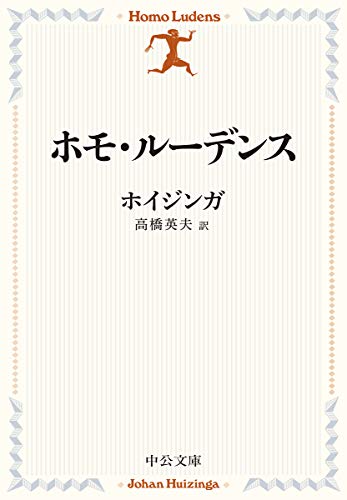 Johan Huizinga, Homo Ludens (trans. Hideo Takahashi, Chuko Bunko) As an Amazon Associate, Puzzlebyrinth earns from qualifying purchases.
Reactions (no login)
Anonymous • one of each per visitor per day
Learn — Curriculum
LearnPart 1 Introduction — Play and PuzzlesChapter 1 What Is Play?2 / 8
Part of these series
The Nature of PlayEpisode 2 of 25