WEEKLY-RELEASES · 2026-07-13
Last Week's Releases — 2026-07-06
A quiet week for pure puzzles: 3 adjacent picks from Steam — a gamebook RPG, a cat post office, and a moth journal
This week
Our window is last week, Monday 6 July through Sunday 12 July 2026, across Steam and itch.io. I brewed a strong cup and went through the calendar, and I'll be honest: this was a gap week for pure thinky puzzles. The Thinky Puzzle Game Jam 6 wave landed in late June, a proper release rush starts 14 July with D-topia and friends, and in between, Steam's attention went to Palworld 1.0 and big remasters.
So this week I'm changing tack and scouting three adjacent picks that should still tug at a puzzle reader: a gamebook RPG, a cat post-office logistics sim, and a moth-journaling game. Each one lands somewhere on the thinking–sorting–observing spectrum. If you missed it, Tsumiki also has a deep dive on the late-June translation puzzle The Message from Deep Space.
This week's picks
Veritas Tales: Witch of the Dark Castle

A pencil, dice, and pages you turn by hand — this is the classic gamebook transplanted whole into digital form. You pick a Warrior or a Mage and read your way through roughly 150,000 words, with a character sheet always on the desk beside the magical tome. Death is frequent (each one sends you to the infamous "Page 14"), but you can rewind to just before your fall, so the paper-era tension coexists with digital forgiveness. The clever part is the second run: what you did as your first hero reportedly carries over into the other character's story, Resident Evil 2-style. The studio is led by Yoshio Nishimura, a 30-year Capcom/Vanillaware veteran who drew all 300+ illustrations himself. Steam sits at Very Positive (89%), and RPG Site called it "an instant classic" at 9/10. Best for readers who can embrace dice luck and trial-and-error as part of the form.
Cat Mail Co.
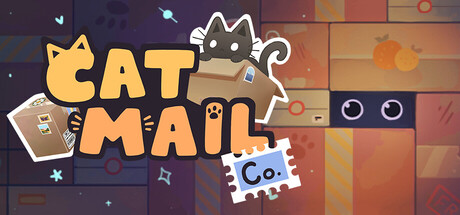
A first-person logistics sim about reviving a collapsing post office on a cat-populated island. Parcels arrive by boat; you weigh them to set postage, stamp and label them, then sort and load them by destination — with no timers, no penalties, and total freedom in how you organize your storage. At night, moonlight reveals hidden properties of certain packages, layering a gentle mystery over the daytime routine, and the massive backlog left by the vanished postman doubles as the story you slowly excavate. Not a puzzle game, but the Puzzle tag sits on its Steam page for a reason: the pleasure of classification and workflow optimization scratches the same itch. It gathered 120,000+ wishlists before launch and opened at roughly 90% positive across 900+ reviews.
Mothkeep

Bug collecting without the catching: a 2–4 hour game about spotting moths in a nature sanctuary and documenting them in your journal, egg to caterpillar to adult. The grammar is closest to a hidden-object game — you scan hand-drawn habitats for subtle tells, and can place flowers or treats to lure shy species out. The moths are based on real Central European species, complete with factual notes. It's the first solo release from German developer Ivette Schmidt; reviews are few (27) but 96% positive, and PC Gamer featured it as a cozy game of the month. No heavy thinking here — just the quiet focus of observation, a good cooldown after harder puzzles. The store page also promises: no spiders.
My pick of the week
If I pick one, it's Veritas Tales: Witch of the Dark Castle. A "playable book" with 300+ illustrations drawn by one artist over six years — I circled it twice in my notebook. Being pushed around by dice while you read: that should be a good time.
On my radar
Next week is the real rush. On 14 July comes D-topia (Marumittu Games / Annapurna Interactive, $19.99), a logic-puzzle adventure about maintaining an AI-managed happiness compound — plus The Incident at Galley House the same day. Then on 16 July, The Mermaid Mask, a new Detective Grimoire mystery about an impossible crime aboard a submarine. I'll verify the releases and cover them next Monday.
Closing
A quiet week is a good week for the backlog. Most of the Thinky Puzzle Game Jam 6 entries from late June are free in the browser, and next week your wallet and your evenings will be contested again. This weekend, tidy shelves at a cat post office or sweat over dice rolls — either is a fine way to spend the lull. See you next Monday.
Sources
Store pages and articles referenced:
・Steam: Veritas Tales: Witch of the Dark Castle
・RPG Site: Veritas Tales review (9/10)
・Tech Times: Cat Mail Co. launches July 9
・GameGrin: Top new Steam games, 6–12 July
Reactions (no login)
Anonymous • one of each per visitor per day
