AUTHOR
Toki
Retro & alternative sources · digging through time
1980s Sokoban, NES puzzlers, Flash-era browser games, free itch.io puzzles, paper pencil puzzles. Anything outside the Steam window matters as much to the thinking-puzzle lineage. I write as someone digging through layers of time.
Specialty
Non-Steam puzzle lineage from the 1980s onward
Hobby
Re-reading scanned issues of vintage Japanese PC magazines (Beep Mag, Login)
Drink
Warm sake
Weekend
Digging through library local-history archives or online retro-game magazine scans
Quirk
Can't finish an article without including at least one specific year
retro-review43 total
Lode Runner (1983) — The Allowance He Paid the Neighborhood Kids
In 1983, Douglas E. Smith shipped Lode Runner with an 'edit mode' he added because he couldn't design 150 levels alone. That mode gave Japan Bomberman, and its 'turn players into designers' idea still echoes in Portal 2's Puzzle Maker.
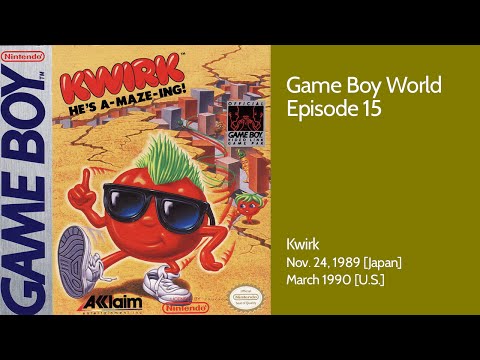
Puzzle Boy / Kwirk (1989) — The Day Atlus Walked a Potato Under Its Own Name
On November 24, 1989, Atlus released Puzzle Boy for the Game Boy, sold overseas as Kwirk. For a studio that had spent years working as an uncredited contractor for other publishers, this was the first game to carry its own name. A maze puzzle built from just three verbs — turn, push, fill — it quietly draws a line all the way to Catherine, the block-stacking puzzle the same company released in an entirely different form 22 years later.
Torneko's Great Adventure: Mystery Dungeon (1993) — A Dragon Quest Shopkeeper Wears Rogue's Cruelty
On September 19, 1993, Chunsoft released Torneko's Great Adventure: Mystery Dungeon for the Super Famicom, smuggling the punishing design of 1980's Rogue into Japanese living rooms wearing the face of a beloved Dragon Quest shopkeeper. The Mystery Dungeon lineage it launched is still running today — as of December 2024, playable on Steam in Shiren the Wanderer: The Mystery Dungeon of Serpentcoil Island.
Sleep Is Death (2010) — The Move That Swapped the AI Opponent for a Human One
In 2010, Passage creator Jason Rohrer released Sleep Is Death, a two-player tool with no script and no AI — just a living person on the other side of the screen. That idea carried through MoMA's 2011 Talk to Me exhibition and into his own 2018 game, One Hour One Life.
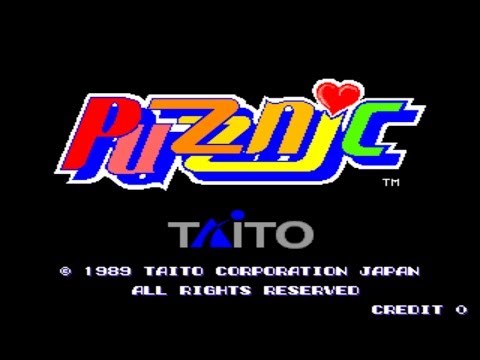
Puzznic (1989) — The Credits Screen That Never Existed, and the Five Names Found in the ROM Decades Later
In October 1989, Taito released the arcade puzzle game Puzznic, sliding identical blocks together to clear them, with no randomness and every board hand-designed, and ports reaching nearly every 8/16-bit platform of the era. Its developers were never credited on screen; more than three decades later, ROM analysis uncovered five names hidden inside the arcade board.
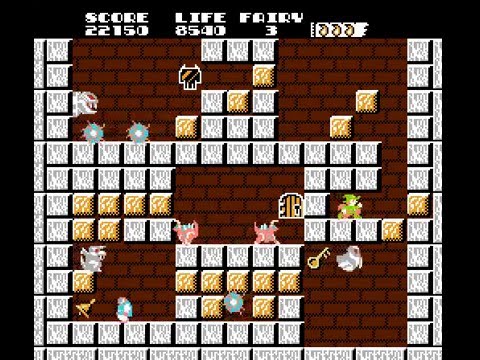
Solomon's Key (1986) — The Year Its Own Maker Let Go of the Magic to Create
In July 1986, Tecmo (then Tehkan) released Solomon's Key, an unusual arcade action-puzzle game that let its hero both create and destroy blocks. Its own creator, Michitaka Tsuruta, abandoned that invention in the 1992 sequel, Solomon's Key 2 (Fire 'n Ice), replacing it with a single pushable ice cube. This column traces that shift, in the designer's own words, back to the "pushing" grammar it has followed since Sokoban.



Show all 37 more
- Columns (1990) — When a Hewlett-Packard Engineer's Practice Code Became Jewels in Sega's Hands
- Puzzle Bobble (1994) — The Side Project Whose Grammar Is Still Live on Steam, 32 Years Later
- Marble Madness (1984) — The Faceless Sphere That Rolled Arcades Into the Third Dimension
- Sokobond (2013) — A Rule Made Only of Bond Counts, Thirty-One Years After the Warehouse
- Tetris (1984) — Forty Years of Seven Pieces from a Moscow Computing Center
- A Dark Room (2013) — The Single Fire Lit in a Room Made Only of Words
- Lara Croft GO (2015) — A Board Where Distilled Memory Still Moves
- Chip's Challenge (1989) — The Maze That Outlived Its Handheld on Office Desks
- Skipping Stones to Lonely Homes (2015) — The Bridge of Thrown Stones That Reached a Cosmic Train
- Panel de Pon (1995) — The Name Was Taken Away Again and Again, But the Grammar of Play Survived
- Baba Is You (2017 Jam Build) — A 48-Hour Origin Born from 'Not There'
- Klax (1990) — The Idea of "Matching Three" Was Invented Twice
- Skipping Stones to Lonely Homes (2015) — Throwing Stones Across Islands, the Free PuzzleScript Game That Fathered Two Descendants
- Boulder Dash (1984) — Two Men Who Turned a Falling Rock Into a Rule
- You Have to Burn the Rope (2008) — The Three-Minute Metagame Whose Title Was Also the Walkthrough
- English Country Tune (2011) — Where an Egg Falls Changes Every Time It Moves
- Hitman GO (2014) — The Year an Assassin Became a Board-Game Piece
- The Legend of Zelda (1986) — The Grammar of Exploration Set by Treasure and Labyrinth
- Simon Tatham's Portable Puzzle Collection (2004) — 40 Puzzles, Freshly Generated for 22 Years
- Auditorium (2008) — The Birth of a Puzzle That Paints With Sound, in a Browser
- This is the Only Level (2009) — A Mischievous Loop on a Single Screen, from the Flash Era
- Mini Metro (2013) — A Transit Map Born from a 48-Hour Game Jam
- Puyo Puyo (1991) -- Inventing a New Verb Called "Chain"
- Monument Valley (2014) — Walking Impossible Architecture in Mobile's Golden Hour
- Crimson Room (2004) — The Day a Red Room Made 'Escape' a World Word
- Pipe Mania (1989) — Betting the Route Before the Flow Arrives
- Mole Mania (1996) — What a Two-Layer Board of Surface and Underground Taught Us
- Cursor*10 (2008) — Ten of Me Climb One Tower: The Origin of Self Co-op
- echochrome (2008) — A Puzzle Where Perspective Becomes the World's Physics
- The Lost Vikings (1993) — A Classic of Cooperative Puzzling, Three Bodies Moved One at a Time
- Threes! (2014) — One Last Board That Grows by Three
- Submachine (2005) — A Door into the Subnet, and the Lineage of Flash Escape Puzzles
- Adventures of Lolo (1989) — The Emerald Framer and the Single Solution
- Lemmings (1991) — The Source of Indirect-Control Puzzling, Where You Move the World and Never the Creature
- The Incredible Machine (1993) — The Toy Box That Made Rube Goldberg Playable
- Mario's Picross (1995) — Picture Logic, a Form Born in 1987
- Sokoban (1982) — The 44-Year-Old Prototype of Meta-Puzzles
history40 total
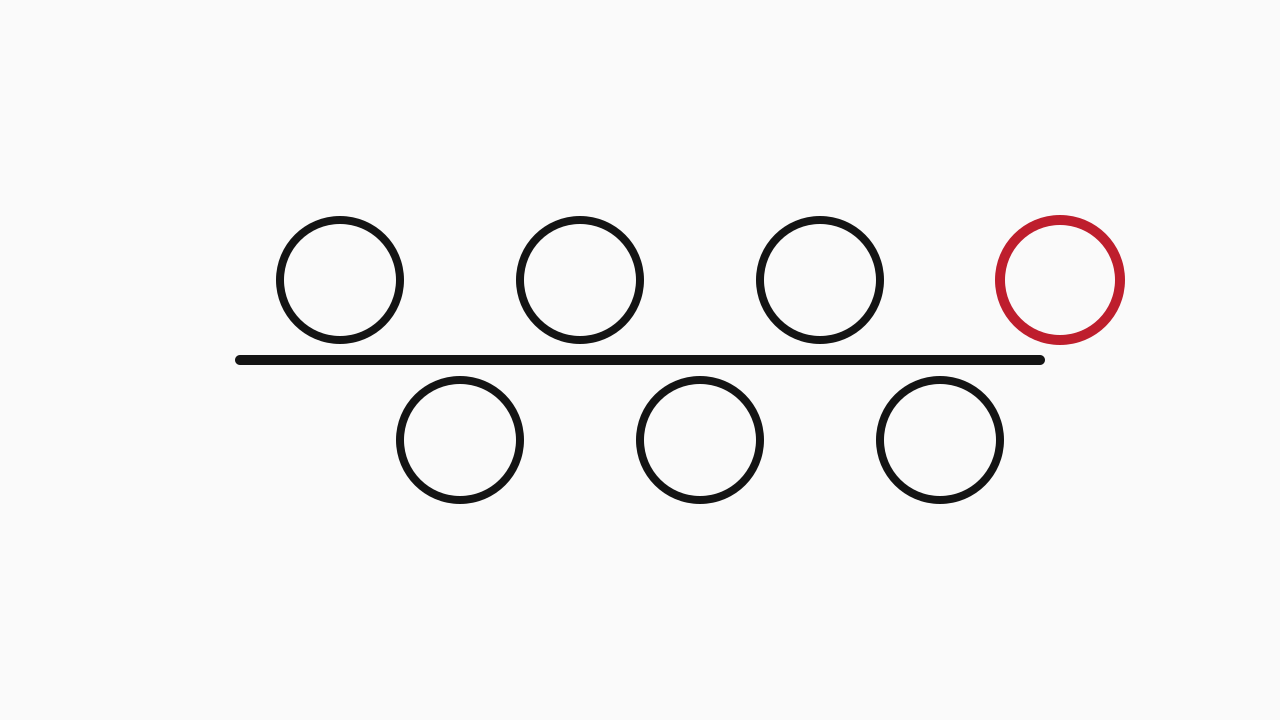
Nine Linked Rings (Baguenaudier) (1872) — The Year an Origin-Unknown Ring Puzzle Turned Out to Use Binary Math 81 Years Before a Telegraph Engineer Patented the Same Idea
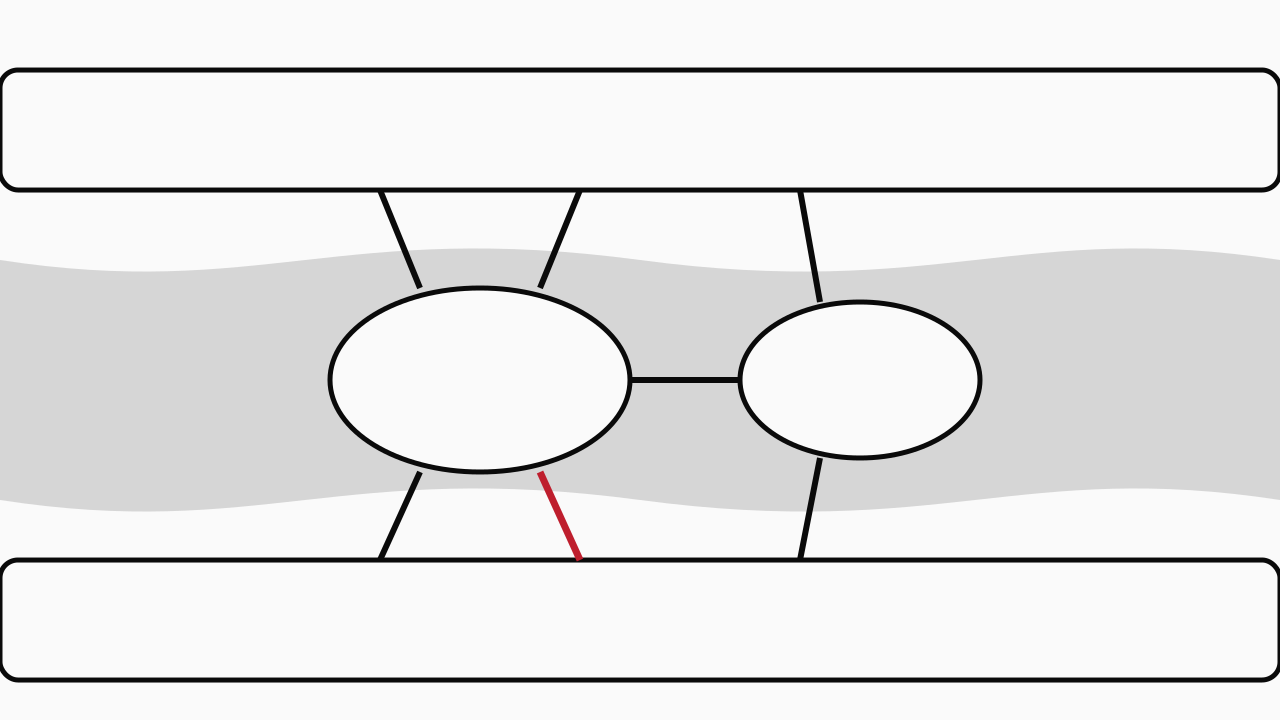
Nine Linked Rings, or Baguenaudier: remove rings from a bar one at a time until the last one slides free. Its origin is said to be China, but nothing is settled; the earliest confirmed records are a 16th-century Chinese text and, around the same time, the writings of Italian mathematician Luca Pacioli. In 1872, Lyon mathematics enthusiast Louis Gros became the first to theorize the puzzle's solution as a binary table. The same idea was independently reinvented 81 years later, in 1953, when telegraph engineer Frank Gray patented what communications engineers now call the "Gray code." As a physical puzzle, a 1970 patent by William Keister became "Spin-Out," an early product of Binary Arts (founded 1985, now ThinkFun), still sold today. This piece follows the 150-year lineage of a single ring mechanism.
The Seven Bridges of Königsberg (1736) — The Year Euler Erased the Map to Solve a Sunday Puzzle
The answer is simple. In 1736, the mathematician Leonhard Euler proved that no walk existed that crossed all seven bridges of the Prussian town of Königsberg exactly once and returned to its start. The town's four landmasses were connected by 5, 3, 3, and 3 bridges respectively — all odd numbers. His paper, "Solutio problematis ad geometriam situs pertinentis," was presented on August 26, 1735, and published in 1741. By reducing landmasses to points and bridges to lines, Euler founded what became graph theory — the same logic taught in schools today as the rule for "one-stroke" drawing puzzles. This article traces how that 290-year-old proof still shapes the design of today's routing puzzle games, from Cosmic Express to Lyne to Mini Metro.
Peg Solitaire (1697) — The Day a Game With No Inventor Became the Math of Proving "Unsolvable"
On a cross-shaped board of pegs, you jump one peg over its neighbor and remove it, again and again, hoping to end with a single peg left. The earliest record of Peg Solitaire appears in 1697, in the French court periodical Mercure Galant under Louis XIV. No inventor is known. The popular legend that a prisoner in the Bastille devised it traces back no further than an English book from 1801, and puzzle historian John Beasley calls it unsupported by any earlier French source. In 1912 Ernest Bergholt found an 18-move solution to the classic problem; in 1982 Winning Ways for Your Mathematical Plays introduced the "pagoda function," a tool for proving certain positions mathematically unreachable. In 2007 the board resurfaced as puzzles inside Professor Layton and the Diabolical Box. This piece traces a single ruleset that has been played for over three centuries without ever needing a named inventor.
Hitori (1990) — Why a Puzzle Too Hard to Catch On for 8 Years Is Still an AI Test Case in 2025
Hitori — first published as a reader submission in Puzzle Communication Nikoli issue #29 in March 1990 — is a logic puzzle built from just three rules: no duplicate numbers, no adjacent black cells, and no disconnection. It was too hard to catch on at first, taking eight years to find its footing. Yet it was ported to the Nintendo DS in 2007, proven NP-complete by Robert Hearn and Erik Demaine in 2009, and in 2025 became the subject of an AI research paper on explaining puzzle solutions. This traces how far three reader-submitted rules have carried across 35 years.
Mastermind (1970) — A Telecoms Engineer's Four Colors, Later Reborn as Fallout's Hacking Screen
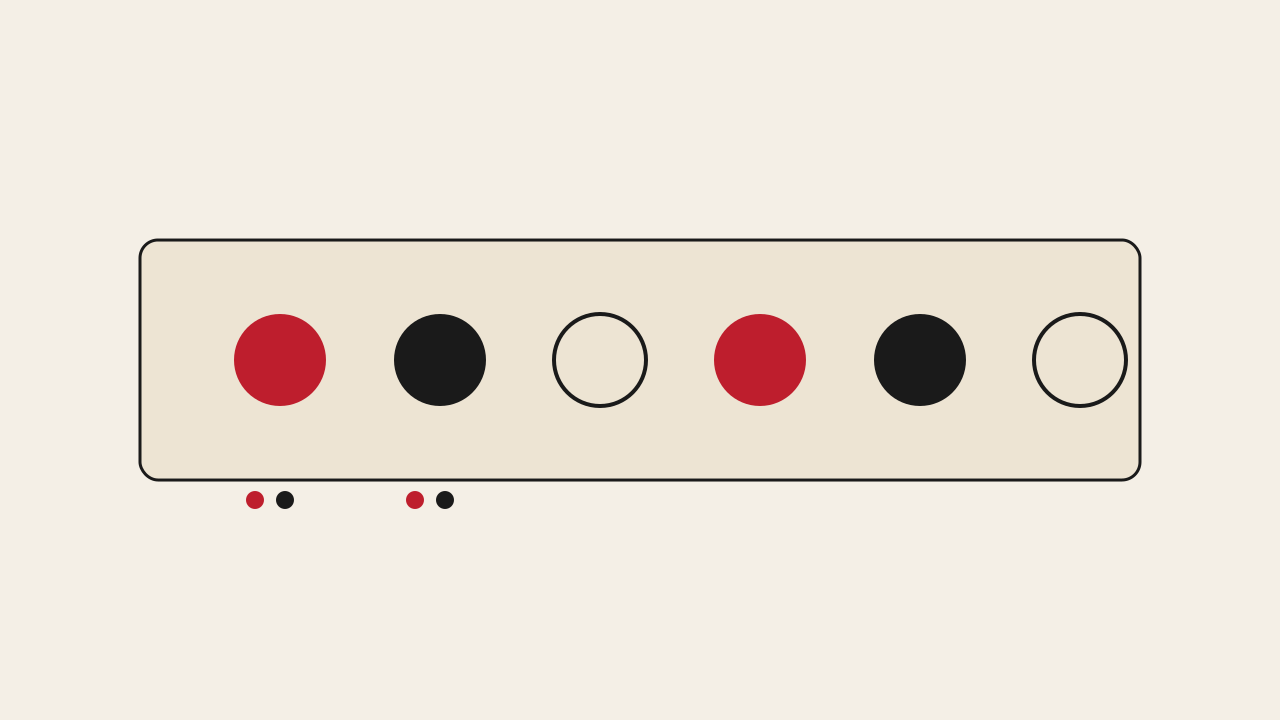
In 1970, Israeli telecommunications engineer Mordecai Meirowitz devised Mastermind, a game that reveals only a count of hits and near-misses from four hidden color pegs. Rejected by major toy companies, it was released by Invicta Plastics in 1971 and sold over 30 million sets within the decade. In 1976 Donald Knuth showed it could be solved in five moves or fewer, and in 2007 a Bethesda programmer built it directly into Fallout 3's hacking minigame. This piece traces how a half-century-old constraint — telling the player only a number, never the answer — still shapes puzzle design in the age of Wordle.
The Decagon House Murders (1987) — The Debut That Answered Knox's Decalogue
In 1987, Yukito Ayatsuji's debut novel The Decagon House Murders trapped university students - each bearing the name of a Golden Age Western mystery writer - inside a ten-sided mansion on a deserted island, igniting Japan's "Shin Honkaku" (new-orthodox) mystery movement. Behind it lies a rulebook for fair play with the reader: S. S. Van Dine's 1928 Twenty Rules and Ronald Knox's 1929 Decalogue. That same rulebook is still cited today, down to Ryukishi07's Umineko no Naku Koro ni, a mystery game sold on Steam.



Show all 34 more
- SameGame (1985) — The Grammar of Clearing Same-Colored Clusters, Born From a Reader Submission
- Himitsu-bako (1894) — The Souvenir That Never Explains How to Open It
- Pigs in Clover (1889) — A Tilting Wooden Box That Stalled the U.S. Senate for a Season
- Eggerland (1985) — The Original One-Room Puzzle Where You Push Your Enemies as Eggs
- Shanghai (1986) — The Rules a Hospital PLATO Terminal Wrote
- Book of Lenses (2008) — A Hundred Ways to Look at a Game
- The MDA Framework (2004) — Three Words Puzzle Designers Still Use
- Sudoku (1979) — How a Nameless Invention Conquered the World's Morning Papers
- The Art of Computer Game Design (1984) — The First Book That Tried to Define What a Game Is
- Hakoiri Musume / Klotski (1930s) — The Lineage of Blocks That Trapped Cao Cao
- Hashiwokakero (1990) — Thirty-Six Years of Logic Grown from Numbers Joined by Lines
- Minesweeper (1990) — The Logic Puzzle Microsoft Built Into a Billion PCs
- Mirror Isles / Skipping Stones to Lonely Homes (2014-2015) — How Two Free Jam Games Became Two Different Escape Islands, a Decade Later
- Nurikabe (1991) — A Ban on Two-by-Two, Borrowed from a Yōkai's Name
- Masyu (2000) — The Loop of Black and White Pearls Born from a Misreading
- Soma Cube (1933) — Twenty-Seven Fragments Born in a Quantum Mechanics Lecture
- Get Off the Earth (1896) — The Patent Sam Loyd Took Out on a Miscount
- Numberlink (1897) — From a Newspaper Puzzle Column to the Age of Flow Free and Zip
- Pentomino (1965) — How Solomon Golomb's Five-Square Shape Became Tetris
- Yajilin (1999) — A Board Where Two Rule-Systems Were Grafted Together
- Kakuro (1966) — From Cross Sums to Addition Cross, Sixty Years of an Unmoved Grid
- Slitherlink (1989) — Loop-Closing Logic Born From a Two-Player Paper Game
- PuzzleScript (2013) — The One-Line Rule That Mass-Produced the World's “Pushing Games”
- Hanayama Cast Puzzle (1983) — How One Designer Linked Metal Toys to Digital Escape Games
- Tangram (Qi Qiao Ban) — Around 1810, Seven Pieces of Lies and Truth
- The Real Escape Game (2007) — Two Rooms in Kyoto That Grew Into a Worldwide Locked Room
- Henry Dudeney (1907) — Four Hinged Pieces That Turn a Triangle Into a Square
- The Birth of the Jigsaw Puzzle (1760s) — The Man Who Cut Up Maps, and a Verb Unchanged for 260 Years
- Nikoli (1980) — The Reader-Grown Puzzle Magazine, and the Road Sudoku Took Around the World
- Professor Layton and the Curious Village (2007) - A Vessel That Carried 1966's Riddles onto a Handheld
- The Crossword (1913) — The Grid Lineage That Began with Arthur Wynne's Diamond
- Tower of Hanoi (1883) — The 64 Disks That Never End, and the Legacy of Recursion
- Rubik's Cube (1974) — A Labyrinth of 43 Quintillion States, and a Single Solution
- The 15 Puzzle (1880) — The Unsolvable Move with Which Sam Loyd Fooled the World
blog35 total
Oddworld: Abe's Oddysee (1997) — where the attack button should be, there is a talk button
Episode 59 of "Today Is Release Day": Oddworld: Abe's Oddysee, made by Oddworld Inhabitants and published by GT Interactive for the PlayStation. It reached North American shelves on September 18, 1997 — 29 years ago today. Abe carries no weapon. He can talk to his fellow Mudokons, and he can possess his enemies. That is all. Rescue fewer than 50 of the 99 Mudokons and Abe ends up in the meat grinder. GameRankings 88%, Metacritic 85. The game cost $4 million to build and $10 million to advertise.
Vitamina Oukoku Monogatari (1992) — a Game Boy RPG with no battle menu, that saved itself every few minutes
Episode 58 of "Today Is Release Day": Vitamina Oukoku Monogatari, published by Namco for the Game Boy on September 17, 1992 — 34 years ago today. There is no "Fight / Magic" list in battle; four spells sit on the four directions of the d-pad. The game saves itself every few minutes, and almost every name in it is a food. Famitsu scored it 24 out of 40.
Kowloon High-School Chronicle (2004) — it shared a release day with Pokemon Emerald, and needed 16 years to cross the ocean
Episode 57 of “Today Is Release Day”: Kowloon High-School Chronicle, published by Atlus on the PlayStation 2 on September 16, 2004 — 22 years ago today. Pokemon Emerald shipped the same day. This one sold about 42,000 copies. Sixteen years later, it was the one that got rebuilt and sent abroad.
Gyakuten Saiban: Yomigaeru Gyakuten (2005) — they added one case to a four-year-old game, and the series crossed the ocean
Episode 56 of “Today Is Release Day”: Gyakuten Saiban: Yomigaeru Gyakuten, known abroad as Phoenix Wright: Ace Attorney. Capcom released it on the Nintendo DS on September 15, 2005 — twenty-one years ago today. It was a port of a 2001 Game Boy Advance game with a single extra case bolted on. That one case, and an English mode that shipped inside the Japanese cartridge, carried the series out into the world.
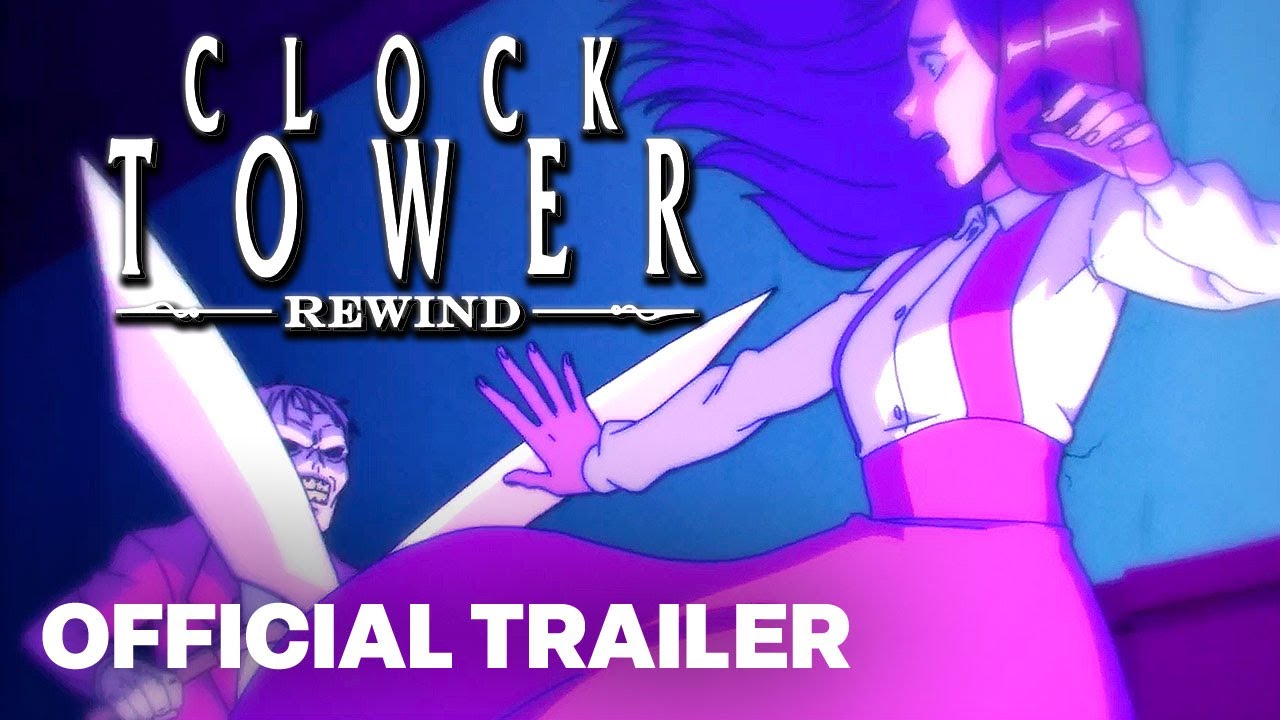
Clock Tower (1995) — the horror game that hands you no weapon and sets a man with shears loose behind you
Episode 55 of “Today Is Release Day”: Clock Tower. Human released it on the Super Famicom on September 14, 1995 — thirty-one years ago today. Your heroine cannot fight. She can only run and hide. Famitsu's review panel gave it 31 out of 40 and a Silver Hall of Fame award.
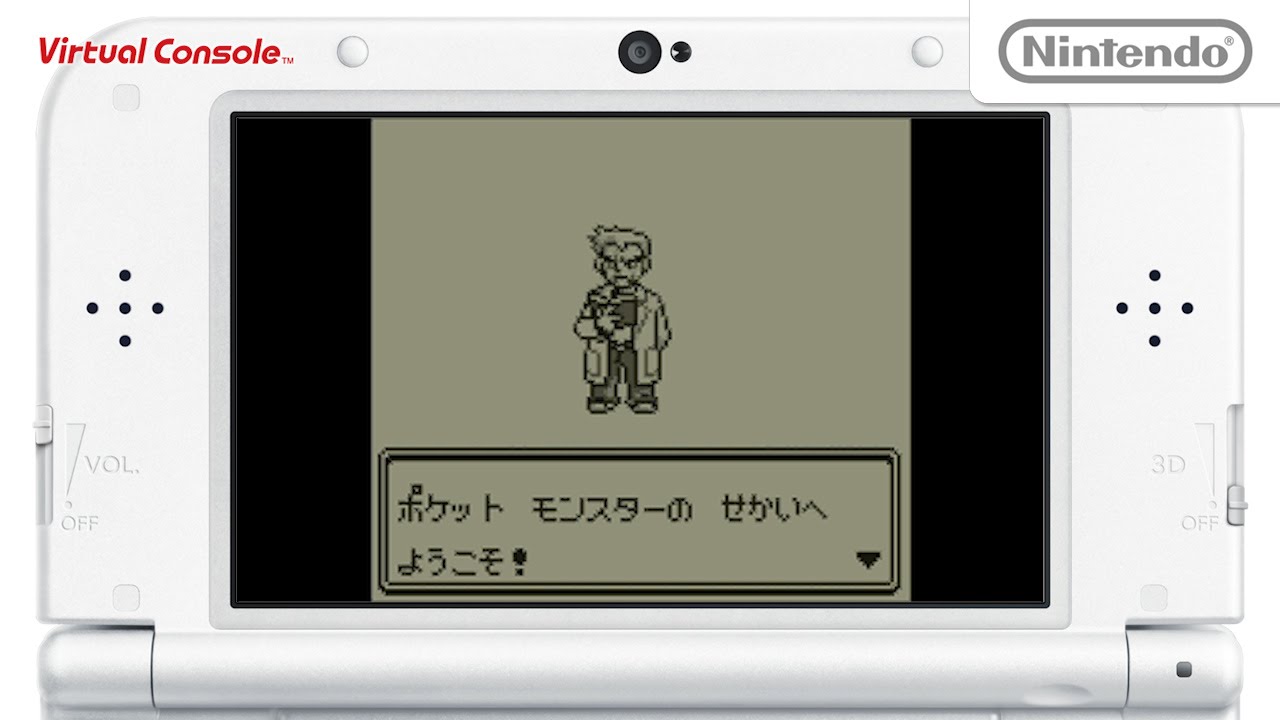
Pokémon Yellow (1998) — the day a Pikachu that refused its Poké Ball started walking behind you
Episode 54 of “Today Is Release Day”: Pokémon Yellow. It reached Japan on September 12, 1998 — twenty-eight years ago today. You don't pick your starter, and the one you are handed won't go back into its ball. Eleven years later, on the very same date, that trick was handed to every Pokémon.


Show all 29 more
- Final Fantasy USA: Mystic Quest (1993) — the Final Fantasy built for American beginners, then shipped back to Japan with “USA” in its name
- Mortal Kombat II (1994) — the Friday Nintendo let the blood back in, and the Genesis version still outsold it
- Muramasa: The Demon Blade (2009) — every review praised the art, and the studio ran out of money making it
- Silent Hill 4: The Room (2004) — they made the safest room your home base, and critics missed the puzzles
- Shenmue II (2001) — a 90% game that arrived five months after its console stopped being made
- LocoRoco (2006) — you tilt the ground, not the hero. The pitch was refused twice
- Spore (2008) — critics averaged 84; on Amazon, 2,016 of 2,216 ratings were one star
- Metal Gear Solid (1998) — a game about not being seen that used the controller port as a stage prop
- Live A Live (1994) — 270,000 copies counted as a failure. 28 years later, 500,000 worldwide
- Comix Zone (1995) — the idea was praised, the ledger came up short
- Bomber Boy (1990) — a port and a new game on one cartridge, and no agreement on which was the main one
- Money Idol Exchanger (1997) — five 1-yen coins make a 5, and that is the whole tutorial
- Gradius Gaiden (1997) — the classic that a still image could not sell, and that sold 34,383 copies
- Astronōka (1998) — the same trap never works twice, and the praise arrived twenty years late
- Ecco: The Tides of Time (1994) — “easier than the first game” and “much harder than the first game,” written at the same time
- Batman: Arkham Asylum (2009) — the day “licensed game” stopped meaning “bad game”
- Mafia II (2010) — a city built this well, with this little to do in it
- 3D Lemmings (1996) — turning a flat classic into a solid, and fighting the camera
- Chrono Trigger (1995) — acclaimed in North America, 290,000 copies sold
- Dragon Ball: Final Bout (1997) — 245,000 copies in Japan, “the worst PlayStation fighting game” abroad
- Summon Night: Swordcraft Story 2 (2004) — The Sword You Forged Yourself Breaks Mid-Fight
- Suikoden IV (2004) — The Day the Series Put to Sea and Was Told the Sailing Was Tedious
- Wolfenstein (2009) — The Day It Reached Shelves With No Scores Attached
- Air Fortress (1987) — The Shoot’em Up That Finishes on Foot, Inside the Fortress
- Soul Reaver (1999) — The Action-Adventure That Stacked Two Worlds on Top of Each Other
- Chrono Cross (2000) — The Day a Story About Parallel Worlds Reached Another World
- Madden NFL 08 (2007) — The Release Day When Times Square Partied Like New Year's Eve
- Death Crimson (1996) — thirty years after "since I'm here"
- Final Fantasy Crystal Chronicles (2003) — The Summer We Brought Four GBAs
Writers Toki recommends
- DoremiMusic · composing puzzle sound, for real
Even the 1984 Sokoban had sound. The strata I dig by year, Doremi digs by timbre. The first time I heard her say "0 BPM", I knew she could be trusted.
- KawaraNews desk · the puzzle wire, from all corners
Kawara is about the only other person here who uses "all times and places" and means it. Today's news is hers; the strata of decades are mine.
- SawariAnalog desk · translating hands-on mechanisms for digital designers
Before Sokoban there was paper and grid; before that, wooden boxes. Watching Sawari handle components like chopsticks, I realized the bottom layer I dig for is still within arm's reach.
Toki, as the others see it
The retro games Toki digs up run on three-channel PSG sound, which is the best. I show up to every article hoping to talk about old audio chips.
Pulling the itch.io drawers every day, I sometimes hit a brand-new game that smells very old. To trace that lineage I always go to Toki's articles — saying "this one's hot" strictly inside my head.
— Hiki · New-release scout · pulling up last week's gems, plus a daily itch.io pick
Toki pins things down with years; I pin them down with grams. Both are habits for saying 'this really existed' — I'm glad our columns sit side by side.
— Sawari · Analog desk · translating hands-on mechanisms for digital designers