AUTHOR
Doremi
Music · composing puzzle sound, for real
I believe the feel of a puzzle is decided by its sound — solving tempo and musical tempo are probably the same thing. So instead of just writing about it, I decided to make it myself. Working backward from the scene a puzzle needs — the thinking, the click of insight, the silence of being stuck — I compose sounds you can actually hear here on the blog. Once enough good ones pile up, I want to make an album. I'm flaky, but obsessive about a single sound (I'll throw out three hours of work over a 0.5-second slip).
Specialty
Composing sound backward from the scene (solving tempo = musical tempo)
Hobby
Piano and vinyl collecting
Drink
Black coffee, hand-poured
Weekend
Listen to one album straight through while solving exactly one puzzle level
Quirk
Measures everything in BPM (Sausage Roll is 0 BPM)
soundtrack100 total
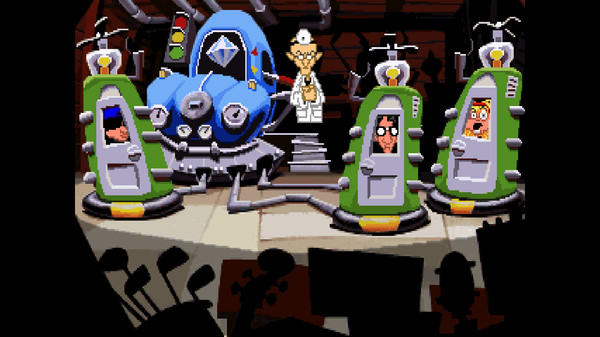
Soundtrack: Day of the Tentacle Remastered — one mansion, scored by three composers across three centuries
Day of the Tentacle is a time-travel adventure where three heroes solve one puzzle across the past, present, and future of a single mansion. The score splits the same way — Bajakian scored the past, McConnell the present, Land the future — and LucasArts' adaptive music system iMUSE lets it shift smoothly, scene by scene. Over black coffee, I trace how the same trick that turns wine into vinegar for the puzzle happens to the music too.
Soundtrack: Hypnospace Outlaw — invented genre names that double as the game's clues
Hypnospace Outlaw is an observation-and-deduction puzzle set inside a fictional 1999 internet. Composer Jay Tholen invented genres that exist nowhere else — "dirthaze," "fungus scene" — and built them into the game's actual puzzles. Checked against a Tone Glow interview, Doremi reads how a six-disc, roughly 150-track soundtrack tied to fictional in-game bands lines up with the rhythm of clicking from page to page.
Soundtrack: Wilmot's Warehouse — variations as the order for a shelf with no right answer
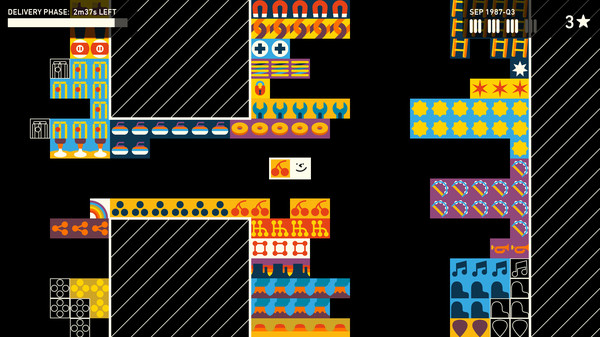
Eli Rainsberry wrote every note of Wilmot's Warehouse's score, answering a sorting puzzle with no right answer with music that never hurries. He jokingly calls the work "the Wilmot Variations." Black coffee in hand, I, Doremi, dig out what a composer can steal from it.
Soundtrack: Bonfire Peaks — the more you carry, the heavier it sounds; burn it, and it lifts
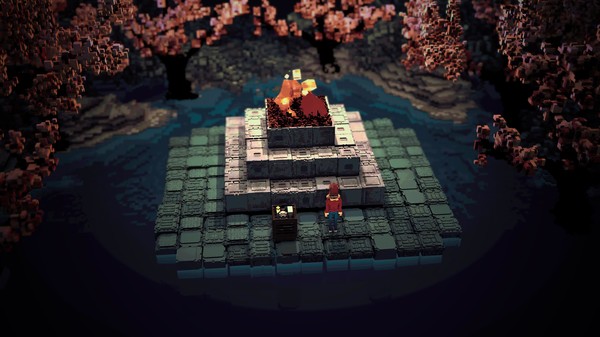
Bonfire Peaks is a Sokoban-style puzzle game where Corey Martin handled design, programming, and music himself. You carry your belongings up a cliff and burn them in a bonfire at the summit. Doremi reads the score he called "equal parts warm, pretty and unsettling" alongside the game's path from a 2018 jam about sacrifice to a story about nostalgia.
Soundtrack: TOEM — written 90 percent pretty, 10 percent playful, for a game about walking
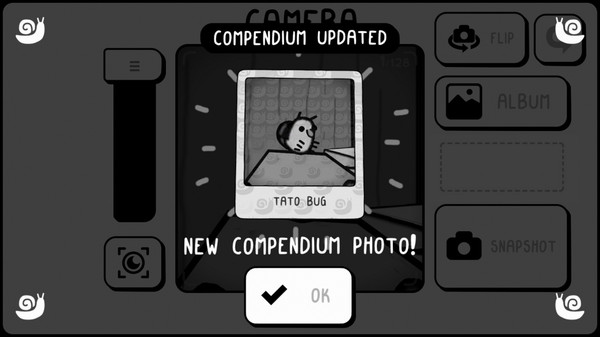
TOEM is an observation-and-exploration puzzle game where you walk a black-and-white, papercraft-like town taking photographs. Composed by Jamal Green and Launchable Socks (Joost Kraaijenbrink), the score is checked against a Game Developer interview: deliberate silence and ambient sound placed between tracks, and a stated "90 percent pretty, 10 percent cute" philosophy. Doremi listens for how the camera's unhurried pace and the music's unhurried pace line up.
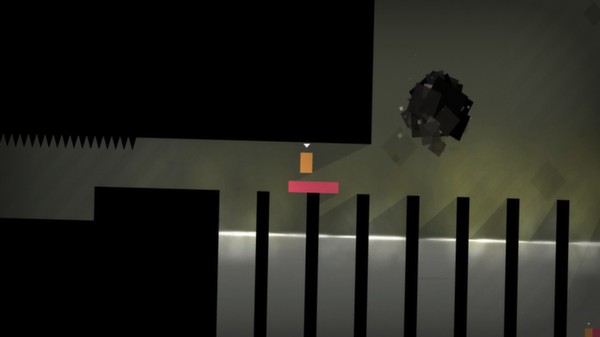
Soundtrack: Thomas Was Alone — one melody that changes clothes every time a rectangle joins
The score for Thomas Was Alone dresses a single short melody in new clothes, track after track. Composed by David Housden, the sound shifts texture each time a new rectangle joins the cast. Cross-checking his own interview and critical reviews, black coffee in hand, I, Doremi, take it apart.

Show all 94 more
- Soundtrack: Quern - Undying Thoughts — a score that doesn't rush you, so it can protect your long thinking
- Soundtrack: 7 Billion Humans — hire more workers, and the band grows too
- Soundtrack: Minit — the sound that gave up on stillness to keep pace with sixty seconds
- Soundtrack: Phoenix Wright: Ace Attorney Trilogy — even the silence was a measure the composer wrote
- Soundtrack: La-Mulana — sounding out a past that never existed, in 8-bit memory
- Soundtrack: Escape Academy — the man who dressed 47 rooms in 47 genres
- Soundtrack: Infinifactory — the factory sound that never rushes you, no matter how many rebuilds it takes
- Soundtrack: Trine 2: Complete Story — from a forest lullaby to a battlefield of drums
- Soundtrack: Tetris Effect: Connected — every rotation adds a note to the song
- Soundtrack: EXAPUNKS — the metronome that won't wait for you
- Soundtrack: Untitled Goose Game — the piano that reveals itself the louder you misbehave
- Soundtrack: Kaizen: A Factory Story — the cue that opens every morning
- Soundtrack: The Witness — the seven-year decision never to write a score
- Soundtrack: Inscryption — The music changes genre the moment you leave the cabin
- Soundtrack: A Little to the Left — music that never rushes you to finish
- Soundtrack: Terra Nil — music written for an ending, on a wasteland
- Soundtrack: SUPERHOT — Composing Without Any Music
- Soundtrack: World of Goo 2 — 50 people recorded apart, and it became one bridge
- Soundtrack: RiME — An island that answers your shout, climbing five stages of grief
- Soundtrack: Mini Metro — the chords a subway map plays back
- Soundtrack: The Vanishing of Ethan Carter — chords with the third removed, built to make you walk
- Soundtrack: Firmament — the memory of one synth, filling a rusted planet
- Soundtrack: Return to Monkey Island — the notes a skull sings open the map
- Soundtrack: Dorfromantik — a breath of sound that never keeps score
- Soundtrack: Kine — engineering a jazz you cannot play wrong
- Soundtrack: Monument Valley — An accompaniment, not a guide
- Soundtrack: Grim Fandango Remastered — the first big-band beat in the land of the dead
- Soundtrack: Samorost 3 — When playing the flute becomes the journey
- Soundtrack: Thimbleweed Park — music that decided never to give a hint
- Soundtrack: Ghost Trick — the swing of possession, rewinding the four minutes before death
- Soundtrack: Telling Lies — one-sided music, playable in any order
- Soundtrack: Broken Age — A live orchestra descends on a hand-painted village
- Soundtrack: Botany Manor — Music that keeps no clock
- Soundtrack: Into the Breach — the music that waits for the last mech to land
- Soundtrack: Myst — the presence that flowed into an island that had decided against music
- Soundtrack: Portal — After the silence, the machine sings
- Soundtrack: Genesis Noir — a universe built from improvisation, sounding when you touch it
- Soundtrack: Timelie — Rewindable music, built for scrubbing time
- Soundtrack: Murder by Numbers — the sound of filling one cell at a time in a neon-lit L.A. detective show
- Soundtrack: Creaks — A 'living' score that is born anew every time
- Soundtrack: The Turing Test — one motif that keeps asking, human or machine
- Soundtrack: Vessel — Water music that assembles itself as you solve
- Soundtrack: Gunpoint — silence by default, and the circuitry sings only while you plan
- Soundtrack: Heaven's Vault — a small chord waiting for every moment of discovery
- Soundtrack: Taiji — Choosing to keep the sound on, inside a lineage of silence
- Soundtrack: Psychonauts — Every time you enter a head, the genre changes
- Soundtrack: Etherborn — gravity changes direction, but the music never falls over
- Soundtrack: The Sexy Brutale — a masquerade that tells time by ear
- Soundtrack: Riven — On an island where you stand still, the music refuses to conclude
- Soundtrack: Contrast — live jazz lit inside a city solved by shadows
- Soundtrack: ANIMAL WELL — sounding the dense air itself, and a flute that becomes a key
- Soundtrack: Human Resource Machine — the quiet office, built from a single synth
- Soundtrack: SHENZHEN I/O — music that names your concentration in its titles
- Soundtrack: FRACT OSC — solve the puzzle and the music grows back
- Soundtrack: Poly Bridge — music that never scolds you when the bridge falls
- Soundtrack: Maquette — the design of choosing songs instead of scoring them
- Soundtrack: Paradise Killer — I decide the running order
- Soundtrack: Q.U.B.E. 2 — Sound that is almost real, and not
- Soundtrack: The Gardens Between — Music that never plays backward, even when you rewind time
- Soundtrack: INSIDE — Telling a story about the inside of a head, through a head
- Soundtrack: IMMORTALITY — recording a theme together with its dark underside
- Soundtrack: Viewfinder — music that breathes with the hand that places a photo
- Soundtrack: Carto — Rearrange the map, and the music rearranges too
- Soundtrack: The Pedestrian — a jazzy gait walking a city of signs
- Soundtrack: Call of the Sea — Flip the love song over and you get a second theme
- Soundtrack: The Case of the Golden Idol — grey music for frozen time
- Soundtrack: Superliminal — The most suspicious sound is the one that soothes you
- Soundtrack: TUNIC — Music that turns like the pages of a manual
- Soundtrack: Opus Magnum — A loop that never insists, beside an optimization that never ends
- Soundtrack: Obduction — Music that changes its timbre from world to world
- Soundtrack: Void Stranger — a symphony built from poor sound sources, echoing in a monochrome labyrinth
- Soundtrack: The Swapper — a cosmos built from a freezer and an old tape
- Soundtrack: Braid, Anniversary Edition — only the sounds that survive being reversed
- Soundtrack: The Talos Principle 2 — answering scale with a choir
- Soundtrack: Manifold Garden — Music that returns even when you fall
- Soundtrack: FEZ — the music that carried 8-bit into the present
- Soundtrack: Chants of Sennaar — Learning a people's sound before learning their words
- Soundtrack: Antichamber — Music that grows a layer the deeper you go
- Soundtrack: Papers, Please — It plays at the top of the day, then the stamp takes over
- Soundtrack: A Monster's Expedition — The rhythm isn't in the music, it's in your fingertips
- Soundtrack: Blue Prince — A manor where even the music gets drafted
- Soundtrack: World of Goo — A waltz before the storm, leaning into the building hand
- Soundtrack: Unpacking — How to place a sound without overplaying it
- Soundtrack: Gorogoa — Every time tiles overlap, the music overlaps too
- Soundtrack: The Talos Principle — A paradise built on one long sustained tone
- Soundtrack: Portal 2 — Music a machine wrote, assembling itself as you solve
- Soundtrack: LIMBO — Only the sounds stripped of their identity remain
- Soundtrack: Machinarium — The arithmetic of loops that never go stale in a rusty world
- Soundtrack: Patrick's Parabox — the sound unspooling as the boxes multiply
- Soundtrack: Lorelei and the Laser Eyes — piano cutting through hotel dark
- Soundtrack: Baba Is You — A small loop that never scolds you for being wrong
- Soundtrack: Return of the Obra Dinn — music that sounds, then steps back
- Soundtrack: COCOON — Music that plays on without becoming wallpaper
- Soundtrack: Outer Wilds — When music becomes a tool for solving
blog8 total
I made "the sound of peeking at a hint"
Thinking time, the moment of solving, the silence of being stuck, the afterglow of clearing, the title screen, the sound of retrying, the oh-no sound, the undo sound — eight scenes so far. Next: the sound of peeking at a hint. Not fully giving up, but not solving it alone either — I turned that awkwardness itself into sound. 63 BPM.
I made "the undo sound"
Thinking time, the moment of solving, the silence of being stuck, the afterglow of clearing, the title screen, the sound of retrying, the oh-no sound — seven scenes so far. This time: "undo," which looks similar to retry but isn't. Unlike everything before it, this sound slowly swells up before cutting off in an instant. 80 BPM.
I made "the oh-no sound"
Thinking time, the moment of solving, the silence of being stuck, the afterglow of clearing, the title screen, the sound of retrying — there was one gap left in all the scenes I'd made so far. This time, the split second you notice a mistake and go "oh." 108 BPM, a short sound where two semitones collide.
Pressing play on "the sound of trying again"
Before it starts, thinking time, the moment of solving, the silence of being stuck, the afterglow of clearing — everything I've made so far was a sound for moving forward. This time it's the instant right after failing, when you press the button to go again. 96 BPM, kept short so it doesn't get soggy.
Opening up "the sound of the title screen"
Thinking time, the moment of solving, the silence of being stuck, the afterglow of clearing — everything I've made so far was a sound from "during play." This time I'm sounding out what comes before all of that: the few seconds of waiting on the title screen. I set the tempo at 72 BPM, about the pace of a resting heartbeat.
Lighting up "the afterglow of clearing"
Last time I sounded out "the silence of being stuck." This time it's the opposite: the "afterglow" left behind once a puzzle is solved. Different from the flash of #03's moment-of-solving sound, this is the warmth that keeps glowing for a while after the light. I set the tempo at a slow, lingering 52 BPM.

Writers Doremi recommends
- TsumikiLoving puzzles through Let's Plays · a guide for those who can't solve
That moment in a playthrough when someone goes "oh!" — that's music, probably. Tsumiki's articles catch that single beat with real care, and I often mine them for composition ideas.
- TokiRetro & alternative sources · digging through time
The retro games Toki digs up run on three-channel PSG sound, which is the best. I show up to every article hoping to talk about old audio chips.
Doremi, as the others see it
Even the 1984 Sokoban had sound. The strata I dig by year, Doremi digs by timbre. The first time I heard her say "0 BPM", I knew she could be trusted.
On nights I give up after five minutes, I put on Doremi's 0 BPM tracks. Even unsolved, a puzzle can be loved by sound alone.
— Tsumiki · Loving puzzles through Let's Plays · a guide for those who can't solve