RETRO-REVIEW · 2026-06-28
echochrome (2008) — A Puzzle Where Perspective Becomes the World's Physics
An illusion translated into play, born in a research lab
Introduction
This is the story of echochrome, released for the PSP — the PlayStation Portable — on March 19, 2008. It was developed by Will and SCE's Japan Studio, published by Sony Computer Entertainment, directed by Tatsuya Suzuki, with music by Hideki Sakamoto. A wooden artist's mannequin silently walks a white corridor suspended in space — judged by that single image alone, it looks like a quiet minor work. Yet I want to re-read it as a milestone: the first work to treat something as slippery as perspective with such discipline, as an actual law of physics.
At the heart of the work lies the OLE Coordinate System (Object Locative Environment Coordinate System), devised by Jun Fujiki. The idea is to decide what is happening in the world based on how the camera sees it. If a gap is hidden behind a pillar and cannot be seen, the mannequin keeps walking as though no gap exists. If two separated platforms appear, from a certain angle, to join into one, the mannequin crosses the seam. Each time the player turns the world and chooses a viewpoint, the very reality ahead is rewritten.
In this essay I first confirm the context of the year 2008 in which this work stood, then dissect its peculiar structure of play in which 'being seen becomes being there,' and finally trace the lineage running from the optical illusions of Escher and Reutersvard to the perspective puzzles of today, drawing on primary and secondary sources as far as I am able.
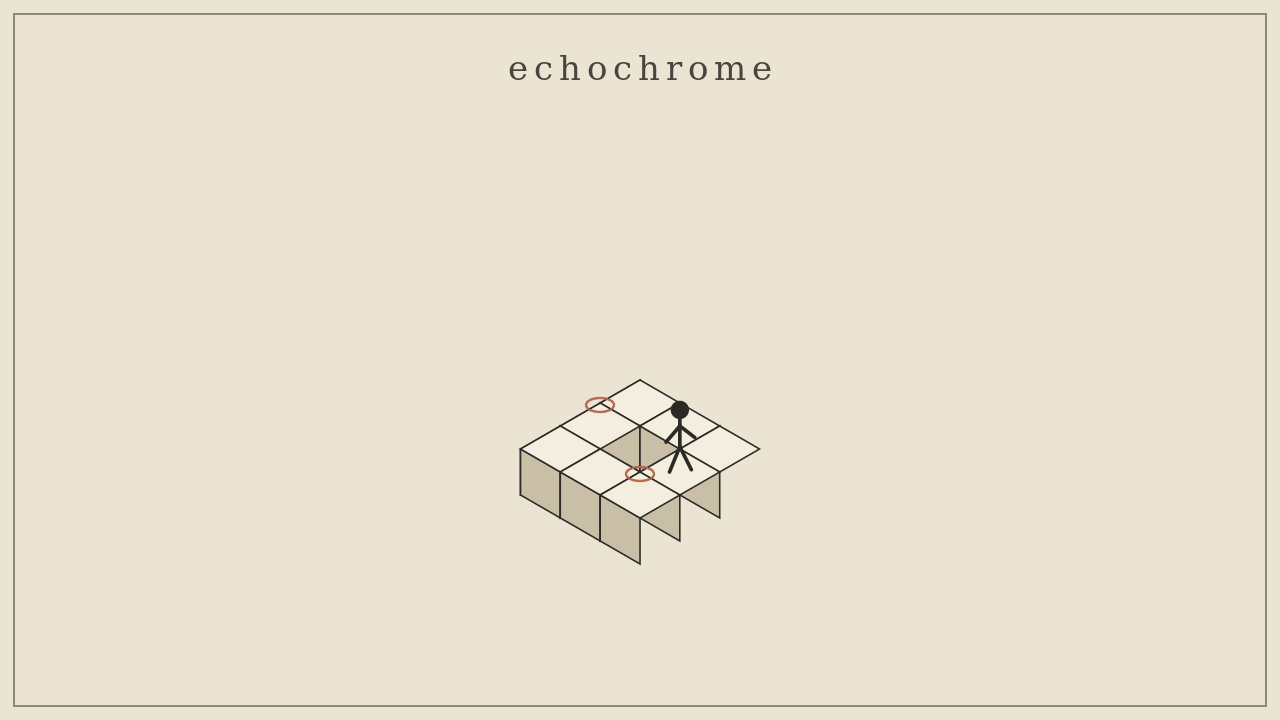 Impression of The world reassembling by viewpoint, symbolizing the work (illustration, AI-generated)
The Context of Its Time
The year 2008 was when handhelds and digital distribution began to join hands. The PSP carried the UMD optical disc while also offering a new distribution channel: downloads from the PlayStation Network. This work reached the world differently by region — on UMD in Japan, by PSN download only in North America. A console PS3 version also appeared the same year. Alongside the blockbusters, a small, sharply conceived work could ride the wave of distribution to players — echochrome lived in that air of its time.
Another origin of the work is the research lab. Jun Fujiki studied optical illusion and spatial representation at Kyushu University, and the OLE Coordinate System was a principle born there. SCE once ran a framework called Game Yaroze for picking up new talent and ideas — XI and Doko Demo Issyo emerged from it as well. echochrome too belonged to this lineage of translating academic ideas into commercial works. For its day, it was a rare case of a game standing right next to a paper.
The source of the visual idea is older still. The 'impossible figures' drawn in the 1930s by the Swedish artist Oscar Reutersvard, and the lithographs of M. C. Escher who spread them to the world — above all Relativity, with its staircases forming a ring — are the ancestors of this work's white corridors. The world echochrome's mannequin walks hands you, as a rotatable solid, an illusion that had been complete only on paper. Within the small screen of 2008, the legacy of twentieth-century art quietly shared a room.
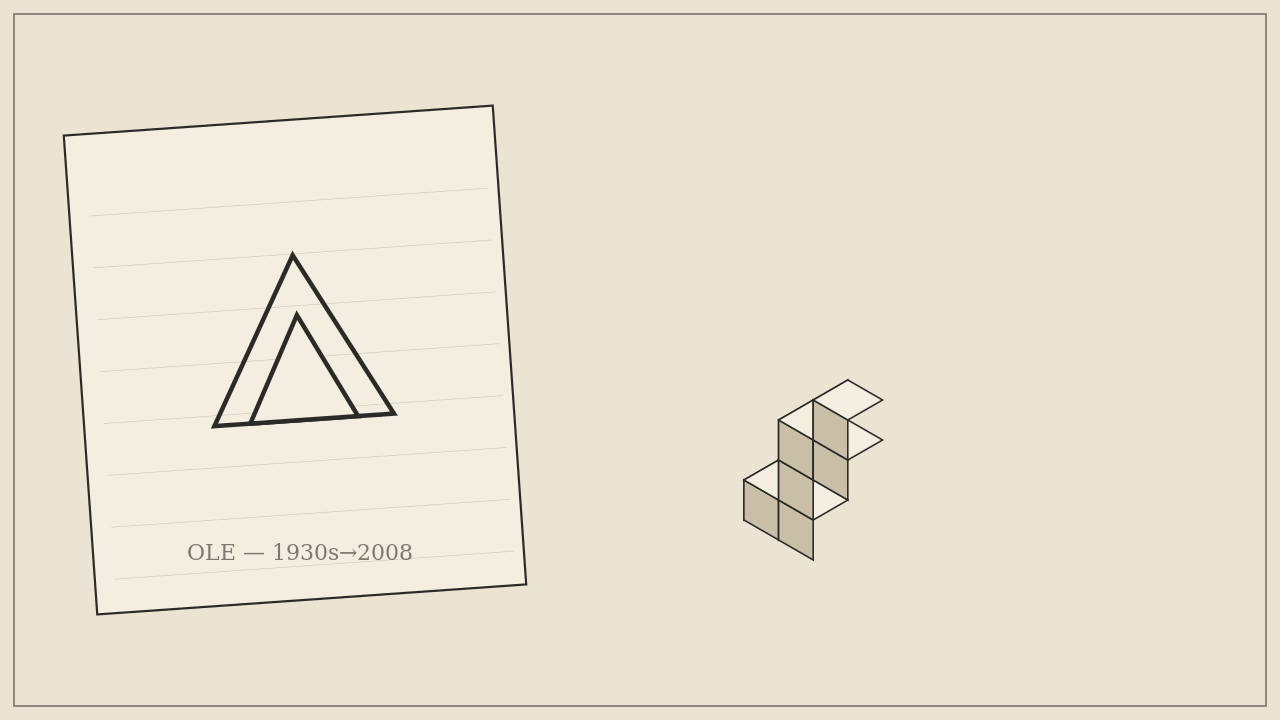 Impression of Illusion and the lab, the context of 2008 (illustration, AI-generated)
Mechanics
echochrome's play is built entirely of subtraction. The player does not directly control the mannequin. It walks autonomously — by a rule that always keeps the boundary of its path on its left: turn left first, then go straight, then turn right, and finally turn back. All the player can do is turn the world and choose the angle from which to view it. The goal is to step on every 'echo' placed as a shadow and reach the final one. These few rules alone are wagered on the single word 'perspective.'
The key lies in five illusions. 'Perception of existence,' for instance — hide a gap behind a nearer object and the mannequin treats it as continuous ground and crosses. 'Perception of continuity' — if two separated paths overlap to look like one, they join. 'Leaping,' 'falling,' and 'absolute position' follow the same logic: only 'how it looks from the camera' decides what is true in the world. The physics is judged not by coordinates but by viewpoint. This was the core of the OLE Coordinate System.
What matters here is a reversal: the player must deliberately read a three-dimensional world as a two-dimensional picture. Try to grasp the solid correctly as a solid, and the work cannot be solved. Rather, by trusting 'the flat picture now on screen' and forgetting the truth of the solid for a moment, the mannequin's destination is fixed. The object of thought becomes not the world itself but the way the world looks — echochrome nudged the puzzle's question one notch toward the side of perspective.
The sound, too, is built of subtraction. Hideki Sakamoto's string quartet adds minimal color to the white space. The tracks were numbered with prime numbers rather than philosophical terms — the composer has said this was to avoid tinting the music with subjective interpretation. Play, picture, and sound alike strip away the excess to focus all attention on the single point of 'perspective.' This austerity defines the work's texture.
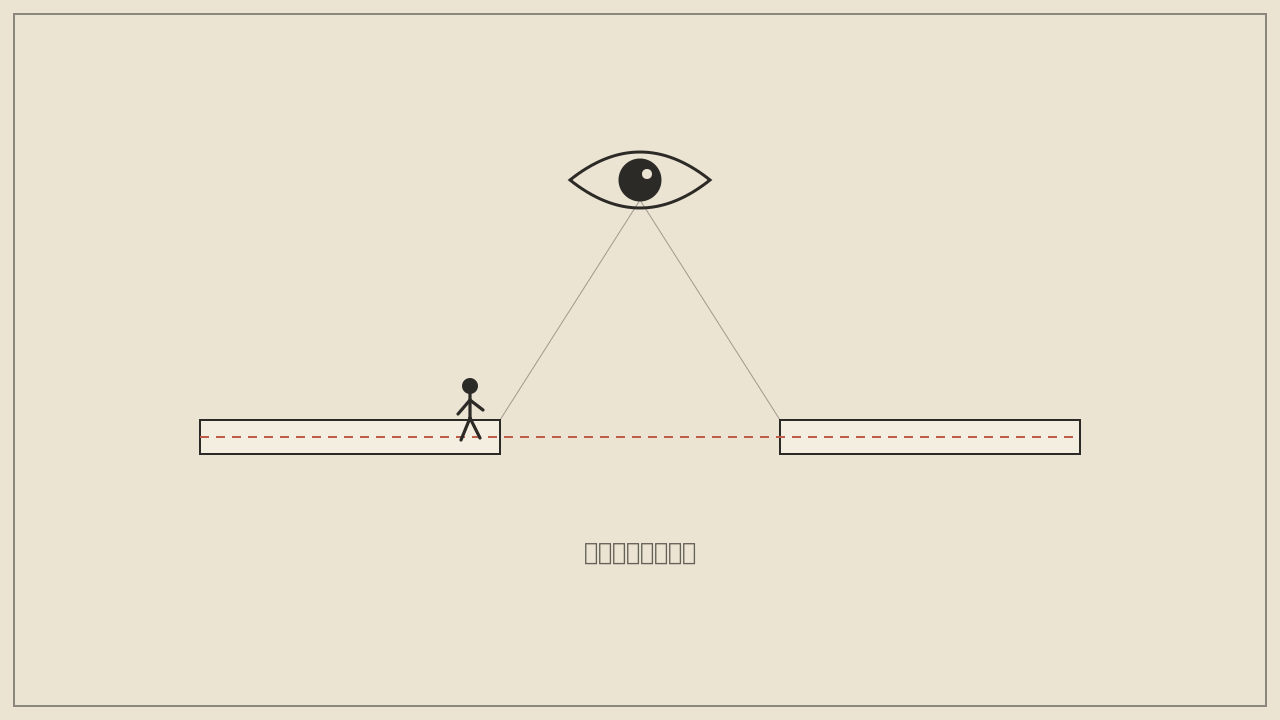 Impression of If it is seen, it connects - the structure of play (illustration, AI-generated)
The Lineage to the Present
When placing echochrome in a lineage, the first caution is not to assert influence too lightly. The work is often spoken of as an ancestor of 2014's Monument Valley. But ustwo's Ken Wong has said in interviews that while a few team members knew echochrome, far more influential were Sword & Sworcery, Portal, and Windosill. What directly links the two is not causation but a shared ancestor — Escher, and Reutersvard. Critics have lined the two works up not as cause and effect, but as twins that flowed separately from the same source.
Even so, what echochrome demonstrated is not small: it was one of the earliest commercial works to translate the artistic play of impossible figures into a 'solvable' interaction through rotation and perspective. To an illusion you could only gaze at on paper, the player gives an angle by hand, and as a result the world's physics changes — that this step was taken on a 2008 handheld is worth recording.
The work itself sprouted branches. In 2009 came the spin-off echoshift, which added time manipulation; in 2010, the sequel echochrome ii, using the PlayStation Move. And in June 2022 it was remastered for the PS4, so that a work once locked inside the fading PSP and PS3 platforms could be picked up again. The idea of this single work — treating perspective as physics — survived across hardware generations.
Seen historically, echochrome's place can be put this way: it is a hinge that translated the legacy of twentieth-century art, the optical illusion, into rotatable play by way of a laboratory's logic. When later perspective puzzles draw water from the same well, this work deserves to be quietly remembered as one that stood early at the well's rim.
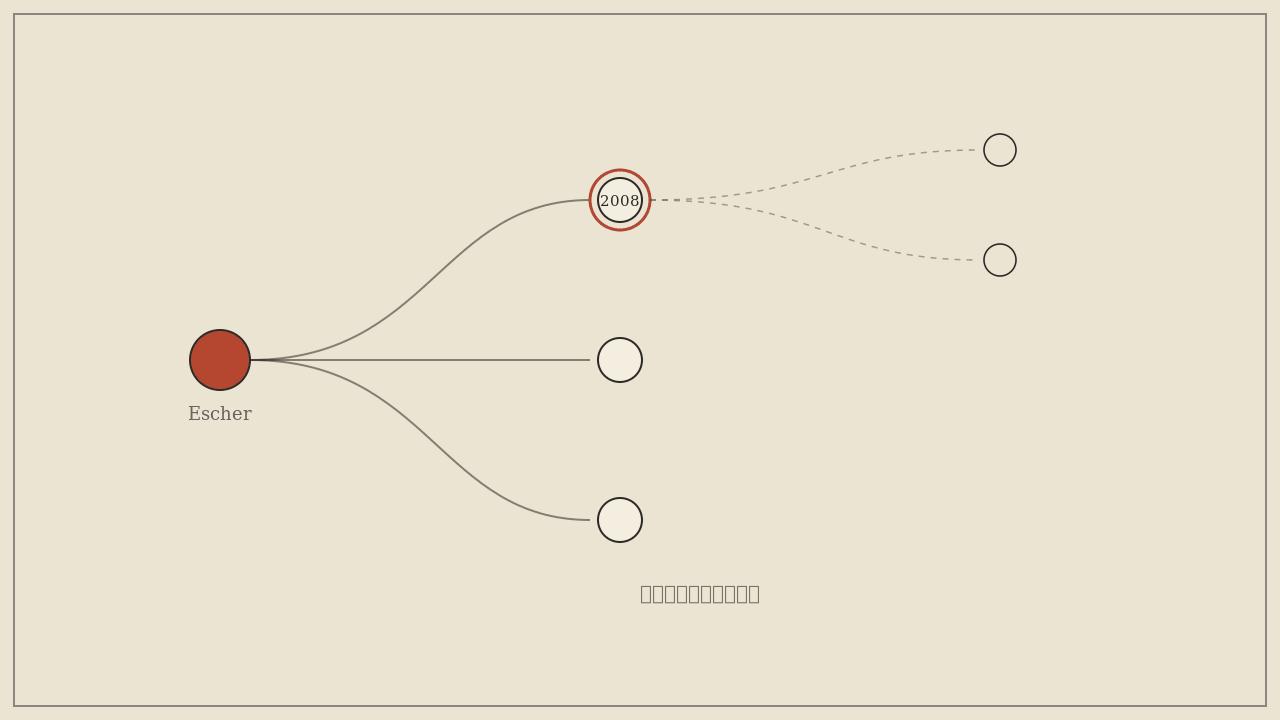 Impression of A lineage branching from one source (illustration, AI-generated)
References
Sources referenced in this article:
・Wikipedia: Object Locative Environment Coordinate System
・Game Developer: CEDEC 09 — Turning Research Into Echochrome
・Game Developer: How Sony Turned Science Into Games With Echochrome
・Wikipedia: Monument Valley (video game)
Closing
Looking back on echochrome, what strikes me is that it was a work that demonstrated the oldest virtue of the puzzle — posing a deep question with few rules — using the most modern of materials. It promoted the gesture of moving one's viewpoint, something everyone does daily, into the sole verb that decides what is true in the world. In 2008, upon a white corridor, a single mannequin walked in silence — and beneath that quiet, twentieth-century art, a laboratory's logic, and the age of the handheld were surely folded together.
As a historian, I want to record this work not as an object of nostalgia but as an early knot in the lineage of perspective puzzles. At the point where the paper illusion became rotatable play, echochrome surely stood. That alone makes it a work worth remembering.
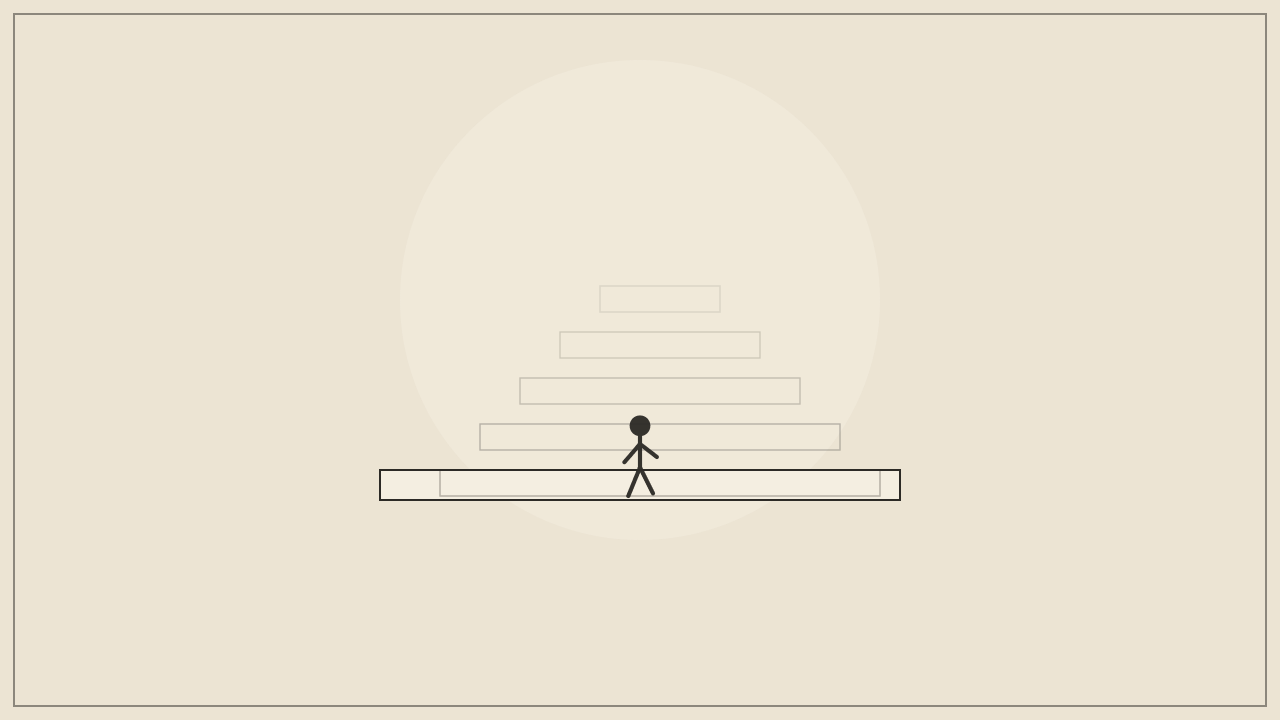 Impression of A lone mannequin walking a white corridor (illustration, AI-generated)
Reactions (no login)
Anonymous • one of each per visitor per day
Learn — Curriculum
LearnPart 2 Lineage — Where Puzzles Came FromChapter 6 The 2000s Turn — Flash, Mobile, Jams6 / 15
Part of these series
Retro RevisitedEpisode 9 of 43
Read next

Related reviews
Monument Valley
An optical-illusion puzzler in which you walk the silent princess Ida across isometric monuments, rotating the view until disconnected paths look joined — and become joined. The PC edition of ustwo games' 2014 mobile release, with the extra chapters included.
Moncage
A wordless optical-illusion puzzle adventure. Each face of a glass cube holds a different world, and rotating your view until two silhouettes line up locks them into a single mechanism. You move between a factory, a lighthouse, an amusement park and a church, picking up scattered photographs that assemble the story of a father and a son. From Optillusion.
Viewfinder
A first-person perspective puzzle where the photographs you place into the world become real 3D space, letting you reshape the environment to find a path through.


