TAG
#retro
0 reviews · 114 essays
Related essays
Nine Linked Rings (Baguenaudier) (1872) — The Year an Origin-Unknown Ring Puzzle Turned Out to Use Binary Math 81 Years Before a Telegraph Engineer Patented the Same Idea
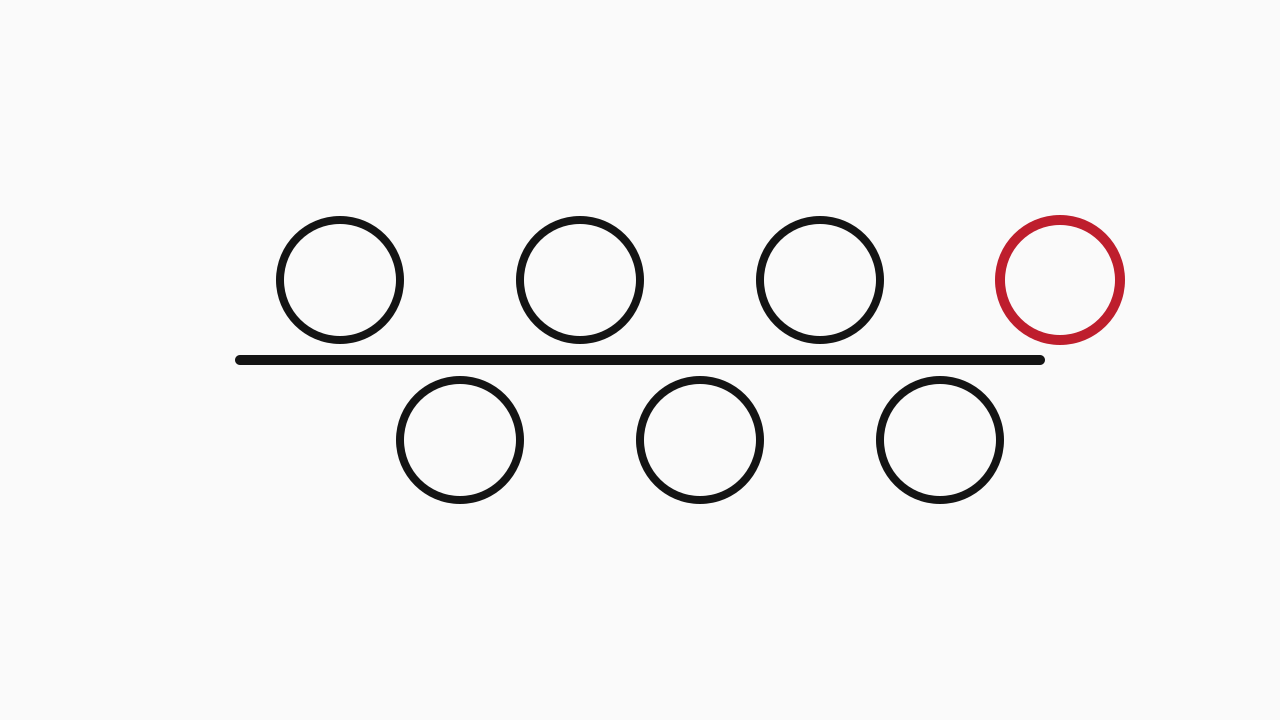
Nine Linked Rings, or Baguenaudier: remove rings from a bar one at a time until the last one slides free. Its origin is said to be China, but nothing is settled; the earliest confirmed records are a 16th-century Chinese text and, around the same time, the writings of Italian mathematician Luca Pacioli. In 1872, Lyon mathematics enthusiast Louis Gros became the first to theorize the puzzle's solution as a binary table. The same idea was independently reinvented 81 years later, in 1953, when telegraph engineer Frank Gray patented what communications engineers now call the "Gray code." As a physical puzzle, a 1970 patent by William Keister became "Spin-Out," an early product of Binary Arts (founded 1985, now ThinkFun), still sold today. This piece follows the 150-year lineage of a single ring mechanism.
Oddworld: Abe's Oddysee (1997) — where the attack button should be, there is a talk button
Episode 59 of "Today Is Release Day": Oddworld: Abe's Oddysee, made by Oddworld Inhabitants and published by GT Interactive for the PlayStation. It reached North American shelves on September 18, 1997 — 29 years ago today. Abe carries no weapon. He can talk to his fellow Mudokons, and he can possess his enemies. That is all. Rescue fewer than 50 of the 99 Mudokons and Abe ends up in the meat grinder. GameRankings 88%, Metacritic 85. The game cost $4 million to build and $10 million to advertise.
The Seven Bridges of Königsberg (1736) — The Year Euler Erased the Map to Solve a Sunday Puzzle
The answer is simple. In 1736, the mathematician Leonhard Euler proved that no walk existed that crossed all seven bridges of the Prussian town of Königsberg exactly once and returned to its start. The town's four landmasses were connected by 5, 3, 3, and 3 bridges respectively — all odd numbers. His paper, "Solutio problematis ad geometriam situs pertinentis," was presented on August 26, 1735, and published in 1741. By reducing landmasses to points and bridges to lines, Euler founded what became graph theory — the same logic taught in schools today as the rule for "one-stroke" drawing puzzles. This article traces how that 290-year-old proof still shapes the design of today's routing puzzle games, from Cosmic Express to Lyne to Mini Metro.
Vitamina Oukoku Monogatari (1992) — a Game Boy RPG with no battle menu, that saved itself every few minutes
Episode 58 of "Today Is Release Day": Vitamina Oukoku Monogatari, published by Namco for the Game Boy on September 17, 1992 — 34 years ago today. There is no "Fight / Magic" list in battle; four spells sit on the four directions of the d-pad. The game saves itself every few minutes, and almost every name in it is a food. Famitsu scored it 24 out of 40.
Peg Solitaire (1697) — The Day a Game With No Inventor Became the Math of Proving "Unsolvable"
On a cross-shaped board of pegs, you jump one peg over its neighbor and remove it, again and again, hoping to end with a single peg left. The earliest record of Peg Solitaire appears in 1697, in the French court periodical Mercure Galant under Louis XIV. No inventor is known. The popular legend that a prisoner in the Bastille devised it traces back no further than an English book from 1801, and puzzle historian John Beasley calls it unsupported by any earlier French source. In 1912 Ernest Bergholt found an 18-move solution to the classic problem; in 1982 Winning Ways for Your Mathematical Plays introduced the "pagoda function," a tool for proving certain positions mathematically unreachable. In 2007 the board resurfaced as puzzles inside Professor Layton and the Diabolical Box. This piece traces a single ruleset that has been played for over three centuries without ever needing a named inventor.
Kowloon High-School Chronicle (2004) — it shared a release day with Pokemon Emerald, and needed 16 years to cross the ocean
Episode 57 of “Today Is Release Day”: Kowloon High-School Chronicle, published by Atlus on the PlayStation 2 on September 16, 2004 — 22 years ago today. Pokemon Emerald shipped the same day. This one sold about 42,000 copies. Sixteen years later, it was the one that got rebuilt and sent abroad.
Gyakuten Saiban: Yomigaeru Gyakuten (2005) — they added one case to a four-year-old game, and the series crossed the ocean
Episode 56 of “Today Is Release Day”: Gyakuten Saiban: Yomigaeru Gyakuten, known abroad as Phoenix Wright: Ace Attorney. Capcom released it on the Nintendo DS on September 15, 2005 — twenty-one years ago today. It was a port of a 2001 Game Boy Advance game with a single extra case bolted on. That one case, and an English mode that shipped inside the Japanese cartridge, carried the series out into the world.
Mastermind (1970) — A Telecoms Engineer's Four Colors, Later Reborn as Fallout's Hacking Screen
In 1970, Israeli telecommunications engineer Mordecai Meirowitz devised Mastermind, a game that reveals only a count of hits and near-misses from four hidden color pegs. Rejected by major toy companies, it was released by Invicta Plastics in 1971 and sold over 30 million sets within the decade. In 1976 Donald Knuth showed it could be solved in five moves or fewer, and in 2007 a Bethesda programmer built it directly into Fallout 3's hacking minigame. This piece traces how a half-century-old constraint — telling the player only a number, never the answer — still shapes puzzle design in the age of Wordle.
Clock Tower (1995) — the horror game that hands you no weapon and sets a man with shears loose behind you
Episode 55 of “Today Is Release Day”: Clock Tower. Human released it on the Super Famicom on September 14, 1995 — thirty-one years ago today. Your heroine cannot fight. She can only run and hide. Famitsu's review panel gave it 31 out of 40 and a Silver Hall of Fame award.
The Decagon House Murders (1987) — The Debut That Answered Knox's Decalogue
In 1987, Yukito Ayatsuji's debut novel The Decagon House Murders trapped university students - each bearing the name of a Golden Age Western mystery writer - inside a ten-sided mansion on a deserted island, igniting Japan's "Shin Honkaku" (new-orthodox) mystery movement. Behind it lies a rulebook for fair play with the reader: S. S. Van Dine's 1928 Twenty Rules and Ronald Knox's 1929 Decalogue. That same rulebook is still cited today, down to Ryukishi07's Umineko no Naku Koro ni, a mystery game sold on Steam.
Pokémon Yellow (1998) — the day a Pikachu that refused its Poké Ball started walking behind you
Episode 54 of “Today Is Release Day”: Pokémon Yellow. It reached Japan on September 12, 1998 — twenty-eight years ago today. You don't pick your starter, and the one you are handed won't go back into its ball. Eleven years later, on the very same date, that trick was handed to every Pokémon.
SameGame (1985) — The Grammar of Clearing Same-Colored Clusters, Born From a Reader Submission
In 1985, a program called Chain Shot!, submitted to the Japanese magazine Monthly ASCII, wrote the rule of clearing adjacent same-colored blocks in one tap. Over the next forty years the rule kept changing its name — SameGame, Clickomania!, Jawbreaker — while becoming the subject of a solving algorithm in 2012 and an AI-reasoning benchmark in 2024. Its author's name has nearly been forgotten, but the rule itself lives on.
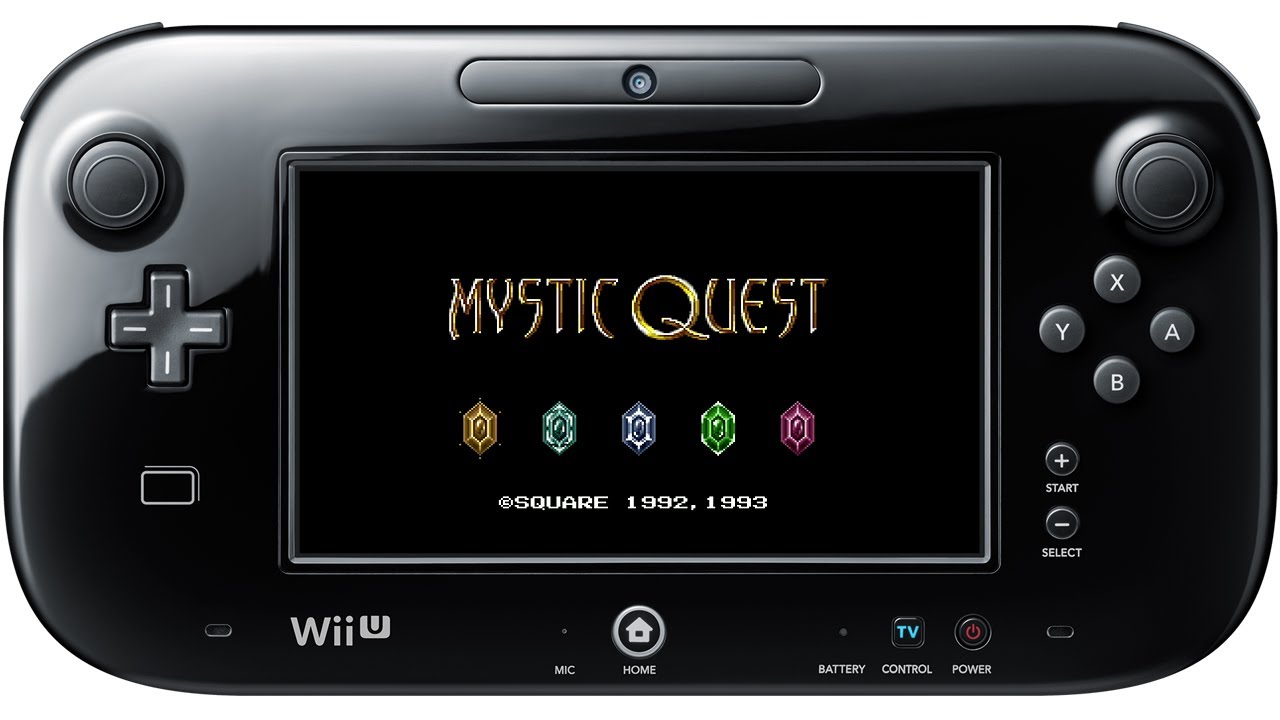
Final Fantasy USA: Mystic Quest (1993) — the Final Fantasy built for American beginners, then shipped back to Japan with “USA” in its name
Episode 53 of “Today Is Release Day”: Final Fantasy USA: Mystic Quest. It reached Japan on September 10, 1993 — exactly thirty-three years ago today. Square had built it in Osaka for North American beginners, and it came home eleven months later with the word “USA” on the box. Famitsu's four reviewers gave it 7, 6, 6 and 4. Even the harshest write-ups praised the music.
Himitsu-bako (1894) — The Souvenir That Never Explains How to Open It
In 1894, in a hot-spring town in Hakone, a wooden box took its familiar form. Under its geometric marquetry sat a mechanism that only opened through a fixed sequence of moves — with no instructions attached. This piece traces the same design grammar found in today's escape rooms back to a single 132-year-old box.
Mortal Kombat II (1994) — the Friday Nintendo let the blood back in, and the Genesis version still outsold it
Episode 52 of “Today Is Release Day”: Mortal Kombat II. The home versions arrived in North America on Friday, September 9, 1994 — exactly thirty-two years ago today. Nintendo had stripped the blood out of the first game's SNES port; this time it allowed the blood and the Fatalities. The Genesis version still sold more in the United States. And only the Japanese release had its blood recoloured green.
Pigs in Clover (1889) — A Tilting Wooden Box That Stalled the U.S. Senate for a Season
In 1889, a single wooden box brought the United States to a standstill. Under a sheet of glass, four tiny marble "pigs" sat in a spiral maze; the only tool was gravity, tilting the board to herd all four into the center pen. Senators and newspapermen alike stopped mid-sentence for it. The inventor was Charles Martin Crandall, who patented it on September 10, 1889. Two years later, puzzle writer Sam Loyd claimed he'd invented it himself, and for decades the record blurred. A craze that got itself mocked in a White House political cartoon deserves, I think, to be read again as one of the first mobile games.
Muramasa: The Demon Blade (2009) — every review praised the art, and the studio ran out of money making it
Episode 51 of “Today Is Release Day”: Muramasa: The Demon Blade, released in North America on September 8, 2009 — exactly seventeen years ago today. Sixteen people at Vanillaware drew this 2D action RPG by hand. The aggregate score was 81, and almost no reviewer failed to praise the art. It still sold only 35,000 copies in its first North American month, and by release the studio’s funds were gone. Then, in June 2026, a follow-up was announced.
Lode Runner (1983) — The Allowance He Paid the Neighborhood Kids
In 1983, Douglas E. Smith shipped Lode Runner with an 'edit mode' he added because he couldn't design 150 levels alone. That mode gave Japan Bomberman, and its 'turn players into designers' idea still echoes in Portal 2's Puzzle Maker.
Silent Hill 4: The Room (2004) — they made the safest room your home base, and critics missed the puzzles
Episode 50 of “Today Is Release Day”: Silent Hill 4: The Room, released in North America on September 7, 2004 — exactly twenty-two years ago today. A series named after a town largely left that town for a single apartment. Room 302 is the only save point in the game; it heals you in the first half and drains you in the second. The aggregate average was 76. What reviewers missed most was not the room, but the series’ logic puzzles.
Eggerland (1985) — The Original One-Room Puzzle Where You Push Your Enemies as Eggs
In 1985, a modest puzzle game appeared for the MSX home computer: Eggerland Mystery. Shoot an enemy to turn it into a pushable egg, then collect hearts to open the treasure box — a design built from just a handful of verbs, contained entirely within one room. HAL Laboratory refined that grammar across a run of Famicom Disk System titles, and in 1989 it crossed the ocean as Adventures of Lolo. Sitting in the producer's chair for those two years was a young Satoru Iwata, years before he became Nintendo's president.
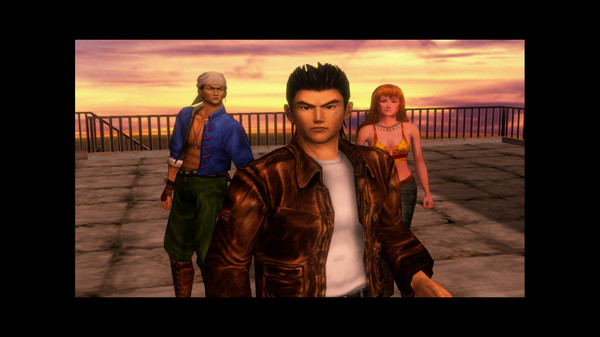
Shenmue II (2001) — a 90% game that arrived five months after its console stopped being made
Episode 49 of “Today Is Release Day”: Shenmue II, released on the Dreamcast on September 6, 2001 — exactly twenty-five years ago today. Sega had left the console hardware business and ended production of the machine five months earlier. Famitsu’s four critics gave it 8 apiece; the English-language average was 90%. Japanese sales still came to a third of the first game’s. North America never got the Dreamcast version, and the finished English build only surfaced twenty years later.
Puzzle Boy / Kwirk (1989) — The Day Atlus Walked a Potato Under Its Own Name
On November 24, 1989, Atlus released Puzzle Boy for the Game Boy, sold overseas as Kwirk. For a studio that had spent years working as an uncredited contractor for other publishers, this was the first game to carry its own name. A maze puzzle built from just three verbs — turn, push, fill — it quietly draws a line all the way to Catherine, the block-stacking puzzle the same company released in an entirely different form 22 years later.
LocoRoco (2006) — you tilt the ground, not the hero. The pitch was refused twice
Episode 48 of “Today Is Release Day”: LocoRoco, released in North America on September 5, 2006 — exactly twenty years ago today. You do not move the round yellow creature; you tilt the ground, using only the L and R buttons. The pitch was turned down twice, and what got it approved was a prototype that only knew how to roll. Critics averaged 83; Japan’s first week was just over 30,000 copies.
Torneko's Great Adventure: Mystery Dungeon (1993) — A Dragon Quest Shopkeeper Wears Rogue's Cruelty
On September 19, 1993, Chunsoft released Torneko's Great Adventure: Mystery Dungeon for the Super Famicom, smuggling the punishing design of 1980's Rogue into Japanese living rooms wearing the face of a beloved Dragon Quest shopkeeper. The Mystery Dungeon lineage it launched is still running today — as of December 2024, playable on Steam in Shiren the Wanderer: The Mystery Dungeon of Serpentcoil Island.
Spore (2008) — critics averaged 84; on Amazon, 2,016 of 2,216 ratings were one star
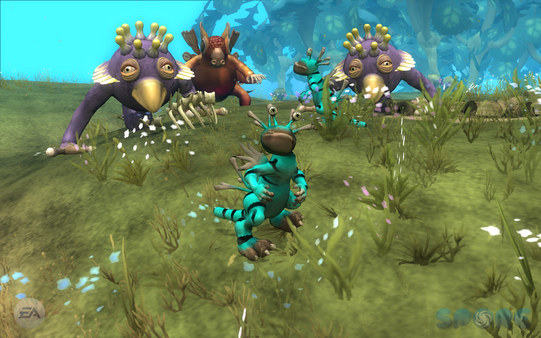
Episode 47 of “Today Is Release Day”: Spore. The first boxes in the world went on sale in Australia on September 4, 2008. Its design — cells to galaxies in one game — averaged 84 across 75 outlets. That same month, 2,016 of 2,216 Amazon ratings were a single star. The argument was never about the game itself.
Sleep Is Death (2010) — The Move That Swapped the AI Opponent for a Human One
In 2010, Passage creator Jason Rohrer released Sleep Is Death, a two-player tool with no script and no AI — just a living person on the other side of the screen. That idea carried through MoMA's 2011 Talk to Me exhibition and into his own 2018 game, One Hour One Life.
Metal Gear Solid (1998) — a game about not being seen that used the controller port as a stage prop
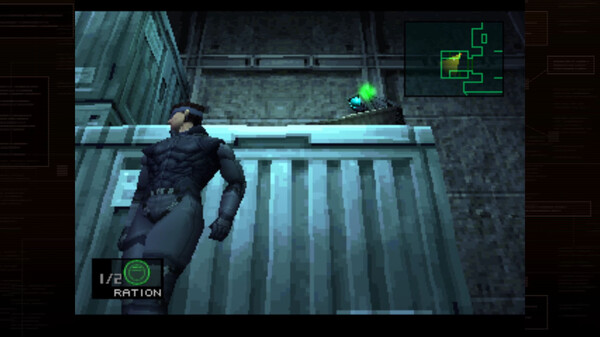
Episode 46 of “Today Is Release Day”: Metal Gear Solid, published by Konami for the PlayStation on September 3, 1998, at 5,800 yen. A game that put not being seen ahead of winning fights. Critics at the time called it a brand new genre, and Japan’s Media Arts Festival gave it an Excellence Award for 1998 — the same year its Grand Prize went to The Legend of Zelda: Ocarina of Time.
Puzznic (1989) — The Credits Screen That Never Existed, and the Five Names Found in the ROM Decades Later
In October 1989, Taito released the arcade puzzle game Puzznic, sliding identical blocks together to clear them, with no randomness and every board hand-designed, and ports reaching nearly every 8/16-bit platform of the era. Its developers were never credited on screen; more than three decades later, ROM analysis uncovered five names hidden inside the arcade board.
Live A Live (1994) — 270,000 copies counted as a failure. 28 years later, 500,000 worldwide
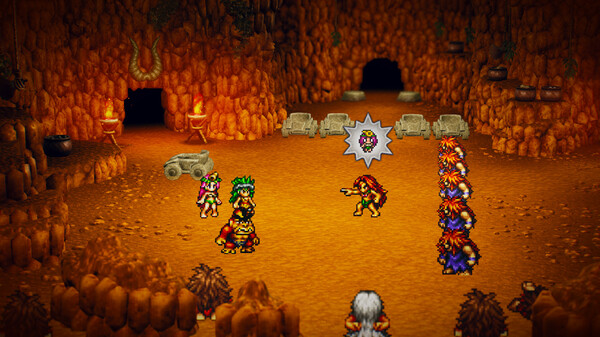
Episode 45 of “Today Is Release Day”: Live A Live, published by Square for the Super Famicom on September 2, 1994, at 9,900 yen. Seven stories set in seven eras, each played its own way, in a single cartridge. Famitsu gave it 29 out of 40, and it sold 270,000 copies in Japan. The 2022 HD-2D remake then reached 500,000 copies worldwide.
Solomon's Key (1986) — The Year Its Own Maker Let Go of the Magic to Create
In July 1986, Tecmo (then Tehkan) released Solomon's Key, an unusual arcade action-puzzle game that let its hero both create and destroy blocks. Its own creator, Michitaka Tsuruta, abandoned that invention in the 1992 sequel, Solomon's Key 2 (Fire 'n Ice), replacing it with a single pushable ice cube. This column traces that shift, in the designer's own words, back to the "pushing" grammar it has followed since Sokoban.
Comix Zone (1995) — the idea was praised, the ledger came up short
Episode 44 of “Today Is Release Day”: Comix Zone, published by Sega for the Mega Drive in Japan on September 1, 1995, at 7,800 yen. You fight your way from comic panel to comic panel. The idea and the artwork drew praise at the time, but the scores stopped around 79% and the game never broke even.
Columns (1990) — When a Hewlett-Packard Engineer's Practice Code Became Jewels in Sega's Hands
In 1990, Sega released Columns, a falling-block puzzle sharing Tetris's silhouette but a completely different clearing grammar. It wasn't made by a game studio — it was written by a Hewlett-Packard engineer as practice code, which reached home consoles worldwide after six months of licensing talks.
Bomber Boy (1990) — a port and a new game on one cartridge, and no agreement on which was the main one
Episode 43 of “Today Is Release Day”: Bomber Boy, published by Hudson Soft for the Game Boy in Japan on August 31, 1990, at 3,500 yen. There are two games inside. One mode is the NES Bomberman carried over whole. The other, the Bomber Boy mode, was made for this cartridge, and it has a shop. Clearing a round earns GP — based on how long you took and how many blocks you destroyed — and GP buys “panels.” Round panels keep working until you die; square panels last a single round. Levels are picked from a map rather than played in a fixed line. The interesting part is how it landed. Britain’s Mean Machines gave it 81, calling it a “highly addictive” port of Bomberman and welcoming the added password system. The Japanese wiki Game Catalogue instead praises the shop and equippable items for giving the game “a customisation of its own,” and files the complete NES Bomberman as the bonus: “quite a bargain for the time.” The main feature and the bonus swapped places depending on where you read about it. It reached North America as Atomic Punk on May 5, 1991, and Europe as Dynablaster in 1991 (as of 2026-08).
Money Idol Exchanger (1997) — five 1-yen coins make a 5, and that is the whole tutorial
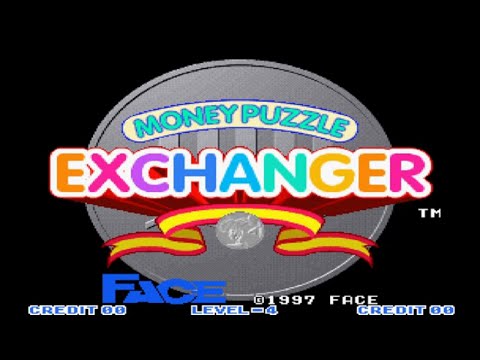
Episode 42 of “Today Is Release Day”: Money Idol Exchanger, published by Athena for the Game Boy in Japan on August 29, 1997. It began as an arcade puzzle game that Face put on the Neo Geo in January 1997 — SNK’s own page calls it the company’s first Neo Geo title. The rules are simply Japanese money. Line up five or more 1, 10 or 100-yen coins, or two or more 5, 50 or 500-yen coins, and they exchange into the next denomination up. Two 500-yen coins have nowhere left to go, so they vanish. There are only two buttons: pick up, and throw. You can start playing before you finish reading the manual. Japanese scores at the time were middling all the same: Famitsu gave the Game Boy version 22 out of 40 and the 1998 PlayStation version 26, and a Family Computer Magazine reader poll returned 19.4 out of 30. The reason lies in how chains work. The Japanese wiki Game Catalogue lists “accidental chains happen easily” as a strength while also noting that you cannot read where an exchanged coin will appear, which makes deliberate chains hard to build. Abroad it has been placed next to Puzzle Bobble and Magical Drop. Since June 28, 2018 it has been on sale as an ACA NEOGEO release for PlayStation 4, Nintendo Switch and Xbox One, and since April 6, 2019 on Windows 10 (as of 2026-08).
Puzzle Bobble (1994) — The Side Project Whose Grammar Is Still Live on Steam, 32 Years Later
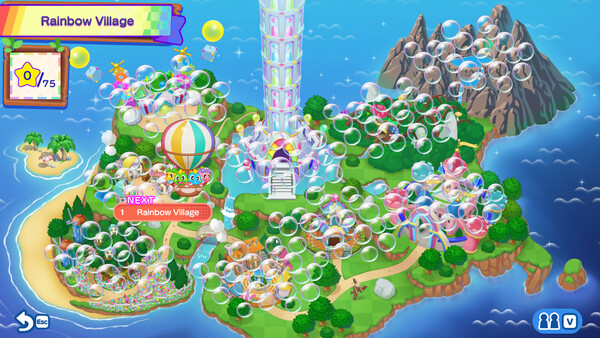
Puzzle Bobble (1994) began as a throwaway spin-off of Bubble Bobble, but its simple three-in-a-row grammar outlived the original thanks to obsessive attention to small details — and it's still being sold today, in a 2026 Steam release.
Gradius Gaiden (1997) — the classic that a still image could not sell, and that sold 34,383 copies
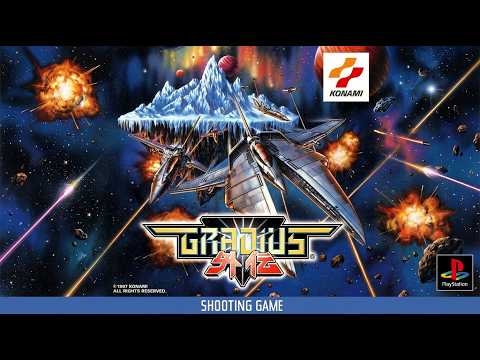
Episode 41 of “Today Is Release Day”: Gradius Gaiden, released by Konami for the PlayStation in Japan on August 28, 1997, at 5,800 yen. It was the first entry in the series designed for a home console rather than an arcade, and reportedly took less than a year to develop. You choose one of four ships — Vic Viper, Lord British, Jade Knight, Falchion β — reorder the power-up meter yourself, and pick between a “Guard” barrier that survives terrain and a “Limit” barrier that grants three seconds of full invincibility. It also added the series’ first two-player mode. Its stages run from a snowfield to the remains of a boss, laser-reflecting crystals and rotating Moai heads. The reception, though, was twisted: Famitsu’s four reviewers called it one of the best-looking shooters on the PlayStation, while the wider public waved it off as “Gradius III with slightly better resolution” and “a 2D shooter, now?” in a year that only looked at 3D. It sold 34,383 copies in its lifetime, and the North American release announced in December 1997 was cancelled. The reassessment came later — on December 3, 2018 it was one of just twenty games built into the PlayStation Classic.
Marble Madness (1984) — The Faceless Sphere That Rolled Arcades Into the Third Dimension
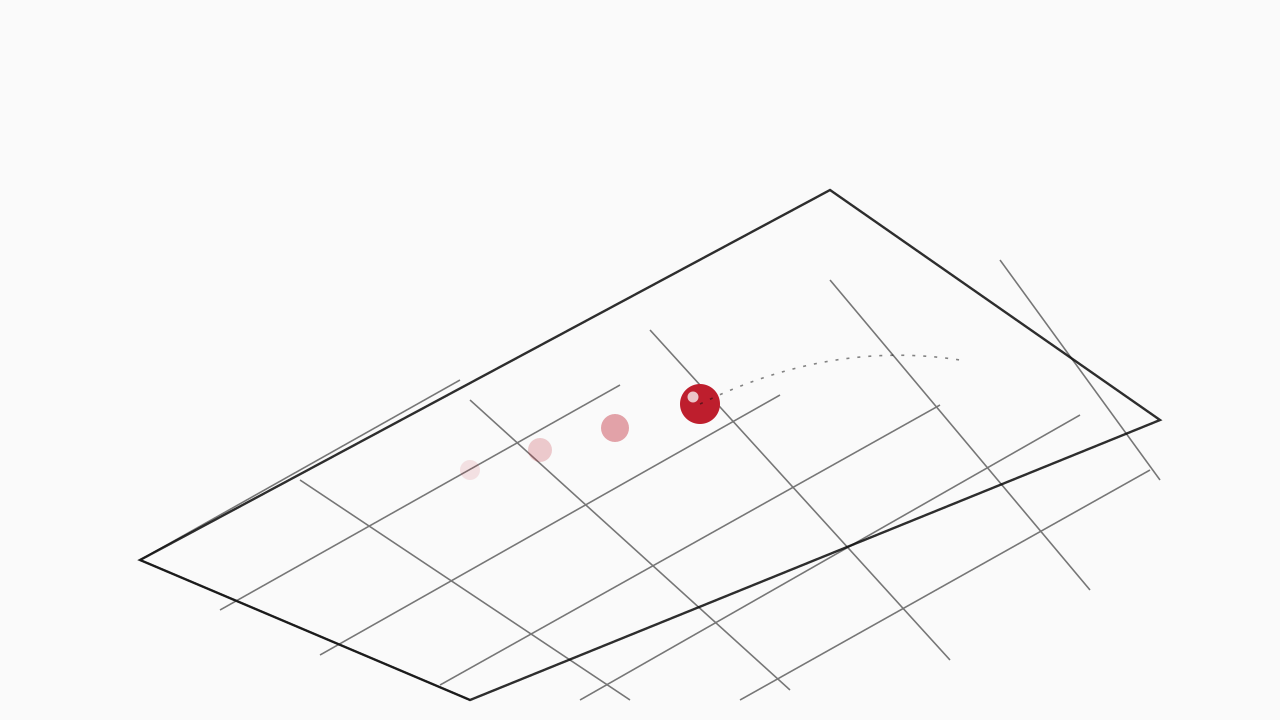
In December 1984, Atari Games released Marble Madness for arcades: guide a single marble with a trackball, relying on gravity and momentum, through six tilted, overhead-view courses. Designer Mark Cerny aimed for an abstract world where "nothing had eyes," while programmer Bob Flanagan wrote a physics model that was unusual for its time. Yet the whole game could be finished in about four minutes. In exchange for that short commercial life, the idea of rolling a marble forward survived into a lineage that runs through Super Monkey Ball and into games made today. I, Toki, check the record.
Astronōka (1998) — the same trap never works twice, and the praise arrived twenty years late
Episode 40 of “Today Is Release Day”: Astronōka, released by Enix for the PlayStation in Japan on August 27, 1998, at 6,800 yen. It was developed by MuuMuu and System Sacom, with game design and AI by Yukihito Morikawa. You grow vegetables in space, tuning weight, pattern and flavour on a crossbreeding machine to win contests, while defending the field against a pest called Baboo with a layout of traps. The twist is that the Baboo adapt: catch one in the same trap often enough and its legs grow stronger, or it sprouts wings. A genetic algorithm runs underneath — only one Baboo appears per day on screen, but at least ten generations turn over internally and the fittest individual is the one you meet, and the mutation rate rises whenever evolution stalls. The reception at the time was quiet, and Morikawa later described his shock that the AI was working properly and nobody gave it credit. The praise took twenty years: at the 2019 anniversary event, AI researcher Yoichiro Miyake called it the best game in the world built with a genetic algorithm.
Shanghai (1986) — The Rules a Hospital PLATO Terminal Wrote
In 1986, Activision released Shanghai, a simple puzzle of clearing mahjong tiles two at a time. But its roots trace to 1981, when a paralyzed student coded it on a hospital PLATO terminal. A historian's look at the 45-year lineage that followed.
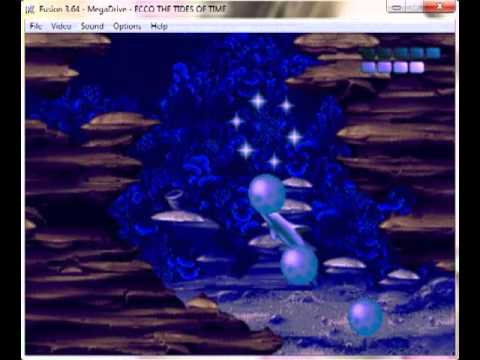
Ecco: The Tides of Time (1994) — “easier than the first game” and “much harder than the first game,” written at the same time
Episode 39 of “Today Is Release Day”: Ecco: The Tides of Time, released by SEGA for the Mega Drive in Japan on August 26, 1994, at 6,800 yen, product code G-4123, on a 16-megabit cartridge. The first Ecco the Dolphin had arrived on July 30, 1993, about a year and a month earlier. You still swim Ecco through the sea and read your surroundings with sonar, but the sequel adds the Pulsar, a charged multi-directional blast, and the Metasphere, which turns Ecco into a seagull, a jellyfish, a shark, a school of fish or an enemy drone. New pseudo-3D stages send you swimming through rings into the distance. It was developed by Novotrade International in Hungary, with box art by Boris Vallejo. Reviewers split over difficulty: Electronic Gaming Monthly scored the Mega Drive version 7.25 out of 10, with two of its four reviewers calling it much harder than the original, while GamePro found it more approachable. Next Generation gave 3 out of 5, the Game Gear version scored 6.5 and the Sega CD version 7.6. Thirty-two years later, Japanese references still carry both halves of that argument.
Book of Lenses (2008) — A Hundred Ways to Look at a Game
Published in 2008, The Art of Game Design: A Book of Lenses introduced 100 questions for looking at a game. A historian's look at where that idea came from, and how it still reaches today's puzzle designers.
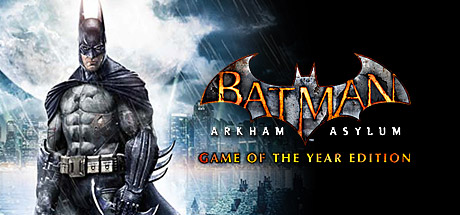
Batman: Arkham Asylum (2009) — the day “licensed game” stopped meaning “bad game”
Episode 38 of “Today Is Release Day”: Batman: Arkham Asylum, released in North America on August 25, 2009, in Europe on August 28 and in Australia on September 3. It was developed by Rocksteady Studios in the UK and published by Eidos Interactive and Warner Bros. Interactive Entertainment. PlayStation 3 and Xbox 360 came first; the Windows version followed in North America on September 15. The whole game takes place inside one asylum. Areas stay shut until the story moves on or you find new equipment, a structure the team drew from The Legend of Zelda and Metroid. Detective Vision shows enemies through walls, and the Riddler leaves 240 collectibles behind. The reception was warm: Metacritic averages of 92 on Xbox 360 and 91 on PlayStation 3 and Windows, 9.3 from IGN, 9.5 from Game Informer, 8 from Edge. Guinness World Records listed it as the most critically acclaimed superhero game ever, with an average of 91.67. It sold roughly 593,000 copies in North America over five tracked days, close to two million worldwide in three weeks, and 4.3 million by October 2011. The Japanese release came on January 14, 2010 from Square Enix at 7,980 yen, and GAME Watch called it a model for how a licensed game should be made.
Sokobond (2013) — A Rule Made Only of Bond Counts, Thirty-One Years After the Warehouse
On August 27, 2013, Alan Hazelden and Harry Lee released a small puzzle game called Sokobond. Its skeleton is 1982's Sokoban, unchanged, with exactly one constraint added: each element has a fixed number of bonds it can form. That modest mutation — an IndieCade 2013 finalist, an IGF Excellence in Audio honorable mention — turned Hazelden into a full-time puzzle designer. This piece traces how the push-rule carried through to A Monster's Expedition (2020), a decade later.
Mafia II (2010) — a city built this well, with this little to do in it
Episode 37 of “Today Is Release Day”: Mafia II, released in North America on August 24, 2010 and elsewhere on August 27. It was developed by 2K Czech in the Czech Republic, published by 2K Games, for PlayStation 3, Xbox 360 and Windows. The setting is the fictional Empire Bay, the years 1945 to 1951, and the lead is Vito Scaletta, home from the war. Eight years separated it from the 2002 original, and the LS3D engine was replaced by the purpose-built Illusion Engine. Three radio stations play licensed period music, and the PC version used NVIDIA PhysX for cloth and destruction. Opinion split hard: Metacritic averages of 75 for PC and PlayStation 3 and 74 for Xbox 360, with Game Informer at 9, GameSpot at 8.5, IGN at 7 and Eurogamer at 4. In Japan, GAME Watch wrote that the city is “so beautiful, so vast — and yet there is very little you can do.” Cut content became its own story after release; designer Daniel Vávra confirmed an entire Sicilian chapter had gone. The Japanese release followed that November from Take-Two Interactive Japan at 7,140 yen.
The MDA Framework (2004) — Three Words Puzzle Designers Still Use
In 2004, a few-page paper presented at an AAAI workshop reshaped the vocabulary of game design. Robin Hunicke, Marc LeBlanc, and Robert Zubek formalized Mechanics, Dynamics, Aesthetics. This piece follows those three words from Doug Church's unfinished 1999 homework, through a GDC workshop room, into the real project Oasis, and onto the shelf we now call Steam.
3D Lemmings (1996) — turning a flat classic into a solid, and fighting the camera
Episode 36 of “Today Is Release Day”: 3D Lemmings. It reached the Sega Saturn in Japan on August 23, 1996, published by Imagineer at 6,800 yen (product code T-15013G). The original Lemmings had arrived on the Amiga on February 14, 1991, developed by DMA Design and published by Psygnosis. The 3D version was built by the British studio Clockwork Games — the first entry in the series without DMA Design. Players steer four movable cameras around a solid level, and can drop into the eyes of a single lemming in “virtual lemming” mode. The one new skill is the turner, which bends walkers ninety degrees left or right. There are 80 main levels across Fun, Tricky, Taxing and Mayhem, twenty each, plus twenty practice levels. Opinion split. Electronic Gaming Monthly gave the PlayStation version 8 out of 10, and PC Gamer US named it Best Puzzle Game of 1995. GamePro panned it for a confusing 3D view worsened by poor controls, and Rob Allsetter in Britain’s Sega Saturn Magazine described catching himself changing camera angles with a split second left. Admirers and detractors were looking at the same thing: the camera. In Japan the Saturn version came first; the PlayStation version followed on November 8, 1996, from Sony Computer Entertainment at 5,800 yen. The series then stepped back from solid space with Lemmings Revolution in 2000.
Sudoku (1979) — How a Nameless Invention Conquered the World's Morning Papers
In 1979, a puzzle called 'Number Place' appeared, uncredited, in an American magazine. This piece traces the 25 years it took to become Sudoku — refined by Japan's Nikoli, carried by a retired Hong Kong judge's homemade program, and finally landing in a London newspaper in 2004 — and the 'logic only, no guessing' design principle that still lives on in the 2024 Steam puzzle collection Islands of Insight.
Chrono Trigger (1995) — acclaimed in North America, 290,000 copies sold
Episode 35 of “Today Is Release Day”: Chrono Trigger. It appeared in Japan on the Super Famicom on March 11, 1995, and the North American version followed on August 22 of the same year. It was built by the “Dream Team” of Hironobu Sakaguchi, Yuji Horii and Akira Toriyama: an RPG that moves between eras, where reaching into the past changes the landscape of the future. Enemies are visible on the map and fights start without a separate battle screen; there are twelve endings, and a replay mode that carries your strength over. Reviews were excellent — an A from Electronic Gaming Monthly, 5 out of 5 from GamePro, 4 out of 5 from Next Generation, 34 out of 40 from Famitsu’s four reviewers — and Nintendo Power called it “revolutionary”. Sales told the opposite story: an August 2003 Square Enix document lists 2.36 million copies in Japan against 290,000 abroad, roughly a tenth of the 2.65 million total. Europe never received the Super Nintendo version at all; its first official release was on Nintendo DS in 2009. Eighteen days after the North American launch, the PlayStation arrived in North America and the 16-bit era began to close. A Steam version followed on February 27, 2018.
The Art of Computer Game Design (1984) — The First Book That Tried to Define What a Game Is
In 1984, Chris Crawford — a game designer who had just been laid off by Atari — wrote a book: The Art of Computer Game Design. It was the world's first serious attempt to define a game itself, through four elements: representation, interaction, conflict, and safety. This essay traces the early-1980s context that produced the book, the small living-room gathering he started the following years that grew into today's GDC, and why his definition still fuels academic debate today.
Dragon Ball: Final Bout (1997) — 245,000 copies in Japan, “the worst PlayStation fighting game” abroad
Episode 34 of “Today Is Release Day”: Dragon Ball: Final Bout, published by Bandai for the PlayStation on August 21, 1997 (5,800 yen, product number SLPS-00949, developed by TOSE). It was the first fully 3D fighting game in the series, built around the Meteor Smash — knock the opponent away, then enter a command on the beat to continue the assault — and around beam clashes settled by who presses faster. Eighteen fighters are playable, but six of them are alternate forms of Goku. The English-language reception was harsh: GameRankings averaged 50.00%, Next Generation (March 1998) called it “inarguably the worst PlayStation fighting game ever made,” and IGN concluded that fans “might as well go out and buy all the toys — at least they’re more controllable.” Electronic Gaming Monthly (December 1997), by contrast, split four ways, with Sushi-X praising it as “a ‘guru game’.” Sales came to 245,000 in Japan and 19,564 in North America, where the initial run was only around 10,000 copies — 264,564 in total. The opening animation was commissioned from Toei Animation, Kenji Yamamoto wrote the music and Hironobu Kageyama sang four new songs. A budget edition followed on July 23, 1998, after which Dragon Ball was absent from PlayStation until Budokai on PS2 in 2002.
Tetris (1984) — Forty Years of Seven Pieces from a Moscow Computing Center
In June 1984, at the Dorodnitsyn Computing Centre in Moscow, Alexey Pajitnov wrote a spare-time program that reduced pentominoes to just seven four-square shapes. This piece traces how that minimal ruleset, copied freely across Moscow on floppy disks, became a global commodity through a licensing war between Western publishers and the Soviet trade body Elorg, Henk Rogers's 1989 Game Boy negotiation, and its modern lineage down to Tetsuya Mizuguchi's Tetris Effect (Steam release 2021).
Summon Night: Swordcraft Story 2 (2004) — The Sword You Forged Yourself Breaks Mid-Fight
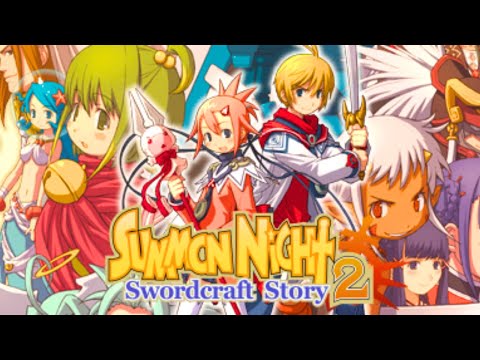
Episode 33 of "Today Is Release Day": Summon Night: Craft Sword Monogatari 2, published by Banpresto for the Game Boy Advance on August 20, 2004 (Famitsu's release schedule lists 5,800 yen before tax). Developed by Flight-Plan. The hero is not training to be a summoner but a Meister — a smith — shaping swords, axes, spears, knuckles and drills out of Shapestones and infusing ores and materials to add offense, defense and elemental effects. Battles play out in real time on a 2D side view; you can carry up to three weapons and swap between them mid-fight. But weapons have durability, and when it runs out the weapon breaks and cannot be used until it is repaired at the forge — repairing is new to this second game. Famitsu's cross review gave it 8, 10, 8, 8 for a total of 34/40. Atlus released it in North America on October 17, 2006, and a budget Value Selection edition appeared in Japan on February 2 of that same year. English-language scores varied: Metacritic averaged 79 from ten reviews, with IGN at 85, GameSpot at 73 and GameSpy at 70. RPGFan's Patrick Gann (December 11, 2006) gave it 86%, calling it easily the best 2D GBA game in the graphics department while pointing out that at least half the soundtrack was carried over from the first game.
Hakoiri Musume / Klotski (1930s) — The Lineage of Blocks That Trapped Cao Cao
In the West as a patent drawing, in China as a paper cutout re-enacting Cao Cao's defeat, and in Japan as a wooden toy called Hakoiri Musume — nearly the same sliding-block puzzle arose independently in three places between the 1890s and the 1930s, with no evidence any referenced the others. Martin Gardner published its 81-move optimal solution in Scientific American in 1964; Microsoft's Windows Entertainment Pack carried it to PCs worldwide in 1991. This is the record of that parallel evolution, up to 2021's Blockee on Steam, which names Klotski as its inspiration in its own words.
Suikoden IV (2004) — The Day the Series Put to Sea and Was Told the Sailing Was Tedious
Episode 32 of "Today Is Release Day": Suikoden IV, published by Konami for the PlayStation 2 on August 19, 2004 at 6,980 yen before tax, developed by Konami Computer Entertainment Tokyo. It is set roughly 150 years before the first Suikoden, and its stage is not a continent but a scattering of islands in the open sea. The hero is a young knight of Razril who inherits the Rune of Punishment — a rune that eats away at its bearer's life each time it is used — and is then blamed for the death of his commander Glen and driven off the island. A ship becomes his headquarters, and the series' hallmark hunt for 108 companions is carried out at sea. Famitsu's cross review gave it 8, 7, 8, 7 for a total of 30/40 and a Silver Hall of Fame place. It sold 303,069 copies in Japan within 2004, short of the 377,729 of Suikoden III. North America got it on January 11, 2005, and GameSpot's review scored it 6.7, with one line in the cons column: time spent sailing is tedious, and there is a great deal of sailing.
Wolfenstein (2009) — The Day It Reached Shelves With No Scores Attached
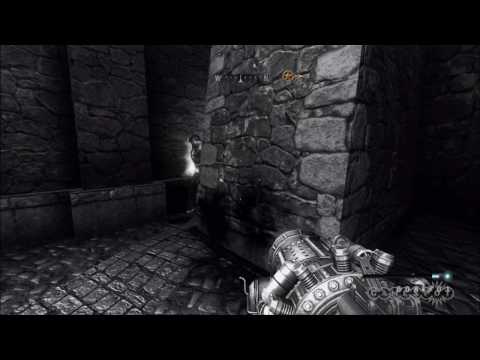
Episode 31 of "Today Is Release Day": Wolfenstein, released by Activision in North America on August 18, 2009 for Windows, PlayStation 3 and Xbox 360 (August 19 in Australia, August 21 in Europe). Raven Software developed it on an enhanced version of id Software's id Tech 4. It is a first-person shooter based out of a German town in the Second World War, in which you push open the "Veil" — the barrier between Earth and another dimension — to slow time, see what is normally invisible, and strip the shields off protected enemies. The odd part is launch day itself: what TechCrunch published on August 18 was not a verdict on the game but an article about not being able to find any reviews. The scores that arrived over the following days scattered widely — 7.5/10 at GameSpot, 7.25/10 at Game Informer, 5/10 from Edge for the PS3 version — and the game sold about 100,000 copies in its first month. Activision laid off staff at Raven Software afterwards, and this became the last Wolfenstein the publisher ever released.
Minesweeper (1990) — The Logic Puzzle Microsoft Built Into a Billion PCs
On 8 October 1990, a small game shipped as one of seven titles in the Windows Entertainment Pack. From 1992's Windows 3.1 onward it came preinstalled on nearly every PC running Windows, and its lineage is said to trace back to Mined-Out, a 1983 ZX Spectrum game by British programmer Ian Andrew. This article follows the genealogy of a logic puzzle nobody set out to design as one — up to 2017's Tametsi, which stripped out the probability and returned the form to pure deduction.
Air Fortress (1987) — The Shoot’em Up That Finishes on Foot, Inside the Fortress
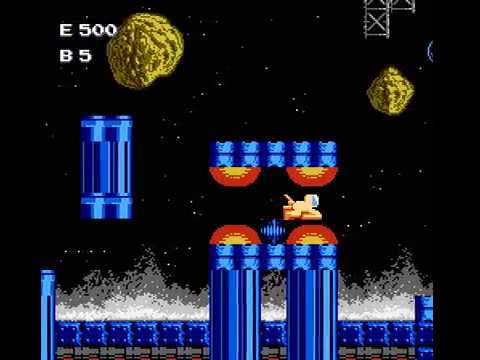
Episode 30 of "Today Is Release Day": Air Fortress, released on the Famicom on August 17, 1987 under HAL Laboratory’s own label, priced at 5,300 yen. The first half is a side-scrolling shooter in which you fly a lightship to the fortress airlock; the second is an action stage where you move through the interior on a jetpack, destroy the core and escape. Energy and items collected in the first half carry straight over to the second, and inside the fortress every shot — bullet or bomb — pushes you backwards, so firing in the opposite direction is how you travel fast. That near-zero-gravity handling is the game’s great quirk. The North American version came out through HAL America in September 1989, and Nintendo Power, VideoGames & Computer Entertainment, Computer Entertainer and Germany’s Play Time all left reviews of it. As for HAL Laboratory, the company that published this cartridge filed for composition five years later, on June 22, 1992.
A Dark Room (2013) — The Single Fire Lit in a Room Made Only of Words
On June 10, 2013, a browser game with no images and no sound was released: A Dark Room. All it showed was a line of text and a button. Built by Michael Townsend, this experiment arrived amid the same season that produced Candy Box! and Cookie Clicker, but set itself apart with a hidden narrative. Ported to iOS by a stranger, Amir Rajan, it rose in 2014 to the top of Apple's official paid games chart. This piece traces how a single hobby project, running on nothing but imagination, climbed to the top of the market.
Soul Reaver (1999) — The Action-Adventure That Stacked Two Worlds on Top of Each Other
Episode 29 of "Today Is Release Day": Legacy of Kain: Soul Reaver, the PlayStation action-adventure developed by Crystal Dynamics and published by Eidos Interactive in North America on August 16, 1999. Raziel can move freely between the material and spectral realms, and the geometry itself warps as he shifts — one mechanic that carries the combat, the traversal and the block puzzles alike. 91 on Metacritic, Editors' Choice from both GameSpot and IGN, 9.3 from IGN. More than 1.4 million copies sold worldwide by 2001, and the first game in the series to join Sony's Greatest Hits line. In Japan, however, the PlayStation version Capcom was to publish was cancelled; it did not reach a Japanese console until the remaster arrived on July 10, 2025.
Lara Croft GO (2015) — A Board Where Distilled Memory Still Moves
In 2015, Square Enix Montreal followed Hitman GO with a second Go-series title, Lara Croft GO. Its method was to distill only the idealized feeling of an old game, remembered rather than replayed, onto a board of nodes and lines — a method that swept critical honors even as the studio itself was shut down in 2022. Because the game shipped as offline, server-independent software, it outlived the company that made it. This piece traces that method, and where it ended up.
Chrono Cross (2000) — The Day a Story About Parallel Worlds Reached Another World
Episode 28 of "Today Is Release Day": Chrono Cross, the PlayStation RPG Square released in Japan on November 18, 1999 and in North America on August 15, 2000 — exactly twenty-six years ago today. You travel between two parallel worlds, Home World and Another World, gathering a cast of more than forty companions. Famitsu scored it 36/40; in North America GameSpot gave it a perfect 10 and named it its Console Game of the Year for 2000, while IGN gave it 9.7. Players hoping for a direct sequel to Chrono Trigger, on the other hand, were left puzzled. 1.5 million copies shipped worldwide by 2003 (850,000 in Japan, 650,000 abroad). Europe never got it at the time — it had to wait for the 2022 remaster.
Chip's Challenge (1989) — The Maze That Outlived Its Handheld on Office Desks
In 1989, Epyx shipped Chip's Challenge, a top-down tile puzzle designed by Chuck Sommerville, as a launch title for the Atari Lynx handheld. The hardware lost its war and the developer collapsed, yet the game spread to office Windows PCs through the 1992 Microsoft Entertainment Pack, survived on fan-made level editors, outlasted a rights freeze that shelved its finished sequel, and finally returned to Steam on May 28, 2015. Few games argue so eloquently that a puzzle's true body is not a machine but a set of rules.
Madden NFL 08 (2007) — The Release Day When Times Square Partied Like New Year's Eve
Episode 27 of "Today Is Release Day": Madden NFL 08, the American football game EA released in North America on August 14, 2007 — the 18th installment in the series. The night before, Times Square even hosted a countdown event recreating the New Year's Eve ball drop. First-week US sales: roughly 1.8 million copies and close to 100 million dollars. Meanwhile, the gap between 60 fps on Xbox 360 and 30 fps on PS3 sparked a major controversy — the 360 version outsold the PS3 version more than four to one that week. And this game remains on record as the last GameCube title released in North America. Exactly nineteen years ago today.
Skipping Stones to Lonely Homes (2015) — The Bridge of Thrown Stones That Reached a Cosmic Train
On 21 August 2015, British puzzle designer Alan Hazelden released Skipping Stones to Lonely Homes, a free browser game. In it you throw stones to build bridges and search a shipwreck for timber, all built in PuzzleScript. This small work, born outside Steam, is linked — in the designer's own words — through that year's prototype Train Braining and the 2017 commercial release Cosmic Express, all the way to Order of the Sinking Star, a major puzzle title announced for 2026. I trace this decade-long voyage.
Panel de Pon (1995) — The Name Was Taken Away Again and Again, But the Grammar of Play Survived
On October 27, 1995, Nintendo and Intelligent Systems released Panel de Pon for the Super Famicom: a competitive puzzle where a bracket cursor swaps two adjacent panels to line up three or more of the same color. It was produced by Gunpei Yokoi. The Western release, retitled Tetris Attack, replaced fairy protagonist Lip with Yoshi's art, erasing her from the West. Over the following three decades the design survived under Pokémon branding, the official Puzzle League line, and Nintendo first-party content — and in December 2025 a free Steam release called Panel Attack openly describes itself as being in the "Panel de Pon / Tetris Attack style." A record of one work whose name kept being taken away, while only the grammar of its play survived.
Death Crimson (1996) — thirty years after "since I'm here"
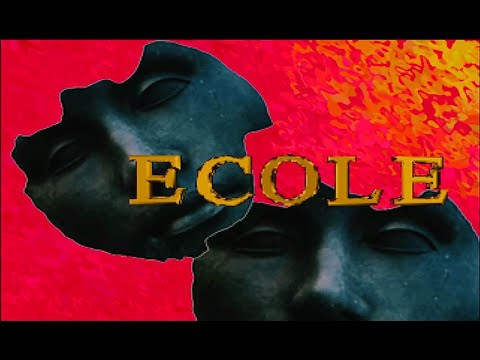
Episode 26 of "Today Is Release Day": Death Crimson, the "dark" light-gun shooter École Software released for the Sega Saturn on August 9, 1996. It scored 13 out of 40 in Famitsu's Cross Review and finished 297th out of 297 in Sega Saturn Magazine's reader race — yet its line "Since I'm here, I choose this red door!" became a catchphrase among Japanese players, and the game spawned sequels. Thirty years ago today — and for the anniversary, the line's actual meaning has finally been explained.
Baba Is You (2017 Jam Build) — A 48-Hour Origin Born from 'Not There'
From 21 to 23 April 2017, the Nordic Game Jam was held at Docken in Copenhagen. Within the 48 hours of the theme 'Not There,' Finnish student Arvi Teikari (Hempuli), working alone, built Baba Is You and won first place. Two years before the finished game reached Steam in 2019, this free itch.io prototype was born; I read it here as an ancestor.
Final Fantasy Crystal Chronicles (2003) — The Summer We Brought Four GBAs
The 25th installment of "Today Is Release Day" is Final Fantasy Crystal Chronicles, released on August 8, 2003 for the Nintendo GameCube. It was the first Final Fantasy on a Nintendo home console since Final Fantasy VI in 1994, and the first original Final Fantasy released after the Square Enix merger. Its four-player mode, which required as many Game Boy Advance units as there were players, divided critics — yet the game took the Grand Prize in the Entertainment Division of the 7th Japan Media Arts Festival. Today marks exactly 23 years.
Klax (1990) — The Idea of "Matching Three" Was Invented Twice
In February 1990, Atari Games released Klax to North American arcades: catch colored tiles sliding down a conveyor and clear them by lining up three or more, horizontally, vertically, or diagonally. Born right after Atari's Tetris lawsuit, it is often cited as the origin of the match-three genre. But in 2020, Bejeweled co-creator Jason Kapalka himself described a lineage that never passes through Klax. This piece traces a case where the same idea was invented twice, independently, using the developers' own words.
Mirror Isles / Skipping Stones to Lonely Homes (2014-2015) — How Two Free Jam Games Became Two Different Escape Islands, a Decade Later
In 2014 and 2015, London puzzle designer Alan Hazelden wrote two free PuzzleScript jam games, Mirror Isles and Skipping Stones to Lonely Homes. By his own account on his website, the former is the spiritual ancestor of his 2020 commercial release A Monster's Expedition, and both games are also credited as one inspiration and starting point for Jonathan Blow's new game Order of the Sinking Star, whose demo appeared in 2026. This piece traces, using only the developer's own words, how two weeks-long free experiments fed into two very different commercial puzzle games over more than a decade.
Masyu (2000) — The Loop of Black and White Pearls Born from a Misreading
In April 1999, Puzzle Communication Nikoli issue #84 published a puzzle format called "Pearl Necklace," using nothing but white circles. In 2000, issue #90 added black circles and renamed it "White Pearl, Black Pearl," completing the logical skeleton Masyu still uses today. The official name "Masyu" wasn't settled until 2003 — the result of Nikoli's president misreading a kanji, an accident that simply stuck. With sources, we trace how a grid using no numbers or letters survived 26 years across an NP-completeness proof, official console ports, and an open-source implementation.
Soma Cube (1933) — Twenty-Seven Fragments Born in a Quantum Mechanics Lecture
In 1933, half-listening to a lecture on quantum mechanics in Copenhagen, Piet Hein enumerated every non-convex fragment that could be made by joining four or fewer unit cubes by their faces, and produced the seven-piece, 27-cube Soma cube. Popularized worldwide by Martin Gardner's 1958 column and commercialized by Parker Brothers in 1969, its 240 solutions were later hand-solved by John Conway and Michael Guy, and its debt is acknowledged by none other than Rubik's Cube inventor Erno Rubik. This piece traces ninety years of a solid-dissection puzzle lineage.
Get Off the Earth (1896) — The Patent Sam Loyd Took Out on a Miscount
In 1896, puzzle columnist Sam Loyd patented a rotating vanishing puzzle called Get Off the Earth. This piece traces the real mechanism behind its disappearing figure, its 1880 predecessor The Magic Egg Puzzle, its roots in Loyd's 1858 Trick Mules, and the trail this rearrangement trick has left in optical-illusion puzzles today.
Numberlink (1897) — From a Newspaper Puzzle Column to the Age of Flow Free and Zip
In 1897, puzzle-maker Sam Loyd printed 'The Puzzled Neighbors' in the Brooklyn Daily Eagle. In 1917, Henry Ernest Dudeney refined it into a motorist's puzzle in his own book; in the 1980s, Nikoli gave it a home in Japan as Arukone and Numberlink. In 2012, Big Duck Games' Flow Free turned it into colored dots and pipes and passed 100 million downloads; by 2025, the lineage reaches LinkedIn's daily puzzle Zip. This essay traces how a 120-plus-year-old rule — draw a single line without crossing — has survived.
Pentomino (1965) — How Solomon Golomb's Five-Square Shape Became Tetris
In 1965, American mathematician Solomon W. Golomb published Polyominoes, a book that gathered the theory of the twelve five-square shapes known as pentominoes. The naming traces back to a 1953 Harvard lecture; Martin Gardner's column carried it to general readers in 1957; a Russian translation appeared in 1975. Then in 1984, a young Moscow computer scientist named Alexey Pajitnov, drawing on his own childhood memories of pentominoes, moved shapes on an experimental computer, and Tetris was born. This piece traces the more than thirty years it took a five-square shape to travel the world.
Yajilin (1999) — A Board Where Two Rule-Systems Were Grafted Together
In July 1999, Puzzle Communication Nikoli issue #86 introduced Yajilin, a hybrid pencil puzzle that grafted the "draw exactly one loop" grammar established by 1989's Slitherlink onto a black-cell-counting rule. It reused the arrow-and-number cell from a puzzle published just before it, Yajisan-Kazusan, and by 2005 had already been adopted, as "Arrow Ring," into the US qualifying round of the World Puzzle Championship. From official Xbox and PS Vita ports to a dedicated 2025 mobile app called Loopr, we trace, with sources, 26 years of this grid's survival.
Skipping Stones to Lonely Homes (2015) — Throwing Stones Across Islands, the Free PuzzleScript Game That Fathered Two Descendants
On 31 August 2015, London-based puzzle designer Alan Hazelden quietly published a free browser game on his own site: Skipping Stones to Lonely Homes. A Sokoban-lineage puzzle built on indirect action — throwing stones whose ripples move distant lilypads — it is, by Hazelden's own account, the prototype behind the 'spiritual successor' A Monster's Expedition (2020), and one of the starting points for Jonathan Blow's decade-in-the-making Order of the Sinking Star (2026). This piece traces how one free hobbyist game fed into two major descendants a decade later.
Boulder Dash (1984) — Two Men Who Turned a Falling Rock Into a Rule
In March 1984, First Star Software released Boulder Dash for Atari 8-bit computers: an action puzzle in which Rockford tunnels through cave dirt to collect diamonds while gravity itself turns against him. Remove the dirt beneath a boulder and it falls; drop a rock on a butterfly and it turns to diamonds. This simple physics rule carried a lineage through Emerald Mine (1987), Supaplex (1991), and Rocks'n'Diamonds (1995), and it has survived more than forty years. This article traces the history behind a board written in six months by two Canadian developers.
Kakuro (1966) — From Cross Sums to Addition Cross, Sixty Years of an Unmoved Grid
Kakuro, known in English as Cross Sums, began in 1966 as a Dell Magazines feature. Nikoli brought it to Japan in the 1980s and renamed it 'kasan kurosu' (addition cross); in 2005 it was re-exported to the world via The Guardian. This essay traces why this grid of arithmetic — neither crossword nor Sudoku, but a hybrid of both — kept its rule unchanged across sixty years of shifting media, from paper magazines to a Nintendo DS cartridge to today's Steam store pages.
You Have to Burn the Rope (2008) — The Three-Minute Metagame Whose Title Was Also the Walkthrough
In April 2008, Swedish student Kian Bashiri released You Have to Burn the Rope on the Flash portals under the moniker "Mazapan." Its title was, quite literally, the solution, and that too-honest confession sparked enormous internet buzz, carrying the game to an Innovation Award finalist slot at the 2009 Independent Games Festival. This essay reads that under-three-minute joke alongside the Flash portal culture of its era, asking why it still left a real mark on the design history of thinking games.
Slitherlink (1989) — Loop-Closing Logic Born From a Two-Player Paper Game
In June 1989, barely half a year into the Heisei era, Puzzle Communication Nikoli #26 introduced a new puzzle format. Adapted from a two-player paper game called Slither into a single-player pencil puzzle, Slitherlink offers a paradoxical solving pleasure — proving where lines cannot go rather than where they can — and carries a nearly 38-year lineage running through NP-completeness proofs to Steam storefronts in the 2020s. We trace, with sources, the loop-logic Nikoli founder Maki Kaji once called "the son of Sudoku."
English Country Tune (2011) — Where an Egg Falls Changes Every Time It Moves
On November 25, 2011, Stephen Lavelle (increpare) — a developer who had already released over 500 free games — put a price on one for the first time: English Country Tune. Its Sokoban-like opening, pushing eggs into incubators, quickly collapses into a rule where gravity itself rewrites with every move. Nominated for Design Excellence at IGF 2012, it precedes the free PuzzleScript engine (2013), 2016's Stephen's Sausage Roll, and — by the creator's own account — Baba Is You. We trace, with sources, the origin of Lavelle's uncompromising design philosophy.
Hitman GO (2014) — The Year an Assassin Became a Board-Game Piece
In 2014, after its console Hitman project collapsed, Square Enix Montreal shipped Hitman GO, a turn-based puzzle played across a board of nodes and lines. Born from paper prototypes, this "distilling" design method spawned Lara Croft GO (2015) and Deus Ex GO (2016), and eventually reached Steam. This piece traces the lineage of a method that turned a AAA brand into a board-game piece.
PuzzleScript (2013) — The One-Line Rule That Mass-Produced the World's “Pushing Games”
In October 2013, indie developer Stephen Lavelle (increpare) released PuzzleScript, a free browser-based puzzle engine whose Sokoban-style push rule fits on a single line of code. Traced forward, it runs through Alan Hazelden's early jam games into A Good Snowman Is Hard to Build, and — by Hempuli's own account — into the block-pushing puzzle revival that fed Baba Is You. Here the lineage is checked against the record.
Hanayama Cast Puzzle (1983) — How One Designer Linked Metal Toys to Digital Escape Games
In 1983, Japanese toy maker Hanayama released Cast Puzzle, a line of metal disassembly puzzles. Nob Yoshigahara (1936-2004), who oversaw the series, unknowingly bridged this wordless metal-puzzle experience to two later landmarks: the 1996 sliding-block puzzle Rush Hour, and Fireproof Games' The Room (2012), whose puzzle-box design later reached Steam. This piece traces a four-decade lineage of a puzzle that still refuses to fully close.
The Legend of Zelda (1986) — The Grammar of Exploration Set by Treasure and Labyrinth
Released 21 February 1986 as the launch title for the Family Computer Disk System, The Legend of Zelda was built by Shigeru Miyamoto and Takashi Tezuka around a one-directional chain: obtain a treasure, and a path opens. Forty years later, that structure stands as an ancestor of today's exploration-based puzzle games. I reread this design, born from the era's disk-capacity constraints, through a historian's eyes.
Simon Tatham's Portable Puzzle Collection (2004) — 40 Puzzles, Freshly Generated for 22 Years
In 2004, British engineer Simon Tatham — also known as the author of PuTTY — released a free collection of single-player logic puzzles. From Sudoku and Minesweeper to the loop-drawing Loopy and the bridge-building Bridges, all 40 puzzles are freshly generated by computer on every run. Written purely to solve a portability annoyance, this hobby project became, twenty years later, the foundation of an AI algorithmic-reasoning benchmark.
Auditorium (2008) — The Birth of a Puzzle That Paints With Sound, in a Browser
In April 2008, Philadelphia studio Cipher Prime released the music puzzle Auditorium as a browser Flash game. Players redirect streams of light particles through control points to fill color-matched audio containers, completing a soundtrack as they solve. This article traces its detour through iOS, PS3, and PSP before it finally reached Steam in 2012.
This is the Only Level (2009) — A Mischievous Loop on a Single Screen, from the Flash Era
On 8 August 2009, John Cooney (jmtb02) released This is the Only Level on Armor Games: a meta puzzle-platformer that replays the same single screen across 30 stages, rewriting only its rules each time. This article traces its rare path of preservation, surviving Flash's technical extinction to return, by the creator's own hand, as part of The Elephant Collection on Steam in 2023.
Mini Metro (2013) — A Transit Map Born from a 48-Hour Game Jam
In April 2013, the Curry brothers of New Zealand built a weekend prototype called 'Mind the Gap' for Ludum Dare 26. This article traces how a minimalist transit puzzle, born from admitting what its makers couldn't do, became a Steam Early Access title in 2014 and shipped as Mini Metro in 2015.
Tangram (Qi Qiao Ban) — Around 1810, Seven Pieces of Lies and Truth
Seven shapes, five triangles, one square, one parallelogram, enough to form countless silhouettes. The tangram's origin lies in late-18th-century China, but its history was long distorted by a fabricated chronicle puzzle maker Sam Loyd wrote in 1903. I dig up both the toy's true voyage and the fiction that obscured it.
Puyo Puyo (1991) -- Inventing a New Verb Called "Chain"
Released simultaneously on MSX2 and the Family Computer Disk System on October 25, 1991, Puyo Puyo was conceived by Kazunari Yonemitsu and developed by Compile. Its 1992 arcade collaboration with Sega gave rise to a new verb: the chain (rensa). Even after Compile's collapse in 2003, this design survived -- through 2014's Puyo Puyo Tetris and its 2018 Steam release. I want to reread this one title as the starting point of competitive versus-puzzle design.
Monument Valley (2014) — Walking Impossible Architecture in Mobile's Golden Hour
Released for iOS on April 3, 2014, Monument Valley was made by a six-person team spun out of a London design agency, who turned Escher's impossible figures into architecture you could walk. Arriving when freemium apps dominated the App Store, it sold millions by betting on the opposite: paid, short, and dense. I re-read it as both a record of mobile gaming's golden hour and a node in the lineage of perspective puzzles.
Henry Dudeney (1907) — Four Hinged Pieces That Turn a Triangle Into a Square
In 1907, English puzzle maker Henry Dudeney published, within The Canterbury Puzzles, the Haberdasher's Puzzle: cutting an equilateral triangle into just four pieces that reform into a square. Hinged together, the pieces could transform with a single fold, and the dissection drew attention in its day -- yet the proof that four pieces were truly minimal remained unresolved for a surprisingly long time, settled only by a 2024 computational-geometry paper. Tracing Dudeney's rivalry with Sam Loyd and his rediscovery through Martin Gardner, this piece rereads how a paper puzzle took 117 years to reach computer science.
The Birth of the Jigsaw Puzzle (1760s) — The Man Who Cut Up Maps, and a Verb Unchanged for 260 Years
In 1760s London, the map engraver John Spilsbury mounted printed maps on wood and cut them apart along national borders, selling them as 'Dissected Maps' — the commercial starting point of what would later be called the jigsaw puzzle. This essay revisits the context in which the format was born as a tool for teaching geography, the structural insight that where you cut is itself the design, and the lineage that runs from Depression-era die-cut cardboard to the 2021 VR title Puzzling Places — a format that survived 260 years without ever changing its verb.
Crimson Room (2004) — The Day a Red Room Made 'Escape' a World Word
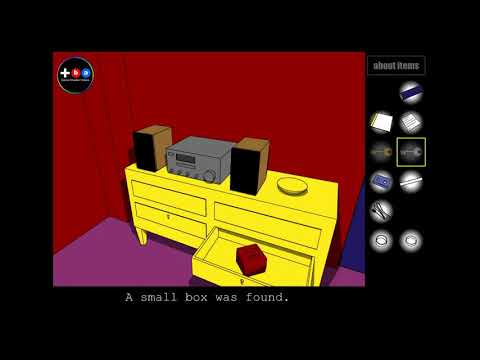
On March 4, 2004, Japanese developer Toshimitsu Takagi released a small free Flash game. You wake in a crimson-walled room, gather keys and tools, and leave through a locked door — nothing more. Yet Crimson Room spread the 'escape the room' genre worldwide, gave Asia the genre name 'Takagism' after its author, and by its instigator's own testimony triggered the world's first real escape game in Kyoto, 2007. I read this red room as a rare junction where digital play flowed back into physical space.
Pipe Mania (1989) — Betting the Route Before the Flow Arrives
In June 1989, Britain's The Assembly Line released Pipe Mania for the Amiga. In North America Lucasfilm Games distributed it as Pipe Dream, and in Japan Video System's arcade version was carried by Namco. Lay the pipe before the green flooz starts to flow - this single verb cast the template of the real-time spatial-connection puzzle.
Mole Mania (1996) — What a Two-Layer Board of Surface and Underground Taught Us
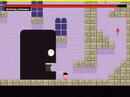
On July 21, 1996, Nintendo released Mole Mania for the Game Boy, developed by Nintendo EAD and Pax Softnica and produced by Shigeru Miyamoto. With four verbs — push, pull, throw, dig — you carry an iron ball to each screen's gate, across a board that exists in two layers: surface and underground. I dig up this forgotten work as an ancestor of the spatial reasoning found in today's multi-layer puzzles.
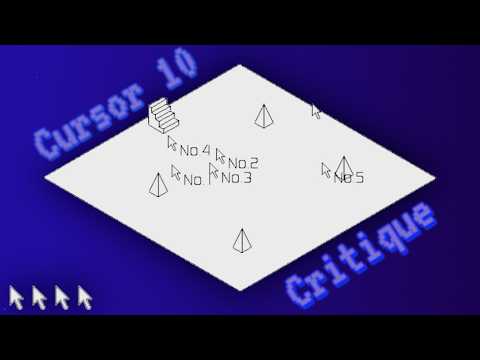
Cursor*10 (2008) — Ten of Me Climb One Tower: The Origin of Self Co-op
In January 2008, Yoshio Ishii of Nekogames posted a single Flash game on his site: Cursor*10. You control the mouse cursor itself; when one life runs out, its recorded actions replay in the next, and you climb a sixteen-floor tower in cooperation with your past selves. I read this small work, built over a single Japanese New Year's holiday, as an origin point of the 'self co-op' grammar in modern puzzle design.
Nikoli (1980) — The Reader-Grown Puzzle Magazine, and the Road Sudoku Took Around the World
Puzzle Communication Nikoli, launched in 1980, was Japan's first magazine devoted to puzzles. Its name came from a racehorse; the prototype of Sudoku came from America. This essay traces forty years in which Nikoli's mode of production—reader submissions and handmade problems—gave birth to Slitherlink (1989) and Nurikabe (1991), and sent Sudoku around the world via Hong Kong judge Wayne Gould's generator program, rereading the source of a question at the heart of modern puzzle design: who should make a good problem?
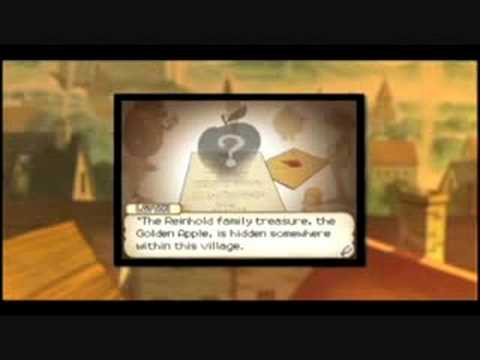
Professor Layton and the Curious Village (2007) - A Vessel That Carried 1966's Riddles onto a Handheld
On February 15, 2007, Level-5 released Professor Layton and the Curious Village for the Nintendo DS. Its bundle of riddles derives directly from Akira Tago's Atama no Taisou (Kobunsha, 1966), the puzzle books producer Akihiro Hino adored as a child. This essay traces, from a historian's view, how Layton's stance of sinking a paper puzzle collection into a narrative vessel connects a forty-year-old book to a handheld, and onward to today's deduction puzzles.
The Crossword (1913) — The Grid Lineage That Began with Arthur Wynne's Diamond
On December 21, 1913, Arthur Wynne's "Word-Cross" was printed in the entertainment supplement of The New York World. Renamed "crossword" by a typesetting error, the pastime spread explosively through Simon & Schuster's 1924 book and went global via The Times in 1930 and The New York Times in 1942. This essay traces how the three inventions of grid, crossing and clue still live as a design vocabulary for thinking puzzles, from paper cells to Nikoli's pencil puzzles and modern digital works.
Tower of Hanoi (1883) — The 64 Disks That Never End, and the Legacy of Recursion
In 1883 the French mathematician Édouard Lucas released a small wooden toy under the pseudonym 'N. Claus (de Siam).' Three pegs, disks of differing size, and just two rules. Yet beneath that plain surface lay the mathematics of recursion: moving n disks demands a minimum of 2^n−1 moves. This essay revisits the toy's true origin, the fabricated Benares legend in which the world ends when 64 disks are moved, and what the ideas of 'recursion' and 'state space' bequeathed to later computer science and to puzzle design today.
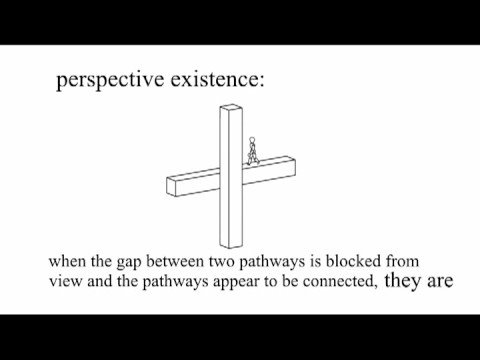
echochrome (2008) — A Puzzle Where Perspective Becomes the World's Physics
Released for the PSP on March 19, 2008, echochrome translated the 'OLE Coordinate System' — an illusion principle researched by Jun Fujiki at Kyushu University — directly into play. The physics of the world a wooden mannequin walks through is rewritten by the angle you view it from. I re-read this work, which turned the impossible objects of Escher and Reutersvard into a rotating puzzle, within the lineage of perspective puzzles.
The Lost Vikings (1993) — A Classic of Cooperative Puzzling, Three Bodies Moved One at a Time
Released in 1993 by Silicon & Synapse (later Blizzard Entertainment) through Interplay, The Lost Vikings is a cooperative puzzle in which the player controls three differently-skilled vikings one at a time and must lead all of them to the exit. In Japan it was distributed by T&E Soft under the title Viking no Daimeiwaku. This essay re-reads its era, the quality of thought its three-way cooperation produced, and the lineage that runs from Lemmings and Gobliiins to today's cooperative puzzles.
Threes! (2014) — One Last Board That Grows by Three
Threes! arrived on the iPhone in 2014. Prototyped in a single night and polished over fourteen months, it lived through a strange reversal when, a month later, the 2048 craze left the original accused of being the copy. We trace the origin of the merge-slide puzzle through the developers' own testimony.
Rubik's Cube (1974) — A Labyrinth of 43 Quintillion States, and a Single Solution
In 1974, the Budapest architect Ernő Rubik carved a small cube as a teaching aid—and ended up placing an entire 'state space,' some 43 quintillion configurations with exactly one solved form, into the palm of a hand. This piece traces the object's precise provenance through primary and secondary sources—its 1974 invention, its 1980 global debut, and the 2010 proof that 'God's Number is 20'—and reads, as history, how an object with no screen and no power supply embodied half a century early the vocabulary modern puzzle designers now take for granted: reversibility, a unique solution, and a space to be searched.
Submachine (2005) — A Door into the Subnet, and the Lineage of Flash Escape Puzzles
On 15 September 2005 the Polish cartoonist Mateusz Skutnik posted a single Flash game on his own website. It was simply called Submachine. Later renamed Submachine 1: The Basement, it became the seed of a ten-part escape-puzzle lineage. I read this hand-drawn browser work, one that never sat on Steam at the time, as a chapter in the history of escape puzzles.
Adventures of Lolo (1989) — The Emerald Framer and the Single Solution
In 1989 HAL Laboratory released Adventures of Lolo on the NES, distilled from the 1985 MSX title Eggerland Mystery. On an 11x11 board, pushable framers and moving enemies converge on a single solution. I read this Sokoban-descended single-screen logic puzzle as a node in a long genealogy, one that codified its ideas well before the modern grid-puzzle wave.
Lemmings (1991) — The Source of Indirect-Control Puzzling, Where You Move the World and Never the Creature
On 14 February 1991, DMA Design of Scotland released Lemmings and, with it, established 'indirect control': the player never steers a character directly but assigns roles and shapes the world to guide a crowd to safety. This essay re-reads its era, the quality of thought its eight skills produced, and its lineage toward RTS and modern puzzle design.
The 15 Puzzle (1880) — The Unsolvable Move with Which Sam Loyd Fooled the World
In early 1880 a craze for the '15 Puzzle' swept America and Europe. But Sam Loyd, whom the world believed to be its inventor, was an impostor who only claimed authorship sixteen years after the craze had ended. This essay traces the box's true origin and the 1879 proof that the 'swapped 14-and-15' board Loyd staked his prize on is mathematically unsolvable, and rereads the legacy sliding puzzles left to modern digital puzzle design: the guarantee of solvability.
The Incredible Machine (1993) — The Toy Box That Made Rube Goldberg Playable
Released in 1993 by Dynamix and Sierra, The Incredible Machine laid gears, balls, fans and cats across a single screen and asked players to build Rube Goldberg contraptions. Assembled in nine months on a $36,000 budget, this toy box—together with its Free Form sandbox mode—became a headwater of the modern physics-and-contraption puzzle. This essay traces the twenty-one years until its own creators put Contraption Maker on Steam in 2014.
Mario's Picross (1995) — Picture Logic, a Form Born in 1987
Released for the Game Boy on March 14, 1995, Mario's Picross translated into play the 'picture-logic puzzle' that two inventors had independently created in Japan eight years earlier. From newspaper puzzle to game, and on to today's Steam nonograms, this is the lineage of a single logic puzzle that survived almost half a century without changing its core.
Sokoban (1982) — The 44-Year-Old Prototype of Meta-Puzzles
In 1982, Hiroyuki Imabayashi of Thinking Rabbit released Sokoban. Forty-four years later, walk-and-push is still the bedrock of Baba Is You and Patrick's Parabox. Reading the lineage backward from period context.