BLOG · 2026-09-01
Comix Zone (1995) — the idea was praised, the ledger came up short
Today Is Release Day #44 — September 1, 1995, Mega Drive
September 1, 1995: a game whose screen is a comic book page
Hello, this is Toki. Episode 44 of “Today Is Release Day.” Today’s game turns the screen you are playing on into a page of a comic book.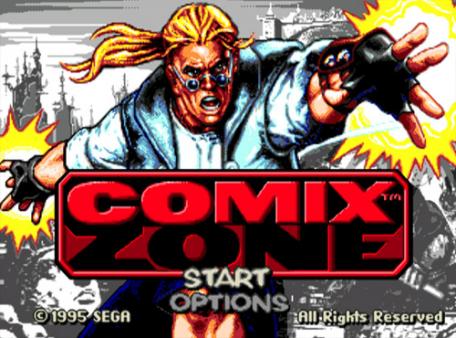 Screenshot from the Steam store page for Comix Zone™ (SEGA)
Comix Zone. Sega published it for the Mega Drive in Japan on September 1, 1995. The price was 7,800 yen, product code G-4132.
The hero is a comic artist. The villain he drew pulls him into his own comic. You fight your way from panel to panel, looking for the way out.
The idea drew praise from the start. The sales did not follow. Today is about both halves of that.
Tear out the page and throw it. It costs you health
One stage is one page of a comic. You clear the condition in a panel, move to the next one, and work toward the goal at the bottom right.
The odd part is the attack. Hold the attack button and Sketch tears the page out, folds it into a paper plane and throws it. The tear comes out of his own health bar.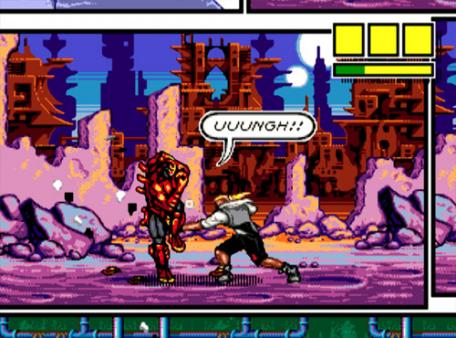 Screenshot from the Steam store page for Comix Zone™ (SEGA)
Enemies can be blown out through the panel border. Moves that only make sense on a comic page keep arriving.
There are six stages. The branching routes change the ending, but a full run is short. Japanese write-ups still note that the volume feels thin.
Sega Technical Institute built it. The starting point was a 1992 demo by programmer Peter Morawiec called “Joe Pencil Trapped In The Comix Zone.”
From there the hero was renamed Sketch Turner and given a pet rat, Roadkill. Comic artist Tony DeZuniga drew for it and Howard Drossin wrote the music. Two stages were cut before release because of the schedule.
“You really want to love it, and a few panels later the honeymoon is over”
The reviews of the day split cleanly. High marks for the art and the idea, ordinary marks for how it plays.
Britain’s teletext magazine Digitiser scored it 79% overall on October 18, 1995. The breakdown was Graphix 86%, Sonix 82%, Gameplay 76%, Lifespan 74%, Originality 79%.
Its verdict was short: “Though it plays like any other beat 'em up, there are minor puzzles to overcome.”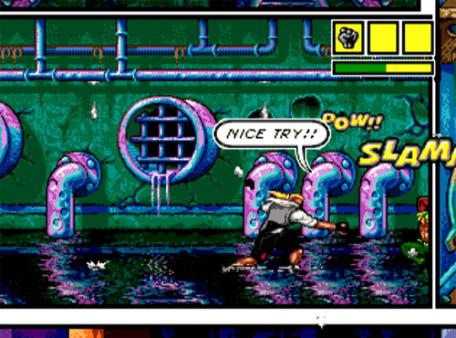 Screenshot from the Steam store page for Comix Zone™ (SEGA)
America’s GamePro was blunter: “You really want to love Comix Zone for its original elements, but after a few panels, the honeymoon's over.”
Next Generation landed in the same place: “A very cool idea for a game that wasn't executed properly, Comix Zone is better than most.”
The four reviewers at Electronic Gaming Monthly admitted the controls were a problem, then said the colours were exceptionally rich for a Genesis game.
The ledger was harsher than the scores. Roger Hector, who ran Sega Technical Institute, is on record saying that Comix Zone failed to break even.
The reason is plain. It arrived at the very end of the Genesis lifecycle, with the Saturn and the PlayStation already on shelves.
Thirty-one years on, the game that lost money has been moved onto the most machines
The Japanese release ended with a small print run. English Wikipedia notes that it “received a small print run in Japan and became an expensive collector's item in the years following its release.” The second-hand price rose because there were few copies, not because it sold.
Meanwhile the ways to play it kept multiplying: Sonic Mega Collection in 2002, Xbox Live Arcade in 2009, Steam in 2010, SEGA Forever in 2017, the Mega Drive Mini in 2019, Nintendo Classics in 2022.
In 2019, reviewing the Mega Drive Mini for GAME Watch, Norihiko Ike wrote that staging the game inside a comic world, panel borders and all, “is everything this game is, and its greatest appeal.”
The same piece calls the difficulty “a little high for a side-scrolling brawler,” while adding that learning the enemy patterns gets you through. Twenty-four years later, the praise and the warning had barely moved.
The video below covers the SEGA Forever mobile version (channel: Genesis VII).
Do you have a game that was short and unforgettable?
September 1, 1995. Let me write the year down. Today, September 1, 2026, makes it exactly 31 years.
The overall score at the time was 79%. That is a number that stops short of love. The game did not break even either.
And it is still being ported. The shortness of those six stages and the slightly high difficulty have both turned into the shape of a memory.
Do you have a game that was short and unforgettable?
Reactions (no login)
Anonymous • one of each per visitor per day
Comments (no login)
No comments yet. Be the first to say something.