HISTORY · 2026-08-22
Sudoku (1979) — How a Nameless Invention Conquered the World's Morning Papers
An architect, a magazine editor, and a retired judge — three strangers who unknowingly built a 25-year relay
Introduction
This is the story of a puzzle born in a quiet corner of America in 1979. It had no name yet, and its creator's name was nowhere to be found — just a small entry tucked into a magazine.
A quarter century later, this same grid would grace the front pages of newspapers worldwide. Its name: Sudoku. An invention that grew up without a credited designer would even leave its mark on today's Steam puzzle games. I want to retrace that journey, year by year.
A Nameless Invention
In May 1979, an American magazine called Dell Pencil Puzzles and Word Games published a puzzle titled 'Number Place.' No author's name appeared on it anywhere.
We now know it was created by an architect named Howard Garns. Born in Indiana in 1905, he died in 1989 — entirely unknown for it in his own lifetime.
It was Will Shortz, The New York Times' crossword editor, who dug up his name. He noticed that Garns's name appeared in the contributor list only in issues that included Number Place. Only after his death was he finally recognized as its inventor.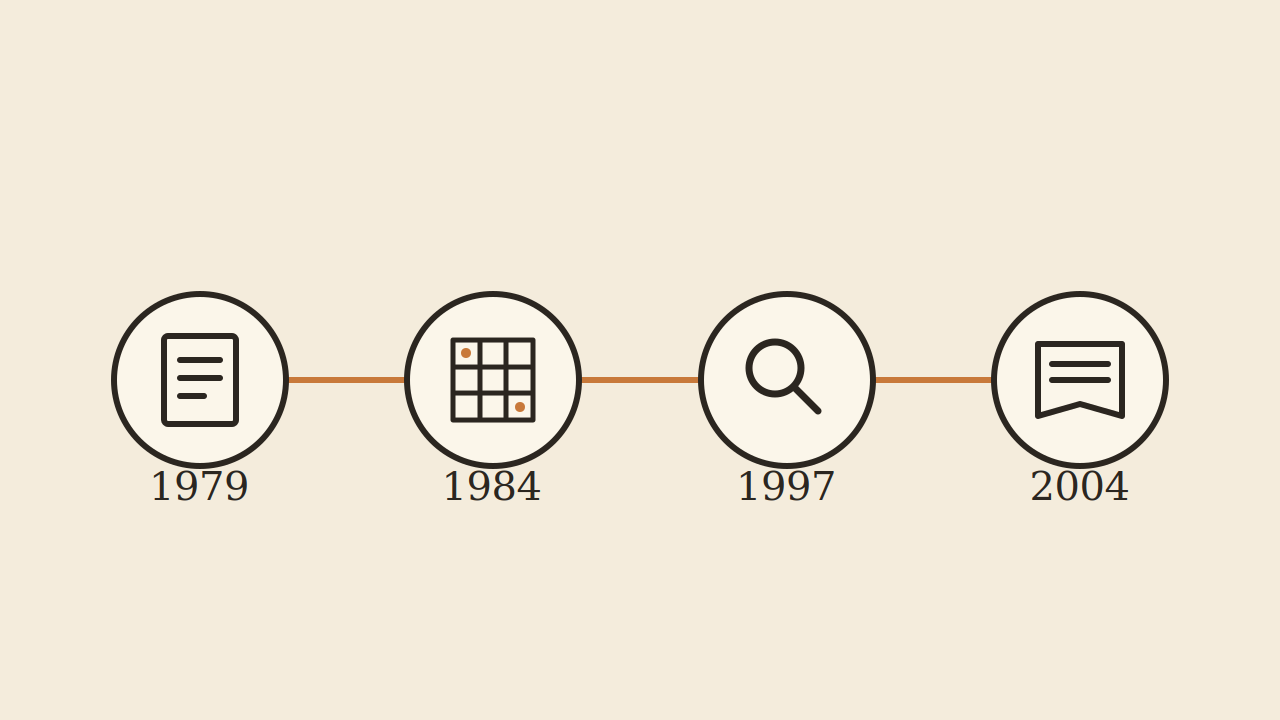 From America to Japan, Hong Kong, and London (diagram)
The Discipline of Symmetry — What Nikoli Refined
In April 1984, this puzzle appeared in a Japanese monthly magazine published by Nikoli, under the name 'Sūji wa dokushin ni kagiru' ('the digits must be single'). It was introduced by Nikoli's president, Maki Kaji.
He later shortened that name to 'Sudoku' himself. Then in 1986, Nikoli made two refinements: capping the number of given clues at 32, and requiring the clue grid to be arranged in point symmetry.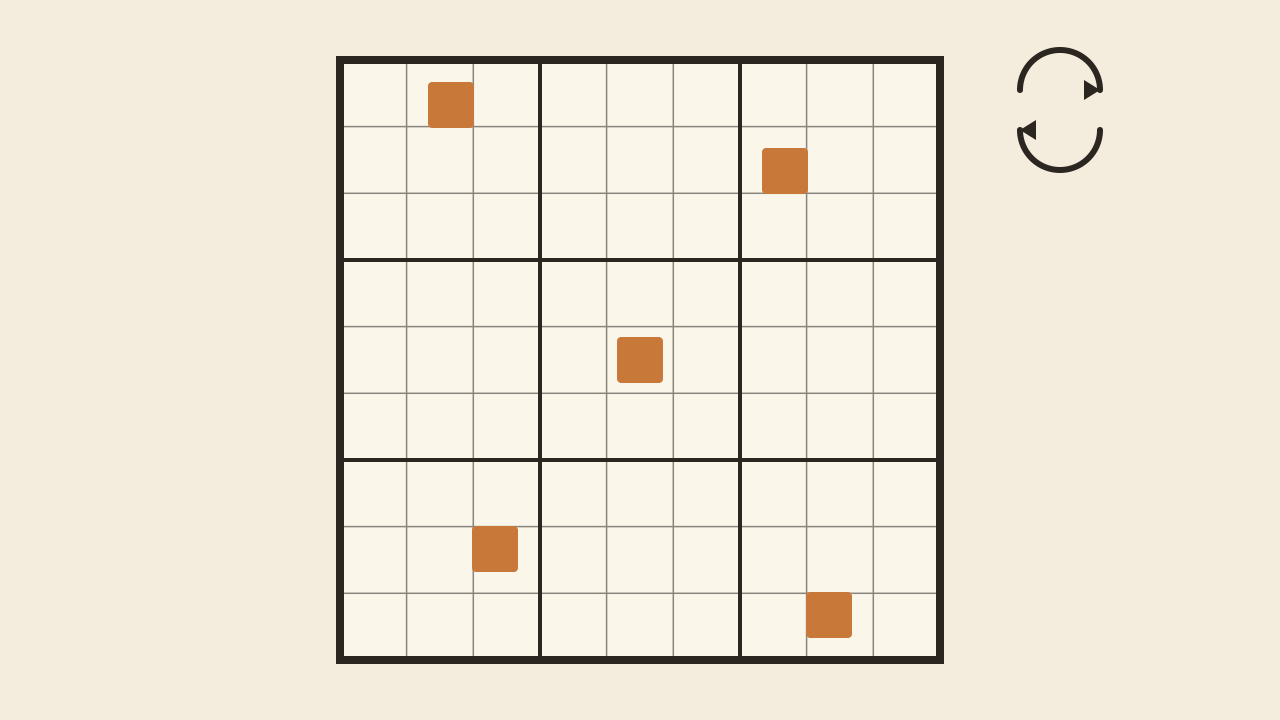 Point symmetry, and the mechanism for solving through logic alone (diagram)
That symmetry wasn't only for looks. It kept the grid free of bias in any one area, guaranteeing a puzzle solvable through pure logic rather than guesswork. This 'no guessing, logic only' line is what lifted Sudoku from a mere number-filling exercise into a puzzle of its own.
A Retired Hong Kong Judge, and a Six-Year Solver
In 1997, Wayne Gould, a retired Hong Kong judge, spotted this puzzle in a Tokyo bookshop. It was a partly completed copy.
He liked it enough to start writing a program that could generate puzzles automatically. It reportedly took him six years to finish.
In September 2004, The Conway Daily Sun in the US ran it for the first time. That November 12, The Times of London began running it daily under the name 'Su Doku.' From there, Sudoku became a newspaper staple worldwide.
The idea of computing a grid whose solution is guaranteed unique is still alive today. Elyot Grant, director of Islands of Insight — a puzzle collection released on Steam in 2024 — revealed in a GDC 2025 talk that his own underclued grids were 'inspired by one cell sudoku.' That trick, which forces players toward logic instead of guesswork, reportedly became a fan favorite.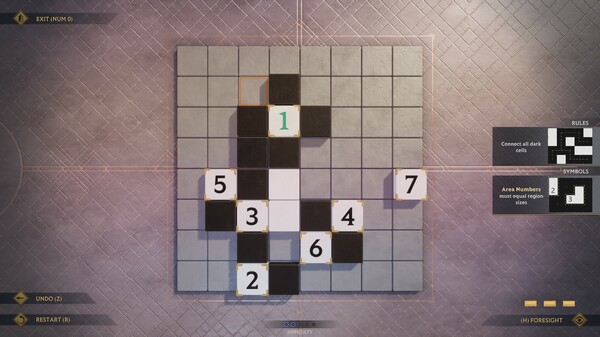 Islands of Insight (official Steam header image)
References
Sources referenced in this article:
・GDC Vault: Elyot Grant, "Designing 10,000 Puzzles for Islands of Insight" (GDC 2025 talk slides)
Closing
Tracing Sudoku's history turns up something strange. No one set out to 'invent' it from the start. Garns was just filling space in a magazine; Kaji was just writing an introduction for a Japanese edition; Gould was just building a program to pass the time.
And yet, over 45 years, this modest grid of numbers reached newspapers around the world — and, in our own era, even a puzzle grid on Steam. As a historian, I'd say that's often how great inventions are made: out of a long chain of small, unintending acts of goodwill.
Reactions (no login)
Anonymous • one of each per visitor per day
Learn — Curriculum
LearnPart 2 Lineage — Where Puzzles Came FromChapter 4 Pencil Puzzles and Nikoli3 / 12
Part of these series
Puzzle Incident HistoryEpisode 27 of 53