HISTORY · 2026-08-21
The Art of Computer Game Design (1984) — The First Book That Tried to Define What a Game Is
The four elements a laid-off Atari designer left behind, and the GDC that began in his living room
Introduction
This is a book from 1984. Not a game. It was an attempt to define, head-on, what a game even is. Its author was Chris Crawford — at the time, a game designer who had just been laid off by Atari. A half-written book and a glowing CRT (illustration, AI-generated)
The title was The Art of Computer Game Design, published by Osborne/McGraw-Hill. At a time when most companies were churning out arcade ports, he alone stopped to put the very act of making games into words. This essay traces the context that produced the book, and the road from a small gathering he started to today's GDC. In front of a shelf of mass production, one book asked a different question (illustration, AI-generated)
The Context of Its Time
Crawford joined Atari in 1979. In 1982 he founded the in-house Games Research Group and made titles such as Eastern Front (1941) and Legionnaire. But between 1983 and 1984, North America was hit by what became known as the video game crash. Unsold software piled up, and companies shrank one after another. Crawford himself was laid off by Atari in 1984, in the middle of that downturn.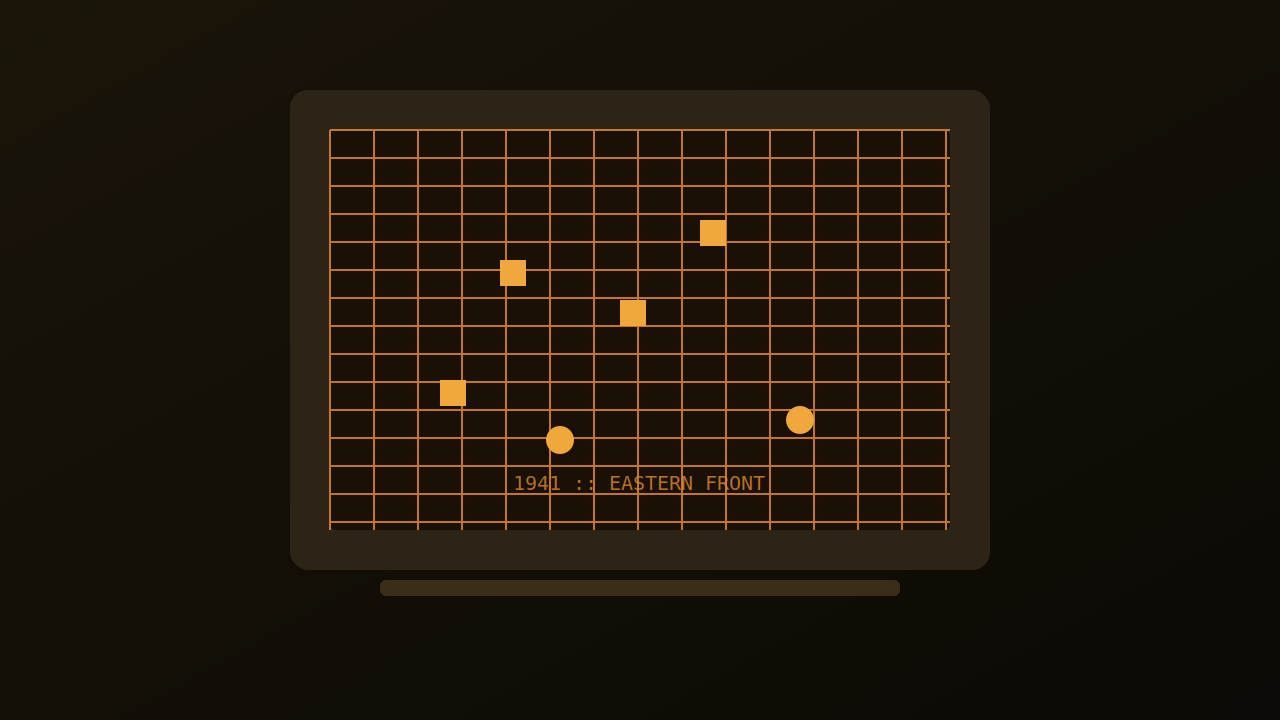 Eastern Front, born from a small in-house research group in 1982 (illustration, AI-generated)
It was that very year he wrote the book. He had already begun, around 1982, shifting his thinking toward treating games as an art form rather than a commercial product. Being laid off likely pushed that shift further. Part of the book's content also extends earlier technical articles he had written for BYTE magazine in 1981 and 1982. A designer pushed out of his company tried to rewrite the definition of the industry itself — that is how this book came to be. The aftershock of the 1983–84 video game crash (illustration, AI-generated)
Four Elements That Define a Game
What Crawford proposed in the book were four elements that define a game: representation — a closed, formal system that subjectively cuts out a slice of reality; interaction — recognizing and reacting to a player's actions; conflict — the player competing against someone or something; and safety — that losing inside the game poses no danger to the player's real body. Only when all four are present, he argued, can something properly be called a game.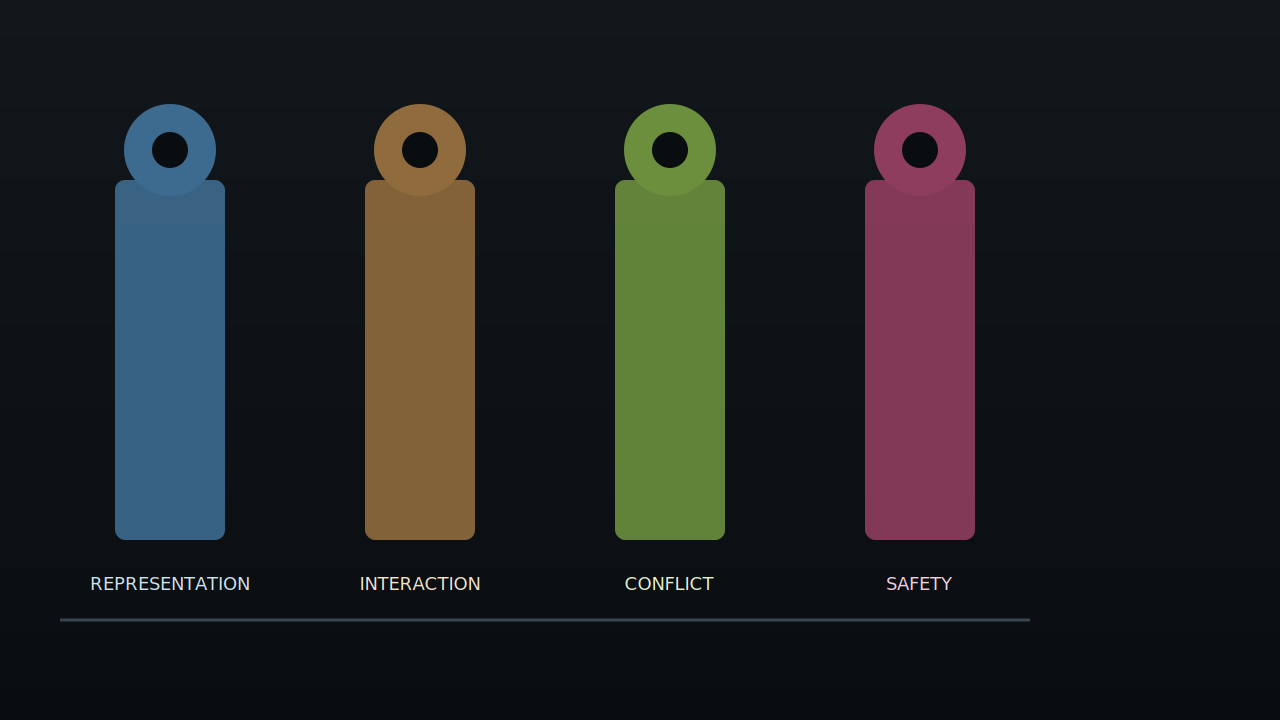 Representation, interaction, conflict, safety — four pillars (illustration, AI-generated)
He did not write this definition purely for the sake of abstraction. He also complained that many of the arcade imitations then being mass-produced chased conflict alone and never touched the full range of human emotion. Games, he argued, should be able to handle joy and sorrow, not just warfare and scorekeeping. The book is over forty years old, but this complaint runs almost unbroken into today's design debates.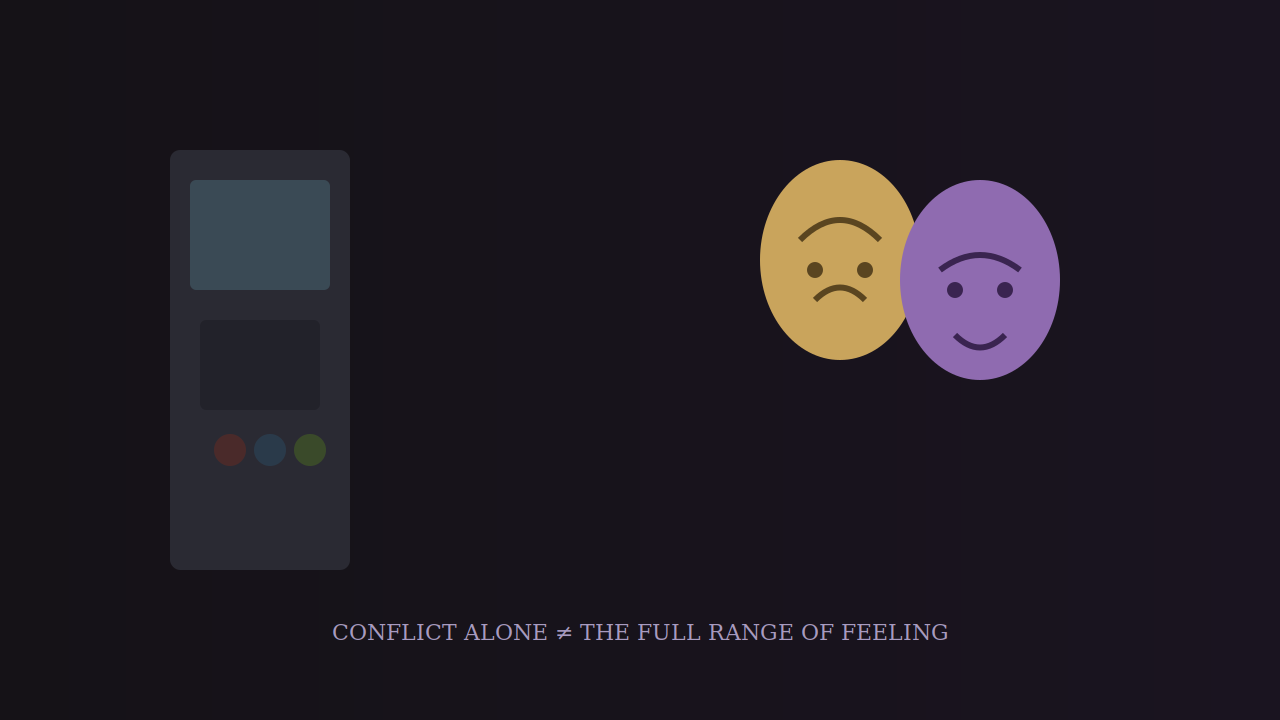 Conflict alone cannot measure the full range of feeling (illustration, AI-generated)
A Lineage That Began in a Living Room
What Crawford left behind was not only a book. In 1987 he invited about twenty-seven designers into the living room of his home in San Jose. That small gathering, held the following year in 1988, is the origin of the Computer Game Developers Conference — today's Game Developers Conference (GDC). The second gathering already drew 125 people, and it grew fast from there. As it happens, this very year, 2026, GDC has just renamed itself the 'GDC Festival of Gaming.' From that 1988 living room to this year's renaming is one unbroken history.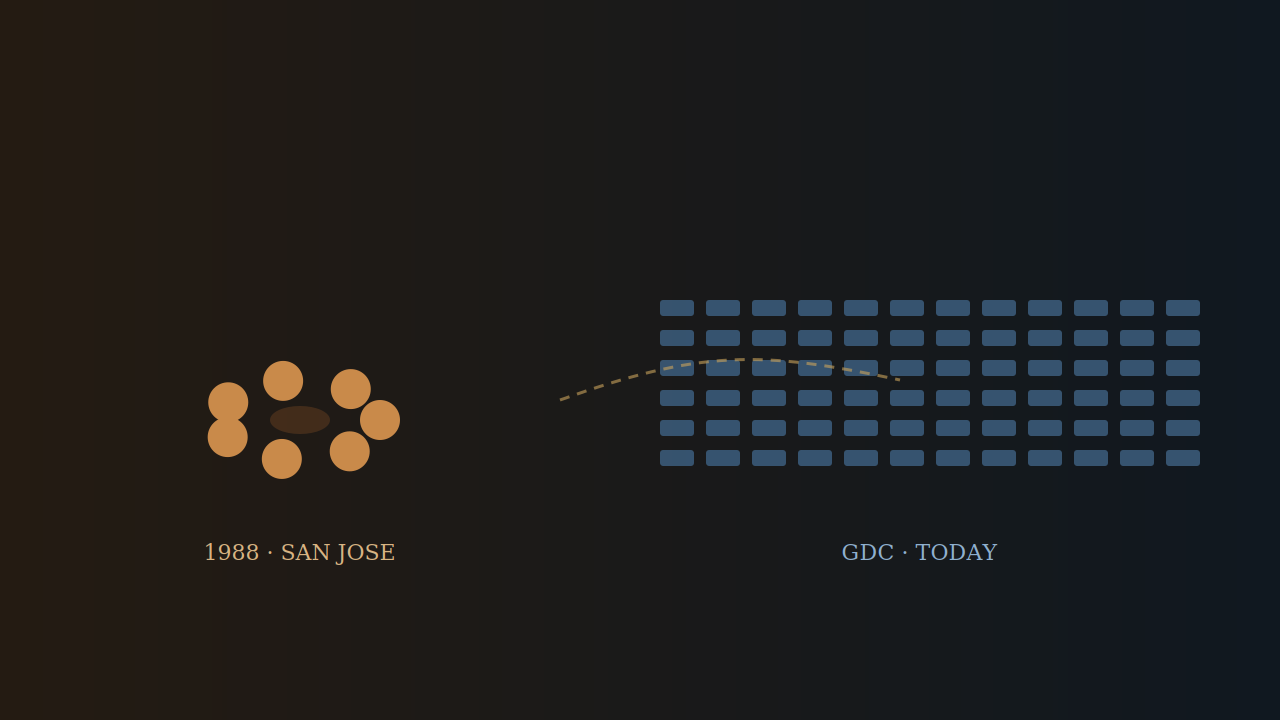 From a living room in San Jose to today's GDC (illustration, AI-generated)
Crawford's four elements later became a target of academic scrutiny too. The game scholar Jesper Juul examined this definition — especially the 'representation' requirement — in his own doctoral thesis (later the book Half-Real), pointing out that it does not fit abstract games like Tetris. The argument over what counts as 'a game' still has not been settled. The abstract thinking-games this site keeps covering, from Sokoban-likes to falling-block puzzles, are very much parties to that same dispute. The argument over 'what is a game' is not over yet (illustration, AI-generated)
References
Sources referenced in this article:
・Wikipedia: The Art of Computer Game Design
・Wikipedia: Chris Crawford (game designer)
・Wikipedia: Game Developers Conference
・Jesper Juul: Theoretical Introduction (doctoral thesis, later Half-Real)
Closing
Crawford himself left commercial game-making in 1992 to pursue interactive storytelling research (Erasmatron, later Storytron). But in 2018 he announced he was halting that work, reportedly saying it would take civilization centuries to embrace the idea. For him personally, this second act did not necessarily pay off. 1992 to 2018, a research thread cut short (illustration, AI-generated)
And yet the four elements he wrote down in 1984, and the small gathering he started at his home the following years, outlived his own hands. When today's puzzle designers argue over whether something 'counts as a game,' some of that vocabulary traces back to a single book, written by a man pushed out of Atari, in the very year he lost his job. That is the roundabout way history leaves its inheritance. From 1984 to 2026, a quiet continuing horizon (illustration, AI-generated)
Reactions (no login)
Anonymous • one of each per visitor per day
Learn — Curriculum
LearnPart 1 Introduction — Play and PuzzlesChapter 2 Words for Talking About Puzzles1 / 6
Part of these series
Puzzle Incident HistoryEpisode 26 of 52