RETRO-REVIEW · 2026-08-27
Marble Madness (1984) — The Faceless Sphere That Rolled Arcades Into the Third Dimension
Six courses born from mini-golf and Escher, and a four-minute earner
Introduction
This is a work Atari Games Inc. released for arcades in December 1984. Mark Cerny handled the design, and Bob Flanagan wrote the physics model. The player rolls a single marble with a trackball, racing through six courses within a time limit.
This marble has no eyes, no mouth. "I wanted to make a world where nothing had eyes," Cerny recalled of his original aim in a 2011 GDC talk. It was a choice to put geometry itself, not a character, at the center of the game.
The tilted, overhead view was not true 3D on the hardware of the day. It was an illusion built by stacking 2D sprites. Even so, I want to reread this game not as nostalgia, but as an ancestor of today's physics puzzles.
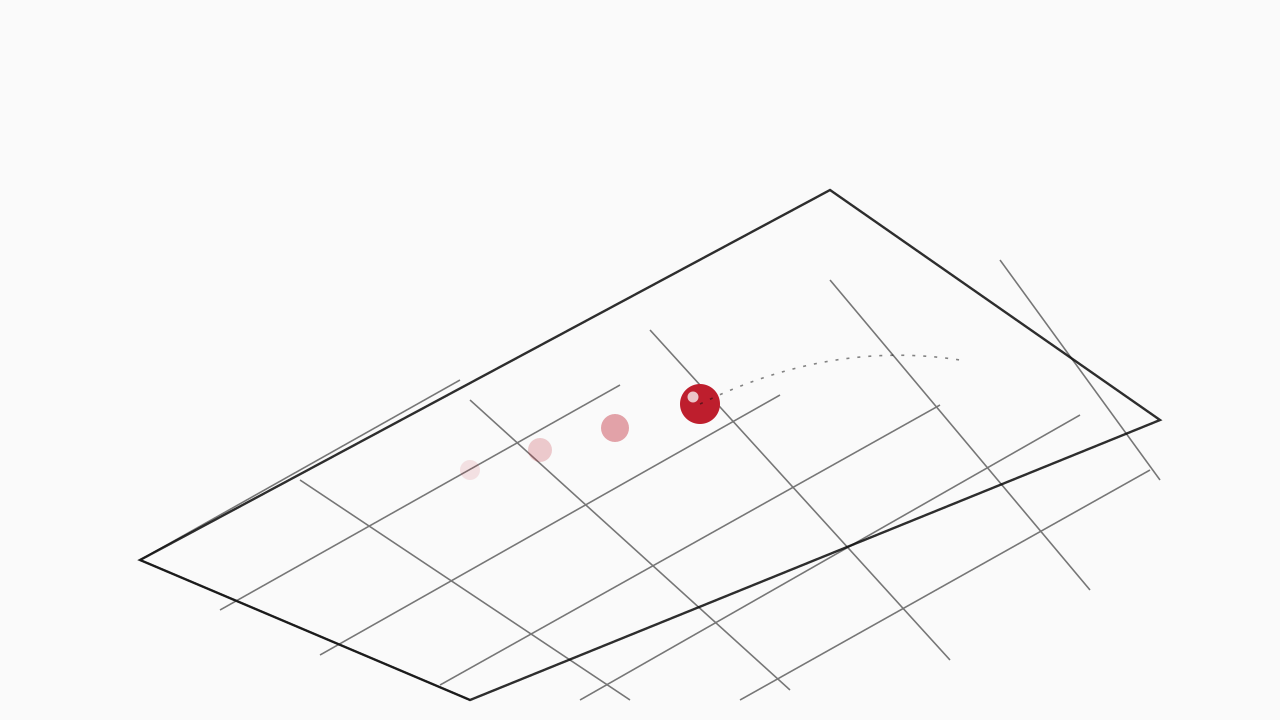 A faceless marble, guided only by gravity and momentum (illustration, AI-generated)
The Era
In 1983, the North American home console market had just suffered the crash known as the "Atari shock." But the arcade business was still alive. After Atari split into a consumer division and an arcade division (Atari Games), the latter was preparing a new board standard, the Atari System 1. Marble Madness was developed as one of the first titles built on it.
Cerny drew his inspiration from miniature golf, racing games, and the prints of M. C. Escher. Early concepts included a touch-screen interface for placing bumpers, and a two-player mode using two motorized trackballs that would physically spin in sync with the ball — both were considered internally and rejected.
The project was experimental on the technical side too: Atari's first game written in the C programming language, and one of the first arcade games to use a Yamaha FM sound chip, with true stereo sound that was still rare for the time. 1984 was a year when not just the play itself, but the very tools of development, were being rewritten.
Mechanics
The six courses are ordered by difficulty: Practice, Beginner, Intermediate, Aggravation, Ultimate, and a hidden bonus course called Silly. The player has to keep the marble from falling while dodging moving enemies and traps on the way to the goal hole.
What carried the marble's motion was the physics model Flanagan wrote. It applied momentum and gravity to the trackball's input, simulating acceleration on slopes and falls off the edge in a plausible way. Behind one simple control scheme sat a kind of calculation that was rare for its time.
Yet across all six courses combined, clearing the game took only about four minutes. Cerny later reflected that a little more work to stretch it to eight minutes might have kept the cabinet earning for longer.
That brevity was not just a design choice. "Two players meant twice as many coins per play, after all," Cerny himself has said — a reminder that the rules of the arcade business were etched directly into the length of the play itself.
Legacy
Marble Madness reportedly sold around 4,000 cabinets and briefly became the highest-earning arcade game in the United States right after release. But that reign didn't last. The short average playtime, the flip side of its high turnover rate, shortened its own commercial life.
Even so, the core idea of rolling a marble forward survived. The English Wikipedia article lists followers like Gyroscope and Spindizzy, and later the Super Monkey Ball series from 2001, as titles carrying forward a similar feel of control.
That lineage hasn't broken even now. Games like Marble It Up! Ultra, made by the indie studio Walaber, keep putting the act of rolling a marble at the center of the design. It's a sign that a concept built on geometry alone, forty years ago, is still a foundation people build on today.
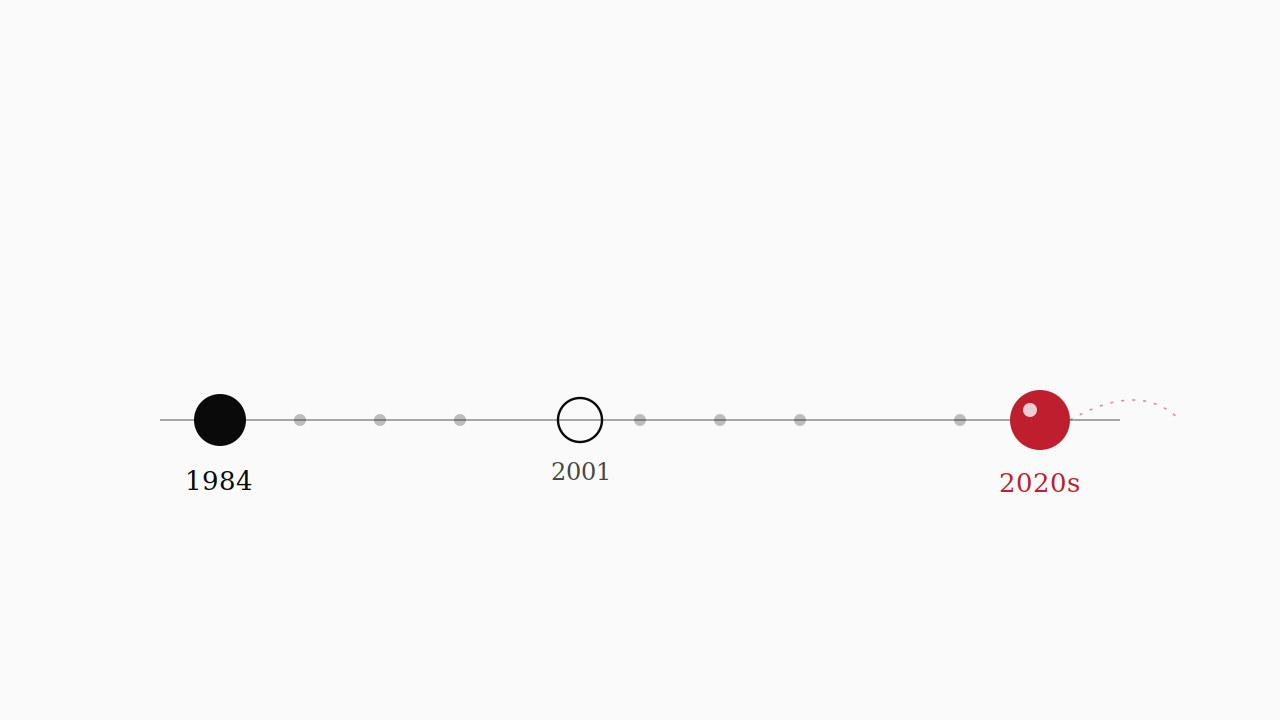 A lineage that keeps rolling, from 1984 to the present (illustration, AI-generated)
Sources
Sources consulted for this article:
・Japanese Wikipedia: Marble Madness
・Game Developer: GDC 2011 — Mark Cerny discusses Marble Madness' turbulent development
Closing
Cerny deliberately kept the marble faceless. But Atari's sales team apparently wanted to put a smiling face on the trackball. Traces of that tug-of-war still remain in the cabinet's panel design today.
Putting geometry, rather than a character, at the center of play must have felt fairly austere for 1984. And yet the play itself came through. Bounce, roll, fall — if the verb itself is interesting enough, you don't need a face. That's how I see it.
Code written in December 1984 for a mere four minutes of play is, forty years later, still rolling somewhere on a board.
Reactions (no login)
Anonymous • one of each per visitor per day
Part of these series
Retro RevisitedEpisode 35 of 45