RETRO-REVIEW · 2026-08-24
Sokobond (2013) — A Rule Made Only of Bond Counts, Thirty-One Years After the Warehouse
Carbon has four, hydrogen has one. Adding a single constraint to a push-puzzle turned an unknown designer into a full-timer
Introduction — A Board Where Elements Join Hands
On August 27, 2013, a small puzzle game was released for Windows, Mac, and Linux. Its creators were Alan Hazelden and Harry Lee. The board holds only pieces named after elements: carbon, nitrogen, oxygen, hydrogen, and helium. Each element has a fixed number of bonds it can form — carbon four, nitrogen three, oxygen two, hydrogen one, helium zero. A single game built entirely on that count is Sokobond.
I have spent many essays digging into how the rule set down by 1982's Sokoban — push boxes to their destinations — has mutated over more than four decades. This game is an unusual case among them. Hazelden himself later said his starting point really was Sokoban, not the visually similar earlier games Atomix or KAtomic. As a historian, I'm glad whenever I can trace a lineage on the developer's own word rather than guesswork.
The game became an IndieCade 2013 finalist and received an honorable mention for Excellence in Audio at the 2014 IGF. But its real significance isn't the polish of the game itself — it's that this was the starting point that turned a little-known designer into a full-time puzzle maker. This piece follows that mutation, and the decade-plus voyage that followed it.
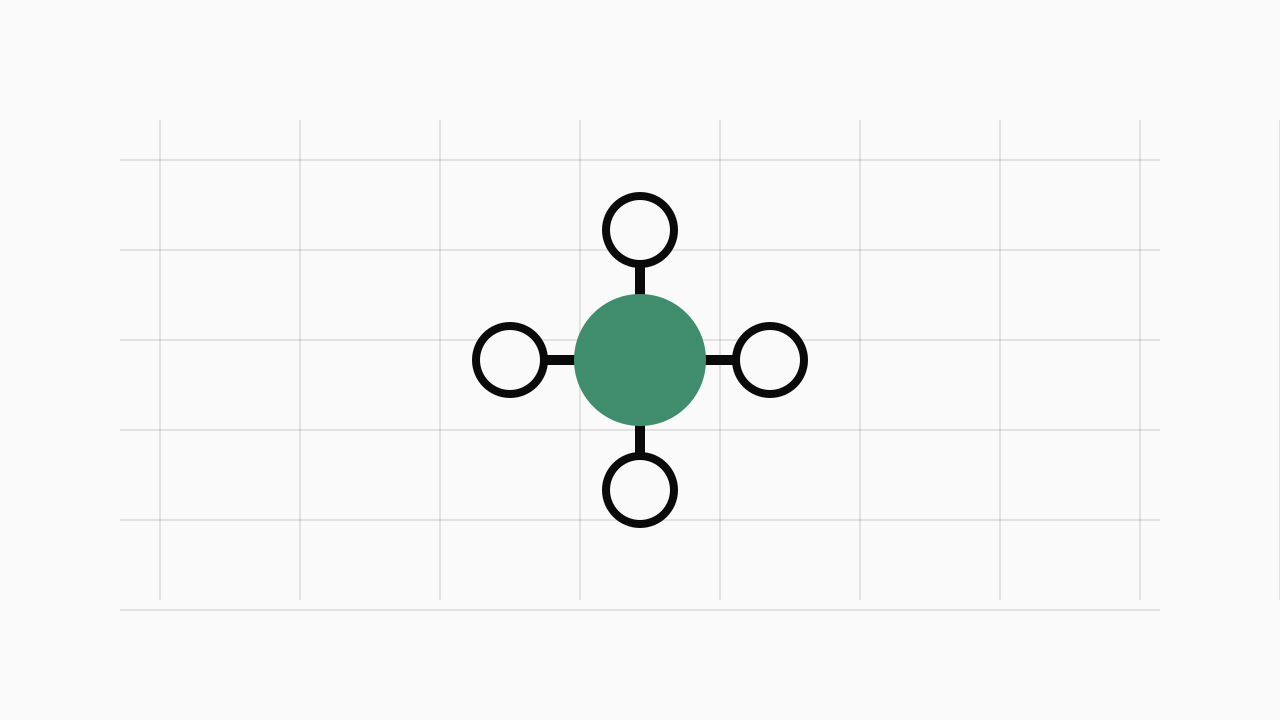 A molecule built from nothing but a bond-count rule (illustration, AI-generated)
The Context — After Flash, Steam and itch.io Raised Solo Designers
2013 sits at the point where free browser puzzles born on Flash were fading, and Steam and itch.io were beginning to support independent puzzle makers as a new distribution route. Hazelden had been a hobbyist developer since 2006, taking part in game jams like Ludum Dare. In a 2024 interview, he recalled switching to full-time development around this game's 2013 release.
The game's subject is chemistry, but playing it demands no scientific knowledge. Critics repeatedly pointed out that the elemental costume served as a device that let players intuitively absorb the abstract rule of bond counts — not a test of science, but a logic puzzle borrowing science as metaphor.
Hazelden has named Manufactoria, SpaceChem, and English Country Tune — already covered in this series — as influences from the same period. Around 2013, quiet puzzles that built up one unassuming rule at a time were becoming a real current within a corner of the indie scene.
 Quiet puzzles that grew up outside the browser, after Flash (illustration, AI-generated)
Mechanics — One Verb, "Bond," Added to "Push"
The skeleton of play is the same as Sokoban's: the player pushes pieces on the board up, down, left, or right. But this game adds a second verb beyond "push": "bond." When two elements end up adjacent, they bond automatically, and from then on move together as one molecule.
What makes this matter is the constraint of each element's "arm count." Hydrogen can only form one bond, so it can only sit at the end of a molecule. Carbon has four, so it can serve as a branching hub. The goal is to assemble the correct molecule into a target shape laid out on the board.
All 105 levels are grouped into themed sections, and the combinations of arm counts demanded grow more complex toward the back half. Critics repeatedly praised the game's minimal look and its progression, which hands out new elements only a little at a time. Raising difficulty through the multiplication of rules alone, without adding spectacle, is — in my reading — a faithful inheritance of Sokoban's design bloodline.
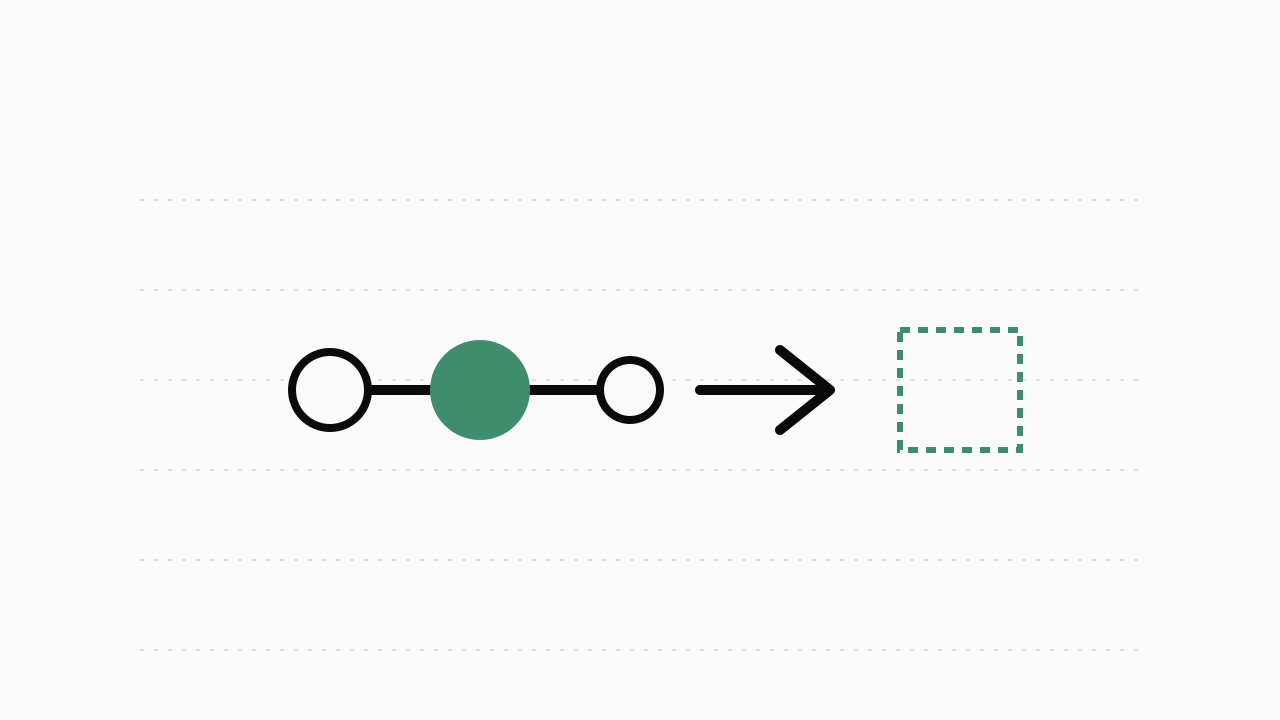 Bond, then push — a chain of two verbs (illustration, AI-generated)
The Modern Lineage — An Island a Decade Into Full-Time Design
Sokobond didn't end as a one-off experiment. Hazelden released A Good Snowman Is Hard to Build in 2015 and Cosmic Express in 2017, then A Monster's Expedition in 2020. That latest title's Switch version scored 92 on Metacritic, and it received an honorable mention for the Seumas McNally Grand Prize — the top award — at that year's IGF.
A Monster's Expedition is likewise built on Sokoban's "push": rolling logs into bridges and rafts to cross from island to island. In a 2024 interview, Hazelden said his sense of player understanding sharpened with each game he made, and added that he regrets earlier titles didn't ship with hint systems from the start. One experiment became a turning point into full-time work, and that decade-plus of full-time work raised a later, acclaimed title — a straight line that, rare among such claims, can be traced through the developer's own words.
Sokobond itself is a small mutation — Sokoban's "push," plus one added word, "bond." But what it demonstrates isn't so much that the push-puzzle genre hasn't run dry, as the fact that adding a single small constraint can still make a forty-year-old rule generate a new game.
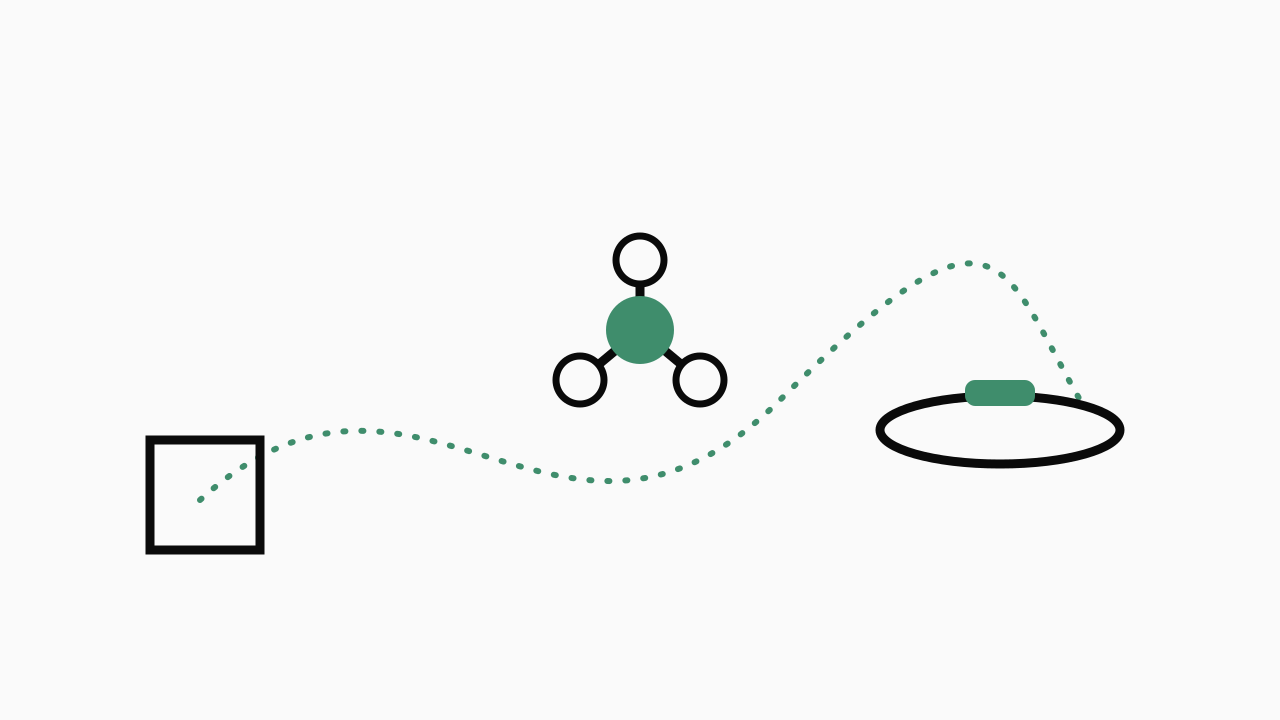 From crate to molecule, from molecule to island (illustration, AI-generated)
Sources
Sources referenced in this article:
・Wikipedia: A Monster's Expedition
・TouchArcade, "Draknek Interview: Alan Hazelden on Thinky Puzzle Games...," 2024
・GamingOnLinux, "Sokobond, A Puzzle Game About Chemistry," 2013
Closing — A Shape Decided by Uneven Arms
Carbon's four arms, hydrogen's one arm. That asymmetry alone decided the shape of every molecule on the board. The islands and logs Hazelden went on to build are, in the end, just another way of restating the same asymmetry: can be pushed, cannot be pushed.
I don't think "retro" only points at the distant past. A rule from 1982 put on a chemist's coat in 2013, then became a raft crossing islands in 2020. That thirty-one-year, then seven-year, voyage is history worth digging up too. What rule will surface next, and in what costume? I'll keep watching the board, and wait to find out.
Reactions (no login)
Anonymous • one of each per visitor per day
Learn — Curriculum
LearnPart 2 Lineage — Where Puzzles Came FromChapter 6 The 2000s Turn — Flash, Mobile, Jams10 / 15
Part of these series
Retro RevisitedEpisode 34 of 45
Read next

Related reviews
Felix The Reaper
An isometric puzzle game in which Felix, a reaper who never stops dancing, may only walk where there is shade. You flip the sun between two positions to reshape the shadows, push and pull props to cast new ones, and arrange each mortal's fatal accident. Made by Kong Orange, narrated by Patrick Stewart.
MOLEK-SYNTEZ
In a cramped 2092 Romanian apartment, you program a home-built synthesizer to turn benzene and acetone into small pharmacological molecules — a Zachtronics optimization puzzle you operate only from the edges of a finite board.

