TAG
#sokoban
1 reviews · 24 essays
Related essays
Soundtrack: Bonfire Peaks — the more you carry, the heavier it sounds; burn it, and it lifts
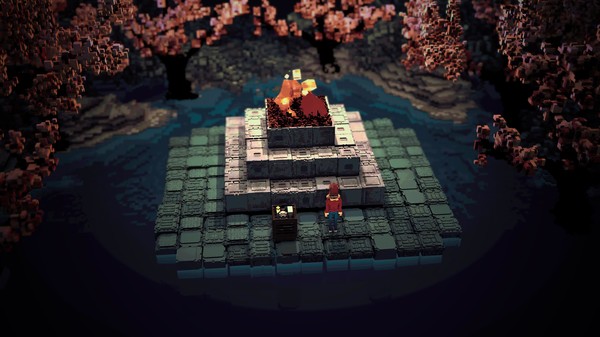
Bonfire Peaks is a Sokoban-style puzzle game where Corey Martin handled design, programming, and music himself. You carry your belongings up a cliff and burn them in a bonfire at the summit. Doremi reads the score he called "equal parts warm, pretty and unsettling" alongside the game's path from a 2018 jam about sacrifice to a story about nostalgia.
"It Learned to Solve Without Being Taught To" — A Diffusion Model That Generates Solvable Sokoban Without a Solver
One piece today: the preprint "Solvable Sokoban Without a Solver via Diffusion" (Sina Baghal), posted to arXiv on August 16, 2026. Deciding whether a Sokoban puzzle is solvable is PSPACE-complete, so puzzle generation has traditionally relied on expensively running an actual solver. This paper trains a Transformer-based discrete diffusion model with no access to solvers, rewards, or solvability labels — just the task of filling in masked grid cells — and finds that 77.4% of generated puzzles are directly solvable, with 94.5% of the rest fixable by removing a single wall. It explains the mechanism through generation-order flexibility: a global property (solvability) leaking out of a purely local training objective.
Siper et al.: Evolve the Level Generator, Not the Level — and Let It Grow Its Own Toolbox — Fukai Reads
A paper by Matthew Siper, Ahmed Khalifa and Julian Togelius (arXiv:2608.17947, accepted at IEEE Conference on Games 2026). Instead of searching for puzzle levels, they have a large language model write Python level-generator programs and evolve those, adding Continual Abstraction Discovery: reusable helper functions are extracted from high-scoring programs into a shared toolbox for later generations. Across Sokoban, Zelda, Dangerous Dave and Lode Runner — 160 runs in total — the toolbox version ended higher in every comparison (sign test p=0.008).
Eggerland (1985) — The Original One-Room Puzzle Where You Push Your Enemies as Eggs
In 1985, a modest puzzle game appeared for the MSX home computer: Eggerland Mystery. Shoot an enemy to turn it into a pushable egg, then collect hearts to open the treasure box — a design built from just a handful of verbs, contained entirely within one room. HAL Laboratory refined that grammar across a run of Famicom Disk System titles, and in 1989 it crossed the ocean as Adventures of Lolo. Sitting in the producer's chair for those two years was a young Satoru Iwata, years before he became Nintendo's president.
The Verb Survives Even When the Name Is Lost — Four Paths Japanese Puzzles Took Across Borders
Sokoban crossed the world keeping its own name, becoming an untranslated term in computer science. Panel de Pon lost its name but its chain-matching grammar survived. Kwirk changed its potato hero into a tomato. Professor Layton reversed the flow, importing a Western brainteaser tradition. Four cases on why a game's grammar and its name travel separately.
Puzzle Boy / Kwirk (1989) — The Day Atlus Walked a Potato Under Its Own Name
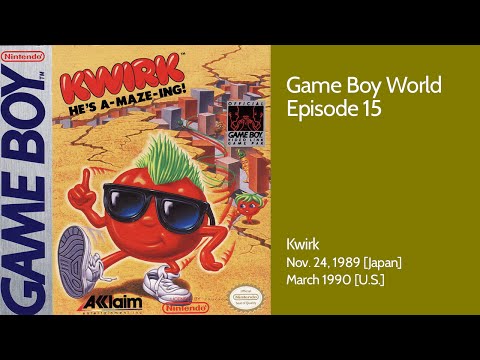
On November 24, 1989, Atlus released Puzzle Boy for the Game Boy, sold overseas as Kwirk. For a studio that had spent years working as an uncredited contractor for other publishers, this was the first game to carry its own name. A maze puzzle built from just three verbs — turn, push, fill — it quietly draws a line all the way to Catherine, the block-stacking puzzle the same company released in an entirely different form 22 years later.
Sokobond (2013) — A Rule Made Only of Bond Counts, Thirty-One Years After the Warehouse
On August 27, 2013, Alan Hazelden and Harry Lee released a small puzzle game called Sokobond. Its skeleton is 1982's Sokoban, unchanged, with exactly one constraint added: each element has a fixed number of bonds it can form. That modest mutation — an IndieCade 2013 finalist, an IGF Excellence in Audio honorable mention — turned Hazelden into a full-time puzzle designer. This piece traces how the push-rule carried through to A Monster's Expedition (2020), a decade later.
Mirror Isles / Skipping Stones to Lonely Homes (2014-2015) — How Two Free Jam Games Became Two Different Escape Islands, a Decade Later
In 2014 and 2015, London puzzle designer Alan Hazelden wrote two free PuzzleScript jam games, Mirror Isles and Skipping Stones to Lonely Homes. By his own account on his website, the former is the spiritual ancestor of his 2020 commercial release A Monster's Expedition, and both games are also credited as one inspiration and starting point for Jonathan Blow's new game Order of the Sinking Star, whose demo appeared in 2026. This piece traces, using only the developer's own words, how two weeks-long free experiments fed into two very different commercial puzzle games over more than a decade.
Wang et al.: Making a Puzzle Solver the Teacher for Every Single Move — Fukai Reads
A game-AI paper by Yu Wang and colleagues. Where long-horizon puzzles reward only the final win, they convert the drop in a solver's remaining-distance-to-goal into a per-move score and mix it into training. Averaged over Sokoban, Minesweeper and Rush Hour, success rises from 16.6% to 62.1%, and on unseen difficulty from 5.9% to 28.4%. Querying the solver costs about 73 parts per million of training wall clock.
Skipping Stones to Lonely Homes (2015) — Throwing Stones Across Islands, the Free PuzzleScript Game That Fathered Two Descendants
On 31 August 2015, London-based puzzle designer Alan Hazelden quietly published a free browser game on his own site: Skipping Stones to Lonely Homes. A Sokoban-lineage puzzle built on indirect action — throwing stones whose ripples move distant lilypads — it is, by Hazelden's own account, the prototype behind the 'spiritual successor' A Monster's Expedition (2020), and one of the starting points for Jonathan Blow's decade-in-the-making Order of the Sinking Star (2026). This piece traces how one free hobbyist game fed into two major descendants a decade later.
From the same skeleton to a different puzzle: the Thinky Collective's “inherit just one thing” design experiment
One piece today. I read, in the original English, a Thinky Games article (by Corey Hardt, published July 24, 2026) from the edited puzzle-focused outlet. It covers how the Thinky Collective — a loose community of puzzle gamedevs — built the browser game The Snake That Eats Puzzle Game Mechanics. Normally they pass a single large PuzzleScript project around, each adding levels, art, or refinements. This time the method changed: each dev received just one piece of the previous person's game and had to make a miniature, single-level game from that shared element. The result is that adjacent games might share sprites while their mechanics have swapped, or keep the same level shape while a new look and context turn the puzzle into something else entirely. A constraint produced divergence, and a dozen-plus one-screen games were strung together. As an aspiring designer, I carried this home as a design template I want to try.
Halina & Guzdial: Generating Levels as a "Cake of Time" — Fukai Reads
A procedural level-generation paper by Halina and Guzdial. It represents a level as a "cake" of board states stacked over time, and generates a level and its solution together with PRP, which recombines play traces. In Sokoban, against six existing methods, it reached 100% playability with high diversity, without hand-authored constraints or rewards.
PuzzleScript (2013) — The One-Line Rule That Mass-Produced the World's “Pushing Games”
In October 2013, indie developer Stephen Lavelle (increpare) released PuzzleScript, a free browser-based puzzle engine whose Sokoban-style push rule fits on a single line of code. Traced forward, it runs through Alan Hazelden's early jam games into A Good Snowman Is Hard to Build, and — by Hempuli's own account — into the block-pushing puzzle revival that fed Baba Is You. Here the lineage is checked against the record.
Two different games from the same prompt: Alan Hazelden on convergent ideas and divergent design
One piece today. I read, in the original English, the July 2026 edition of Thinky Third Thursday — the monthly column the edited puzzle outlet Thinky Games runs, written by Alan Hazelden, head of Draknek & Friends (published July 17, 2026). At its center I put a passage Alan wrote himself. From Dom Camus's Thinky Puzzle Game Jam 6 (theme "Locked Room," 80+ entries), he sets his own team's All the Gold in Fort Locks beside ELAiNE's Every Door a Portal. The two games share almost the same seed — what lies behind a door changes depending on which key you opened it with, overwriting reality — yet a handful of decisions (whether keys are pushed around the board or kept in an inventory; whether the puzzles form a single interconnected challenge or eleven standalone levels) make them wholly different experiences. Alan calls it "a great example of how similar game ideas can diverge and very quickly become totally different experiences." A seed can be shared; the design decisions are what split the experience. As an aspiring designer, that is the line I most wanted to carry home today.
A good puzzle wants to be solved: Tom Hermans' three layers — Presentation, Elegancy, Aspiration
One piece today. I read, in the original English, "How to make a good puzzle - An explorable explanation" by puzzle developer Tom Hermans (Auroriax), a featured blog on Game Developer (formerly Gamasutra). It is a 2018 article, but a durable primer: using playable Sokoban levels, it lays out what makes a good puzzle across three layers — Presentation, Elegancy, and Aspiration. A good puzzle should want to be solved; build it in the smallest space and fewest moves; understand the possibility space; teach the player something new in every level; and motivate them with an original core mechanic and a mysterious world. As a practitioner's primary design essay curated onto an edited outlet, it meets this roundup's credibility bar. A little old, so covered with its date made explicit.
Bazzaz et al.: Believing It's AI Changes the Experience — Fukai Reads
A CHI '26 paper by Bazzaz and Cooper on perception bias toward generated content. Mixing human-made and AI-generated levels in Super Mario Bros. and Sokoban for 142 players, they report that players can barely identify the creator, yet levels believed to be AI-made are rated less fun, harder, and more frustrating.
Inside Patrick Traynor's Philosophy — Designing by Discovery, Not Invention
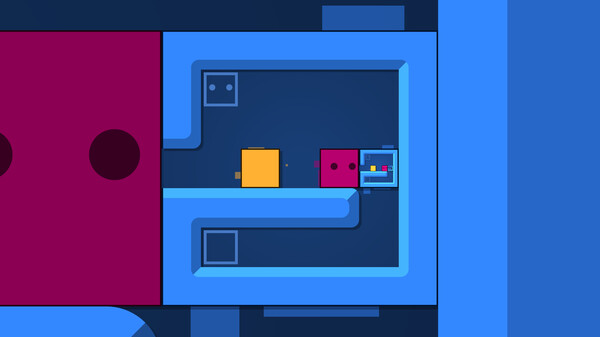
A study of Patrick Traynor, sole creator of Patrick's Parabox, drawn from his interviews and his 2024 GDC talk. He calls recursion 'a corner of truth of the universe' and casts himself as a discoverer rather than an inventor; we read his pursuit of approachability, his publicly told failures around difficulty curves and rules, and the ethics of a discoverer.
Soundtrack: Void Stranger — a symphony built from poor sound sources, echoing in a monochrome labyrinth
The music of the monochrome Sokoban labyrinth Void Stranger conjures both grandeur and unease using nothing but stock MIDI sounds and chip waveforms. Composer Eero Lahtinen built it around one idea: that you shouldn't get sick of the same loop while stuck on a puzzle. Doremi reads its repeat-proof writing and its patient drones from a composer's chair.
Monti et al.: Measuring AI's Planning Power on a Single-Corridor Sokoban — Fukai Reads
A paper by Monti and colleagues on SokoBench, a benchmark that measures reasoning models' long-horizon planning with Sokoban. By lining up only single-box straight corridors and narrowing difficulty to a single axis (corridor length), it shows that even state-of-the-art reasoning models break down once more than 25-30 moves of lookahead are needed. The authors locate the cause in accumulated miscounting.
Where 'Solvable' and 'Fun' Diverge — PuzzleJAX Hands 500+ PuzzleScript Games to the Machines (arXiv, Aug 2025)
One article today: "PuzzleJAX: A Benchmark for Reasoning and Learning" (arXiv preprint, August 2025) by researchers at NYU, the University of Malta, the University of the Witwatersrand (South Africa), and Microsoft (Sam Earle, Graham Todd, Ahmed Khalifa, Julian Togelius and others). They reimplement PuzzleScript — Stephen Lavelle's (increpare) 2013 puzzle-authoring language — on the GPU and hand 500+ human-authored games to tree search, reinforcement learning, and large language models. Read as a designer, the core is one observation: 'solvable by a machine' and 'interesting to a human' are not the same thing. Tree search brute-forces simple games but stalls the moment they get richer; LLMs score 0% on most. The authors even note PuzzleScript's own creator hesitating to embed an auto-solver into the IDE, a caution about measuring difficulty by search.
Can AI Build a Whole Puzzle Game? ScriptDoctor and Its Generate-Playtest-Repair Loop
ScriptDoctor has a large language model write an entire puzzle game — rules, sprites, levels — then lets a compiler and a search-based agent inspect the result and demand revisions. The testbed is PuzzleScript, a language indie developers know well. I walk through the paper in five parts — problem, method, findings, where you can use it, limitations — covering why human-authored examples boost success rates, why reasoning models win, and the distance between 'solvable' and 'fun'.
Ten years of sausage grilling and a shift of perspective — minimal rules, maximal depth, and spatial cognition as puzzle material
Two articles today. First: Thinky Games' 10th anniversary feature on Stephen's Sausage Roll (April 21, 2026) — the sokoban-like praised by puzzle developers as perfectly designed, which birthed the sausage-like subgenre through radical minimalism. Second: Alan Hazelden's Thinky Third Thursday April 2026 (April 16), spotlighting A Little Perspective and He Who Watches — two games that use perspective shifts and spatial cognition as their core puzzle material.
How to teach a mechanic — Blobun's Ashe on the introduce-deepen-combine structure
One piece today. Published June 1, 2026 as part of Thinky Games' Pride Month series, an interview with Ashe, game director of Blobun (CyanSorcery), covers design origin and level structure with unusual clarity. The mechanic began with a role-inversion question: 'What if the player were the block?' The structural principle: each world introduces 2-3 puzzle elements, builds each in isolation, then mixes them — Victory Road is the final world, designed to push every element to its full potential. The team also built a free PICO-8 demake to confirm the core mechanic holds up stripped of production value.
Sokoban (1982) — The 44-Year-Old Prototype of Meta-Puzzles
In 1982, Hiroyuki Imabayashi of Thinking Rabbit released Sokoban. Forty-four years later, walk-and-push is still the bedrock of Baba Is You and Patrick's Parabox. Reading the lineage backward from period context.