RETRO-REVIEW · 2026-09-03
Sleep Is Death (2010) — The Move That Swapped the AI Opponent for a Human One
Jason Rohrer built a 30-second-turn improvised play with no script and no AI in it
Introduction
What I'm laying on my desk today is a piece of software you won't find on today's Steam. Sleep Is Death, released in 2010 by game-maker Jason Rohrer: a tool for two people to improvise a story together, and nothing else.
Sleep Is Death is a two-player, improvised storytelling program that Rohrer designed, programmed, and drew entirely by himself, releasing it DRM-free from his own website in April 2010. It costs $14, and that single purchase covers both seats: one player becomes the "Controller," moving art, sound, and prose in real time, while the other becomes the "Player," typing short commands. No script exists anywhere during the match.
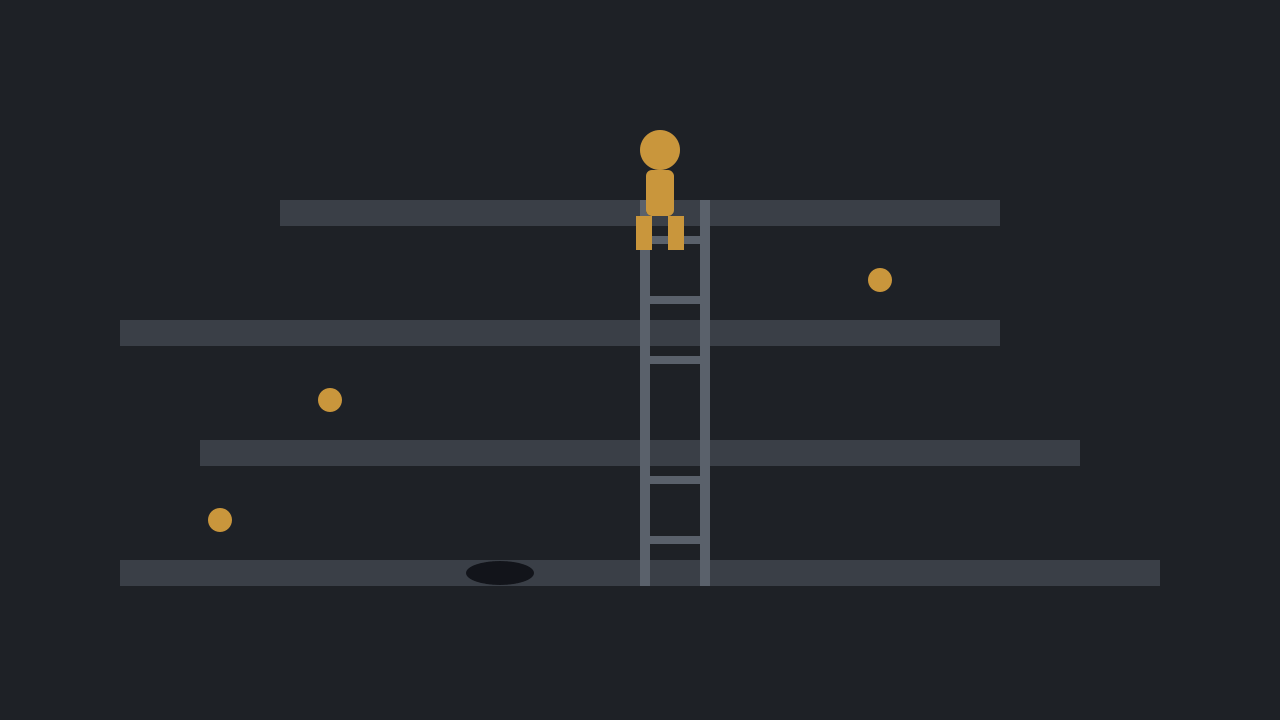
 A room for two, with no script (illustration, AI-generated)
The context of its time
To understand 2010, you have to go back three years. In 2007 Rohrer released Passage, a five-minute game in which an entire life ends, and became a central figure in the debate over whether games could be art. Sleep Is Death was the next move from that same figure, this time questioning the framework of "a game" itself.
Where it premiered mattered too. From February 4 to 6, 2010, at Atlanta's High Museum of Art, an academic symposium called The Art History of Games commissioned Rohrer's piece and installed it as two networked PCs on-site — a still-rare gathering, at the time, of scholars and critics treating games as art history.
Its distribution reflected the era as well. The main stage for free browser games back then was Flash portals like Newgrounds and Kongregate, but Rohrer skipped that entirely, selling it pay-what-you-want from his own site. In interviews he framed this as compensation for a service rather than licensing content under a copyright regime.
 2010: a single terminal, set inside a museum (illustration, AI-generated)
Mechanics
The system is simple but uncompromising. The two players split into Controller and Player, and within a 30-second turn limit, they move a character, its belongings, and the prose around it. No script, no AI, sits between them — only the real person on the other side of the screen is generating the response.
The look and sound are cut down to match that constraint. Characters are ultra-low-resolution sprites drawn on the spot; the music is a short loop built from just three MIDI instruments. Rohrer deliberately locked those instruments to a minor key so an upbeat composition couldn't be made — the melancholy mood is enforced by the tool itself.
In a later interview, Rohrer explained the reasoning: "I don't think narrative and game mix very well in general... Anything pre-authored is going to fight with interactivity." He stripped out everything pre-authored and put a living person in its place. That's the core of Sleep Is Death as a device.
 Two roles, trading places every 30 seconds (illustration, AI-generated)
A lineage into the present
The following year, in 2011, this work was featured in the Museum of Modern Art's Talk to Me exhibition. The curatorial text is direct: where dialogue with a machine usually plays the role of the "other," this piece flips that arrangement, letting the person on the other side of the screen be exactly what they are — someone with real reactions, real feeling, real perception — and turns that fact alone into the game. Rohrer had already entered MoMA's permanent collection in 2012 with Passage, making him a rare case of one creator placed on that shelf twice.
The idea of generating meaning purely from a living person's judgment, with no pre-written script standing in, didn't end there for Rohrer himself. In 2018 he released One Hour One Life (Steam app ID 595690), still playable on Steam today: a multigenerational survival game in which each life lasts sixty minutes, and the meaning of the civilization that forms has no script behind it at all — only the choices of whichever strangers happened to be online at the same time. It's the same question, rewritten eight years later in a different genre by the same author.
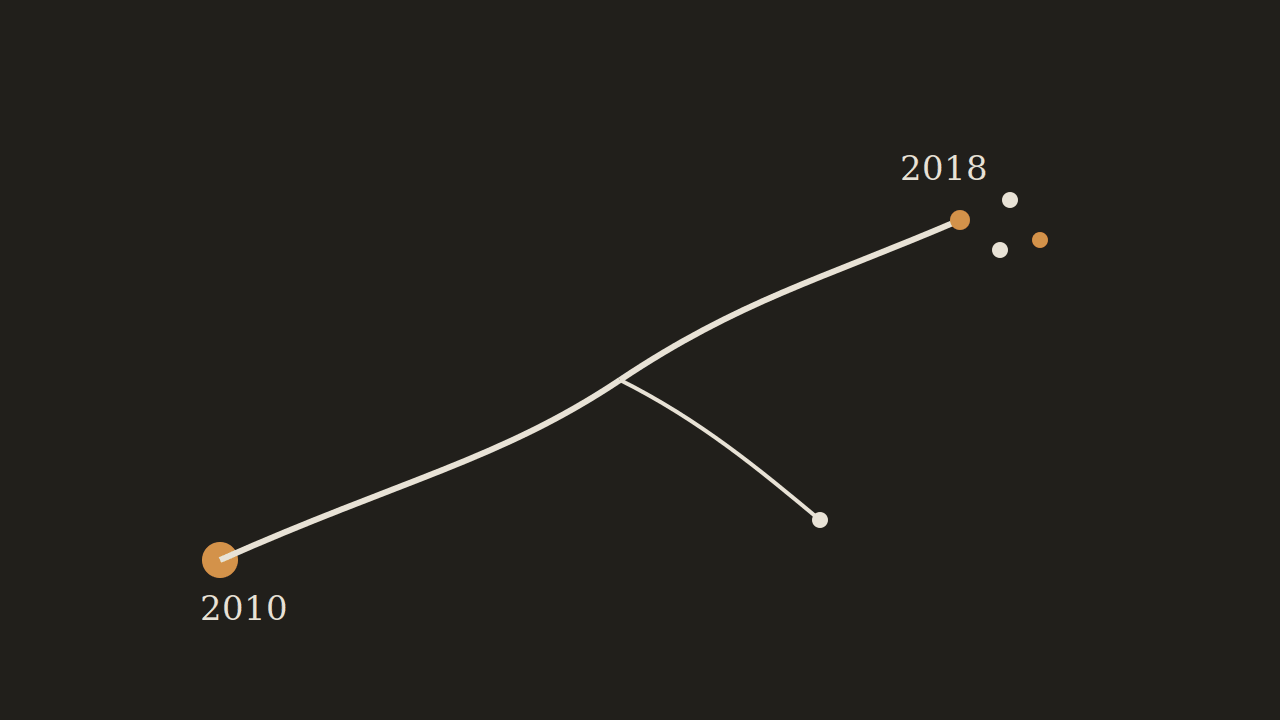 One spark, eight years later, became a world of many generations (illustration, AI-generated)
Sources
Sources referenced in this article:
・Sleep Is Death — official site
・MobyGames: Sleep Is Death (Geisterfahrer)
・Engadget: Hands-on: Sleep Is Death (2010)
・MoMA: Talk to Me — Sleep Is Death
・Wikipedia: Passage (video game)
・Trinity News: Sleep Is Death — Interview with Jason Rohrer (2010)
Closing
The reason I dug this up today, year stamped front and center, is that 2010 example: an entire experience held together not by graphics or budget, but by a single constraint — an opponent with no script. Looking back now, when AI-generated storytelling has become an unremarkable tool, you can see this piece arrived at the same place from the opposite direction — by putting a living person where a machine would later go.
 Two empty chairs, and a lamp that stays lit (illustration, AI-generated)
Reactions (no login)
Anonymous • one of each per visitor per day
Part of these series
Retro RevisitedEpisode 40 of 43