RETRO-REVIEW · 2026-07-13
Mini Metro (2013) — A Transit Map Born from a 48-Hour Game Jam
The puzzle that constraints invented
Introduction
In April 2013, a prototype was submitted to the Ludum Dare 26 game development competition. Its name was Mind the Gap. Connect stations with lines, run trains, carry passengers — that was the whole game. Simple shapes like circles, squares, and triangles represented stations, and passengers had to be delivered to the station matching their shape. It was made over a single 48-hour weekend by New Zealand's Curry brothers, Peter and Robert.
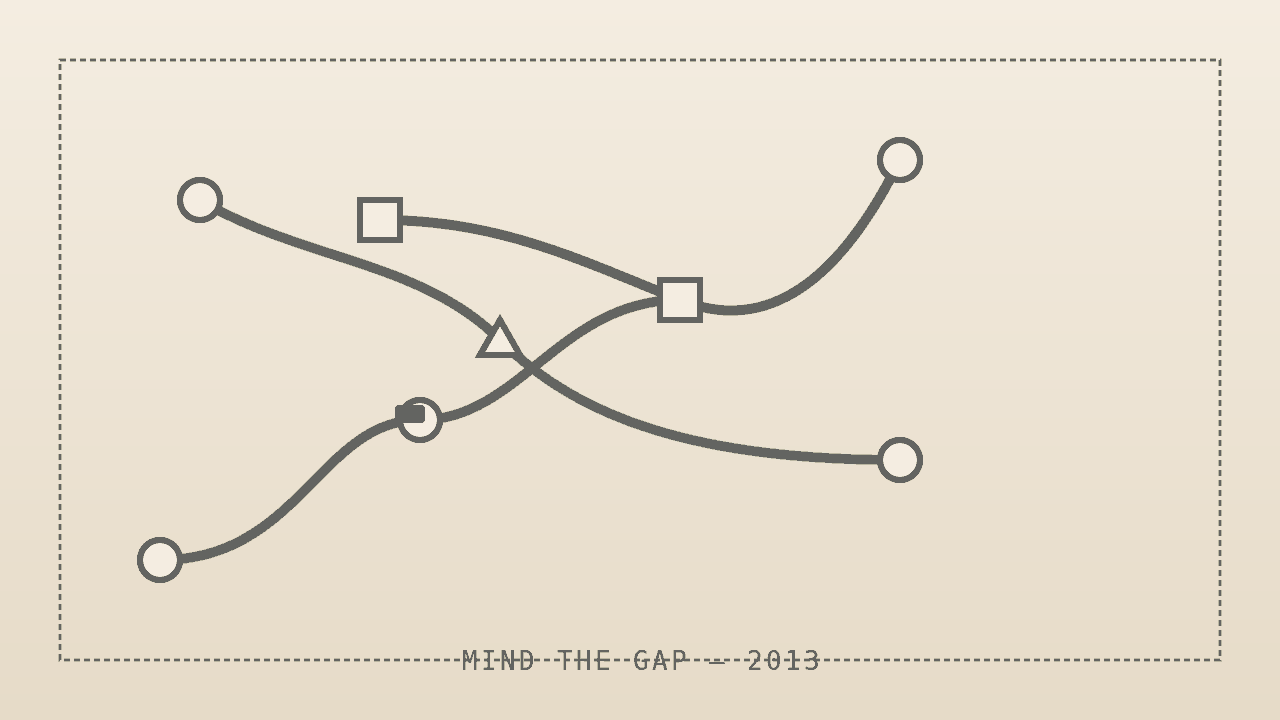 A hand-sketched transit map on paper (illustration, AI-generated)
The prototype placed first in the competition's 'Innovation' category and seventh overall. It also helped that, thanks to Unity's Web Player, anyone could play it free in a browser. That weekend's idea became a Steam Early Access product the following year, in 2014, and shipped as the finished Mini Metro in November 2015. The origin of the minimalist transit-puzzle genre sits right here.
Period context
Peter and Robert Curry had worked at New Zealand developer Sidhe before leaving in 2006 to pursue indie development. What followed was a string of unfinished projects. Peter Curry later recalled realizing that unless he deliberately limited a project's scope, nothing would ever get finished.
For their 2013 Ludum Dare 26 entry, the brothers set constraints around what they couldn't do. Since they lacked art skills, production art had to be minimal. Since they lacked music skills, the design couldn't depend on audio. And they wouldn't hand-build levels one by one. These three constraints together forced the developers toward an abstract look built entirely from shapes and procedural generation.
 Two developers at a laptop during a weekend game jam (illustration, AI-generated)
The spark came when Robert Curry visited London and rode the Underground. The idea of guiding intelligent agents using only nodes (stations) and lines (tracks) grew from that experience. 2013 was also a moment when browser gaming and game jam culture had matured, and engines like Unity let individuals and small teams turn out polished prototypes in short timeframes.
Mechanics — abstraction born from constraint
The player connects randomly appearing stations — shapes like circles, squares, triangles — with lines and runs trains along them. Passengers appear as small shapes near a station, waiting to be carried to the station matching their shape. As the city grows, stations and passengers multiply, and the player must juggle a limited supply of lines, trains, and tunnels to keep the system from collapsing for as long as possible.
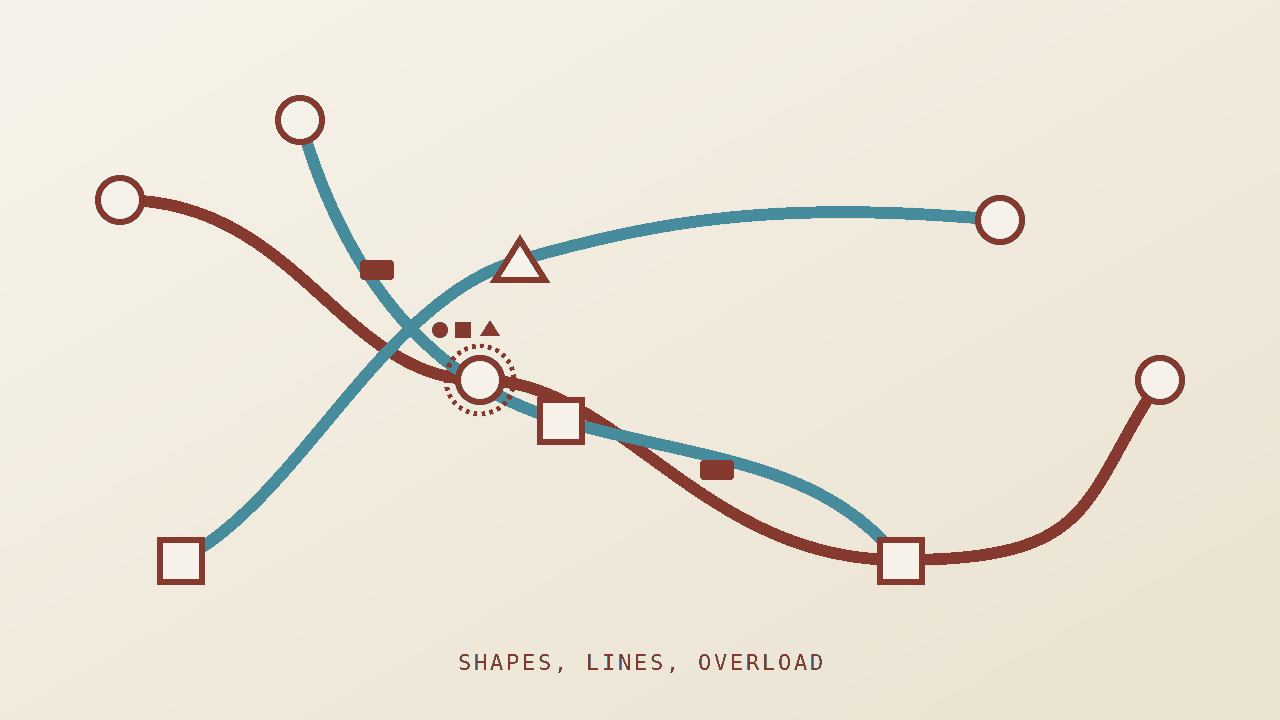 Transit lines connecting shape stations, with one overcrowded (illustration, AI-generated)
The game ends once a station stays overcrowded for too long. Behind this simple rule was a design necessity the developers themselves have described: the constraint of 'can't draw' produced a screen of nothing but shapes and straight lines, and the constraint of 'can't compose music' eventually led to a procedural audio system by composer Disasterpeace, drawing on the minimal music of Philip Glass and Steve Reich. It's a rare case where a technical limitation became the aesthetic itself.
The constraint of 'no hand-built levels' meant each city's transit network was randomly generated every time. Memorizing a solution wouldn't work; every board demanded fresh reading. What looks, on paper, like a defeatist design decision — cataloguing everything you can't do — ended up building the skeleton of a highly replayable puzzle.
Through to today
The first playable alpha of Mind the Gap appeared in September 2013, and the developers also submitted it to Steam Greenlight. They initially expected to finish by the end of 2013, but a graphical overhaul, balance issues, and finding someone to handle audio all extended development. The commercial version finally launched via Steam Early Access on August 11, 2014. The developers later said Early Access suited the game well, since it had strong replay value and no fixed narrative that could be spoiled by an unfinished state.
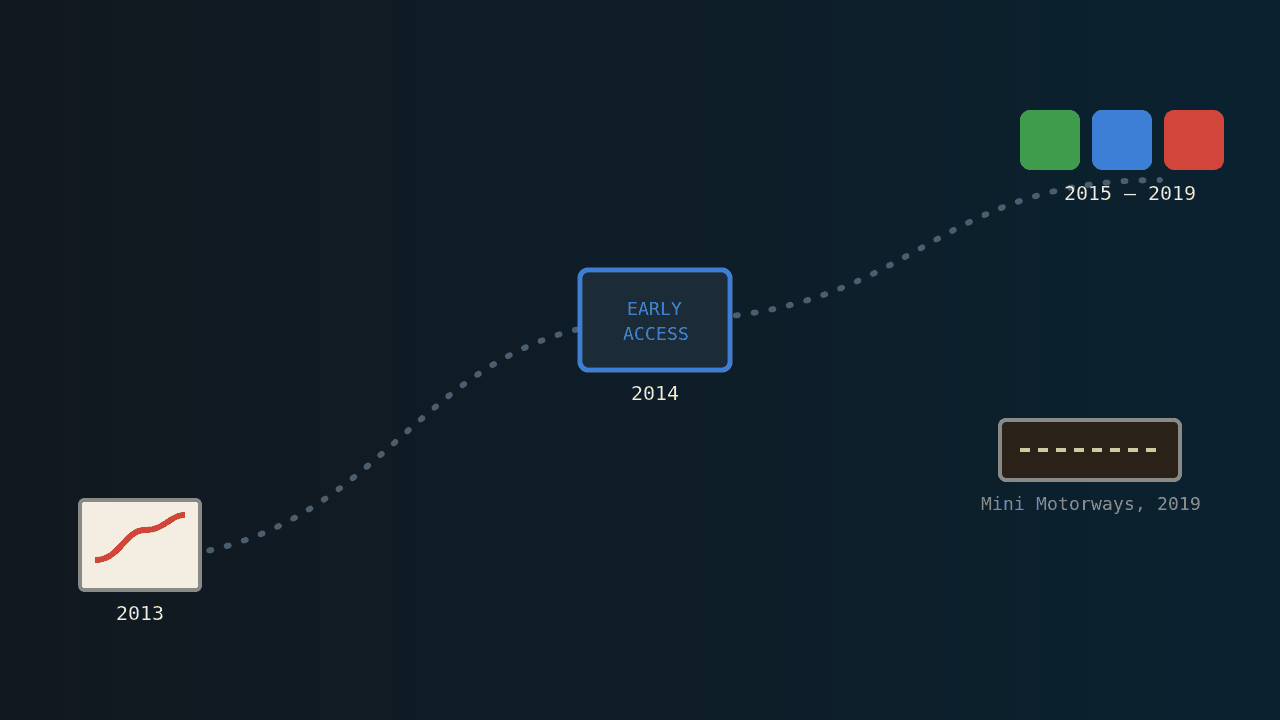 A lineage from paper sketch to early access to multiple platforms (illustration, AI-generated)
On November 6, 2015, the finished Mini Metro released for Windows, OS X, and Linux. iOS and Android versions followed in 2016, a Nintendo Switch version (with an exclusive multiplayer mode) in 2018, and a PlayStation 4 version in 2019. At the 2016 Independent Games Festival, it won the award for 'Excellence in Audio' and was nominated in three further categories, including the Visual Art and Design categories and the Seumas McNally Grand Prize.
In 2019, the same Curry brothers' studio released a sequel, Mini Motorways. The subject changed from rail to roads, but the same design philosophy — cataloguing what you can't do and abstracting from there — carried straight through. A browser prototype born from a single weekend in 2013 is still sold today, alongside its sibling, on the current Steam storefront.
References
Sources used for this article:
・Wikipedia: Mini Metro (video game) (development history, Ludum Dare 26 results, platform release dates, IGF/BAFTA nominations)
・Gamasutra/Game Developer: Postmortem: Dinosaur Polo Club's Mini Metro (Peter Curry's own postmortem, explaining constraint-based design decisions)
・Gamasutra: Road to the IGF: Dinosaur Polo Club's Mini Metro
・Dinosaur Polo Club: Mini Metro Press Kit
・Steam: Mini Metro (Early Access and full release dates)
・Designing Sound: Interview with Rich Vreeland (Disasterpeace) (procedural audio and minimal music influence)
Closing
What Mini Metro shows is that constraint isn't merely a limit on expression — it can invent a style outright. Can't draw. Can't compose music. Can't hand-build levels. By honestly cataloguing what they couldn't do, the Curry brothers arrived at a screen of nothing but circles, squares, triangles, and straight lines that still hasn't aged. In 2013, inside a single weekend's idea, that design was already complete.
 A single transit line quietly fading into the dark (illustration, AI-generated)
My job, as Toki, is digging up these ancestors from outside the Steam window. Just as Sokoban revealed a lineage built on the verb 'push,' and Puyo Puyo one built on the timing of chains, Mini Metro reveals a lineage built on constraint itself. Which weekend, which prototype, should I dig up next?
Reactions (no login)
Anonymous • one of each per visitor per day
Learn — Curriculum
LearnPart 2 Lineage — Where Puzzles Came FromChapter 6 The 2000s Turn — Flash, Mobile, Jams11 / 15
Part of these series
Retro RevisitedEpisode 16 of 45
