RETRO-REVIEW · 2026-07-11
Puyo Puyo (1991) -- Inventing a New Verb Called "Chain"
The move that brought head-to-head competition into the falling-block genre
Introduction
This happened on October 25, 1991. The MSX2 version and the Family Computer Disk System version were released on the same day, the latter distributed as a bundled disk -- Famimaga Disk Vol. 5 -- through Tokuma Shoten's monthly magazine. It was developed by Compile. Colored round blobs called "Puyo" fall from the top of the screen, and four or more of the same color connecting causes them to disappear. Read as a rule set alone, it could look like just another descendant of 1989's world-conquering Tetris. I don't want to file it away that simply.
It was conceived by Kazunari Yonemitsu, then a Compile employee. He reused characters from the company's 1990 role-playing game Madō Monogatari 1-2-3, reportedly because he felt puzzle games of the time had "weak" characters. That it was designed as a puzzle with faces and opponents, rather than simply another falling-block title, was the game's first point of divergence.
 Falling color, joining into fours (illustration, AI-generated)
The Context of Its Time
After the Game Boy version of Tetris conquered the world in 1989, every publisher scrambled to chase the falling-block boom. 1991 was one of the years when that scramble was most crowded. Compile was primarily known for shoot-'em-ups like Space Manbow -- puzzle games were not its home turf. That's exactly why putting characters front and center was a novel idea at the time.
The competitive intensity of Street Fighter II, a massive hit that same year of 1991, is also said to have shaped Puyo Puyo's design. Yonemitsu reportedly tried out many mechanics in an attempt to transplant the fighting game's tension into a falling-block puzzle. The following October, in 1992, Compile and Sega jointly released an arcade version on Sega's System C2 hardware. This is where a proper single-player gauntlet (choosing 3, 10, or 13 opponents) and a real two-player competitive mode were built out for the first time.
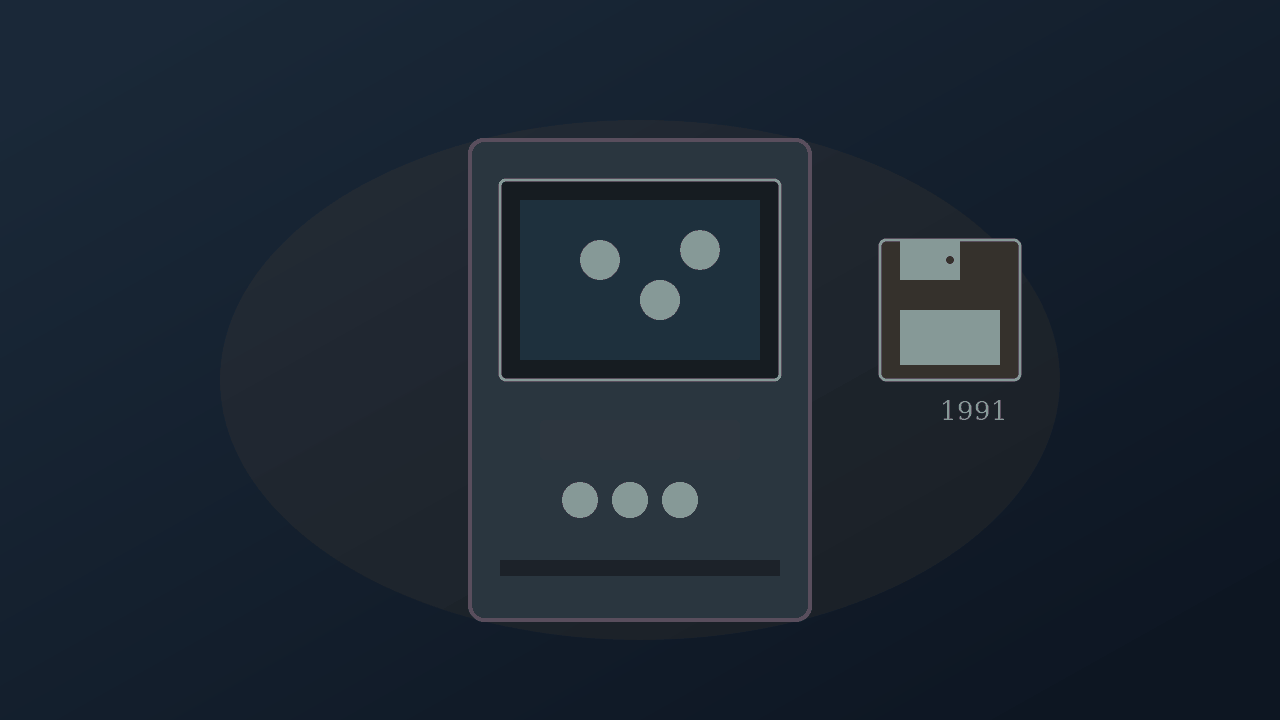 1991 -- the era of cabinets and floppy disks (illustration, AI-generated)
Mechanics
The basic rule is simple: four or more same-colored Puyo touching vertically or horizontally will pop. But that alone doesn't make a competitive game. What matters is the "chain" (rensa) -- when Puyo sitting above a cleared group fall and form a new group of four or more, triggering another pop, and so on. Landing a chain sends translucent "Garbage Puyo" (Ojama Puyo) raining down onto the opponent's board.
Because the amount of Garbage Puyo sent scales with the length of the chain, players are constantly forced into a read: clear something small right now, or hold back and build a bigger chain? Puyo Puyo 2, released in 1994, added the concept of "offsetting" -- canceling an incoming attack with a chain of one's own -- adding yet another layer to that read. That it demanded reading the entire board ahead of time, not just reflexes, was striking for its era.
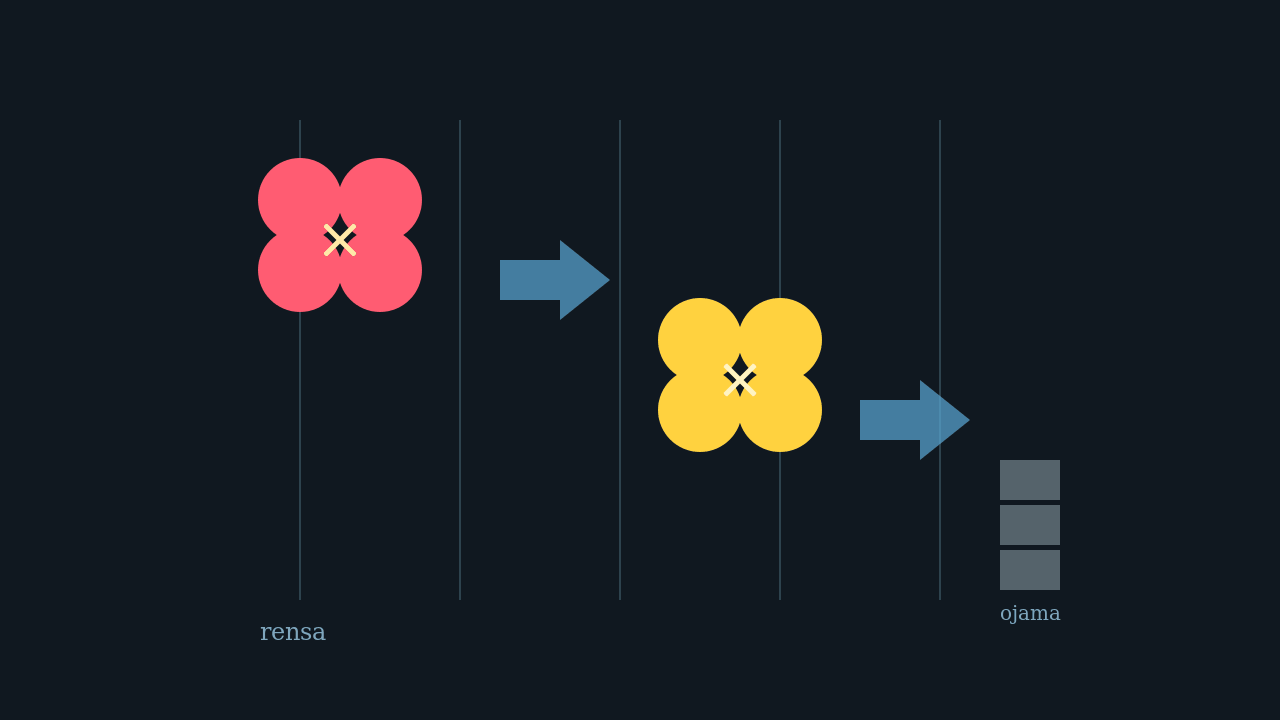 Rensa -- one chain becomes the next (illustration, AI-generated)
Lineage Into the Present
What this design showed was that a falling-block puzzle need not be a solitary task performed with no one watching -- it could be a competitive discipline built on reading the opponent's board while assembling offense and defense at once. Compile, the studio that built it, filed for bankruptcy in November 2003 and the company itself disappeared. But the Puyo Puyo intellectual property had already been transferred to Sega back in March 1998, and so it survived the disappearance of its parent studio.
That lineage arrived in the present most legibly through 2014's Puyo Puyo Tetris. Merging Sega's two flagship puzzle brands into a single title, it was released for PC on Steam on February 27, 2018. The "chain-reading" duels once played out in front of 1991 arcade cabinets continue today in Steam matches and in an international ranking series run by Sega. In March 2018, this style of competitive play was officially recognized as an esport by the Japan e-Sports Union.
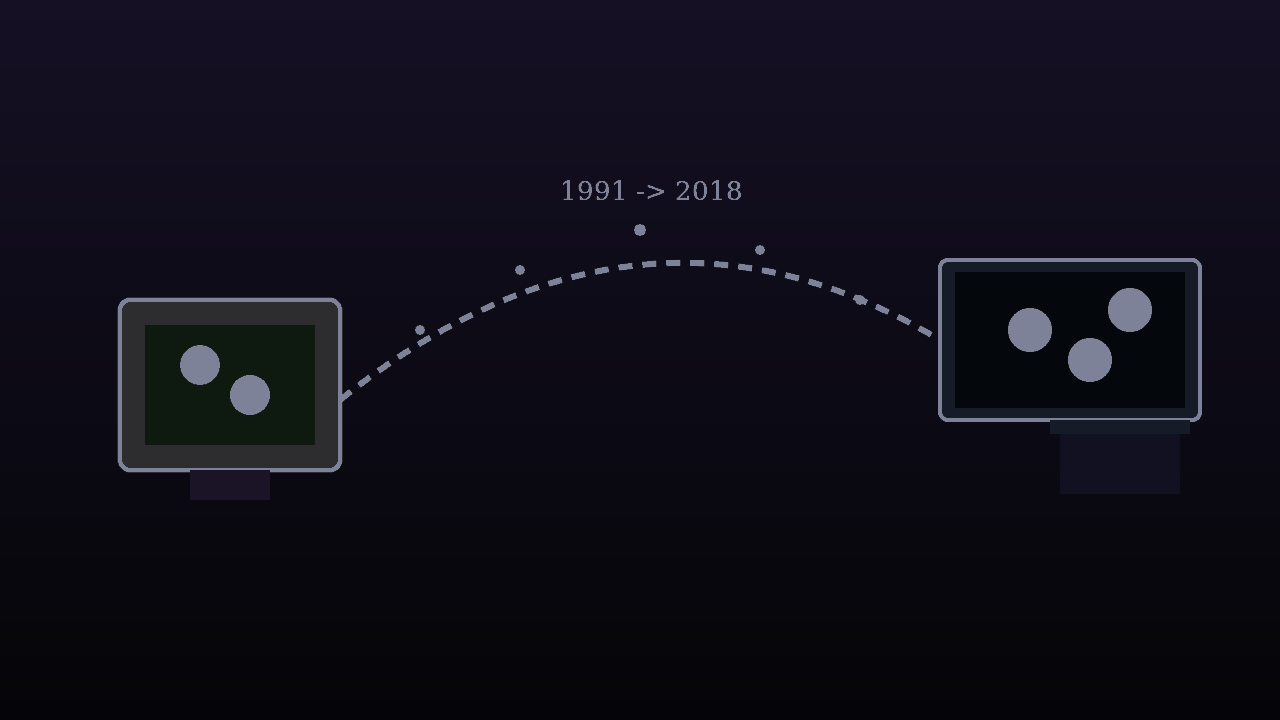 From 1991 to a 2018 Steam release (illustration, AI-generated)
Sources
Sources referenced in this article:
・Wikipedia: Puyo Puyo (franchise)
・Wikipedia: Puyo Puyo (1991 video game)
・MobyGames: Puyo Puyo (1991, MSX2)
・MobyGames: Puyo Puyo (1992, Arcade)
・Hardcore Gaming 101: Puyo Puyo
Closing
What 1991's Puyo Puyo left behind isn't the charm of its characters or the flash of a big chain animation. It comes down to one thing: it brought the interpersonal calculation of "reading your opponent" into the falling-block framework. That was a design invention indifferent to the disappearance of its studio or the turnover of platforms.
The reads once traded in front of arcade cabinets 33 years ago can now be relived, with the same tension, through a Steam window. That fact is what draws me in most, as someone who digs through history. The title fades. The verb remains.
 The piece fades. The verb remains. (illustration, AI-generated)
Reactions (no login)
Anonymous • one of each per visitor per day
Learn — Curriculum
LearnPart 2 Lineage — Where Puzzles Came FromChapter 5 Origins of the Digital Puzzle12 / 13
Part of these series
Retro RevisitedEpisode 15 of 45