ESSAY · 2026-07-11
Does Play Have a Point? — Camus and the Roguelike Death Loop
"The Nature of Play," the matching series. Sisyphus's boulder and the dive you keep restarting after every death
Introduction — Dying 38 Times, Diving Again
Late one night, I died for the 38th time in a roguelike. Right before the boss room, at the usual corner. The screen fades to black and I'm sent back to the first room. Almost none of the upgrades or items I built up come with me. By any normal logic, this is a punishment. And yet I add ice to my glass and dive right back in. Unable to explain what's fun about this repetition, my hand stalled over the retry screen I was designing for a puzzle.
"The Nature of Play" returns to the matching format this time. My partner is Albert Camus, who in The Myth of Sisyphus argued about endless repetition head-on. I won't get into hard existentialism (honestly, I couldn't). I'll take the single line he ends on — "one must imagine Sisyphus happy" — and lay it, sheet by sheet, over the roguelike death loop.
Sisyphus's Boulder — That Moment Walking Back Down
In the myth, Sisyphus is punished for deceiving the gods by having to push a huge boulder up a mountain forever. The instant it reaches the top, it rolls back down under its own weight. He walks down again, and pushes it up again. Eternally — labor that produces nothing. Camus chose this as the purest image of a life stripped of meaning, what he calls "the absurd."
What's striking is that Camus fixed not on the labor itself but on an unexpected moment: the walk back down, after the rock has rolled away, as Sisyphus descends to follow it. A brief stretch freed from toil, when he can be fully conscious of his fate. It is there that Camus sees the human victory. As long as he remains a conscious laborer, he stands above his fate.
This is the crux. Camus never says to lighten the punishment itself. The boulder can stay heavy. What changes is the consciousness of the one who pushes. The moment he looks down on his fate and owns it — 'this is my boulder' — the same labor turns from punishment into his own work. The outer rock doesn't move an inch, yet the whole thing is decided on the inside. That's the strange kind of victory Camus laid out.
Then the famous closing line: "The struggle itself toward the heights is enough to fill a man's heart. One must imagine Sisyphus happy." Happiness lives not in the outcome — the summit — but in the struggle itself and in being conscious of it. I take Camus's conclusion just as it is and dive down into the underworld with it.
Hades — A Story That Advances Each Time You Die
The game I'll match is Hades (Supergiant Games, full release 2020). You play Zagreus, son of Hades, king of the underworld. Trying to escape to the surface, he fights his way up from the bottom of the underworld. And he dies. Over and over. Each time he's cut down, he's pulled up from a pool of blood and set back at the entrance of his father's house. It's exactly Sisyphus's shape — repetition that sends you back to the start just short of the top.
But Hades uses that repetition the opposite way from a normal game. Death isn't failure; it's fuel that moves the story forward. Every time you die and return to the house, the residents have new lines, you grow a little stronger at the Mirror of Night, and the tangled affairs of the family are revealed one sheet at a time. The team deliberately designed a "procedural narrative," using the roguelike loop to dole out the story across runs. Failure has become progress.
Concretely, it goes like this. When you return to the house after your umpteenth death, Achilles the mentor offers combat advice, Nyx the goddess of night quietly shares her story, and your father Hades coldly snaps from his throne, 'Back again?' The same faces greet you with slightly different words tuned to how many runs you've done. The death itself is the same, but the scenery you return to is a little different each time. That 'little different' is what saves the empty-handed walk back from boredom.
And here it clicks. That "moment walking back down" Camus placed at the heart of happiness — Hades has an exact counterpart: the stretch after death, back in the house. Supergiant refused to leave the descent as silent, fruitless toil and rebuilt it into time for conversation and relationship. No one spoke to Sisyphus on his way down, but Zagreus has people to talk to.
A Pause Here — Is a Boulder That Gets Lighter Still the Same Boulder?
Here's this installment's discovery. Camus's Sisyphus had no father or friend to speak to him on the way down. All he had was his own consciousness. Hades, however, added content to that "walk back" from the outside. In other words, a game can supply, by design and from without, the victory Camus could only locate inside a person. What philosophy preached as "be this way," games translate into "you can build it this way."
But something snags here. Pure roguelike (die and you're fully back to square one — faithful to Sisyphus) versus roguelite with meta-progression (the more you die, the stronger you get — the Hades type). The latter keeps making the repetition easier. I'm grateful for it. Yet through Camus's eyes it also looks a little like cheating. If the boulder gets lighter each time, it's no longer the same boulder. The weight of repetition — the empty-handed despair of bringing nothing back — was supposed to be the core of the absurd, and design keeps kindly diluting it.
In fact, it isn't only upgrades that pull Hades away from pure absurdity. Lines that multiply the more you die, a family story that deepens, and escape as an end point. Camus's Sisyphus had no end point and no hope — and the wager was to imagine him happy anyway. Hades adds hope from the outside to make the repetition bearable. That's kind. But repetition topped up with hope is no longer absurdity; it becomes a story. Which is stronger as play probably differs from work to work.
Let me state my stance as a maker in one line: "You may lighten the boulder — but never take away the moment of being conscious on the way down." Carrying over strength to ease the repetition is fine. But if we automate even the walk back where you chew over why you died, I suspect the very dwelling-place of happiness disappears with it. From here on, I leave it to you at the end of the piece.
Takeaway — Design the "Walk Back" After Failure
Today's takeaway fits in one line: after failure, always place something the player can be conscious of on the "walk back." A puzzle's retry, too, shouldn't just snap the board to zero and be done — design the moment of descent, a short beat that shows at a glance why you failed. In Camus's terms, happiness lives in the consciousness of that return. The time spent walking empty-handed down the mountain is the only place you can rechoose your next move.
Before the ice in my whiskey melted through, I wrote in big letters under the retry screen in my sketchbook: "Make three seconds of the descent." Three seconds that show the last failure at a glance before the board resets. No idea if it'll work. But just knowing where to fix things, I feel I moved forward tonight. That's it for tonight.
One last question for you. When you die in a roguelike and still think "one more run," why is that? Because you can get stronger? Because the story advances? Or just because you love the moment of diving back in itself? Tell me in the comments. Next time, back in the reading slot: Huizinga's Homo Ludens, chapter 2 — on play and contest (agon).
References: Albert Camus, The Myth of Sisyphus (in Japanese: trans. Toru Shimizu, Shincho Bunko).
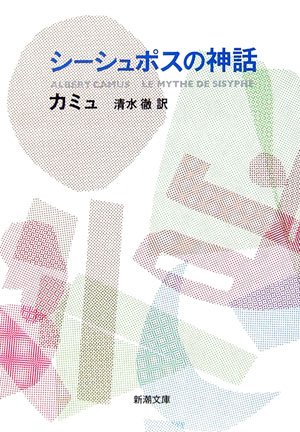 Albert Camus, The Myth of Sisyphus (Japanese ed., trans. Toru Shimizu, Shincho Bunko)The cover image is an Amazon Associate link. As an Amazon Associate, Puzzlebyrinth earns from qualifying purchases.
Reactions (no login)
Anonymous • one of each per visitor per day
Part of these series
The Nature of PlayEpisode 3 of 25
Read next
Related reviews
Desktop Dungeons: Rewind
A turn-based puzzle-roguelike on a single screen of dungeon, where revealing unexplored tiles is what heals you, so every fight is a resource problem. QCF Design's 3D remake of their 2013 Desktop Dungeons, with a rewind for taking moves back and the kingdom-building layer carried over.
Isle of Arrows
A puzzle-leaning tower defense: place randomly drawn tiles onto a floating island, grow the paths yourself, and line up towers against the waves. Unwanted tiles can be skipped, one at a time, for coins. Gridpop's crossbreed of board game and tower defense.
Duskers
You send drones into abandoned spacecraft, scavenge fuel and parts, and move on to the next hull. Every order is typed, and all you see is one camera feed plus a sensor blip that says something is there without saying what. A single-player game of planning in the dark from Misfits Attic.


