BLOG · 2026-09-10
Final Fantasy USA: Mystic Quest (1993) — the Final Fantasy built for American beginners, then shipped back to Japan with “USA” in its name
Today Is Release Day #53 — September 10, 1993, on the Super Famicom
September 10, 1993: a Final Fantasy with “USA” on the box went on sale in Japan
Hello, this is Toki. Episode 53 of “Today Is Release Day.” Today's game is one of the very few Final Fantasy titles with a country's name printed in the title.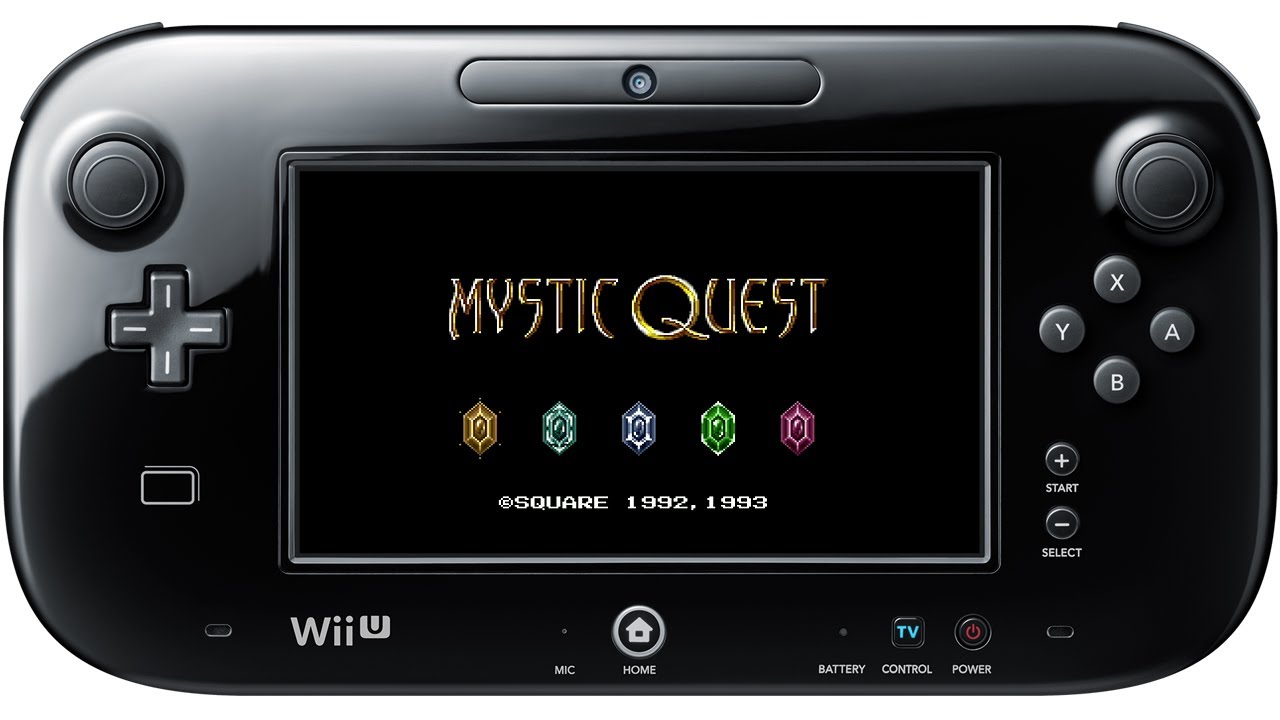 From the thumbnail of “ファイナルファンタジーUSA ミスティッククエスト プレイ映像” (Nintendo 公式チャンネル, YouTube)
Final Fantasy USA: Mystic Quest. Super Famicom, published by Square, priced at 7,900 yen, on a 4-megabit ROM cartridge.
As the name says, the game was built for North America first. It launched there on October 5, 1992 as Final Fantasy: Mystic Quest, and reached Japan eleven months later.
The usual direction is reversed. This was not a Japanese game crossing the ocean; it was a game made for the other shore, coming home — and announcing that fact in its own title.
Why build one for America? Because difficulty was seen as the obstacle
In North America at the time, role-playing games were still a niche. Square is said to have identified difficulty as one reason players stayed away.
So this game was planned around a simple rule: lower the difficulty until a child could finish it. Action elements were added for players who wanted a faster pace.
Development was handled by Square's Osaka division. Chihiro Fujioka wrote the scenario, Kouzi Ide handled system and design, and Ryuji Sasai and Yasuhiro Kawakami wrote the music. Nobuo Uematsu's name is not on this one.
The story was stripped right down. Four crystals have been taken by the Dark King, and the hero travels the world to beat him. The amount of text is strikingly small by series standards.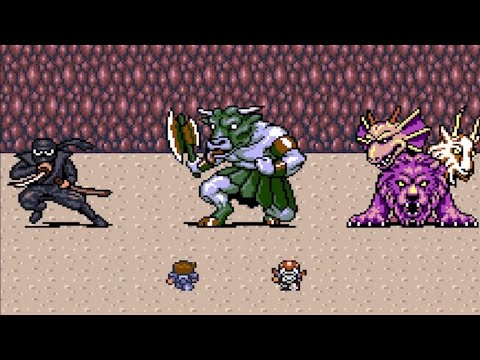 From the thumbnail of “Final Fantasy Mystic Quest (SNES) Playthrough - NintendoComplete” (NintendoComplete, YouTube)
One companion, visible enemies, and walls you blow open with bombs
The shape of play is quite different from the main series. Your party is the hero plus one ally — two at most.
Enemies stand on the screen, and no battle starts unless you walk into one. You are never ambushed just for moving.
In dungeons you hit switches with a sword, cut trees with an axe, and blow holes in walls with bombs. You can jump on the field, too. There is an action-game texture running through the RPG.
Magic does not drain MP; each spell has a fixed number of uses. And if your party is wiped out, you can restart from just before that fight.
Every doorway to “got stuck, gave up” was quietly bricked over. Even world-map travel moves one space at a time, like a board game, so getting lost is impossible.
Famitsu's four reviewers: 7, 6, 6, 4. Around 800,000 copies sold worldwide
So how was it received at the time?
Famicom Tsūshin's cross review came in at 7, 6, 6 and 4 — twenty-three points out of forty. One reviewer gave it a four.
In Famicom Magazine's reader poll it scored 21.7 out of 30 overall, with 3.8 for characters.
North American opinion split too. Electronic Gaming Monthly's four reviewers gave 7, 8, 7 and 7, and the GameRankings average sits at 67%. The recurring complaint was that it committed neither to beginners nor to devoted players.
Sales, according to figures from Square's publicity department, came to roughly 800,000 copies worldwide, about half of them in Japan. Measured against the main Final Fantasy games of the era, that is a small number.
So it is neither a big-selling failure nor an unsung masterpiece. In scores and in units alike, it was set down quietly a little below the middle.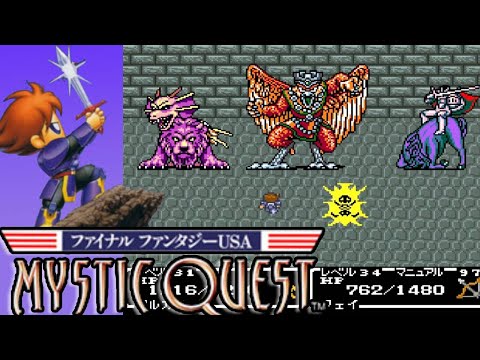 From the thumbnail of “スクウェアのSFC『ミスティッククエスト』エンディングまで【マルカツ!レトログゲーム】” (マルカツ!レトログゲーム, YouTube)
Even the harsh reviews praised the music
Opinion split hard on this game, but one element drew near-unanimous praise: the music.
Ryuji Sasai and Yasuhiro Kawakami wrote it. Guitar sits up front, closer to rock than to the usual Super Famicom RPG score — an unusual texture for 1992.
Later retro-game write-ups still call it strong, singling out the standard battle theme. A soundtrack album, Final Fantasy USA: Mystic Quest Sound Collections, was released as well.
A game deliberately thinned out in play, and the thickest thing left in it was the sound. That is a familiar story, but rarely is the gap this visible.
December 21, 2010: put back on the shelf as a Virtual Console title
Now for what came after. On December 21, 2010 the game was released as-is on the Wii Virtual Console, followed by a Wii U version on April 16, 2014.
The video below is gameplay footage published by Nintendo's official Japanese channel, showing the Japanese version's field and battle screens.
The overlap of purposes is the interesting part. In 1992 it was built as a door for North Americans who had never touched an RPG; in 2010 it was re-shelved as a door for people who wanted to try an old RPG.
Being built gentle still works, decades later. You could say the intention simply never aged.
Nineteen ninety-three, for the record
1993. I never feel an article is finished until I have written the year down. The Japanese release was September 10, 1993 — exactly thirty-three years ago today, September 10, 2026.
Too hard to sell, they said, so it was made easy. Too easy to satisfy, they then said. Carrying both verdicts, this is still the game some people in Japan and North America remember as their first RPG.
What was the first RPG you finished on your own? I would like to hear it.
Reactions (no login)
Anonymous • one of each per visitor per day
Read next
Comments (no login)
No comments yet. Be the first to say something.