BLOG · 2026-08-26
Ecco: The Tides of Time (1994) — “easier than the first game” and “much harder than the first game,” written at the same time
Today Is Release Day #39 — August 26, 1994, Mega Drive
August 26, 1994: a gentle-looking game that was not gentle at all
Hello, Toki here, with episode 39 of “Today Is Release Day.” Today’s game stars a dolphin. It looks soft and friendly, yet the word that followed it around from the start was “hard.”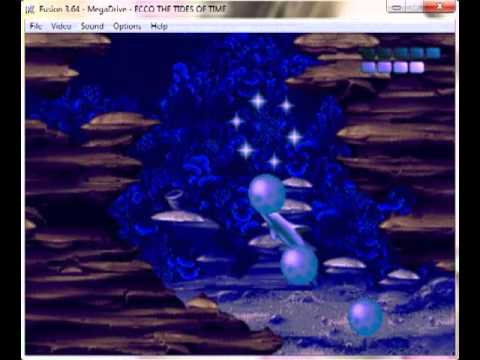 From the thumbnail of “Ecco 2 - The Tides of Time - Mega Drive / Genesis Longplay” (Debyaka, YouTube)
The game is Ecco: The Tides of Time, released by SEGA for the Mega Drive in Japan on August 26, 1994. It cost 6,800 yen, carried the product code G-4123, and shipped on a 16-megabit cartridge.
What makes it interesting is how neatly opinion split. “Easier to get into than the first game” and “much harder than the first game” were written at the same time, about the same title.
The Japanese Mega Drive version of the first Ecco the Dolphin had arrived on July 30, 1993, also at 6,800 yen. The sequel followed about a year and a month later.
Swim, sing, transform, and cross time
The basics are the same as before. You swim Ecco through the sea, send out sonar to read your surroundings, and return to the surface now and then to breathe.
This is what the sea looked like in the first game. The sequel keeps that look almost untouched.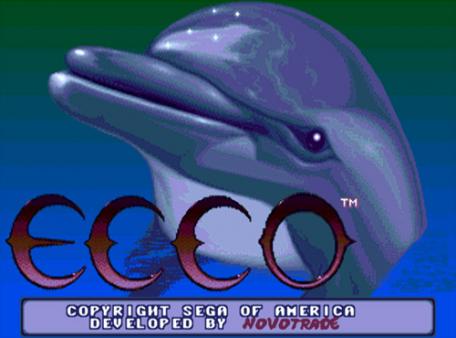 From a screenshot of “Ecco the Dolphin™” on Steam (SEGA)
Two new powers arrive. The first is the Pulsar, a charged sonar blast that fires in several directions.
The second is the Metasphere. Touch it and Ecco changes shape — into a seagull, a jellyfish, a shark, a school of fish, and even a drone belonging to the enemy.
The kinds of screens grew, too. New pseudo-3D stages send you swimming through rings into the distance, laid out much like a scrolling shooter.
The story picks up where the first game stopped. Ecco fights the invading Vortex and follows the fate of the sea across time.
It was developed by Novotrade International in Hungary and published by SEGA. The box art came from Boris Vallejo, the painter known for his fantasy figures.
Looking at the same game, reviewers split over how hard it was
The American magazine Electronic Gaming Monthly put four reviewers on the Mega Drive version and landed on 7.25 out of 10.
They agreed it was a step up from the first game. On difficulty they did not agree: two of the four called it much more difficult than the original. All of them singled out how remarkably colorful it was.
GamePro leaned the other way, praising how much more approachable it felt and how much fun the transformations were. On sound it wrote: “All the game's audio is simple, soothing and effective.”
Next Generation gave it 3 out of 5: “Taxing puzzles, RPG elements, shooting stages, and some of the best Genesis graphics to date make you want to reel Ecco II in, but it's certainly not a keeper.”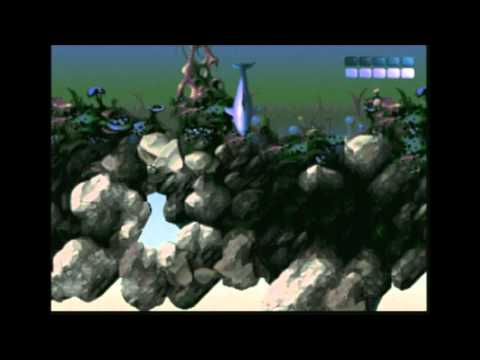 From the thumbnail of “CGR Undertow - ECCO: THE TIDES OF TIME for Sega Genesis Video Game Review” (CGRundertow, YouTube)
The ports were reviewed too. Electronic Gaming Monthly gave the Game Gear version 6.5. GamePro called it “very slow-paced and difficult,” then decided it was “worth the effort.”
The Sega CD version scored 7.6 in the same magazine, where reviewer Mike Weigand wrote: “Take the Ecco 2 game and add beautiful music and excellent sound effects and you get the Ecco 2 CD.” Same game, different ears.
Thirty-two years on, difficulty is still the first thing anyone mentions
Counting from August 26, 1994, August 26, 2026 lands exactly thirty-two years later. An article never feels finished to me until a year is written down, so there it is.
The odd part is that the argument has not moved. A Japanese games reference still says the difficulty is on the high side, and doubts that someone who bought it for the looks will happily reach the ending.
Yet the same page also reports that most people find it easier than the first game. The split from 1994 has simply been carried forward.
The praise for its sound survives as well. Long recordings of the Sega CD version are still around, so you can hear what reviewers were talking about. From the thumbnail of “Sega CD Longplay [101] Ecco: The Tides of Time (US)” (WorldofLongplays, YouTube)
The Japanese Game Gear version, by the way, followed in 1995. Its levels were rebuilt heavily, so the handheld and the console versions are far from identical.
Has a game ever looked gentle to you and then hurt?
Ecco is not a strong dolphin. Charge, sing, surface for air — three verbs, and a whole ocean to cross with them.
That may be exactly why it is hard. The water goes on forever, and the correct path through it is always narrow.
Has a game ever looked gentle enough that you picked it up, and then hurt you?
August 26, 1994. Let me write the year one more time. That was the day the Mega Drive’s sea got a great deal rougher.
Reactions (no login)
Anonymous • one of each per visitor per day
Read next
Comments (no login)
No comments yet. Be the first to say something.