BLOG · 2026-09-09
Mortal Kombat II (1994) — the Friday Nintendo let the blood back in, and the Genesis version still outsold it
Today Is Release Day #52 — September 9, 1994: the home versions launched together in North America
Friday, September 9, 1994: everything hit the shelves at once
Hello, this is Toki. Episode 52 of “Today Is Release Day.” Today's pick is a fighting game whose story turned over twice, both times because of the colour of blood. From the thumbnail of “Mortal Kombat II - Extended Live Action TV Spot | Commercial (45 Seconds)” (Mortal Kombat Secrets - MKSecrets.Net, YouTube)
Mortal Kombat II. The arcade original was made by Midway; the home versions were published by Acclaim Entertainment.
Each port went to a different studio. The North American SNES version was handled by Sculptured Software, the Genesis (Mega Drive) version by Probe Software.
The home versions arrived in North America on September 9, 1994. SNES, Genesis, Game Boy and Game Gear all shipped the same day. Today, September 9, 2026, that is exactly thirty-two years.
That day was a Friday. Fans still call it “Mortal Friday.”
Sixty-five trucks and eleven jumbo jets. Fifty million dollars in week one
The first game's home versions had landed on Monday, September 13, 1993 — the day known as “Mortal Monday.” The sequel moved to a different weekday.
Acclaim put ten million dollars behind it, in a global marketing campaign.
More than 2.5 million copies were shipped. Getting them to 15,000 stores took sixty-five trucks and eleven jumbo jets, by the recorded account.
First-week sales came to fifty million dollars. That beat the box office of Forrest Gump, True Lies, The Mask and The Lion King, which were in cinemas that same season.
In the United States in September 1994, it was the best-selling title on Genesis, on SNES and on Game Gear.
They took the blood out of the SNES port — and lost
Here is the heart of it. In the first Mortal Kombat, Nintendo's policy turned the SNES version's blood into sweat.
The finishing moves, the Fatalities, were swapped for milder animations, and four were cut outright.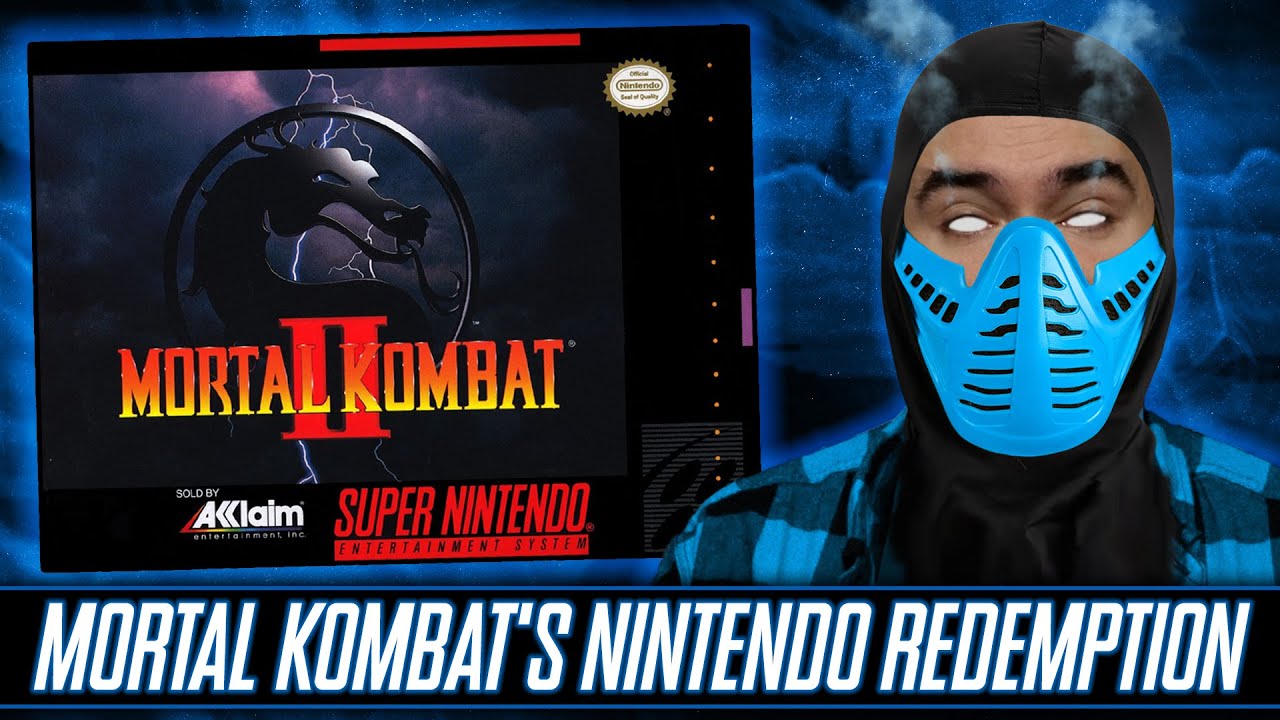 From the thumbnail of “BLOOD SOAKED SEQUEL! - How 'Mortal Kombat II' Saved the Series on Super Nintendo” (616Entertainment, YouTube)
The numbers answered. The best-selling console game of 1993 in the United States was the uncensored Genesis version.
For the sequel, Nintendo changed course and allowed the blood and the Fatalities on SNES.
The Genesis version, this time, was uncensored from the start with no secret code. In 1994 the two machines finally sat on the shelf under the same terms.
The SNES port got called “the most perfect conversion.” The Genesis port sold more
Contemporary verdicts split cleanly along magazine lines.
Electronic Gaming Monthly's four reviewers gave the SNES version 9, 8, 8 and 8. The Genesis version got 8, 7, 7 and 7.
GamePro awarded the SNES version a perfect 20 out of 20 and the Genesis version 17.5. Reviewers of the day went as far as calling the SNES port the most perfect coin-op conversion ever made.
In Britain, though, Computer & Video Games gave the SNES version 96% and the Genesis version 97%. In Japan, Famitsu's panel scored the SNES version 8, 7, 7, 6 for 28 points, and the Mega Drive version 8, 8, 7, 6 for 29.
US sales, meanwhile, were not close. The Genesis version sold 1.78 million copies; the SNES version 1.51 million.
Putting the blood back did not close the gap the first game had opened. By then, I think, buyers had already picked their machine.
In the Japanese Super Famicom version, the blood turned green
Japan got the game a little later, on November 11, 1994, published by Acclaim Japan at 11,800 yen before tax.
And only in that Japanese release was the blood recoloured green.
When a Fatality lands, the screen switches to black and white — a way of keeping the detail from being seen.
In a game released uncensored almost everywhere, Japan was the one version that was altered. In a single year, the censorship had moved from North America to Japan.
For what it is worth, the text stayed in English, menus included. There was no Japanese localisation.
October 30, 2025: the two versions people argued over shipped in one box
Now for thirty-two years later. On October 30, 2025, Mortal Kombat: Legacy Kollection was released, developed by Digital Eclipse and published by Atari.
It holds twenty-three games and versions. Mortal Kombat II is in there as the arcade original plus the SNES, Genesis, Game Boy and 32X ports.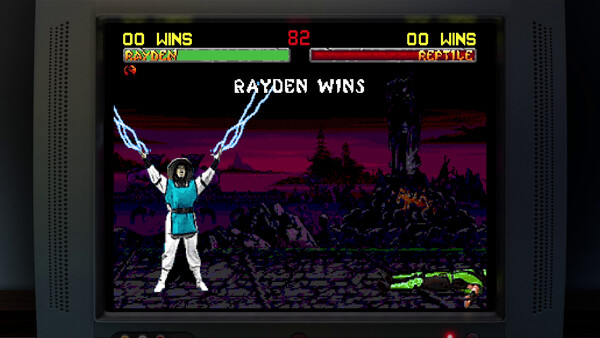 From a Steam screenshot published for Mortal Kombat: Legacy Kollection (Digital Eclipse / Atari)
Which means the two versions compared in 1994 can now be picked from the same menu. Back then you had to own the machine to see the difference.
Aggregate scores came to 84 on PS5 and Xbox Series X|S, and the collection won fighting game of the year at the 29th D.I.C.E. Awards. At launch, input lag and audio faults were reported and later patched.
A film of the same name, Mortal Kombat II, also opened in North America on May 8, 2026. Critics were divided; it took 129 million dollars worldwide.
Nineteen ninety-four, for the record
1994. An article never feels finished to me until the year is written down. The home versions reached North America on September 9, 1994 — exactly thirty-two years ago today, September 9, 2026.
They removed the blood and lost; they put it back and still fell short on sales. That eighteen-month exchange, I think, is what redrew the line for what home games were allowed to show.
Is there a game you chose a console for? This was the era when the same title held different things depending on the box you picked.
Reactions (no login)
Anonymous • one of each per visitor per day
Read next
Comments (no login)
No comments yet. Be the first to say something.