REVIEW · 2013-05-01
FEZ
Rotating 2D, and a secret layer that asks to be decoded — reading the split
Introduction
Gomez is a 2D creature who learns of a third dimension and sets out for the end of the world. You rotate the screen ninety degrees at a time, reading one solid structure as four different 2D planes — a 'rotating side-scroller' puzzle-platformer. Made in 2013 by Canada's Polytron Corporation, published by Trapdoor.
I read this off the Steam review pool. The label is 'Very Positive': 91% of 6,204 English reviews are positive (11,470 Steam-purchase reviews across all languages, snapshot 2026-06-16). Metacritic 91, Eurogamer 10/10, IGN 9.5 — the press scores sit high. By the numbers it looks like a unanimous classic.
But sort the review bodies and praise and complaint point at the same spot from opposite sides: 'a beautiful, gentle discovery' against 'an unfair ARG that forces decoding.' Even the last 30 days don't move it (recent: 84% of 33). I want to read that decade-long, unbudging split in design terms.
 A flat world opens into 3D as it rotates — Steam store
First Impressions
Line up the helpful positives and the words echo each other: mind-blowing, ingenious, beautiful, relaxing, and 'I wish I could wipe my memory and play it new again.' Most cite the first shock of a flat world re-stitching as it rotates, and a calm exploration with no enemies and no death penalty.
The negatives and qualified positives keep coming back to: obtuse, cryptic, tedious. The main path is 'easy enough for a child,' yet the secrets jump to 'ARG territory' — and the gap between them is the grievance. Slow door transitions and poor mid-air control recur on the controls side.
What's telling is how often both sides name the same thing. One reviewer's 'joy of discovery' is another's 'lack of hints.' The game is over a decade old, yet recent reviews still land on the same spot. My task is to translate where that fork sits into design language.
 A calm pixel world with no enemies — Steam store
Putting the Mechanics into Words
What the positives almost unanimously call 'genius' is the perspective rotation — what reviewers name 'rotating & projecting.' The world is truly 3D, but you only touch its 2D projection; rotate and depth re-sorts, so platforms far apart in 3D sit side by side in 2D. In our terms the verb is subtracted to one — 'rotate' — and that one word rewrites the grammar of space. It sits in the line of Manifold Garden and Antichamber.
But the root of the split is here too. Several reviewers note, coolly, that 'the main path needs only rotation, and you hit its floor in minutes.' The yellow cubes you need to finish come almost entirely from rotation, and the verb is never developed further. A vivid verb, introduced and then parked — that, I think, is what 'too easy' really means.
Every hard spot then moves to a second grammar: decoding an invented alphabet and number system. One Russian positive review calls reading the scattered glyphs 'feeling like Champollion.' Another reviewer calls the same thing 'memorising a useless cipher.' One design, demanding a high resolution of observation, swings between magical and tortuous depending on who holds it.
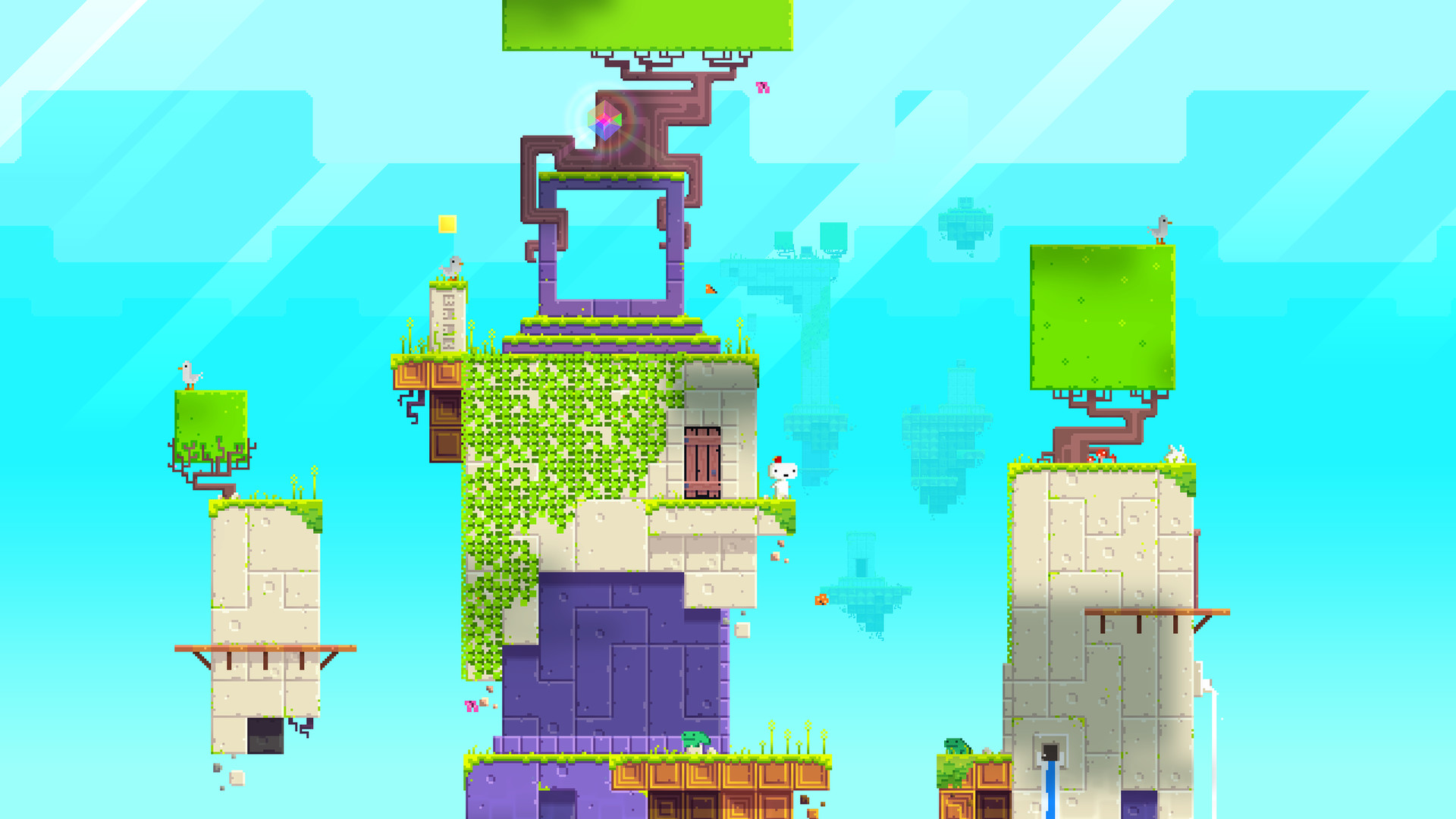 Rotate the screen and depth re-sorts — Steam store
The World
One of the few points nearly every review shares is the feel of the world: pixel-art towns, the charming animation of tiny creatures, and Disasterpeace's (Rich Vreeland) delicate ambient chiptune. Even negative reviews open with 'the core mechanic is genius and the visuals burst with life' before the complaints. Art and sound are near-unanimous.
As design, the world works as a buffer that lowers pressure. No enemies; fall and you respawn at the last safe spot. With no penalty for failure, you can try rotations like 'smelling the flowers on a walk.' It plays the role that space itself plays in COCOON or The Witness — here carried by mood.
But the same calm reads to the negative side as 'no resistance.' Penalty-free exploration feels hollow to anyone wanting tension. A perfect world for those who came to soak in atmosphere; thin for those who came for the payoff of mastery. Even the verdict on the world forks by expectation.
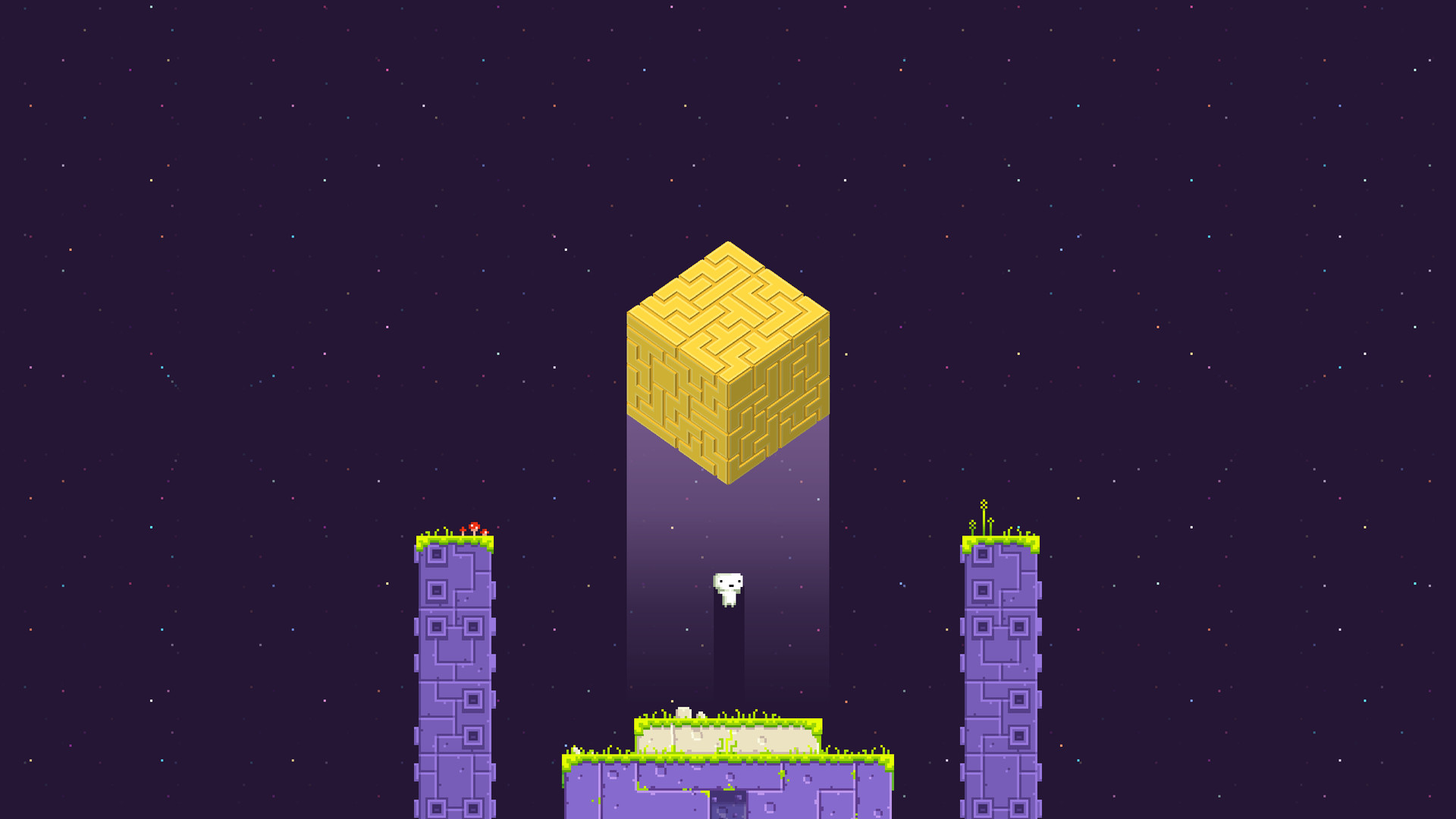 Pixel-art towns and a Disasterpeace score — Steam store
The Texture of Difficulty
This game's difficulty won't fit one number. Sort the pool and it splits in two: the main path is so easy you 'never feel you left the tutorial,' while the hidden cubes (the blue 'anti-cubes') and the red cubes jump to its most notorious puzzles. The curve doesn't rise smoothly; it faults between main path and secret.
The negatives cite the same examples: QR codes that just spell out button inputs (scan with a phone, and reused more than once), a QR obscured by scaffolding you're meant to rebuild in third-party software, empty rooms with no clue at all, and an invented alphabet and number system you must decode. The community even hosts guides stating 'FEZ is almost impossible to finish without a guide,' alongside a 'guide to avoid guides.' The grievance is that the secret solutions assume outside knowledge.
To me this is a question of kind, not amount. A spatial 'rotate' verb, with an alien 'decode' grammar grafted on late. The same content becomes 'one of the few games that made me want a sheet of paper' (a recent positive) or 'an unfair ARG.' Less a flaw than a choice of range — aimed at high-resolution observers, with the stroll-and-relax crowd left outside the line.
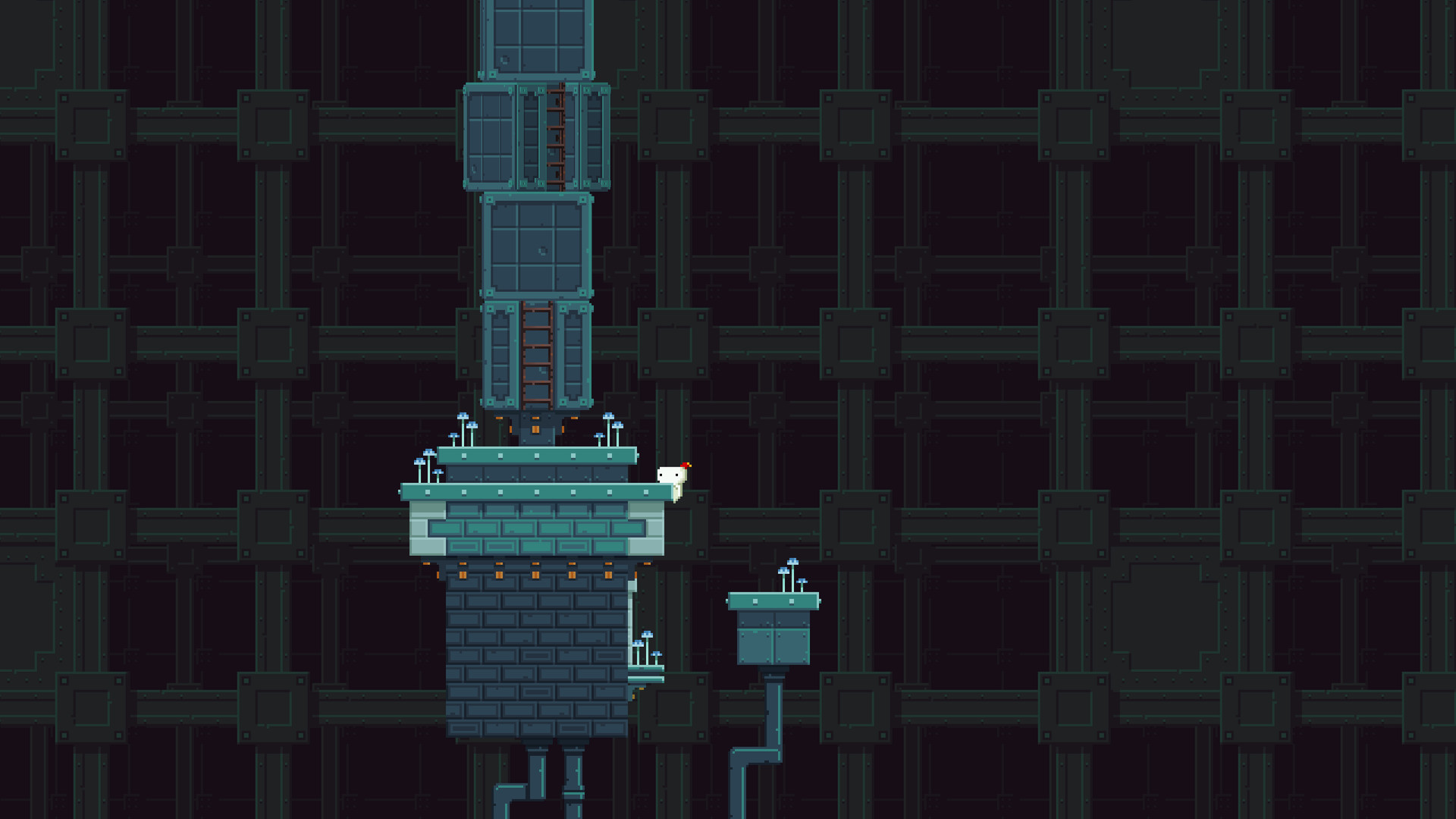 Secret cubes jump to decoding glyphs and numbers — Steam store
Sources
This piece was written by reading the user reviews on the Steam store page as of 2026-06-16. No review text is quoted directly; typical claims are reconstructed.
- Steam: FEZ (Very Positive, 91% of 6,204 English reviews; 11,470 reviews across all languages; recent 84% of 33)
- Read via WebFetch: representative helpful positive/negative reviews, several recent reviews, and the community hub's recent posts and walkthrough guides
- Press: Metacritic: FEZ (91), plus scores from Eurogamer (10/10) and IGN (9.5/10)
Closing
Steam reads 'Very Positive,' 91% in English; my design-critique score is 8.0. The core rotate verb, at the moment it arrives, is genius without qualification, and the penalty-free world is calm and lovely. The deduction is clear: that vivid verb is never developed deep on the main path, and every hard spot is handed to a separate decode grammar. The genre-defining rotation and the ARG-grade decoding never join into one learning curve.
What the pool shows, unmoved for over a decade, is that the verdict is set mostly by what you came expecting. For anyone here for the shock of rotation and a gentle world, it remains a classic. For anyone who wants the payoff of full completion by their own decoding, bring paper and patience. Anyone who wants only the bite of challenge, with no quiet stroll, was outside its range from the start. The split itself maps who the game was made for.
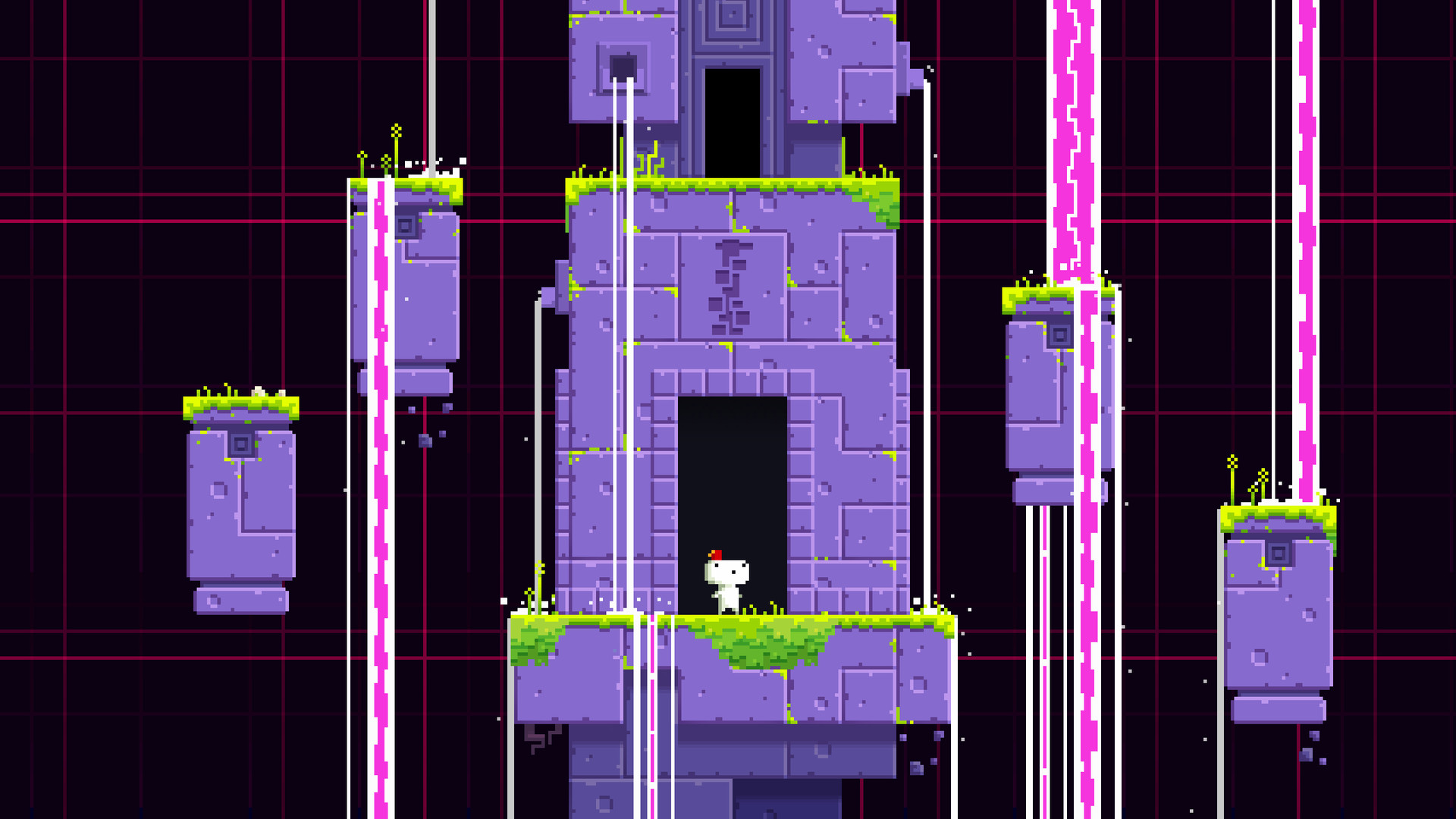 The rotation invention, and the decoding load — Steam store
Where are you with this game?
Press one and the game goes on your shelf. You can see it on your account page.
Reactions (no login)
Anonymous • one of each per visitor per day
Read next

Related reviews
The Bridge
A 2D puzzle game where you rotate the entire stage to change which way gravity pulls, threading M.C. Escher-style impossible architecture to reach the exit key. From a single verb — turn the world — grow vortexes, a rolling boulder and full inversion, all in hand-inked black-and-white lithograph. A 2013 game by Ty Taylor and Mario Castañeda.
The Swapper
A 2D puzzle-platformer where a gun lets you spawn up to four clones and swap your consciousness between them as you descend the derelict space station Theseus. Red and blue lights bar cloning and swapping in a tight grammar while a lonely clay-modeled world quietly asks what the self is — from Facepalm Games.
Antichamber
A first-person puzzler in white walls and black lines that treats non-Euclidean space itself as a grammar.


