REVIEW · 2020-07-23
Röki
The 89% is grading the art and the story — the complaints gather not around finding the solution but around the price of trying one
First Impressions
I have not played this one. I am reading what its 3,208 reviews actually graded. The numbers first: 3,208 reviews on Steam, 2,854 of them positive, 89.0%, labelled Very Positive (snapshot of 2026-08-31). SteamDB's all-language count sits near 3,000 reviews at 85.6%. On Metacritic the PC version scores 76 across 38 critics, with a user score of 7.7 from 72 ratings.
The figures line up neatly. But start reading the helpful reviews and one word repeats on both sides of the line: slow.
What interests me is where that word sits. The negative side quits over it. The positive side concedes it and recommends the game anyway. So the argument is not about whether the game is slow. It is only about whether you are willing to pay.
 The 1st image in the Steam store gallery — Steam store screenshot
The World
The praise converges on one thing: the world built on Nordic folklore. Across the positive pool the recurring words are beautiful, storybook, atmospheric, Nordic. Snow, forest, hand-drawn shapes, and the score come up again and again.
The negative side does not contest this. Plenty of negative reviews open by granting the art. The shape I kept meeting was some version of gorgeous art, agonising play.
In Puzzlebyrinth's vocabulary, the game asks for observational resolution. Each screen is a dense single picture, and finding what can be clicked is itself a step. The positive "it is beautiful" and the negative "I cannot spot the small items" are two outcomes of the same design choice.
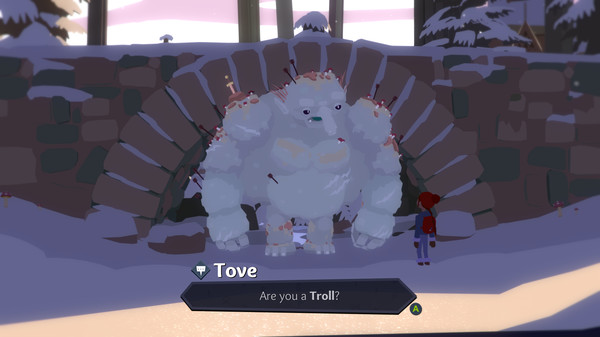 The 2nd image in the Steam store gallery — Steam store screenshot
The Feel of the Story
The story follows Tove, a girl searching for her sister, and it is about losing family. The strongest words in the positive pool land here: I cried, darker than I expected, there is something else under the cute art.
That gap between surface and content is the centre of most recommendations. People who played it with their children and people who describe it as a story about accepting loss sit in the same review pool. Both are describing the game correctly.
The third act, though, draws complaints from inside the positive pool too. The castle stretch runs long, clicking through dialogue piles up, the ending drags — written by people who still recommended it. The difference between puzzles with a story and puzzles without one is something I looked at in Puzzles With a Story, Puzzles Without. I do not read this as the story losing power. I read it as the cost of advancing the story going up.
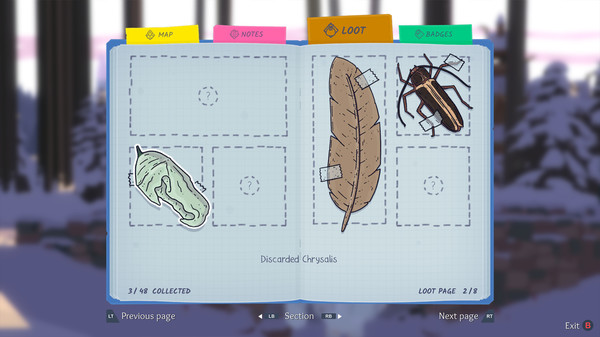 The 3rd image in the Steam store gallery — Steam store screenshot
Putting the Mechanics into Words
The verbs are the classic point-and-click set: pick up, combine, place, talk. There is no combat and no failure state. The developer describes it as a non-violent adventure anyone can finish.
The input is not classic, though. You walk the character with the keyboard and handle objects by dragging. The mouse alone will not do. Japanese reviewers name the imprecise targeting directly, and the English pool keeps returning to the same objection: WASD in a point-and-click. I wrote about control schemes setting difficulty in When the Control Scheme Decides the Difficulty.
The puzzles themselves are gentle. Even the positive pool mostly calls them logical and fair, with little moon logic, and almost nobody complains about being unable to solve them. So what is hard here? The review pool answers plainly: you know the solution. It is the walking that is long.
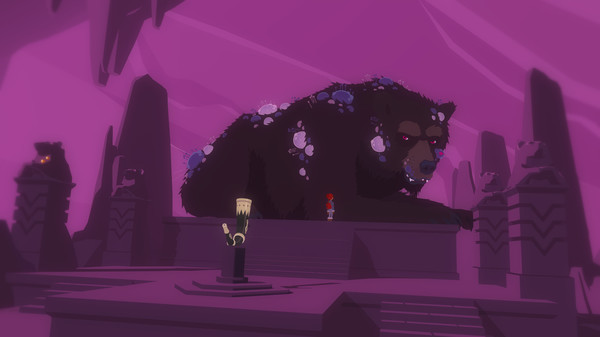 The 4th image in the Steam store gallery — Steam store screenshot
Pacing
This is the heart of it. Line up the complaints and they form one mass: slow, unskippable, backtracking, slog, busy work. Climbing, placing an object, talking — each animation plays out and none of it can be skipped.
One negative review put the mechanism precisely: trial and error is not the problem, sitting through minutes of animation for each attempt is. In this design every attempt carries a fixed price.
Gentle puzzles do not save you from that. If one attempt is expensive, the total still climbs, and an exploration game cannot tell you how many attempts you will need. Of price times count, the developer lowered the difficulty rather than the price. Whether a design permits or punishes an attempt is the subject of The Ethics of Undo. The positive side does not deny this either — the defences are that you stop noticing if you focus, or that the shortcuts make it bearable. Both take the price as given.
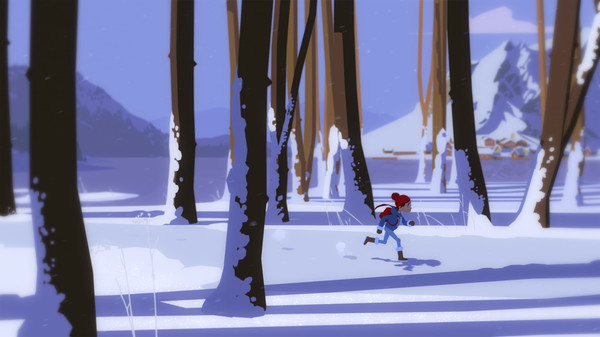 The 5th image in the Steam store gallery — Steam store screenshot
Sources
This article is based on the Steam user reviews and related data as of 2026-08-31. Review text is not quoted directly; recurring claims are reconstructed.
・Steam: Röki (2,854 of 3,208 reviews positive, 89.0%, labelled Very Positive / 2026-08-31 snapshot)
・Read: top 20 helpful positive, top 20 helpful negative, 10 most recent, and the top 5 Japanese-language reviews
・SteamDB: Röki (all languages, about 3,000 reviews at 85.6% positive)
・Metacritic: Röki (PC 76 from 38 critics, user score 7.7 from 72; PS5 82 from 8 critics, Switch 79 from 6)
・Images are taken in order from the Steam store screenshot gallery. The image CDN was not reachable from this session, so captions state gallery position only.
Closing
I read the recent pool too. Eight of the ten I saw were recommendations, clustered around the end of 2024. The game has sat at around two dollars, ninety percent off, for a long stretch. The lower the price falls, the cheaper the time cost looks by comparison.
The Japanese pool adds a complaint the English one does not carry: translation quality. Uneven register, wrong particles, and mistranslations that touch puzzle hints are all named. Broken hints raise the number of attempts, and every extra attempt carries the price described above. The same puzzles cost more in Japanese.
From a design standpoint I give it 7.2, harsher than Steam's 89.0%. The deduction is not for easy puzzles. It is for pairing easy puzzles with an expensive attempt. The shape — hand-made art praised, the moment-to-moment play attacked — resembles Trüberbrook, though there the argument was about automating the search and here it is about time spent walking and watching. Who is it for? Someone who wants Nordic folklore and a story about loss delivered at walking pace. Buy it for the solving and what you will remember is the waiting.
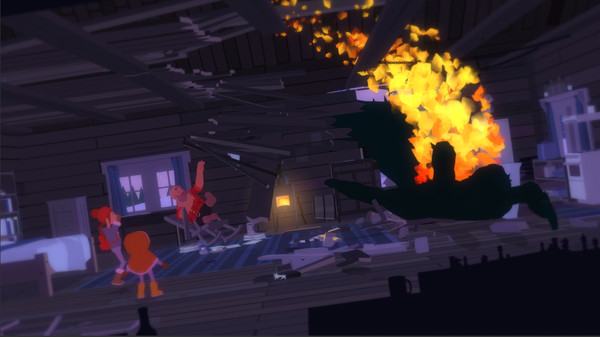 The 6th image in the Steam store gallery — Steam store screenshot
Reactions (no login)
Anonymous • one of each per visitor per day
Read next

Related reviews
THE LONGING
A hand-drawn adventure about waiting. You play a small Shade, alone deep underground, whose one task is to wait 400 days for a sleeping king to wake. Everything moves slowly, from the walking to the doors, and the timer keeps running while the game is closed. You can explore the caves, furnish a room, and read real classic novels to make the time pass faster. Made by Studio Seufz.
Genesis Noir
A hand-drawn black-and-white point-and-click adventure in which you play No Man, a watch peddler diving through the history of the universe to save his love from the Big Bang — a gunshot fired by a jealous god. Feral Cat Den built it out of tactile puzzles: turn a dial, touch a thing, see what happens.
Trüberbrook
A point-and-click adventure in which Hans Tannhauser, an American physicist who has won a trip to a remote West German village in 1967, chases a stolen physics paper and walks into a story about another dimension. Made by the German studio btf, with sets built as real miniatures and photographed.


