REVIEW · 2018-07-13
The Spectrum Retreat
Color-swapping at the Penrose Hotel
Introduction
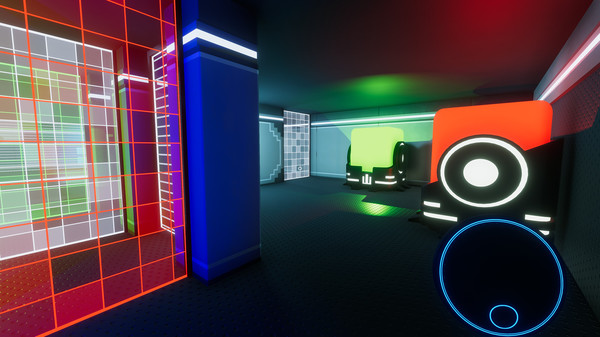
You wake in the near-future Penrose Hotel. The art-deco corridors are handsome and faintly deserted. To move on you pull a colour out of a tinted wall, carry it, and hand it to a same-coloured field — a first-person puzzler where you hold exactly one colour. Made by Dan Smith Studios and published by Ripstone in 2018.
I write this from the Steam review pool. The label is 'Mostly Positive,' 76% of 223 reviews (snapshot 2026-06-16). The critics run a touch cooler — OpenCritic averages 69 across 39 outlets, 37% recommend; Metacritic 68. The numbers read 'fine, neither high nor low.' But the substance of the split is sharp.
It splits on one fact: the game wears two faces, puzzle and story. Colour-matching chambers alternate with walking the hotel to follow the plot. The positive side reads the alternation as breathing; the negative as two separate games stitched together. I'll measure that seam in design terms.
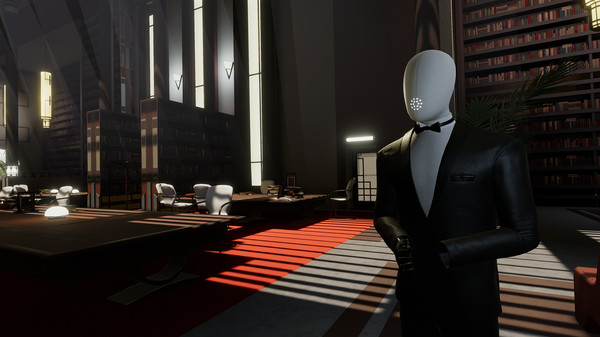 The Spectrum Retreat — Steam store art
First Impressions
Line up the helpful positives and the words rhyme: relaxing, atmospheric, clever, and 'you can tell it won a BAFTA.' Most praise the quiet tension of soft music and an empty hotel, and a colour-matching that's 'tough but never unfair.'
The negatives and qualified positives keep returning to: derivative, predictable, short, and 'the story is hollow.' A lesser Portal; twists you guess early; an abrupt ending. HowLongToBeat puts it near five hours, and several flag the price against that length.
What interests me is how often praise and complaint point at the same thing. One reviewer's 'story and puzzle melting together' is another's 'two separate games taking turns.' My job isn't to stage that as a fight but to translate where the fork happens.
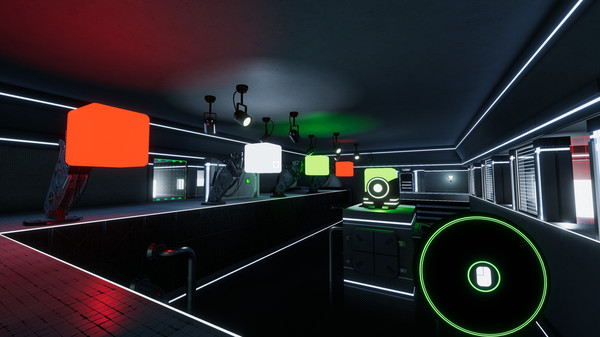 The Penrose Hotel — Steam store
Putting the Mechanics into Words
What the positives praise most is how clear the core verb is. You hold one colour at a time: touch a tinted wall to take its colour, hand it to another, and only barriers of the colour you carry let you through. In Puzzlebyrinth terms, the verb is subtracted to one — 'swap the colour you hold.' Where Portal's portals join space, here colour joins passage.
One verb, but the grammar grows in steps: later you carry colours, route them across gravity shifts, data bridges and teleport pads, until it becomes a question of order and placement. 'Easy at first, then it makes you think' is reviewers describing that curve adding one rule at a time.
Even the recommendations carry a caveat: a good base that rarely does more than pass colour along, with solutions that tend toward a single line. The restraint and the under-use sit in the same review — the test-chamber fate I noted for The Turing Test, in the same shape.
 The colour-swap puzzle — Steam store
The World
The one thing nearly every review agrees on is the hotel. Art-deco lines, soft light, an unpeopled hush. The positive side calls it 'cosy yet chilly'; even the negative opens with 'the atmosphere is good' before the complaints. The 'calm but something's wrong' feel of music and space is a near-unanimous strength.
In design terms the hotel is a device for raising observation. If the colour chambers raise logical density, the hotel lowers it to let you breathe — a buffer that slides your attention from solving toward 'where am I, who am I.' The same role The Witness's island played as room to think.
But that buffer is also the fault line. The negatives call the walking 'padding' and the exploration 'thin.' A space being beautiful and a space having something to do are separate questions — a vessel for mood that succeeds, a place to play that runs light.
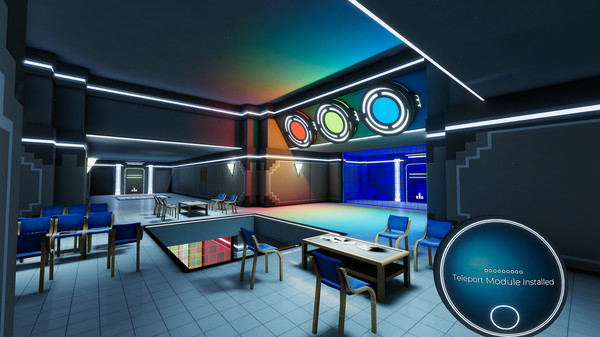 The art-deco hotel — Steam store
The Feel of the Story
The story tells, in fragments, the loss of a family failed by a healthcare system. The helpful positives read it as 'a human sadness that lands between puzzles,' liking how the narrator's voice and memory shards slowly resolve into a picture. Destructoid grants there's 'a narrative worth hearing.'
The negatives concentrate their fire here: twists guessed early, an abrupt end that explains nothing after your choice, 'I felt betrayed.' IGN Italy's verdict — 'a split personality, half puzzle, half walking sim; both well made, but the forced dichotomy breaks the rhythm' — overlaps neatly with the user complaints.
Translated to design, this is a problem of story bitrate. Plot is doled out behind runs of consecutive puzzles. Destructoid's 'the cadence is slightly off' means the density of solving and the density of telling never sync. Where Obra Dinn made deduction itself the story, this one runs plot and puzzle in parallel and leaves the thread between them thin.
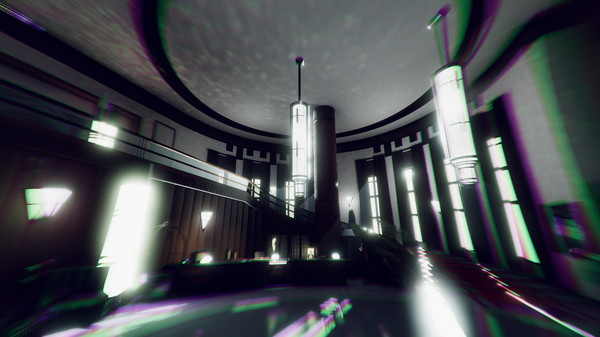 The Spectrum Retreat — Steam store
Sources
This piece was written by reading the user reviews on the Steam store page as of 2026-06-16. No review text is quoted directly; typical claims are reconstructed.
- Steam: The Spectrum Retreat (Mostly Positive, 76% of 223 reviews)
- Read the top helpful positive and negative reviews plus several recent ones to extract the axes of agreement and disagreement
- Press: OpenCritic (69 avg / 37% recommend, 39 outlets), Metacritic 68, and reviews from Destructoid, IGN Italy and Nintendo Life
Closing
Steam reads 76% positive, OpenCritic 69; my design score is 7.0, leaning toward Steam. The core verb — swap the colour you hold — is clear, and the curve builds one rule at a time. Two marks come off: the verb isn't developed to its end, and the densities of puzzle and story never sync, so the double structure sometimes looks like two separate games.
What the pool shows is that your verdict is mostly set by which face you came to see. Within reach for anyone wanting quiet mood and tidy colour puzzles; outside it for anyone expecting Portal-grade fusion of story and device. The work of a young, BAFTA-winning talent whose ambition slightly outruns the craft — and that slight overrun is exactly what 76% is measuring.
 Awards — Steam store
Where are you with this game?
Press one and the game goes on your shelf. You can see it on your account page.
Reactions (no login)
Anonymous • one of each per visitor per day
Read next
Related reviews
Semblance
A 2D puzzle-platformer where you dent and raise the very ground to build your own footholds, threading past spikes and lasers to return each essence to the world-trees. Nyamakop's debut from South Africa, built on a single verb — deform — in a world with no 'hardness'.
Q.U.B.E. 2
A first-person puzzler where manipulation gloves grow colored cubes on white walls — red steps, blue springs, green movable blocks — recombined to cross a sand-buried alien structure. The sequel to Q.U.B.E., made by Toxic Games.
La-Mulana 2
A 2D exploration-puzzle action game in which Lumisa Kosugi descends into the ancient ruins of Eg-Lana with a whip and a notebook. You copy down the inscriptions on the walls and match them to contraptions several rooms away. NIGORO's sequel to La-Mulana.


