TAG
#generative-ai
0 reviews · 4 essays
Related essays
Pfau & Vrettis: What Happens When Players Generate Their Own Pokémon Cards — Fukai Reads
An arXiv preprint (not peer reviewed) by Johannes Pfau and Panagiotis Vrettis at Utrecht University. A player writes a name and some flavour text; retrieval, a text model and an image model turn it into a Pokémon-style card in about 20 seconds. Forty-nine students made 196 cards. Visual satisfaction averaged 4.25 out of 5 and mechanical fit 4.04, and 93.5% said the final design was their own idea. None of the cards has been played, so balance remains unverified.
Bazzaz and Cooper: Comparing Generative AI to PCG Across 500,000 Steam Reviews — Fukai Reads
A paper by Bazzaz and Cooper at Northeastern analysing 508,192 Steam reviews. Comparing 5,970 titles that disclose generative-AI use against 5,186 titles that use PCG, the recommend rate is 86.3% for PCG versus 68.4% for generative AI — a 17.9-point gap — and generative-AI reviews split almost evenly at 53.0% positive to 47.0% negative. A thematic analysis of 600 reviews raises five themes: signals of low developer investment, ideological rejection, conditional acceptance, mismatch between disclosure and evidence, and criticism of not using AI where it should be. arXiv:2608.11539, ACM DOI 10.1145/3831347 assigned.
Turning “what makes a good puzzle” into a formula: DeepMind quantifies the counter-intuitiveness of chess puzzles
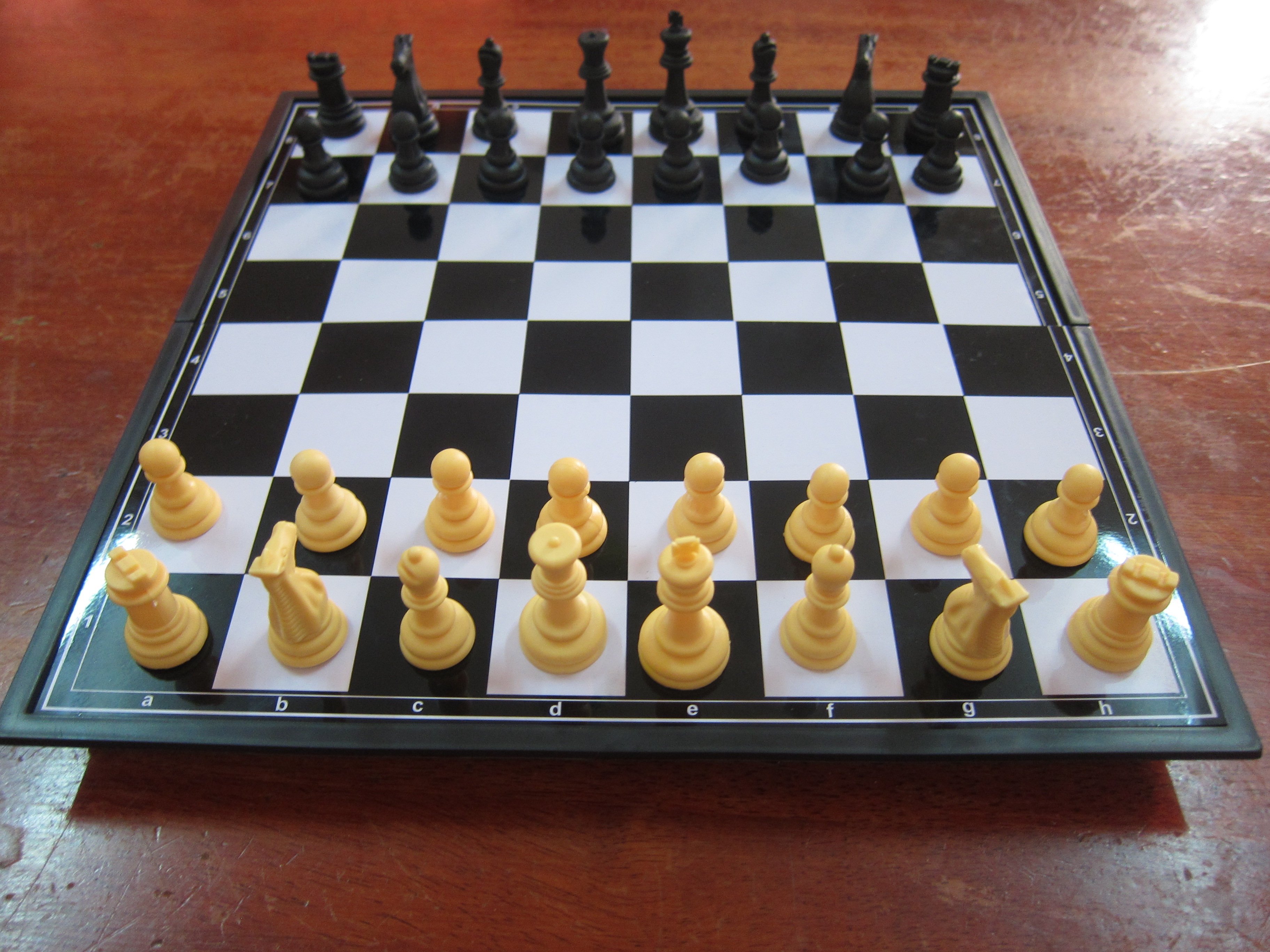
One piece today. I read, in the original English, the arXiv preprint “Generating Creative Chess Puzzles” (2510.23881, October 2025) by Xidong Feng and colleagues at Google DeepMind. Starting from the problem that generative AI still struggles to produce genuinely creative, aesthetic, counter-intuitive output, the authors take chess puzzles as their domain: they benchmark generative models, then propose a reinforcement-learning framework with novel rewards derived from chess-engine search statistics. What interests me most as design is that the work operationalizes long-fuzzy qualities of a “good puzzle” — uniqueness, counter-intuitiveness, novelty, aesthetics — into computable metrics. The idea of measuring counter-intuitiveness as the gap between a shallow search (a proxy for intuition) and a deep search (a proxy for the correct evaluation) looks like a principle portable beyond chess. I take it up as a pre-review preprint, with its date made explicit.
Bazzaz et al.: Believing It's AI Changes the Experience — Fukai Reads
A CHI '26 paper by Bazzaz and Cooper on perception bias toward generated content. Mixing human-made and AI-generated levels in Super Mario Bros. and Sokoban for 142 players, they report that players can barely identify the creator, yet levels believed to be AI-made are rated less fun, harder, and more frustrating.