TAG
#reinforcement-learning
0 reviews · 12 essays
Related essays
Kelidari et al.: A Card-Game Agent Is Only as Strong as the Yardstick You Build First — Fukai Reads
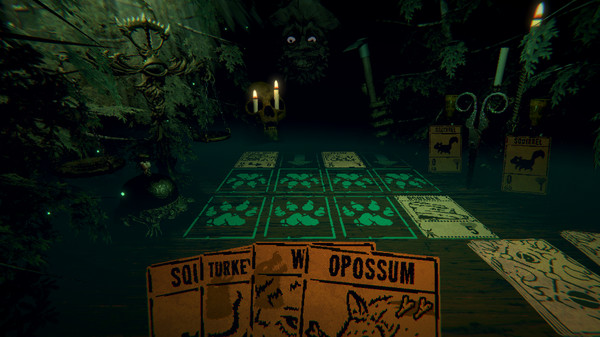
An arXiv preprint by Nima Kelidari and two co-authors, under submission to AIIDE 2026. Using Gin Rummy and a hand-written fixed expert as an immovable yardstick, they run more than a hundred controlled experiments on what makes a lightweight reinforcement learning agent strong. Win-rate against the expert is 15.0% for PPO, 22.5% for TRPO and 34.2±2.1% with every working ingredient stacked; swapping network shapes leaves win-rates overlapping, while a search that can see the hidden cards reaches 85% against 26% for one that cannot.
Wang et al.: Making a Puzzle Solver the Teacher for Every Single Move — Fukai Reads
A game-AI paper by Yu Wang and colleagues. Where long-horizon puzzles reward only the final win, they convert the drop in a solver's remaining-distance-to-goal into a per-move score and mix it into training. Averaged over Sokoban, Minesweeper and Rush Hour, success rises from 16.6% to 62.1%, and on unseen difficulty from 5.9% to 28.4%. Querying the solver costs about 73 parts per million of training wall clock.
Ponnock & Ho: The Order of Mario 1-1 Has a Measurable Teaching Effect — Fukai Reads
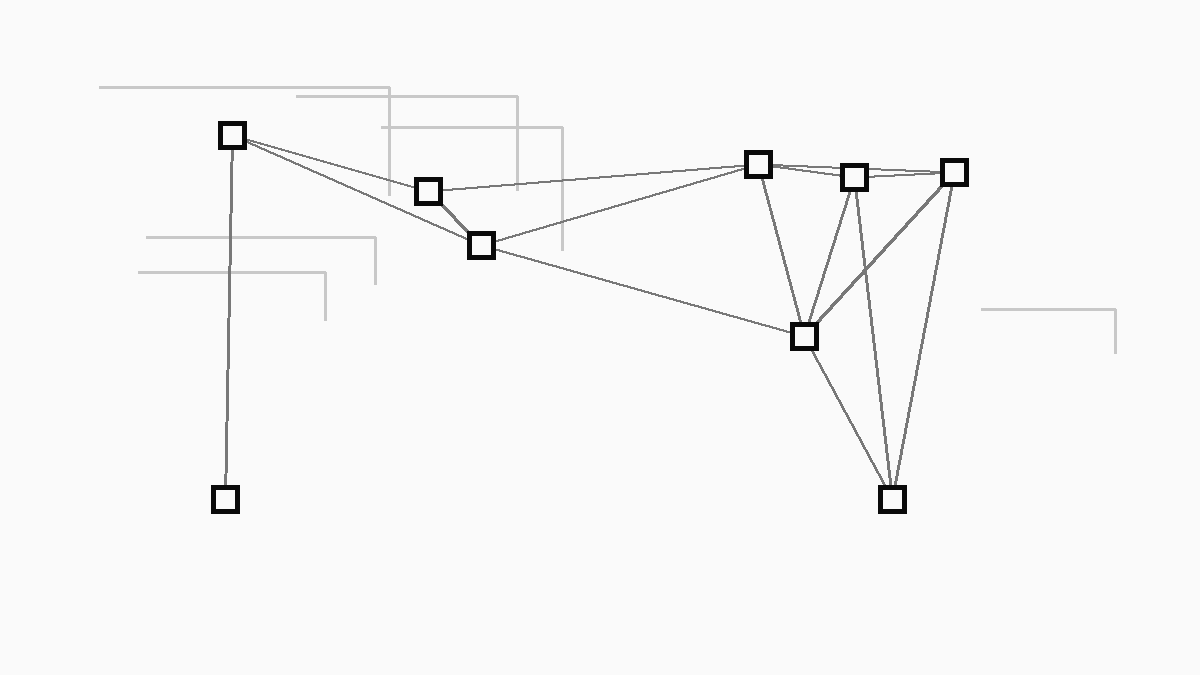
A reinforcement learning and level design paper by Jesse Ponnock and Lucas Ho (arXiv preprint, not peer-reviewed). Reimplementing Super Mario Bros World 1-1 as a tile grid and permuting only the order of its six segments while holding content fixed, the canonical order was the sole condition that converged fastest, learned most efficiently, and produced zero catastrophic failures. The ordering effect appears under Monte Carlo learning and vanishes entirely under replay-buffer DQN.
Wang et al.: Gauging Tetris Block Puzzle Difficulty by How Fast a Strong AI Learns — Fukai Reads
An arXiv preprint from a National Yang Ming Chiao Tung University and Academia Sinica group that measures the difficulty of the popular mobile game Tetris Block Puzzle. It rates rule variants by how fast and high a strong AI (Stochastic Gumbel AlphaZero) can learn to play, finding that more holding/preview blocks make the game easier while adding block shapes makes it harder (the T-pentomino most of all).
Earle et al.: Recasting Level Design from a One-Person Job to a Multi-Agent Collaboration — Fukai Reads
A paper on reinforcement-learning level generation (PCGRL) by Earle et al. It recasts the traditional single-agent, tile-by-tile method as a multi-agent problem in which several agents divide the work and edit in parallel, showing across maze and dungeon domains that more agents improve generation quality, generalization to unseen boards, and computational efficiency.
Bhaumik et al.: Stitching WFC and Reinforcement Learning for Playable, Good-looking Levels — Fukai Reads
A procedural level generation paper by Bhaumik et al. It tackles the weaknesses of WFC (good-looking but unplayable) and reinforcement learning (playable but ugly) with WCRL, which narrows the RL agent's actions using WFC's local rules, generating Lode Runner levels that are both example-like and playable.
Li et al.: Making Geometry Problem Solving Verifiable with a Solver as Referee — Fukai Reads
An arXiv preprint by Can Li et al. on geometry problem solving (GPS). Their SD-GPS translates diagram-and-text problems into a form a symbolic solver can execute, and at impasses proposes helper lemmas verified by the solver itself. The abstract reports it consistently outperforms existing methods on Geometry3K and PGPS9K. Fukai reads it for its use in solvability-guaranteed puzzle generation.
Sestini et al.: Making AAA Game NPCs Feel Authentic with Reinforcement Learning — Fukai Reads
A vision paper from the research team at Electronic Arts. It tests whether AAA game NPCs can be improved with reinforcement learning, through two real cases — goalkeeper positioning in EA SPORTS FC 25 and infantry locomotion in Battlefield 6 — and lays out seven requirements RL must meet in production. Its conclusion: RL is a tool to augment, not replace, existing game AI.
Aryan et al.: When You Stall, the World Changes — AbideGym Turns Static RL Worlds into Adaptivity Tests — Fukai Reads
A preprint by Aryan et al. (Abide AI) on RL environment design. To fight the brittleness that comes from training in fully static worlds, AbideGym rewrites the rules and grows the map mid-episode, triggered by the agent's own inactivity, forcing it to abandon memorized policies and re-plan. The paper presents the design and a comparison to prior work; no experimental results yet.
Özkan: Co-Training the Level-Generating AI and the Level-Solving AI — Fukai Reads
A paper by Miraç Buğra Özkan that trains level generation and level solving together via reinforcement learning. In Unity, a hummingbird (solver) and a floating island (generator) learn while watching each other's results, reaching about 90.2% success across 100 unseen layouts.
Jara Gonzalez & Guzdial: Generating Enemy Shapes as Gates You Need a Mechanic to Beat — Fukai Reads
A paper by Jara Gonzalez and Guzdial on generating enemy morphologies (collision shapes). They frame 'enemies defeatable only with a specific mechanic' as a 4x4 grid generation problem, compare reinforcement learning, A* search, and neural generation, and find a simple A* reachability rule yields the best gating and most diverse shapes at the lowest cost.
Feng et al.: Can AI Generate Counter-Intuitive Chess Puzzles? — Fukai Reads
A study, led by a Google DeepMind team, on generating creative chess puzzles with AI. A generative model trained on Lichess data is tuned with reinforcement learning, raising the rate of counter-intuitive puzzles from 0.22% to 2.5% (about tenfold). The highlight is how they reduce creativity to numbers a machine can measure.