TAG
#nintendo
0 reviews · 4 essays
Related essays
Panel de Pon (1995) — The Name Was Taken Away Again and Again, But the Grammar of Play Survived
On October 27, 1995, Nintendo and Intelligent Systems released Panel de Pon for the Super Famicom: a competitive puzzle where a bracket cursor swaps two adjacent panels to line up three or more of the same color. It was produced by Gunpei Yokoi. The Western release, retitled Tetris Attack, replaced fairy protagonist Lip with Yoshi's art, erasing her from the West. Over the following three decades the design survived under Pokémon branding, the official Puzzle League line, and Nintendo first-party content — and in December 2025 a free Steam release called Panel Attack openly describes itself as being in the "Panel de Pon / Tetris Attack style." A record of one work whose name kept being taken away, while only the grammar of its play survived.
The Legend of Zelda (1986) — The Grammar of Exploration Set by Treasure and Labyrinth
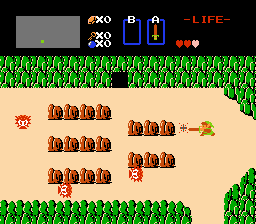
Released 21 February 1986 as the launch title for the Family Computer Disk System, The Legend of Zelda was built by Shigeru Miyamoto and Takashi Tezuka around a one-directional chain: obtain a treasure, and a path opens. Forty years later, that structure stands as an ancestor of today's exploration-based puzzle games. I reread this design, born from the era's disk-capacity constraints, through a historian's eyes.
Mole Mania (1996) — What a Two-Layer Board of Surface and Underground Taught Us
On July 21, 1996, Nintendo released Mole Mania for the Game Boy, developed by Nintendo EAD and Pax Softnica and produced by Shigeru Miyamoto. With four verbs — push, pull, throw, dig — you carry an iron ball to each screen's gate, across a board that exists in two layers: surface and underground. I dig up this forgotten work as an ancestor of the spatial reasoning found in today's multi-layer puzzles.
Mario's Picross (1995) — Picture Logic, a Form Born in 1987
Released for the Game Boy on March 14, 1995, Mario's Picross translated into play the 'picture-logic puzzle' that two inventors had independently created in Japan eight years earlier. From newspaper puzzle to game, and on to today's Steam nonograms, this is the lineage of a single logic puzzle that survived almost half a century without changing its core.