TAG
#research
0 reviews · 92 essays
Related essays
Guo et al.: humans drifted off the greedy move within about ten games; self-evolving AI did not — Fukai Reads
A preprint by Yingying Guo and four co-authors (arXiv:2608.07490, not peer-reviewed). They propose a way to measure how repeated play changes the way humans and language agents choose moves. Thirty-two students played 709 games across three board games, and four self-evolving language agents were run through the same metric space. Humans mostly shifted from the locally greedy move toward more global play: on the game-specific behavioral metrics, 11 of 12, 10 of 11 and 8 of 9 participants improved. The agents' gains were short-lived. The authors write that the central limitation is not the absence of reflection but the failure to convert reflection into reusable changes in behavior.
Li et al.: the AI that showed up uninvited was closed by five players out of ten — Fukai Reads
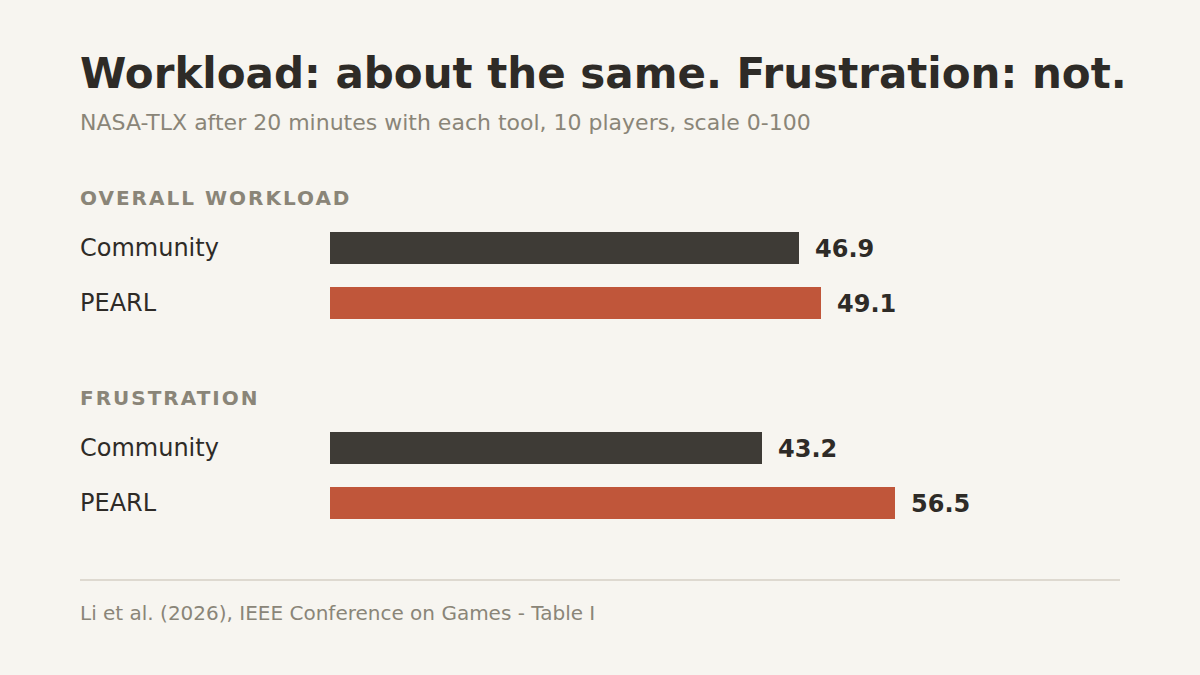
A peer-reviewed paper by Jiahong Li and eight co-authors (accepted to the 2026 IEEE Conference on Games, arXiv:2609.13718). They built PEARL, an AI support agent that retrieves expert-annotated move explanations and structurally similar peer boards, into Parallel, a puzzle game for learning parallel programming, and evaluated it with ten players. Participants rated the existing visualization tool more useful, and at least five minimized or abandoned the AI during play. Frustration scored 43.2 against 56.5. The authors conclude that what players rejected was not the content of the help but its unsolicited delivery, and ask of their own system: are we building Clippy?
Williams et al.: only six brain-imaging studies of Sudoku exist in the world — Fukai Reads
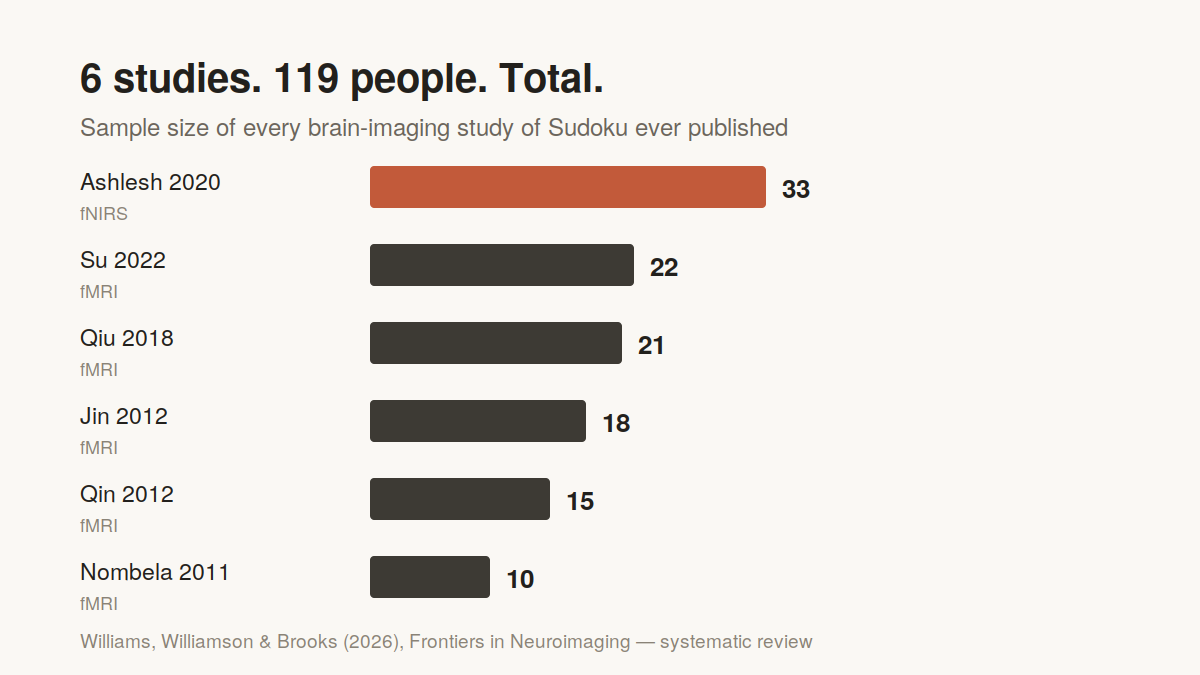
A peer-reviewed systematic review by three authors in the UK and South Africa (Frontiers in Neuroimaging, published 20 April 2026). Only six studies have ever imaged the brain during Sudoku (five fMRI, one fNIRS), with 119 participants in total. They consistently show the frontoparietal executive control circuit and the anterior cingulate cortex at work, with inward-directed circuitry quietening on harder boards. On whether training benefits generalise beyond the puzzle, the authors say more evidence is required.
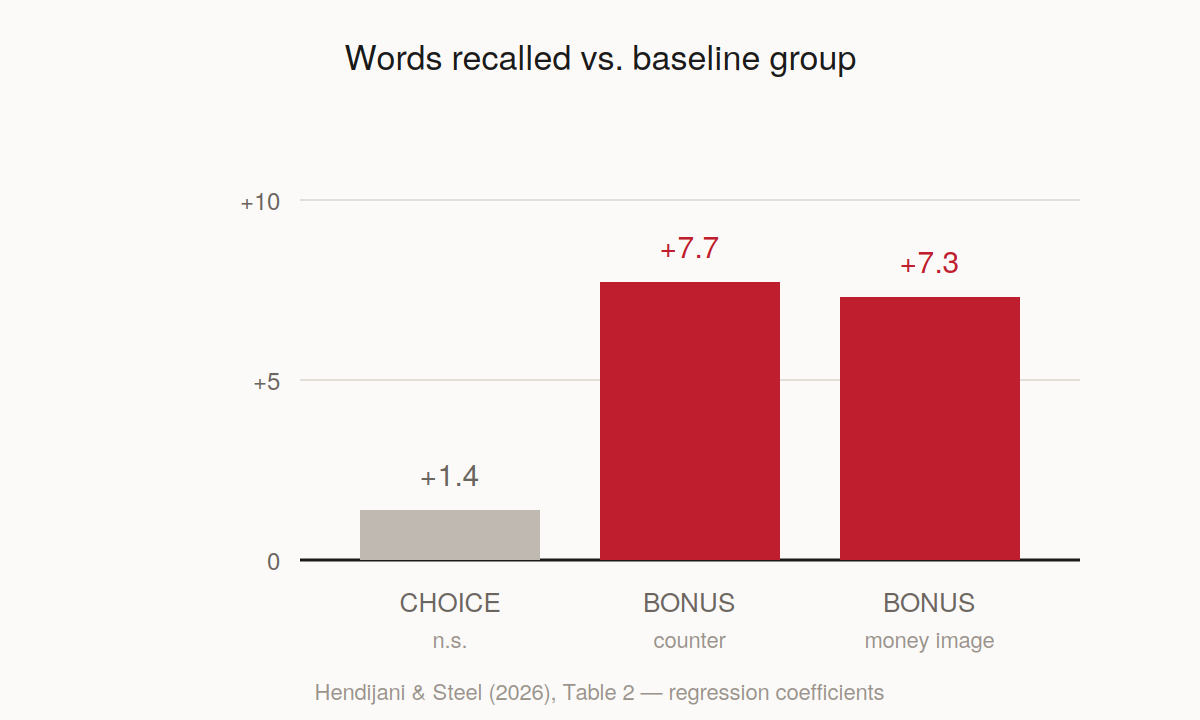
Hendijani and Steel: Letting people choose moved nothing; a number in the corner of the screen did — Fukai Reads
A peer-reviewed paper by two authors from the University of Tehran and the University of Calgary (Frontiers in Psychology, published 13 August 2026). In a memory test with 270 people it compared letting participants choose against paying them per correct answer: the reward added about seven recalled words, while choice produced no statistically confirmed effect. Eye tracking showed the reward's effect ran through whether people looked at the on-screen reward display.
Melo Legarda et al.: Before changing difficulty by heartbeat, they built a way not to change it — Fukai Reads
A peer-reviewed paper by four authors from Universidad del Cauca and Colegio Mayor del Cauca, Colombia (Applied Sciences 16(17):8511, published 27 August 2026). They built a mechanism that adjusts game difficulty from a chest-strap heart sensor and logged eight sessions totalling 6 hours 48 minutes. Mean end-to-end latency was 2.06 s. The striking number: against 191 committed state transitions there were 83 flips the automaton withheld — nearly a third of the change-or-hold decisions land on “do not change”. No subjective data was collected, and the authors never claim the game became more enjoyable.
Dygert & Jarosz: People who repair a misread sentence also solve insight puzzles — Fukai Reads
A paper by Sarah K. C. Dygert and Andrew F. Jarosz on insight and sentence comprehension. Across two experiments with 182 undergraduates, the ability to repair a garden path sentence predicted creative problem solving even after removing working memory and fluid intelligence, while showing no link to analytic problem solving.
Tudor et al.: The scoreboard was one query away, and the agent never opened it — Fukai Reads
An arXiv preprint (submitted 2 September 2026) by seven authors from Oxford and elsewhere. They wired 76 tool endpoints into Sid Meier's Civilization VI and had language-model agents play whole games of 300+ turns. Agents queried victory progress only once every 30-75 turns (the supplied playbook recommended every 20), and in 7 of 20 losses that were foreseeable they never checked it in the final 20 turns. Commitments the agents wrote down for themselves were carried out within ten turns only 48.2%-65.8% of the time.
Nagaya et al.: Delete "don't bet" from the menu, and twice as many people take the risk — Fukai Reads
A peer-reviewed, open-access paper by Kazuhisa Nagaya and Fuminori Ono (Yamaguchi University) and Kazuya Nakayachi (Doshisha University), published in Judgment and Decision Making on 13 July 2026. It re-measures small-stakes loss aversion by rewriting the choice as "bet or bet" instead of "bet or don't bet". Across three studies with 1,345 participants, the share of people picking the risky option jumped from 23.3% to 50.0%. Much of what has been called loss aversion may be a separate habit: a preference for not acting.
Macchi et al.: Letting people touch it changed nothing; drawing it as parts raised solving by 33 points — Fukai Reads
A peer-reviewed paper by Laura Macchi and colleagues at the University of Milano-Bicocca (Journal of Intelligence, 9 May 2026) testing the received wisdom that handling a problem's materials makes insight more likely. Asked to build four equilateral triangles from six pencils, participants given the real pencils went from 27.3% to 32.6% — no significant difference. But swapping a matchstick arithmetic puzzle for a photograph of real matchsticks lifted solving from 46.7% to 79.3%, with nothing to touch. What worked was not the hand, but the picture saying "I am made of parts."
Ghasemi et al.: People know what a default does — and aim it differently at allies and rivals — Fukai Reads
A peer-reviewed paper by Omid Ghasemi, Ben R. Newell and colleagues (Judgment and Decision Making, 4 September 2026) pushing back on the well-known 2017 finding that people fail to use defaults strategically. Across three card-game experiments, participants set the default in their own favour on more than 80% of trials — the high-value card for teammates, the low-value card for opponents — and, shown only someone else's default choice, worked out which option was better 79.5% of the time.
Baek et al.: Ordering a Level That Is 75% Zelda and 25% Mario, in Plain Words — Fukai Reads
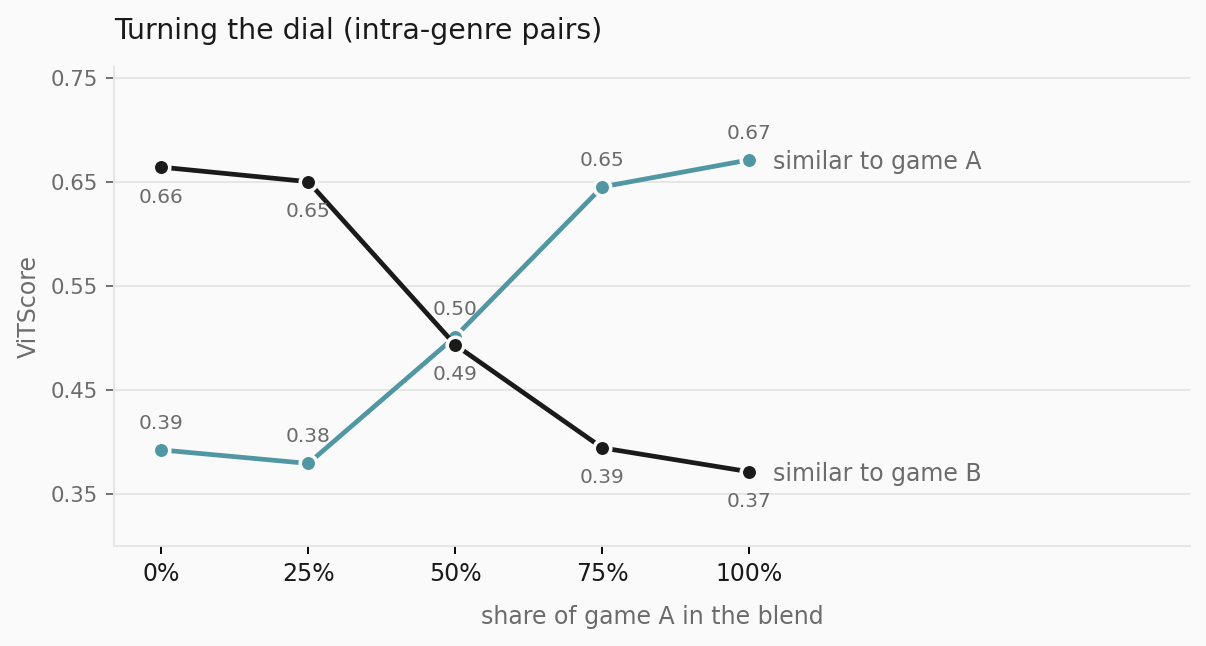
A paper by In-Chang Baek and four co-authors at GIST and Dongguk University (arXiv:2603.26782, an un-peer-reviewed preprint). They put 5,576 levels from Zelda, Dungeon, Lode Runner and Super Mario Bros into a single latent space so that levels can be blended across games using text and a mixing ratio. Sharing one model instead of four costs about 4.4% in overall similarity, and turning the ratio dial swaps similarity between the two source games as intended. Blending through a single written instruction, however, remains weak.
Siper et al.: Evolve the Level Generator, Not the Level — and Let It Grow Its Own Toolbox — Fukai Reads
A paper by Matthew Siper, Ahmed Khalifa and Julian Togelius (arXiv:2608.17947, accepted at IEEE Conference on Games 2026). Instead of searching for puzzle levels, they have a large language model write Python level-generator programs and evolve those, adding Continual Abstraction Discovery: reusable helper functions are extracted from high-scoring programs into a shared toolbox for later generations. Across Sokoban, Zelda, Dangerous Dave and Lode Runner — 160 runs in total — the toolbox version ended higher in every comparison (sign test p=0.008).
Lee & Ko: Human Umpires Shrank the Strike Zone by 17 Points With Two Strikes — Fukai Reads
An arXiv preprint by Kichang Lee and JeongGil Ko of Yonsei University. Using the Korean Baseball Organization's switch to automated ball-strike calling as an immovable ruler, they audit 1,216,246 pitches — restricted to those on the edge of the zone — to see how human umpires' calls moved with context. Called-strike probability was 17.17 percentage points lower in 0-2 counts and 6.61 points higher in 3-0 counts, and the pattern disappears under automation.
McCaughey et al.: People Change How Much Information They Buy Only When They Are Told the Price Changed — Fukai Reads
An open-access, peer-reviewed paper by Linda McCaughey and two co-authors in Judgment and Decision Making. Across five experiments and 755 analyzed participants in a task where every observation costs money, people did change how much information they bought when the price changed — but almost entirely through planning ahead, not through what they experienced while playing. A direct hit for anyone pricing hints or scouting.
Lohn: Adding the Strongest Possible Move to Rock-Paper-Scissors Only Buys You 55.6% — Fukai Reads
An arXiv preprint by Andrew J. Lohn of Georgetown's CSET, solving what happens when you add "Dynamite" to Rock-Paper-Scissors. Giving one player the strongest possible move raises their win rate only from 50% to 55.6%, and the wins arrive through Rock rather than through Dynamite. Widen the move set and the gap shrinks further, while undominated moves quietly drop out of the optimal strategy.
Elshamy et al.: Read the player's skill, then redraw the level itself — Fukai Reads
A Scientific Reports paper from Elshamy and colleagues at E-JUST on inferring player skill and rewriting the terrain of the level itself. Where conventional dynamic difficulty adjustment tunes enemy health and item drops, this pipeline rearranges floors, gaps and enemies in place. Skill classification reached 97.82% accuracy; 74.1% of rewritten levels remained completable.
O'Neill et al.: A Board Where Nothing Makes You Keep Your Word — Fukai Reads
A paper from UC Berkeley introducing C2C, a four-player conquest game built to measure negotiation and betrayal. On a board with no mechanism at all to enforce agreements, language models and humans played over 1,100 games — and humans turned out to make far fewer promises than the AI agents did.
Gao & Dubé: Letting a machine do the first read of player-made math levels — Fukai Reads
An arXiv preprint by Jie Gao and Adam K. Dubé of McGill University. A children's math learning game has a Creative Mode in which advanced players build their own levels, but reading every submission by hand does not scale. The authors extracted features from 206 levels (86 by experts, 120 by players) and trained a classifier to do the first read. Random forest gave the best recall and F1, scoring 82.42±5.71% accuracy and 72.70±9.22% F1 in the outer loop.
Ahmetovic et al.: Handing half your controller to someone else — Fukai Reads
A study from the University of Milan on how people with upper-limb impairments operate games. The authors built GamePals, a framework that splits control in off-the-shelf titles, and had 13 participants play Rocket League with a human copilot and with a software copilot. Seven said they could not have played without support, while participants also mistook the copilot's actions for their own.
Xu & Verbrugge: Turning gravity and time into coordinates of the level generator — Fukai Reads
A peer-reviewed FDG 2026 paper by Kaijie Xu and Clark Verbrugge of McGill University. Level generators have long built geometry first and checked mechanics such as gravity inversion or moving platforms afterwards. This paper promotes the mechanic itself to a coordinate axis, searching a larger graph in which (x, y) is joined by a layer index or a timestamp. Switch-spacing error falls to 0.000-0.002 and alternative-route robustness reaches roughly nine to ten times that of an unguided baseline.
Collins et al.: People judge a brand-new game with one move of lookahead and six imagined playouts — Fukai Reads
A peer-reviewed Nature paper by Katherine M. Collins and colleagues (MIT and others). More than 1,000 people were shown 121 novel games from the tic-tac-toe family and asked, before playing, whether each looked fair and fun. The Intuitive Gamer model - one move of lookahead spent inside six simulated playouts - explained the fairness judgements at R2 = 0.81 against a human ceiling of 0.82, beating the deep-searching Expert Gamer (0.65) and MCTS (0.60).
Byers et al.: Who Is Player Time Designed For? — Fukai Reads
A peer-reviewed CHI 2026 paper (Best Paper Honourable Mention) by Thomas Byers, Martin Gibbs and Bjorn Nansen. Twenty hour-long interviews with AAA, indie, mobile and live-service developers produce a grounded account of how the time-shaped parts of a game get decided inside a studio: undocumented intuition, metrics spanning seconds to months, and design that works backwards from a number. The authors close with four heuristics — and they land squarely on anyone shipping a daily puzzle.
Hu et al.: We Judge Others' Satisfaction Without Counting Their Options — Fukai Reads
A peer-reviewed paper by Beidi Hu, Alice Moon and Eric VanEpps in Psychological Science (January 2026). Across six preregistered experiments with 10,092 participants, people factored choice set size into their own satisfaction but barely factored it into predictions of someone else's. Three things shrink the neglect: showing the different set sizes side by side, asking for a ranking, and restating the number of options. It bears directly on how we read playtests and pick rates.
Pfau & Vrettis: What Happens When Players Generate Their Own Pokémon Cards — Fukai Reads
An arXiv preprint (not peer reviewed) by Johannes Pfau and Panagiotis Vrettis at Utrecht University. A player writes a name and some flavour text; retrieval, a text model and an image model turn it into a Pokémon-style card in about 20 seconds. Forty-nine students made 196 cards. Visual satisfaction averaged 4.25 out of 5 and mechanical fit 4.04, and 93.5% said the final design was their own idea. None of the cards has been played, so balance remains unverified.
Zhao et al.: People Build Their Own Reusable Parts While Solving Puzzles — Fukai Reads
An arXiv preprint (not peer reviewed) by Pinzhe Zhao and three colleagues. Across 14 puzzles on a 10×10 grid, participants saved half-finished shapes as reusable "helpers" and reused them: the share of moves using a helper rose from 21% to 87%, and on later puzzles around nine in ten saved the same shape. Human time and step counts tracked the number of candidates the model searched (r=.82), not the length of the shortest program (r=-.20). Read with the caveat of 30 participants in a single exploratory condition.
Kelidari et al.: A Card-Game Agent Is Only as Strong as the Yardstick You Build First — Fukai Reads
An arXiv preprint by Nima Kelidari and two co-authors, under submission to AIIDE 2026. Using Gin Rummy and a hand-written fixed expert as an immovable yardstick, they run more than a hundred controlled experiments on what makes a lightweight reinforcement learning agent strong. Win-rate against the expert is 15.0% for PPO, 22.5% for TRPO and 34.2±2.1% with every working ingredient stacked; swapping network shapes leaves win-rates overlapping, while a search that can see the hidden cards reaches 85% against 26% for one that cannot.
Battleday et al.: Measuring AI Discovery With 70 Games That Never Explain Their Rules — Fukai Reads
An arXiv preprint by Ruairidh M. Battleday and fifteen co-authors. On DiG-bench — 70 text-string games with both rules and win conditions hidden, across seven tiers, 21 released publicly — the strongest single model beat 50 games and all models pooled beat 57, while all 70 were beaten by at least one human on a first attempt. Handed the ground-truth rules, the same model jumps from 18 games to 69, and agentic harnesses did not improve on the basic one.
Mannem et al.: Some Puzzles Are Learnable, Some Are Not — Fukai Reads
An arXiv preprint by Gowrav Mannem and colleagues (Algoverse AI Research). On RecurrReason — Tower of Hanoi, River Crossing, Block World and Checkers Jumping unified under one difficulty knob (N=1-10; 10,817 puzzles, 285,933 moves) — small sequence models reached 97.27% validation and 81.00% out-of-distribution on Block World, but only 11.11%/0.00% on Tower of Hanoi, 1.11%/0.10% on Checkers Jumping, and 0.00% everywhere on River Crossing. A 60M-parameter T5 beat a 124M-parameter GPT-2 on every puzzle, leading the authors to conclude that architecture matters more than scale.
Pereira & Zuidema: Reasoning Models Build a Map of the Tower of Hanoi, Then Lose It — Fukai Reads
An arXiv preprint by Devin Pereira and Willem Zuidema (University of Amsterdam). On the flat-to-flat Tower of Hanoi, reasoning models encode the board almost perfectly at the end of the prompt (rank correlation 0.935, nearest-state retrieval 1.00), yet that representation decays while they write out the moves — shown with linear probes and activation patching. Re-injecting the prompt-time representation lifted Qwen3.6-27B from 33/81 (41%) to 59/81 (73%) optimal solutions.
Lu et al.: Is Flow Made of Difficulty, or of the Effort You Spend? — Fukai Reads
A peer-reviewed study by Hairong Lu and colleagues (Psychological Research, 2025) on flow and mental effort. Manipulating perceived difficulty and expected odds of success separately in a visual discrimination task, the difficulty manipulation landed hard (partial eta-squared = 0.64) while expectancy showed only a weak trial-level effect (d = 0.04); the inverted-U in flow was marginal (p = 0.053) and P300 showed no relation to flow. An exploratory study with N = 37.
Li et al.: Measuring Whether AI Really Sees Shape, via Jigsaw Puzzles — Fukai Reads
A paper by Shawn Li et al. introducing JigShape, a benchmark for spatial reasoning in vision-language models. Interlocking tab-and-blank pieces make the ground truth unique across 95,468 instances from 4x4 to 16x16; only GPT-5.5 beat chance zero-shot (69.65% on 4x4), everything collapses from 8x8 even after fine-tuning, and removing the shapes drops 97% to 10%.
Bazzaz and Cooper: Comparing Generative AI to PCG Across 500,000 Steam Reviews — Fukai Reads
A paper by Bazzaz and Cooper at Northeastern analysing 508,192 Steam reviews. Comparing 5,970 titles that disclose generative-AI use against 5,186 titles that use PCG, the recommend rate is 86.3% for PCG versus 68.4% for generative AI — a 17.9-point gap — and generative-AI reviews split almost evenly at 53.0% positive to 47.0% negative. A thematic analysis of 600 reviews raises five themes: signals of low developer investment, ideological rejection, conditional acceptance, mismatch between disclosure and evidence, and criticism of not using AI where it should be. arXiv:2608.11539, ACM DOI 10.1145/3831347 assigned.
Randelshofer et al.: Fifteen UX Leaders in AAA Studios on Pre-Production Decisions — Fukai Reads
A qualitative study by Ivana Randelshofer (Ubisoft Düsseldorf) and colleagues at the University of Waterloo HCI Games Group and elsewhere. Semi-structured interviews with 15 senior UX leaders from AAA studios (Blizzard, EA DICE, Guerrilla, Larian, Remedy, Ubisoft, and others) analysed with reflexive thematic analysis. Findings: pre-production decisions blend theory, experience and instinct; cross-functional structures (strike teams, competency teams) align player needs with production constraints; academic frameworks work best as discussion starters, not prescriptions. arXiv preprint posted August 2026, not peer reviewed. A rare look at what game production actually feels like from the UX side.
Cai et al.: Bringing the Authoritative Server into Learned World Models — Fukai Reads
A paper on multiplayer world models by Cai and eight colleagues at Alaya Lab, Peking University and Institute of Science Tokyo. It ports the authoritative-server contract of online games into a learned model, splitting it into a Logic Engine that advances a typed shared state and a Rendering Engine that draws each camera from it. On matched multiplayer Snake it reaches 0.764 state recovery against 0.128 for the best video-based baseline, with cross-view disagreement of 0.000 by construction, and advances 1,024 player entities for 10,000 ticks. arXiv preprint, submitted 6 August 2026, not yet peer-reviewed.
Han et al.: Sorting Out When Learning Order Matters, by Computational Complexity — Fukai Reads
A paper by Han and four colleagues at UC Davis and partner institutions on the computational complexity of instructional sequencing. They formalise the ordering of prerequisite-linked concepts as a stochastic shortest-path problem, prove that the stochasticity of retry-after-failure collapses exactly by dividing cost by success probability, show that optimal ordering nonetheless remains NP-hard, and give a cheap diagnostic that upper-bounds the value of sequencing before any optimisation. On 70,893 real interactions from an introductory CS course that headroom was under 0.2%, while on a constructed trap greedy sequencing lost 28.3-45.1%. arXiv preprint, submitted 5 August 2026, not peer reviewed.
Honda et al.: Measuring Which Options Are Worth Trying by How Much Uncertainty They Remove — Fukai Reads
A paper by Honda and five co-authors at the University of Tokyo proposing the B-EUR model, which formalises the value of trying a candidate option as the uncertainty about action-outcome relations it is expected to remove. Tested through simulation and human experiments (44 participants) on a graph-shape guessing task, the value of trying, enjoyment and choice frequency all followed an inverted U peaking at intermediate generalizability. Outcome discriminability affected choice behaviour but showed no significant effect on subjective ratings. An arXiv preprint posted 6 August 2026, not yet peer reviewed.
Tarun Kumar S: What Happens When You Tell a Human-Move Predictor the Last 20 Moves and the Clock — Fukai Reads
A paper by Tarun Kumar S of Peargent Labs on Otter, a chess AI that predicts human moves. Where earlier models treated each position independently, Otter conditions on the last 20 moves and on remaining clock time, reaching 55.23% top-1 accuracy with 15.3M parameters — 1.98 points above Maia 2. Of the +7.62 point gain over a board-only baseline, history contributes +5.24 and the clock +2.38. An arXiv preprint posted 5 August 2026, not yet peer reviewed.
Geheeb et al.: Let an LLM Poke at Your Game Design Pillars — Fukai Reads
A paper on game design pillars and LLMs by Julian Geheeb and colleagues at the Technical University of Munich. Pillars are heavily used in industry but almost unexamined academically; the paper gives them a formal definition and quality criteria, then hands structural checking, contradiction detection and feature evaluation to an LLM in a prototype called SPINE. A 42-hour game jam and interviews with four developers produce a consistent picture: useful at the moment of putting a pillar into words, thinning with each rewrite iteration, and unable to recognise deliberate juxtaposition when flagging contradictions. Peer-reviewed at FDG '26.
Chen: Reconstruct the Persistent World First, Then Build Something Playable — Fukai Reads
A narrative-to-game paper by Yi-Chun Chen. Before generating scenes or gameplay individually, it makes explicit reconstruction of a persistent world — entities, locations, relationships, evolving state — the central objective, maintained as one computational object shared across the pipeline. The prototype builds the world with GPT-5-mini plus constrained world completion and realises it as playable tile-based PyGame environments. An arXiv preprint offering qualitative feasibility across three cases, with no quantitative evaluation.
Huang et al.: Letting an AI Play the Generated Game, Then Fix It — Fukai Reads
A game-generation paper by Yixu Huang and colleagues (Fudan University, Xiaohongshu and others). Play2Code puts a screen-driving GUI agent into the generation loop as a playtester, evaluated on PlaytestArena, a new environment of 200 tasks and 1,548 rubric criteria. Averaged over three backbones, rubric pass-rate goes from 29.7% for single-pass generation and 52.2% for a code-inspection-only pipeline to 66.8%.
Wu et al.: Rebuilding a Case Report Into a Chain of Decisions — Fukai Reads
A medical-education gamification paper by Qian Wu and colleagues (CUHK and others). MedGame is a dual-engine framework that converts static case reports into a three-level Act / Scene / Decision Node script and then into a dependency graph of multimodal generation tasks. Fine-tuning on a 5,000-case benchmark lifts structural validity from 79.4% to 99.1%, while medical accuracy plateaus around 7 out of 10.
Wang et al.: Making a Puzzle Solver the Teacher for Every Single Move — Fukai Reads
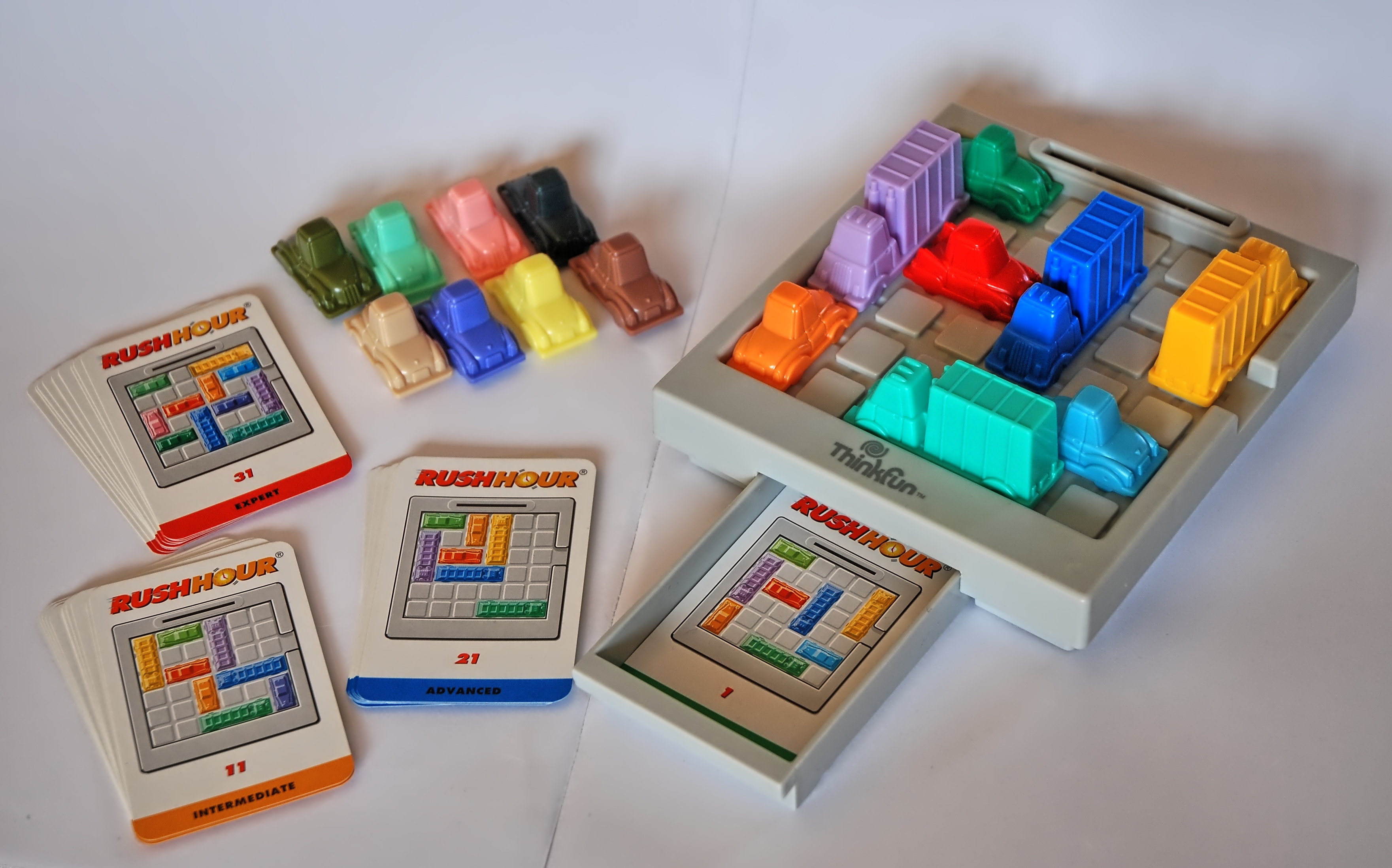
A game-AI paper by Yu Wang and colleagues. Where long-horizon puzzles reward only the final win, they convert the drop in a solver's remaining-distance-to-goal into a per-move score and mix it into training. Averaged over Sokoban, Minesweeper and Rush Hour, success rises from 16.6% to 62.1%, and on unseen difficulty from 5.9% to 28.4%. Querying the solver costs about 73 parts per million of training wall clock.
Ponnock & Ho: The Order of Mario 1-1 Has a Measurable Teaching Effect — Fukai Reads
A reinforcement learning and level design paper by Jesse Ponnock and Lucas Ho (arXiv preprint, not peer-reviewed). Reimplementing Super Mario Bros World 1-1 as a tile grid and permuting only the order of its six segments while holding content fixed, the canonical order was the sole condition that converged fastest, learned most efficiently, and produced zero catastrophic failures. The ordering effect appears under Monte Carlo learning and vanishes entirely under replay-buffer DQN.
Jeong et al.: Same Puzzle, Different Answer Buttons, Different Difficulty — Fukai Reads
A peer-reviewed paper on cognitive load and interaction design by Harim Jeong and colleagues (JMIR Serious Games). Holding a tablet Stroop stimulus fixed and changing only the answer options from written labels to color patches raised accuracy from 0.86 to 0.91 and cut reaction time by 85.4 ms across 127 children aged 6-12. Prefrontal neural indices showed no significant difference.
Zhou et al.: The Verifier is the Curriculum — Training Game Generation on a Launch Check Alone — Fukai Reads
A game-generation paper by Chenyu Zhou and colleagues. Starting from a diagnosis that the learned judge is gameable, they gate self-distillation on a single binary signal — does the generated Godot project launch cleanly — and over three rounds lift clean generation on four unseen families from 8.8% to 42.2%, with best-of-16 coverage going 18/25 to 25/25. Loosen the gate and the gain disappears.
Gould & Ward et al.: Measuring Puzzle Difficulty in Units of Human Solve Time — Fukai Reads
An AI evaluation paper by Gould, Ward and colleagues. They attached human solve times to 43 benchmarks and over 30,000 problems, and found that the human time of tasks a model completes at 50% success without externalising its reasoning has doubled roughly every 373 days over six years, reaching about three minutes for GPT-5.5. Their difficulty-measurement craft, built partly on Sudoku and crosswords, transfers directly to puzzle design.
Li et al.: Rereading Video World Models as Game Engines — the Unsolved Problem Called State — Fukai Reads
A survey of interactive world models by Zhen Li and colleagues. It reorganizes research on generating game worlds with video models along four dimensions drawn from the engine's action-state-observation loop, and argues that the remaining hard problems all revolve around explicit game state. It also contributes a 90+ hour Black Myth: Wukong dataset.
Teo et al.: AI Assistants Overassist — Int-Bench Measures Intervention in Problem-Solving — Fukai Reads
Teo et al. on LLM intervention behavior. Using Int-Bench, a simulated setting, they measure when and how much AI assistants help during problem-solving, finding AI intervenes earlier and more often than humans, tends to leak the answer, and does not improve transfer. A useful read for puzzle hint design.
Halina & Guzdial: Generating Levels as a "Cake of Time" — Fukai Reads
A procedural level-generation paper by Halina and Guzdial. It represents a level as a "cake" of board states stacked over time, and generates a level and its solution together with PRP, which recombines play traces. In Sokoban, against six existing methods, it reached 100% playability with high diversity, without hand-authored constraints or rewards.
Hsu et al.: LLM-Voiced NPCs Make Players' Heads Heavier -- A 'Double-Edged Sword' Experiment — Fukai Reads
An empirical LLM-NPC paper by Hsu et al. (Communication University of China and others). They built a scripted-NPC version and a GPT-4.1 LLM-NPC version of the same game and ran a between-subjects test with 130 players. LLM-NPCs significantly raised cognitive load (p<.001), did not significantly improve overall enjoyment (p=.195), and increased autonomy while lowering usability and trust.
Wang et al.: Gauging Tetris Block Puzzle Difficulty by How Fast a Strong AI Learns — Fukai Reads
An arXiv preprint from a National Yang Ming Chiao Tung University and Academia Sinica group that measures the difficulty of the popular mobile game Tetris Block Puzzle. It rates rule variants by how fast and high a strong AI (Stochastic Gumbel AlphaZero) can learn to play, finding that more holding/preview blocks make the game easier while adding block shapes makes it harder (the T-pentomino most of all).
Johnson et al.: What Changes in a Game When You Build an LLM Into It — Fukai Reads
A qualitative study by Johnson and colleagues at the University of Calgary on developing two games with an LLM embedded in their structure. Reading developer reflections, it analyzes how embedding an LLM as a component (not decoration) changes gameplay, playability, and player experience. Variability and personalization increase, but new burdens of correctness, difficulty calibration, and coherence emerge, with schema enforcement and validation as the keys.
Earle et al.: Recasting Level Design from a One-Person Job to a Multi-Agent Collaboration — Fukai Reads
A paper on reinforcement-learning level generation (PCGRL) by Earle et al. It recasts the traditional single-agent, tile-by-tile method as a multi-agent problem in which several agents divide the work and edit in parallel, showing across maze and dungeon domains that more agents improve generation quality, generalization to unseen boards, and computational efficiency.
Bhaumik et al.: Stitching WFC and Reinforcement Learning for Playable, Good-looking Levels — Fukai Reads
A procedural level generation paper by Bhaumik et al. It tackles the weaknesses of WFC (good-looking but unplayable) and reinforcement learning (playable but ugly) with WCRL, which narrows the RL agent's actions using WFC's local rules, generating Lode Runner levels that are both example-like and playable.
Shyne et al.: How Far Do Puzzle Solver Loops Match Human Felt Difficulty — Fukai Reads
A logic-grid-puzzle difficulty study by Shyne, Facey & Cooper. Using solver loops (the pass count of a human-style solver) as a difficulty proxy, they generate difficulty-varied puzzles with a quality-diversity algorithm and, in a 63-player study, show solver loops correlate significantly with subjective difficulty (c=0.30, p=0.015).
Nath et al.: Training Game AI When Streaming Dirties the Video — Fukai Reads
A paper by a Microsoft team (Nath et al.) on imitation-learning agents for streamed video games. It proposes streaming augmentations that artificially manufacture the temporally connected noise of cloud gaming and mix it into training. Even from five demonstrations, completion rises by up to ~40%, and performance loss under network lag drops from 49.82% to 7.45%.
Ye et al.: Measuring Image-Capable AI (MLLMs) with Children’s Intelligence Tests — Fukai Reads
A paper (arXiv preprint) by Hengwei Ye and colleagues at ShanghaiTech University on KidGym, an MLLM evaluation benchmark inspired by children’s intelligence tests (the Wechsler scales). It measures five abilities — Execution, Perception Reasoning, Memory, Learning, Planning — across 12 tasks on a 2D grid at three difficulty levels, evaluating nine models. Even top models reached only 0.30 on abstract-shape puzzles and 0.72 on counting against a human 1.00.
Zeng et al.: Automating Game Balancing with LLM-vs-LLM Self-Play — Fukai Reads
A paper by Zeng et al. on automated game balancing. It tackles balancing asymmetric strategy games by using multi-agent LLM self-play as an evaluator and Bayesian optimization to search rule parameters, reporting convergence to near-0% win-rate gaps on their own game, CivMini.
Waugh: Measuring AI's Reasoning with Sudoku and Slitherlink — Fukai Reads
A paper (arXiv preprint) by Justin Waugh of Approximate Labs on Pencil Puzzle Bench, a benchmark that measures LLM reasoning with pencil puzzles. From 62,231 puzzles across 94 types it selects 300, and its core is that a machine can verify every move against the rules; 51 models were evaluated. Even the strongest GPT-5.2 reached only 56.0% in agentic mode, with about half unsolved.
Ahn et al.: Puzzle Difficulty Lives in Concepts, Not Looks — Fukai Reads
A paper (arXiv preprint) by Ahn et al. at Boston University introducing CogARC, a human-adapted version of the ARC abstract-reasoning benchmark. Logging 260 people's grid-puzzle solutions edit by edit, they find difficulty is driven by conceptual rule complexity rather than grid size or color count, and that people converge on the same wrong answers even when they fail.
Luo et al.: How AI Delivers Help Matters as Much as the Help Itself — Fukai Reads
A paper by Luo et al. (UC Santa Barbara) on how a mixed-initiative AI delivers help. Using Rush Hour puzzles, they compare on-demand (Button) help with inactivity-triggered (Timer) help, and show that although task performance is nearly identical, the Timer mode earns more positive perceptions of the AI. Accepted to IUI '26.
Ying et al.: Measuring AI's General Intelligence Through Every 'Human Game' — Fukai Reads
A preprint from a team at MIT, Harvard and others that measures AI's general intelligence through games humans made. Rebuilding 100 popular App Store and Steam titles with an LLM and having seven frontier vision-language models play them, the best reached only 8.5 against a human median of 100, falling far short on memory, planning and inferring rules.
Triebel et al.: Does AI Have Both a Head and a Hand on a Classic Physics Puzzle? — Fukai Reads
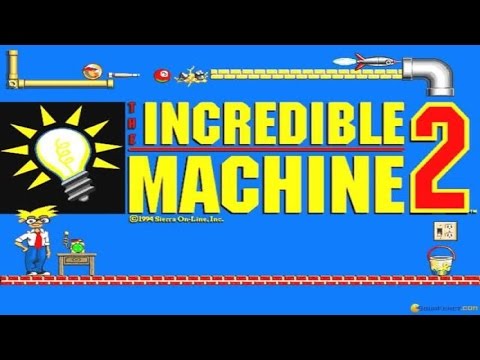
A paper by Triebel et al. evaluating VLMs on the classic physics puzzle The Incredible Machine 2. Using VLATIM, a five-stage benchmark, it asks whether screen-operating AI can solve problems like humans; the cleverer large models can plan but cannot click precisely, and no model solved even one puzzle to completion.
Nasvytis & Fan: Insight and Transfer Show Up in How You Talk — Fukai Reads
A paper by Nasvytis and Fan (Stanford) that reads insight and transfer from think-aloud speech. With 189 participants solving five matchstick-arithmetic puzzles, the group that saw the same type repeated grew faster and more accurate after their first success (accuracy 0.75 by trial 5) and named the problem type roughly seven times as often. The mark of transfer, it reads, is being able to put the knack into words.
Li et al.: Making Geometry Problem Solving Verifiable with a Solver as Referee — Fukai Reads
An arXiv preprint by Can Li et al. on geometry problem solving (GPS). Their SD-GPS translates diagram-and-text problems into a form a symbolic solver can execute, and at impasses proposes helper lemmas verified by the solver itself. The abstract reports it consistently outperforms existing methods on Geometry3K and PGPS9K. Fukai reads it for its use in solvability-guaranteed puzzle generation.
Sestini et al.: Making AAA Game NPCs Feel Authentic with Reinforcement Learning — Fukai Reads
A vision paper from the research team at Electronic Arts. It tests whether AAA game NPCs can be improved with reinforcement learning, through two real cases — goalkeeper positioning in EA SPORTS FC 25 and infantry locomotion in Battlefield 6 — and lays out seven requirements RL must meet in production. Its conclusion: RL is a tool to augment, not replace, existing game AI.
Xu et al.: When Generative AI Becomes the Heart of Play — Fukai Reads the AI-Native Games Survey
A survey (arXiv preprint) by Zhiyue Xu and five co-authors on "AI-native games," where generative AI is the core loop itself. It defines them by a counterfactual — would play collapse if the AI were removed — and classifies 53 real artifacts along two axes: game type (G) and dominant AI mechanic (N), showing a skew toward narrative genres and a thin use of AI at the rule layer.
Wermann et al.: How In-Game AI 'Words' vs 'Demonstration' Change Learning and Cognitive Load — Fukai Reads
A pre-registered experiment by LMU Munich and colleagues comparing 'verbal' and 'demonstration' support from an in-game AI NPC. Splitting 152 people into three groups in Qookies, a quantum-technology learning game, they found no difference in learning gains between conditions, but the verbal-plus-visual group reported significantly lower intrinsic cognitive load than the verbal-only group (d=0.60).
Aryan et al.: When You Stall, the World Changes — AbideGym Turns Static RL Worlds into Adaptivity Tests — Fukai Reads
A preprint by Aryan et al. (Abide AI) on RL environment design. To fight the brittleness that comes from training in fully static worlds, AbideGym rewrites the rules and grows the map mid-episode, triggered by the agent's own inactivity, forcing it to abandon memorized policies and re-plan. The paper presents the design and a comparison to prior work; no experimental results yet.
Wang et al.: An LLM Agent That Reads Mental Busyness From Gaze — Fukai Reads
A paper from Meta Reality Labs and collaborators that estimates cognitive load (mental busyness) from eye gaze. It tackles the poor generalization and low interpretability of prior methods with GazeMind, a framework that structures gaze and has an LLM reason over it with context, individual traits, and worked examples, reporting 62.73% accuracy on three-way classification (over 20 points above prior methods).
Mirowski et al.: From Writing a Story to Finding One — Fabula, a Writing AI Grown With the Writers' Community — Fukai Reads
A paper on Fabula, a Google DeepMind writing-support AI. Its hierarchical story planner-generator, the Drama Manager, was critically co-developed with 42 experts; it proved strong at structure but weak at style and surprise. Fukai reads it for lessons that apply directly to game interactive narrative.
Özkan: Co-Training the Level-Generating AI and the Level-Solving AI — Fukai Reads
A paper by Miraç Buğra Özkan that trains level generation and level solving together via reinforcement learning. In Unity, a hummingbird (solver) and a floating island (generator) learn while watching each other's results, reaching about 90.2% success across 100 unseen layouts.
Liu et al.: More Memory Makes AI Agents Less Cooperative — Fukai Reads
An arXiv paper from a Carnegie Mellon-led team studying how an LLM agent's memory length affects cooperation. Across 7 models, 4 repeated social-dilemma games, history windows up to 80 rounds and 500-round matches, longer history degrades cooperation in 18 of 28 settings — a 'memory curse.' The cause is the content of accumulated defection records, not context length, and forward-looking reasoning partly fixes it.
Feng et al.: Can LLM Agents Bargain Well in a Trading Game? — Fukai Reads
A Tsinghua University team's benchmark, SidConArena, for evaluating LLM agents in a cooperative-yet-competitive trading game. Built on the board game Sidereal Confluence, it scores agents across negotiation, production, and sealed-bid auction phases, finding that frontier models are stronger but still misprice resources, bargain passively, and plan poorly over long horizons.
Bazzaz et al.: Believing It's AI Changes the Experience — Fukai Reads
A CHI '26 paper by Bazzaz and Cooper on perception bias toward generated content. Mixing human-made and AI-generated levels in Super Mario Bros. and Sokoban for 142 players, they report that players can barely identify the creator, yet levels believed to be AI-made are rated less fun, harder, and more frustrating.
Liu et al.: AI Assistance Erodes Persistence — A Warning for Hint Design — Fukai Reads
A paper by Grace Liu and colleagues on how AI assistance affects independent problem-solving and persistence. Across RCTs with 1,222 participants, AI raised in-session performance but, once removed, left people solving less and giving up more. Those who got direct answers declined most while hint-users did not, a result that speaks directly to game hint design.
Jara Gonzalez & Guzdial: Generating Enemy Shapes as Gates You Need a Mechanic to Beat — Fukai Reads
A paper by Jara Gonzalez and Guzdial on generating enemy morphologies (collision shapes). They frame 'enemies defeatable only with a specific mechanic' as a 4x4 grid generation problem, compare reinforcement learning, A* search, and neural generation, and find a simple A* reachability rule yields the best gating and most diverse shapes at the lowest cost.
Munk et al.: Generating Dynamic Game Text with Small Language Models — Fukai Reads
A paper by Munk et al. (IT University of Copenhagen) on generating in-game text dynamically with small language models (SLMs). It tackles the offline, cost and consistency walls of cloud LLMs using small models aggressively fine-tuned for narrow jobs. Their proof of concept, DefameLM, runs a medieval-RPG smear-poster loop, showing a one-billion-parameter-class model reaches high quality in a few seconds on a consumer PC.
Zeytuncu: Puzzle Difficulty Comes Down to How Many Numbers You Use — Fukai Reads
A difficulty-modeling paper by Yunus E. Zeytuncu on integer arithmetic puzzles (Countdown-style number games). Using an exact solver to generate over 3.4 million instances and defining difficulty by minimum operation count, it shows that the number of inputs used in a minimal solution alone is a 'minimal sufficient statistic' that perfectly determines difficulty.
Chao et al.: Insight Is About Searching Far — Fukai Reads
A paper on insightful problem-solving by Chao, Hsieh & Wu. Using a Japanese RAT and a simulation to quantify the search path to a solution, it shows that de-fixation is necessary for solving but is not what determines insight; the hallmark of insight is exploring the solution space over greater distances.
Monti et al.: Measuring AI's Planning Power on a Single-Corridor Sokoban — Fukai Reads
A paper by Monti and colleagues on SokoBench, a benchmark that measures reasoning models' long-horizon planning with Sokoban. By lining up only single-box straight corridors and narrowing difficulty to a single axis (corridor length), it shows that even state-of-the-art reasoning models break down once more than 25-30 moves of lookahead are needed. The authors locate the cause in accumulated miscounting.
Luo et al.: Can AI Agents Build Whole Playable Games in a Real Engine? — Fukai Reads
A paper by Luo, Wang and colleagues on GameCraft-Bench, a benchmark for end-to-end game generation by coding agents. It has agents build complete playable games on Godot from natural-language specs, judged by launch, input replay, and video-based scoring across 140 tasks in 15 families. Even the strongest configuration reaches only 41.46% overall, and the authors report that agents can build mechanics but fall short of finished games with content, readability, and polish.
Li et al.: AutoBG, an AI that supports board game design end-to-end from ideation to finish — Fukai Reads
A paper (arXiv preprint) by Zizhen Li et al. on AutoBG, a board game design assistant that covers the whole workflow—ideation, rulebook generation, and individualized feedback—via Verifier-Gated Iteration that splits the generator from the critic; the critic, BG-Critic, is reported to outperform GPT-5.4 on diagnostic quality.
Nasir et al.: Evolving the Rules of Play Themselves — Fukai Reads MORTAR
A paper on automatic game design by Nasir, Togelius and colleagues. Instead of levels, MORTAR evolves game mechanics themselves using a quality-diversity algorithm paired with a large language model, judging quality by whether stronger AI agents reliably beat weaker ones. Running on GPT-4o-mini, it generates diverse, playable games and even quantifies each mechanic's contribution.
Jiang et al.: Can a Sentence Build a Playable Game? — Fukai Reads OpenGame
A paper by Yilei Jiang et al. (CUHK) on OpenGame, an agent that generates whole 2D web games from natural language. Reusable skeletons and a 'living debug protocol' curb integration errors, setting a new state of the art across 150 tasks - though puzzles remained its weakest genre.
McConnell & Zhao: Generating Just-Right Puzzles in Real Time with a Genetic Algorithm — Fukai Reads
A paper by McConnell and Zhao on adaptive puzzle generation using a genetic algorithm. It generates Cosmic Express-style path puzzles in real time (about 7 seconds each) to match a player model built from how the player solves, and shows in an 18-person study that a time-only version lags on felt difficulty and sense of progression.
Li et al.: Can LLMs Play and Beat 2D Games? - Fukai Reads GVGAI-LLM
A paper by Li et al. (NYU and others) proposing GVGAI-LLM, a benchmark that has language models play 118 2D games to measure reasoning and spatial grounding. Translating boards into ASCII maps and solving zero-shot, GPT-4o-mini scored 0% on 477 of 540 levels and a 10.27% overall win rate, falling short of classic search algorithms. I unpack it as problem, method, findings, use cases, and limitations.
Kar: Using Autonomous Agents to Check at Runtime Whether Generated Levels Are Actually Playable — Fukai Reads
A PCG (procedural content generation) paper by Rishabh Kar of King's College London. It proposes Momentum, a mechanism that validates whether a generated course is actually traversable inside the same runtime loop, without pausing the game. Two autonomous agents run ahead of the player and inspect the path via geometric checks from the air and NavMesh checks on the ground. The evaluation is presented as structural estimates derived from the code.
Xu et al.: Promoting Game Mechanics to Coordinates to Generate Solvable Levels — Fukai Reads
A PCG (level generation) paper by Xu and Verbrugge of McGill University. Against geometry-first prior methods, it proposes HDPCG, which runs pathfinding on a dimensional-expanded graph that promotes mechanics such as gravity inversion and moving platforms to a coordinate, guaranteeing solvability during generation, and reproduces playable levels in Unity.
Sun et al.: Why Do Players Lose Themselves in Punishingly Hard Games? — Fukai Reads
A paper by Sun et al. on difficulty design in Soulslike games. Through a qualitative analysis of 600 Steam reviews it asks why players immerse themselves in punishingly hard games, and proposes 'resilient flow' — absorption sustained by meaningfully framing frustration.
Feng et al.: Can AI Generate Counter-Intuitive Chess Puzzles? — Fukai Reads
A study, led by a Google DeepMind team, on generating creative chess puzzles with AI. A generative model trained on Lichess data is tuned with reinforcement learning, raising the rate of counter-intuitive puzzles from 0.22% to 2.5% (about tenfold). The highlight is how they reduce creativity to numbers a machine can measure.
Can AI Build a Whole Puzzle Game? ScriptDoctor and Its Generate-Playtest-Repair Loop
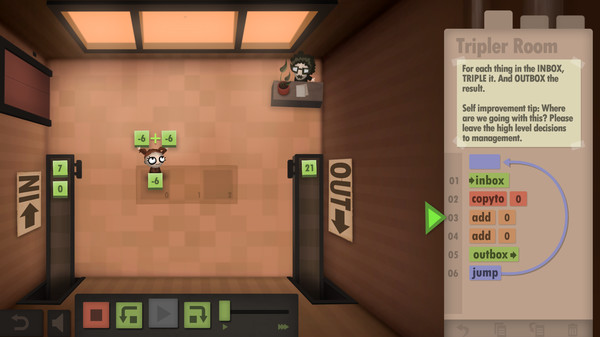
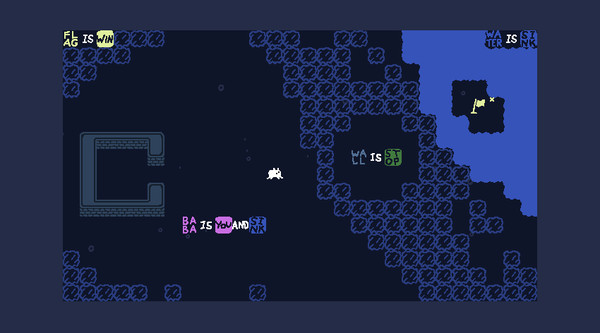
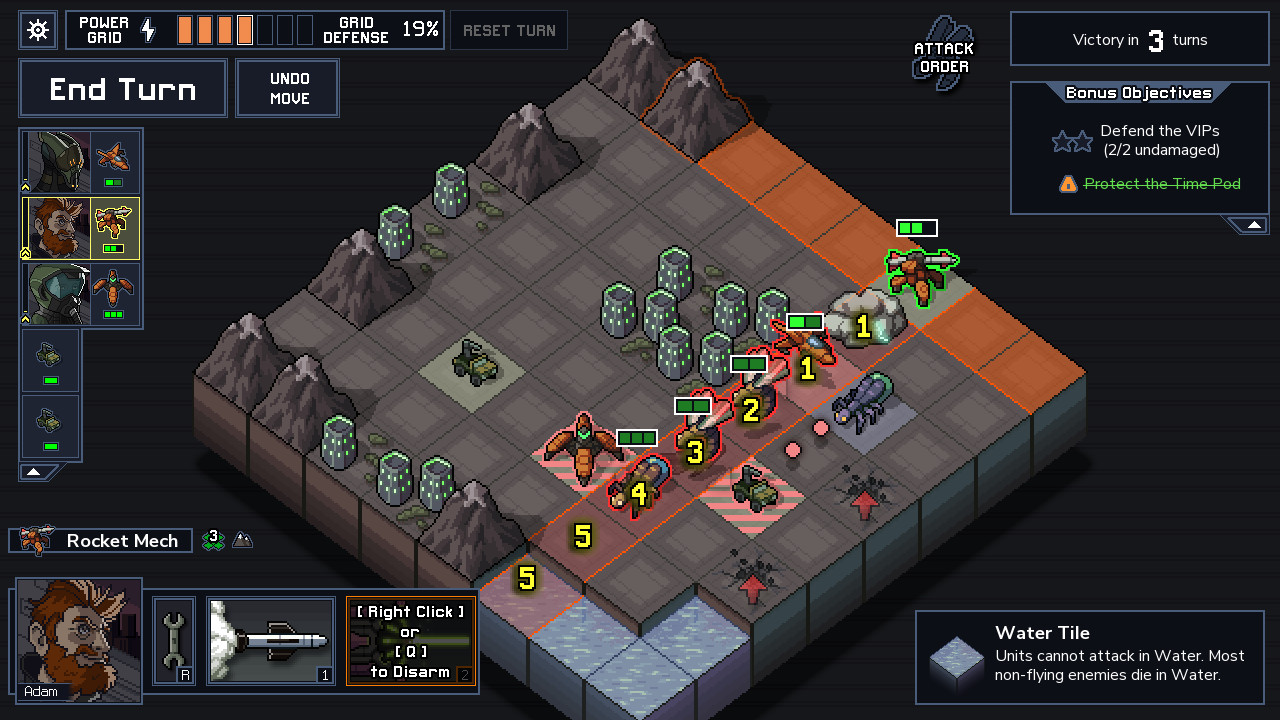
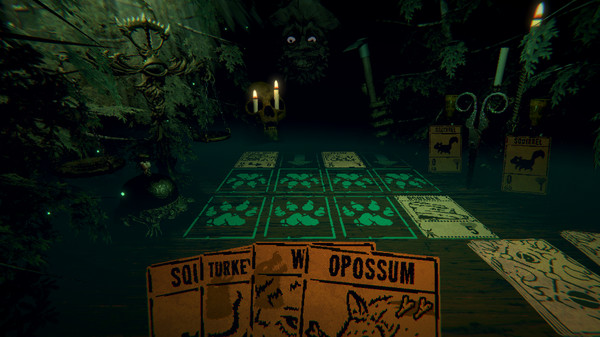
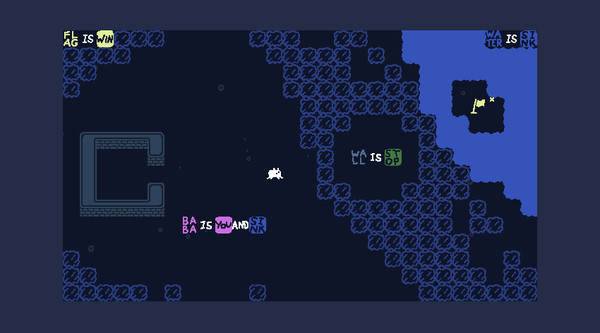
ScriptDoctor has a large language model write an entire puzzle game — rules, sprites, levels — then lets a compiler and a search-based agent inspect the result and demand revisions. The testbed is PuzzleScript, a language indie developers know well. I walk through the paper in five parts — problem, method, findings, where you can use it, limitations — covering why human-authored examples boost success rates, why reasoning models win, and the distance between 'solvable' and 'fun'.

















_studio.JPG)