ESSAY · 2026-07-17
Reading Homo Ludens Chapter by Chapter — When Play Becomes Contest, the Stake Is Honor
"The Nature of Play" reading log, part 2. Huizinga's agon, read through a maker's eyes
Bending the Promise a Little, and Skipping a Chapter
Late one night, I froze over whether to show a daily rank on the puzzles on my own site. A leaderboard would probably liven things up. But at the same time, I felt it might turn that quiet solitary time into time spent losing to someone. Does competition make play better, or break it? "Add a rank?" has sat scribbled in the margin of my drafting notebook for two nights now.
So far I've been reading Huizinga's Homo Ludens one chapter at a time. Last time I promised I'd "read chapter two." But when I opened it, chapter two is about the play-concept as expressed in language — honestly, a chapter I'd rather leave to the linguists. What hits a maker like me head-on is the one after it: chapter three, "Play and Contest as a Civilizing Function." So tonight I bend the promise a little and jump ahead. What I'm reading is the contest — the agon.
Just to be clear: I'm not a game scholar. I'm a maker who fiddles with boards here every night. So I only carry home as much theory as I can chew into something usable for tomorrow's board. Nothing beyond that. Tonight's question is that one line in the notebook: "Add a rank?"
Culture Rises in the Form of Contest
Agon (agōn) is ancient Greek for "contest." The games at Olympia, the staging of tragedies — trace them back and they were all agones. Here Huizinga makes another of his radical claims: a large part of human culture rose up out of competition, that form of play.
The examples he lines up are striking. A trial was originally "a contest of arguments"; in old societies, out-riddling an opponent — a battle of wits — carried real weight. The potlatch of North American peoples is a contest of gifts, in which one lavishly gives away or even destroys property to prove "who stands higher." Poetry duels, exchanges of insults, boasting at the banquet table. None of it is for material gain; all of it exists for the sake of winning itself.
And once he says it, you nod. People want to compete for no reason at all. Children hurl stones to see whose flies farther; adults trade how many minutes today's sudoku took. There's nothing to gain or lose, yet the instant you draw a single line of win-and-lose across it, they turn serious. It runs straight on from last time's "magic circle." Draw the circle and people get serious. And inside that circle, the first thing they do is start to compete.
The Stake Is Not Money but Honor
This is what I most want to carry home today. Huizinga keeps repeating that what is really at stake in the agon is not material gain. What the winner first receives is honor — being first, being recognized by all as excellent. The prize is merely a visible mark of that honor. The gold medal isn't valuable in itself; you want it because it points to "number one."
For a maker, this is a plain but decisive distinction. When we add ranks or scores, we tend to design from the "prize" side first — points, rewards, limited items. But by Huizinga's lights, what people really want is the feeling of being recognized for having done well. The prize is only a mirror reflecting that feeling. Make the mirror gorgeous, and if there's nothing to reflect, it's empty.
And once again you nod. People go out of their way to screenshot the result of a free-to-play puzzle and send it to a friend — even though it earns them nothing. That's not for the prize. It's to have someone see "I did well today" — to have the honor received.
Contests That Need No Leaderboard
Let me check it against real examples. Wordle (created by Josh Wardle in 2021 and acquired the next year, 2022, by The New York Times) has no prize money, no ranking, no reward. All it has is that shared grid that shows your result with nothing but green and yellow squares. And still the whole world competed — in how many tries you solved it, in doing one notch better than a friend. What was at stake was precisely honor: the single line "I did well today." Huizinga's agon holds up with zero reward design.
Conversely, fattening the prize can make a contest thinner. Versus Tetris (made by Alexey Pajitnov in 1984) is still hot not because winning hands you in-game currency, but because sending your opponent one more row and edging out the win is the point in itself. Honor sits at the center; the prize is just an add-on.
Thinking back on my own daily puzzles (Tridem and CRYPTEM), the same holds. Rather than slicing ranks finely and pitting you against others, a form that lines up "today's you" beside "yesterday's you" actually lasts longer. Honor can be contested not only against others but against your past self — and in a contest with yourself, losing exposes you to no one. Here, I felt, was the first answer to that line in the notebook.
When Contest Breaks the Magic Circle
That said, Huizinga does not praise competition unreservedly. Near the end of the book he worries that modern sport has become so professionalized and organized that it is, on the contrary, losing the quality of play — that free feeling of "playing." When winning turns into an obligation and honor gets pinned to a number on a leaderboard, the seriousness inside the circle gets soiled by the profit and loss outside it.
The same thing happens with puzzles. The moment you post a rank, some people quit trying because they're afraid to lose. The daily score starts to feel like a work quota, and that quiet solitary time turns into grading time. Competition can thicken play, and it can kill it. The boundary lies in whether honor stays "the joy of being recognized" or flips into "the shame of losing."
What's interesting is that this very worry connects to last time's talk of "order and tension." Competition is the finest device for tension, but if the tension runs too high, it is order — the frame in which you can play with ease — that breaks. A maker's job, I think, is probably to keep balance on this single tightrope.
Takeaway — A Contest Wagers Honor, Not Shame
Today's takeaway fits in one line: if you add competition, wager "honor," not "shame." Design to shine a light on those who did well, never to expose those who slipped. Before you post a leaderboard, prepare one line that hands back "here's where you did well today." To tie it to last time's talk of the descent, leave the loser, too, a return path down which they can quietly head for the next round.
A sip of whiskey. Under the "Add a rank?" in my drafting notebook, I drew a line and wrote: "Leaderboard later. First, show 'today's you vs. yesterday's you.'" A form you can compete against yourself in, before you compete against others. Whether it works, I don't know. But just having two nights of wavering condense into a single line, I feel I moved forward tonight. That's it for tonight.
One last thing I want to ask you. When a rank or score makes you happy, is it because you "beat someone"? Or because you were "better than yesterday's you"? Tell me in the comments. Next time's full-length piece returns to the matching format: Bernard Suits's definition — "to play is to take on unnecessary obstacles by choice" — set against speedrunning. We'll read the play of deliberately choosing the inconvenient detour.
Reference: Johan Huizinga, Homo Ludens (trans. Hideo Takahashi, Chuko Bunko), chapter 3, "Play and Contest as a Civilizing Function."
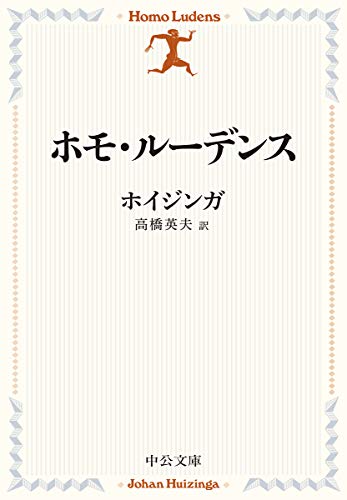 ヨハン・ホイジンガ『ホモ・ルーデンス』(高橋英夫 訳、中公文庫)* The cover image is an Amazon Associates link. As an Amazon Associate, Puzzlebyrinth earns from qualifying purchases.
Reactions (no login)
Anonymous • one of each per visitor per day
Part of these series
The Nature of PlayEpisode 5 of 15