ESSAY · 2026-07-14
If You Looked Up the Answer, Did You Really Solve It?
Taking that guilty feeling to Ryle and Plato
That guilty feeling the moment you see the answer
Late at night, I was stuck on a puzzle for the better part of an hour. It felt like one more step, but the board wouldn't budge. A sip of whisky. On impulse, I opened a walkthrough. I had the answer in three seconds. “Ah, of course,” my hand moved, and the clear screen came up. …And yet I felt nothing like victory. I couldn't bring myself to write “solved” in my drafting notebook. What is this guilt? If you look up the walkthrough, can you say you “solved” it? Tonight I'm calling in two philosophers with different answers.
Ryle — “Knowing that” and “knowing how” are different things
In The Concept of Mind, Gilbert Ryle split knowing into two kinds: “knowing that” and “knowing how.” Reciting your times tables versus riding a bicycle. The first is the possession of a fact, the second the exercise of a skill, and the two, Ryle argues, are different in kind (the second chapter of the Japanese edition is titled, precisely, “Knowing How and Knowing That”).
Bring that line to bear, and what a walkthrough hands you is only the fact—“the answer is this” (the that). Solving a puzzle, on the other hand, lives in the skill (the how) of moving your mind in front of the board and finding the path yourself. So reading the answer grows your solving skill by not one millimeter. Ryle would say, without hesitation: “You did not solve it. You merely came to know the answer.”
Plato — a “true opinion” is not yet knowledge
In the Meno, Plato draws the line a little differently. He distinguished “true opinion” (orthē doxa) from “knowledge” (epistēmē). Merely having the right answer is no more than a true opinion. As a guide to action it is every bit as useful as knowledge—but until you “tie it down with reasoning about the cause,” it drifts off and escapes, as Socrates puts it in the dialogue.
The answer you got from a walkthrough is exactly this “escaping true opinion.” Which brings to mind The Witness (developed by Thekla, Inc., 2016). Look up a guide and you can draw the line. But unless you've grasped for yourself the grammar of the panels—“why that line”—you'll get stuck the same way on the next board. Conversely: if, after seeing the answer, you can retrace “why this is correct” in your own head, that is the moment opinion turns into knowledge. Plato might add: it's less about whether you looked, and more about whether you tied it down afterward.
Takeaway — a hint isn't a betrayal if it closes the loop
The maker's takeaway fits in one line. Don't let a hint feature end at “show the answer”; design it to show “why it works” too, so the player closes the loop. Handing over just the answer is imposing an opinion; handing over the reason builds a bridge to knowledge. That faint cheapness of a hint that's really just an exposed solver—this is probably why.
As for me, I lean ever so slightly toward Plato. If you can retrace the why yourself even after seeing a hint, you may say you “solved” it. And yet—that feel of “the moment you grasped it under your own power” (Ryle's how) is what I'm really in the business of selling. So I'd rather a hint offer not the answer but the reason for the next move.
I want to ask you: that game you cleared by looking up the walkthrough—does it count as “solved”? Is the loss sealed the instant you see the answer? Or is it safe as long as you make sense of the reason afterward? Tell me in the comments. Next in the shards column: “In a world where Undo lets you redo, does choice still mean anything?” Once again, two philosophers arrive with different answers.
References: Plato, Meno (trans. Fujisawa Norio, Iwanami Bunko) / Gilbert Ryle, The Concept of Mind (Japanese trans. Sakamoto Hyakudai et al., Misuzu Shobo).
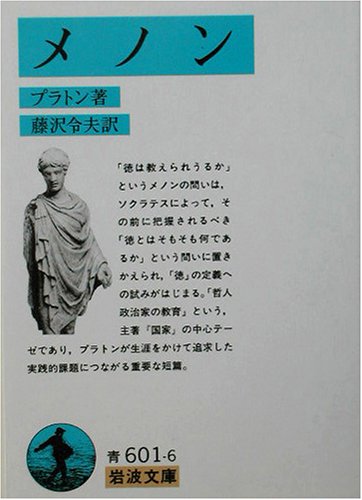 Plato, Meno (trans. Fujisawa Norio, Iwanami Bunko)
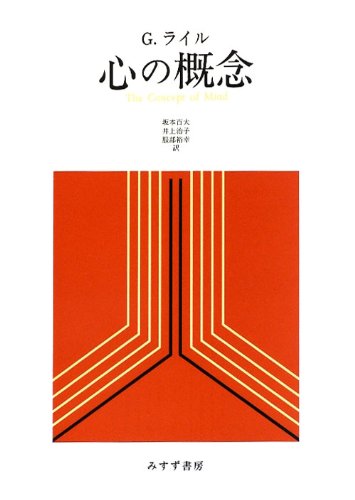 Gilbert Ryle, The Concept of Mind (Japanese trans. Sakamoto Hyakudai et al., Misuzu Shobo)The cover images are Amazon Associate links. As an Amazon Associate, Puzzlebyrinth earns from qualifying purchases.
Reactions (no login)
Anonymous • one of each per visitor per day
Part of these series
The Nature of PlayEpisode 4 of 15
