REVIEW · 2013-06-20
Magrunner: Dark Pulse
Reading the Steam verdict on a Portal-meets-Cthulhu magnet puzzler
Introduction
Magrunner: Dark Pulse is a first-person puzzler where a Magtech glove charges objects so that like colours attract and opposites repel — the reverse of real magnets — as you clear one test room after another. The setting is a cyberpunk lab laid over H. P. Lovecraft's Cthulhu Mythos. Frogwares built it in Unreal Engine 3 and released it in 2013.
I wrote this from the Steam review pool, not from playing it myself. The label is Very Positive — 80% of 366 Steam-purchaser reviews; counting key activations, 830 of 1,135 (73%) are positive, and Metacritic sits at 70 (2026-07-14 snapshot). Critics ran a notch cooler: GameSpot 7.5, IGN 6.8, Destructoid 6.5.
The word the pool keeps reaching for is not the studio or 'Cthulhu' but 'Portal.' Praise and complaint both sit on that line, so this piece starts from the comparison and reads what the game inherited and where it set a grammar of its own.
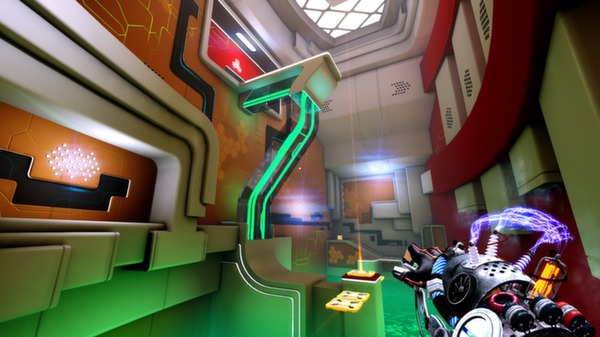 A first-person puzzler set in a magnetic-tech lab — Steam store
First Impressions
The top helpful positive reviews land on two first impressions. One is how legible the controls are — 'you get it in seconds,' 'a brilliantly intuitive tutorial.' The other is atmosphere: the clean high-tech facility rotting into mythos-slime reads as 'striking.' Low threshold, strong pull.
But plenty of reviewers brace at the same screen and call it 'a Portal re-tread' — wall scrawls, a two-function weapon, inter-level elevators, even the frequent loading screens. The debt is worn openly. A few find the cocky hero, Dax, grating.
So the resolution of observation splits within minutes. The same fact — 'it resembles Portal' — reads as accessibility to one side and lack of identity to the other. Both are right. What the game adds behind the resemblance doesn't show yet; it only resolves after a few rooms of the magnetic grammar.
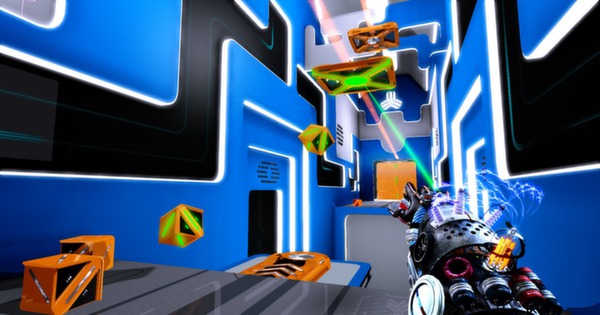 The clean-to-corrupt shift is where first impressions divide — Steam store
Putting the Mechanics into Words
What positive reviews praise most is how few verbs there are. The Magtech glove shoots a red or a green charge; like colours attract, opposites repel — the reverse of real magnets, which the developer says was flipped on purpose to allow three-plus objects to interact. In Puzzlebyrinth terms the verb is subtracted to one, and a two-value grammar of red and green is all you think in.
Yet two values expand fast. Cubes carry individual field strengths (press F to see them); stack two and reverse their charges and the top one launches. Later a robot dog, Newton, becomes a portable charge source, alongside catapults, platforms and transformers. When reviewers call the puzzles 'nutty,' that is combinatorial explosion — a small verb set fanning out into an exponential solution space.
Even the recommendations carry a caveat: 'aha moments alternate with busywork,' 'the puzzles barely connect to the story.' The restraint of a two-value verb sits beside rooms that pad it out without developing it. That coexistence, in the same review, is the honest texture of the game.
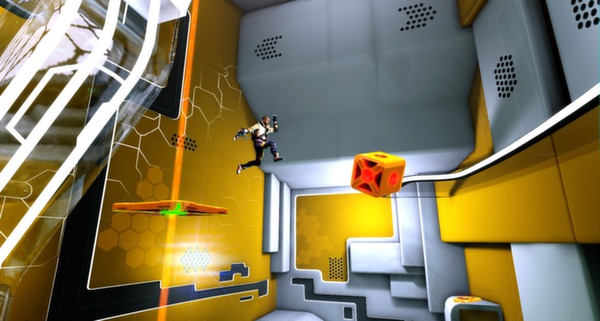 Red and green charges move cubes and platforms — Steam store
Place in the Lineage
The pool measures Magrunner against one ruler: Portal. GameSpot sums it up as 'Portal with Cthulhu' — the two-function weapon, the cubes, the inter-level elevators, the facility decaying like Portal 2. User reviews keep saying 'another helping of Portal.' The lineage isn't hidden; it's announced.
But magnetism asks for different thinking than portals. If a portal is a verb that joins space, magnetism is a verb that moves things by attraction and repulsion, so reading gravity and the direction of force is the core. Even within the Portal-like lineage — beside the colour logic of ChromaGun or the rotating rooms of Q.U.B.E. 2 — Magrunner sits apart in making you read the direction of force.
The complaint isn't the resemblance; it's that the copy skipped Portal's core — GLaDOS's wit. Half of Valve's fun was narration, several reviewers note, and Magrunner inherited the mechanism but not the voice. I read that as reach, not defect: it lands for anyone who wants the magnetic grammar quiet, and falls outside anyone who came for the talk.
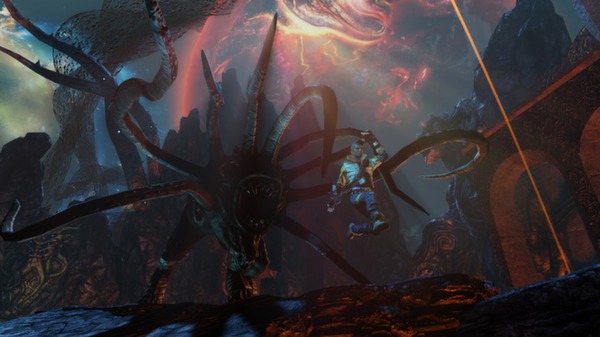 A test chamber that announces its Portal lineage — Steam store
The Feel of the Story
The sharpest split isn't mechanics but story and Cthulhu. The negative side keeps returning to 'Cthulhu in name only' — the mythos is thin, aimed at 'awesome' rather than dread. IGN calls the horror 'under-baked'; users write 'boring enemy design' and 'the puzzles don't connect to the story at all.'
Atmosphere, though, is an asset for the positive side. Many find the clean facility corrupting into oily mythos-fixtures 'absorbing,' and GameSpot credits its 'excellent horror ambience.' So the same story is praised as world-dressing and faulted as narrative — the same element read two ways again.
To me this is placement, not craft. Unlike Return of the Obra Dinn, where the story becomes the grammar of deduction, Magrunner's mythos never touches the solutions; the puzzles run on the same logic after the facility rots. The story is wallpaper outside the verb — it lifts mood but never the learning curve. The gap in reviews is whether you read that detachment as staging or as neglect.
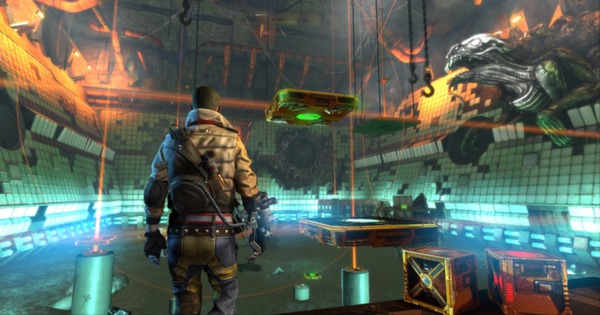 The mythos dressing lifts mood but never enters the solving — Steam store
Sources
This piece was written from the Steam store's user reviews as of 2026-07-14.
・Steam: Magrunner: Dark Pulse (80% of 366 Steam-purchaser reviews positive; 830 of 1,135 = 73% overall; 'Very Positive', 2026-07-14 snapshot)
・Read the top helpful positive and negative reviews plus recent ones via WebFetch; positive clusters on the magnetic puzzling and ambience, negative on thin Cthulhu, dull enemies, story disconnect, and late twitch-platforming.
・Critic context via Metacritic 70 and GameSpot 7.5 (Leif Johnson).
Closing
Steam reads 80% positive among purchasers, 73% overall, Metacritic 70; my design-critique score is 7.5. It runs a little high because the two-value magnetic verb genuinely produces combinatorial explosion, and the 40-level curve is carefully taught — difficulty dips whenever a new element arrives, then climbs once it's in your hands. Marks come off for the twitch and platform-jumping grafted on late, and for a story left outside the verb.
The pool's verdict is mostly 'buy it on sale.' Reported clear times run about 10-11 hours, and against a $20 list price satisfaction is highest at a discount. Well worth it for anyone who wants the logic of moving things by magnetism, or a sturdy test chamber to fill the gap between Portals; outside its reach for anyone expecting GLaDOS-grade narration or real horror.
What it's worth comes down to whether you enter knowing what it kept from Portal and what it didn't — the mechanism, yes; the voice, no. Swallow that one point and the magnetic grammar still holds up. The clean split, the pool quietly shows, is just the gap between readers who understood that at the door and those who didn't.
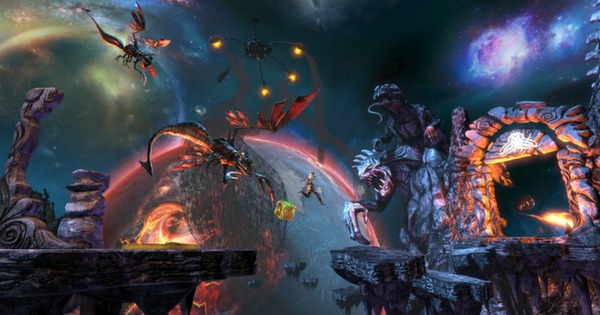 It kept the mechanism, not the voice — Steam store
Reactions (no login)
Anonymous • one of each per visitor per day
Read next
Related reviews
Sherlock Holmes: Crimes and Punishments
A third-person detective adventure set in Victorian London: walk the scene, lift clues from it, then wire them together on a board called the Deduction Space until a conclusion forms. Each of six standalone cases supports several conclusions, and you also decide whether to hand the person you name to the law or let them go. Made by Frogwares.
Teslagrad
A hand-drawn 2D puzzle-platformer about climbing an abandoned Tesla Tower on magnetic polarity - like poles repel, opposite attract - plus a blink through electric barriers. There is no text or dialogue; the story is told entirely through murals and backgrounds. By Norway's Rain Games.
The Bridge
A 2D puzzle game where you rotate the entire stage to change which way gravity pulls, threading M.C. Escher-style impossible architecture to reach the exit key. From a single verb — turn the world — grow vortexes, a rolling boulder and full inversion, all in hand-inked black-and-white lithograph. A 2013 game by Ty Taylor and Mario Castañeda.


