REVIEW · 2014-02-13
NaissanceE
A Lonely Descent Through a Vast Structure
First Impressions
You descend, endlessly, into the depths of a structure drawn only in black and white. NaissanceE, released in 2014 by Limasse Five, is a first-person exploration game with only a handful of actions: run, jump, and touch light and shadow. I write this not as my own playthrough but as a reading of the Steam review pool.
The label is "Very Positive": 85% of 2,849 English reviews are positive, and across all languages 4,339 reviews (3,662 up, 677 down; snapshot 2026-07-05) run about 84% positive. Metacritic, meanwhile, sits at a mild 66 — critics rate it a notch below the crowd. That inversion, pros lukewarm and users warm, already tells you what kind of game this is.
Read the reviews in helpful order and the most frequent proper nouns are not the developer or a genre but Tsutomu Nihei's manga BLAME! and Piranesi's Imaginary Prisons (Carceri). Players reach for a lineage of architecture and etching, not of puzzle design. That reflex is itself what I want to read.
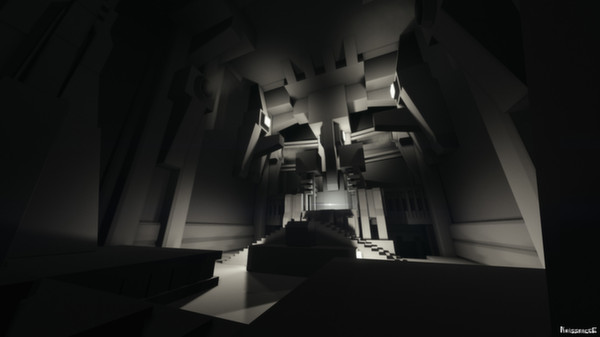 A vast structure built from black and white alone — Steam store
The World
The one word almost every positive review reaches for is small — "it makes you feel small." Monolithic. Sheer scale. Loneliness. The sense of a place not built for humans. More_Badass's long log describes spotting a strange structure in the distance and walking fifteen minutes to reach it, calling it something rare even in open worlds.
In my vocabulary this is subtraction taken to the limit. Colour is nearly all black and white; there is no UI, no text, no map, no health bar, no dialogue, no stated story. What remains is the outline of enormous space and the fall of light and shadow. Where most games build density by adding, this one builds it by removing — with nothing else present, the height of a ceiling or the depth of a drop becomes information.
What is telling is that reading space this way sits on a continuum with other observation puzzles. Just as The Witness dissolved its puzzles into an island, NaissanceE hands the act of reading to the architecture itself — except there are no symbols to solve, only the decision of where to step next. Here observation resolution is spent finding a direction, not an answer.
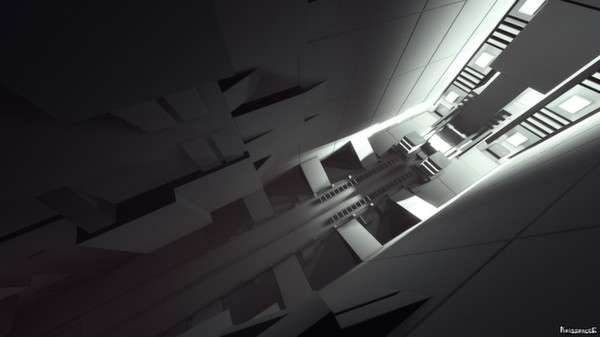 Scale you have to look up at becomes information — Steam store
Putting the Mechanics into Words
Positive reviews barely mention mechanics. What they praise is the beauty of the light-and-shadow entities — devices that open and close in response to your proximity or to how much light falls on them. The negative side, by contrast, concentrates its fire on the breathing mechanic that makes you time your breath while running: "adds nothing," "like Receiver, it makes an automatic action conscious, but I cannot see the point."
Count the verbs: walk, run, jump, touch light. That is all. The breathing is a grammar grafted onto that small set — it overwrites an unconscious action (running) with a conscious one (timing a breath). The intent is immersion, but the pool reads it as a grammar out of step with contemplation: you want to look at the space, and the game asks you to manage your fingertips instead.
So the verb design splits into two layers. In the exploration layer subtraction works; in the execution layer one unfamiliar verb is added and creates friction. Where Antichamber taught the logic of space with nothing but walking, NaissanceE puts a cost on walking itself — and that is the source of the difficulty rift I turn to next.
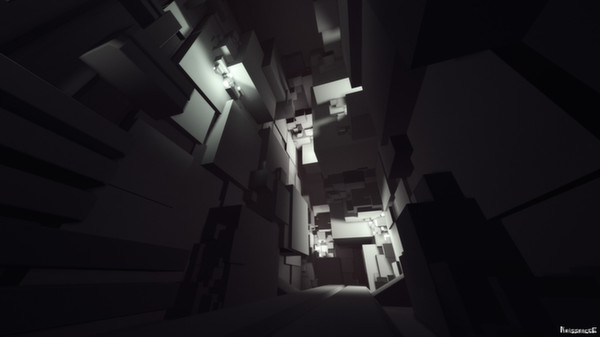 Passing through devices that react to light and shadow — Steam store
The Texture of Difficulty
"Too hard" and "not hard, it is an atmosphere game" split the same review section down the middle. Pool the sticking points and almost one place gets named: a stretch of rotating platforms and a wind-blown pipe — the fan sequence. jack's detailed review dismisses it as "unreasonable and un-fun," then adds a single update: once he realised the wind blows automatically on a timer, he raised his verdict to a "reluctant recommendation."
The "difficulty" the pool describes divides into three kinds. Navigational: not knowing where to go. Execution: precision jumps. And recovery cost: checkpoints spaced so far apart that each failure replays a long stretch. Positive reviews forgive mostly the first; negative reviews rage mostly at the second and third.
That is the fault line in the learning curve. The exploration stretches are flat and meditative, then an old-school die-and-retry slope is spliced in. Several reviews report the developer calling the platforming hard by design — so it is a decision, not an accident. The cost is the switch itself: a player moving at the speed of contemplation is suddenly asked for the speed of reflex.
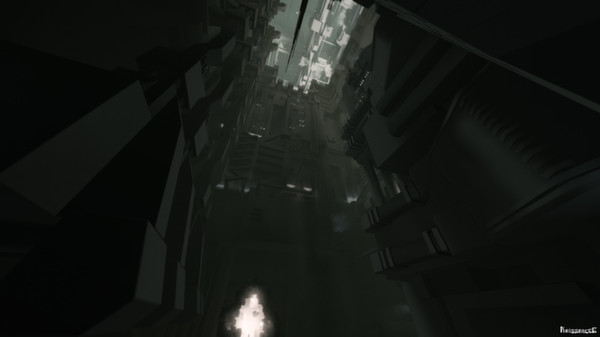 An old-school slope spliced into meditative exploration — Steam store
Place in the Lineage
As I said at the top, the proper nouns in this review section skew toward visual art. Most frequent is Tsutomu Nihei's manga BLAME! — "the unofficial BLAME! game" recurs almost verbatim — then Piranesi, Blade Runner, and Yume Nikki / LSD Dream Emulator. All of them are the vocabulary of pictures, comics, film, and dreams, not of games.
How those names are chosen states the game's position outright. Players measure NaissanceE not by the quality of its puzzles but by how strongly it evokes inhuman scale. Words that connect it to a lineage of mechanics — sokoban, Portal-likes, observation puzzles — barely appear. The nearest are Antichamber and Manifold Garden, and even those stay at "abstract architecture in first person."
That tilt toward a visual lineage is also the root of the split. To those who watch it as a picture it is near perfect; to those who play it as a game the puzzles and platforming feel thin. The Metacritic-66-versus-user-85% inversion reads as exactly that gap: critics scored it as a game, most users scored it as an experience.
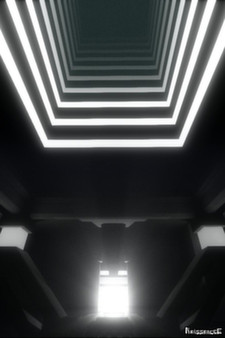 A landscape described in the words of art, comics, and film — Steam store
Sources
This piece was written by reading the Steam store page's user reviews as of 2026-07-05.
・Steam: NaissanceE (Very Positive, 85% of 2,849 English reviews; all languages 4,339, 3,662 up / 677 down)
・Read via WebFetch, focused on the top helpful positive and reserved reviews and spanning posts from 2014 to 2024 (positives and reservations from More_Badass, minuend, Audish, AestheticGamer, FastLawyer, klety, 8day, LeKrapz, OrbWinder, plus jack's more critical review).
・Developer, release date, genre tags and engine were verified on SteamDB; the critical angle on Metacritic (66) and Rock, Paper, Shotgun. What users call "art," critics soften to "not for everyone as a game," and that gap in temperature is exactly what the score inversion shows.
Closing
NaissanceE is a game with a clear sense of who it is and is not for. If you want to be swallowed by enormous space and read a world with no dialogue and no map on your own feet, it is a rare experience, and free. If you want meaty puzzles or comfortable platforming, the switch between contemplation and reflex will grate. This is not a matter of better or worse but of design reach.
Steam's overall is about 85%, Metacritic 66. From a design standpoint I give it 7.5. The subtractive world-building is close to perfect, but the friction of the breathing mechanic and the recovery cost keep the floor of the experience from rising past a point. Close to the users' warmth, yet I understand the critics' reserve — the middle of the two is this game's honest landing. Reviews put a playthrough at roughly three to five hours.
What remains after reading the pool is that one word: small. A free game more than a decade old is still, in fresh reviews, being described as having "made me feel small." Not many works hold people this long on the strength of evocation alone.
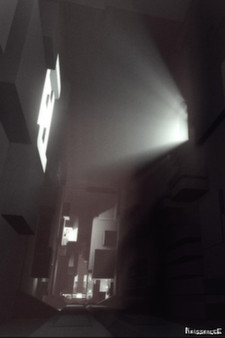 What is left at the bottom of the descent is the feeling of being small — Steam store
Where are you with this game?
Press one and the game goes on your shelf. You can see it on your account page.
Reactions (no login)
Anonymous • one of each per visitor per day
Read next

Related reviews
Escape Goat 2
A 2D puzzle platformer about escaping a trap-filled stronghold with a goat and its mouse companion. Each room is a single screen, solved with jumps, an immortal mouse that crawls walls and stands on switches, and a magic hat that swaps the goat's position with the mouse's. Over a hundred rooms across ten zones, from MagicalTimeBean in 2014.
The Vanishing of Ethan Carter
A first-person mystery in which you play an occult detective, walking a deserted valley to examine bodies and belongings and reassemble each death by putting the scattered fragments back in order — a photogrammetry-built forest explored with no map and no HUD, from The Astronauts.
Ether One
A first-person adventure where, as a "Restorer," you dive into a dementia patient's memories, gathering letters and objects in the seaside town of Pinwheel and solving optional puzzles to rebuild the past — carrying just one item at a time. By the UK's White Paper Games.


