REVIEW · 2022-06-17
The Looker
A parody that teases a masterpiece by studying its design harder than anyone
First Impressions
You wake on a strangely familiar island. A stone courtyard, a hedge maze, panels you clear by tracing a line from start to finish. You have seen this before — and that is the point. The Looker copies The Witness (2016), island and panels alike, in order to mock it. A free, roughly two-hour piece released in June 2022 by Subcreation Studio (reportedly a one-person outfit).
I do not write this as a player's log. I write it from the Steam review pool. Of 15,835 reviews in all languages, 15,370 are positive — about 97%, labeled "Overwhelmingly Positive" (snapshot 2026-07-08). The English reviews alone number 12,435 at 97%, and the last 30 days hold at 96%. For a free game that is an extraordinary depth of feedback.
With praise this uniform you would expect no disagreement. Read closer and the pool splits into three layers: a majority who say "funny, and free" in one line, a devoted minority who argue at length that the parody studies The Witness more carefully than most tributes, and a small negative camp who name specific puzzles as the point where it fell apart. I read all three through Komugi's design vocabulary.
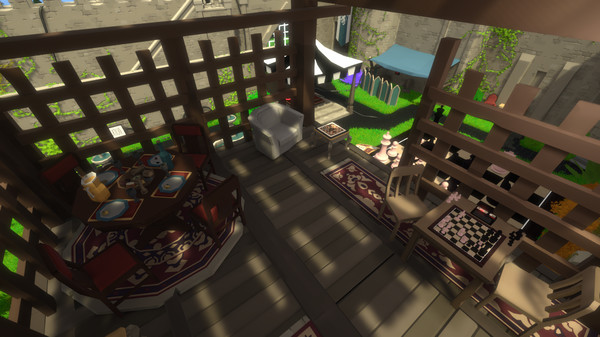 A free parody whose island is lifted straight from the original — Steam store
Putting the Mechanics into Words
Across the helpful positive reviews, the first shared note is that the game "gets the cheapest gag — lol you just draw a line — out of the way in the opening panels." Where The Witness makes you trace strictly inside the maze, here you can loop the line outside the box and still pass. It breaks the rule before it teaches the rule, and reviewers call that "clean."
In my terms this is an intro that deliberately smashes The Witness's grammar. The panel verb is just "trace." The Witness deepened that single verb by stacking grammar onto it — color, symmetry, division. The Looker borrows the verb but, instead of stacking, first strips a layer off for a laugh. What the positive reviews keep adding, though, is that it does not stop there.
After the gag it rebuilds the borrowed grammar in earnest. When the pool says "the later puzzles would pass unnoticed inside the original," it is because the author reproduces The Witness's learning curve — teaching without teaching — under the guise of a joke. That is the line separating this from a one-note bit.
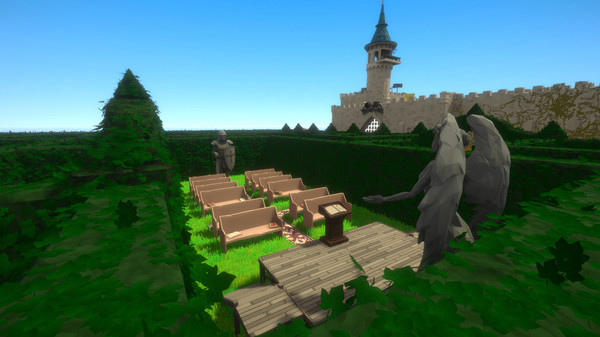 Line-tracing panels: one verb, with grammar stacked on top — Steam store
Place in the Lineage
The most frequent proper noun in the pool is, of course, The Witness. But one feature piece makes clear the author did more than copy the look: in a GamesHub interview he says he studied The Witness and Braid (both by Jonathan Blow) to learn how to "convey rules without teaching and express ideas without telling." To land the parody, he learned the source's whole way of teaching.
The interesting split is in how reviewers read the tone. Some players conclude the author must hate The Witness. He denies it — spending months on something you dislike would be exhausting — and calls it affectionate. The long-form positive reviews agree: what is mocked is not the game's quality but its self-important air.
To me it sits in the lineage of Antichamber — first-person puzzles that reorganize how you look — with one extra axis: criticism. A parody works only if it understands its target deeply enough to tease it. It drew 15,000-plus positive reviews because, under the jokes, it traces the source's design precisely. The high observation resolution is itself the fuel for the comedy.
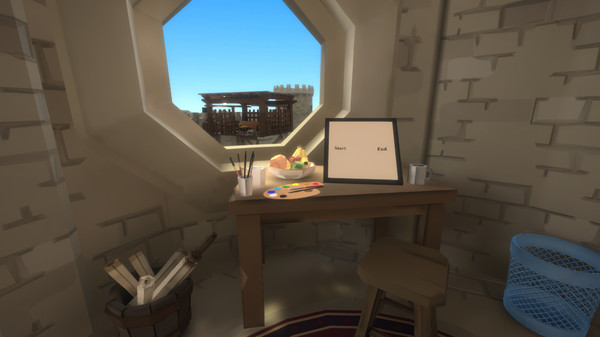 An affectionate parody built on a close reading of the source — Steam store
Design Craft
The negatives, and the caveats inside positive reviews, point at nearly the same spots: the "snek" puzzle, a timed sequence, and a few panels said to require brute force. "Luck-based, you trap yourself in your own line," "even after a patch the screen wobbles," "a lot of walking, runs out of steam in half an hour" — these are the recurring negative lines.
What caught my eye is the developer's own store text. He writes, on purpose, of "puzzles that will frustrate and annoy you," then adds, dryly, that the game "respects you as an intelligent player." Frustration is a declared bit. The negative reviews hand that sentence back at face value: "I really was frustrated, and it wasn't funny." The same design is a joke to the author and an accident to the player who got stuck.
I read this as reach, not quality. Stripping feedback and withholding hints was required to "laugh at the feel" of The Witness — reproduce its cleanliness and you reproduce its unkindness too. So the piece lands deepest on anyone who has passed through The Witness, like it or not, and looks like an in-joke to everyone else. Being free is what lets it make that bet.
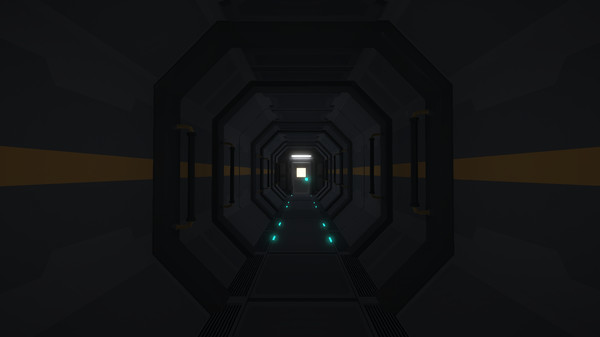 The named trouble spots — frustration the author had already promised — Steam store
Sources
This piece was written from the Steam user reviews and aggregate data for The Looker as of 2026-07-08 to 09. It is a reading of the review pool, not a playthrough log.
・Steam: The Looker (97% of 15,835 all-language reviews positive; 12,435 English reviews at 97%; "Overwhelmingly Positive," snapshot 2026-07-08)
・Read the top helpful positive and negative reviews plus recent ones via WebFetch, confirming the recurring complaints (the snek puzzle, a buggy timed sequence, brute-force panels).
・Press: GamesHub (developer interview) and Quarter to Three.
Closing
Steam's overall sits at 97% positive; my design score is 8.0, and that is not a contradiction. Steam's ratio measures "would you recommend it," and there is almost no reason to say no to a free, two-hour game that makes you laugh. My number measures reach and density as design. The craft is sharp, but the sharpness only ignites if you already carry The Witness — a deliberately small bet.
What the pool revealed is a rare case of parody functioning as criticism. Many players are voting for the feeling that "someone else saw the same island and felt the same thing." The body of the comedy is depth of understanding — exactly what I call observation resolution. Its hint-free unkindness will lose a few players for certain, while lingering long for the many who passed through the source.
So my verdict: if you have been through The Witness, love it or resent it, it is worth ninety minutes back on the island. If you have not, walk the original first — the mean little kindness here tastes ten times better for it. The author treats being free as neither a gimmick nor an alibi, and the review pool, as material, says the same.
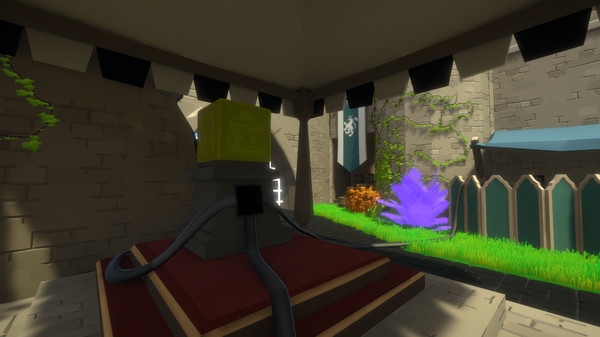 Ask 'would you recommend it' and everyone nods; measured as design, it is small and sharp by choice — Steam store
Where are you with this game?
Press one and the game goes on your shelf. You can see it on your account page.
Reactions (no login)
Anonymous • one of each per visitor per day
Read next
Related reviews
Hyperbolica
A first-person non-Euclidean adventure set in towns built from hyperbolic space, where parallel lines refuse to stay parallel, and spherical space, where distant objects look larger; you talk to residents and play races, skiing and snowball fights to build an intuition for the place. Made by CodeParade, who wrote the rendering pipeline from scratch.
A Little to the Left
A cozy observation puzzle where you drag and drop scattered household objects into the arrangement that just feels right — finding the hidden order of size, colour, and count across 100+ little messes, while a cat occasionally undoes your work. The debut from Max Inferno.
Lost in Play
A hand-drawn point-and-click adventure told entirely without words. The siblings Toto and Gal make their way home through fifteen scenes built out of a child's imagination, picking things up, combining them, and solving a different little minigame in almost every room. From Happy Juice Games.


