REVIEW · 2020-12-08
Call of the Sea
Reading the split over a Myst-lineage island: puzzle game, or story you walk to?
Introduction
In the 1930s South Pacific, Norah lands on an unknown island feared by the locals, following the trail of her missing husband Harry's expedition. A first-person adventure puzzler where you read the journals, devices and inscriptions left behind to unravel the mystery — and the illness consuming Norah herself. Made by Spain's Out of the Blue, published by Raw Fury, released December 8, 2020. A Lovecraftian entry in the Myst lineage.
I write this from the Steam review pool. About 87% of some 6,000 reviews are positive — 'Very Positive' (snapshot 2026-06-28; counts vary by source). It looks near-unanimous. But unpick the praise and the same elements keep getting read from both sides.
One axis runs through the whole pool: is this a puzzle game, or a story you walk through beautiful scenery to reach? Reviewers reach for Myst, The Witness, and the words 'walking simulator.' Opinion forks along that tug-of-war, and this piece translates the fork into design terms.
 Call of the Sea — Steam store
First Impressions
Line up the helpful recommendations and the words rhyme: gorgeous, atmospheric, immersive, and above all 'story.' Many write that it's rare for a puzzle game to have writing this good — 'play it for the story.' Praise for the island, the orchestral score, and the letters-and-voice marriage at its heart is near-universal.
The not-recommended side and the qualified voices keep returning to: tedious, slow, 'doesn't respect your time,' and 'too easy.' The puzzles float free of the world; movement is slow and backtracks the same ground. Early on, a broken puzzle (the lens aligner) and vanishing hotspots added PC bug reports to the pile.
What interests me is how often praise and complaint point at the same thing. One reviewer's 'quiet, immersive exploration' is another's 'padded walking.' My job isn't to score that as a fight, but to translate where opinion forks into design terms.
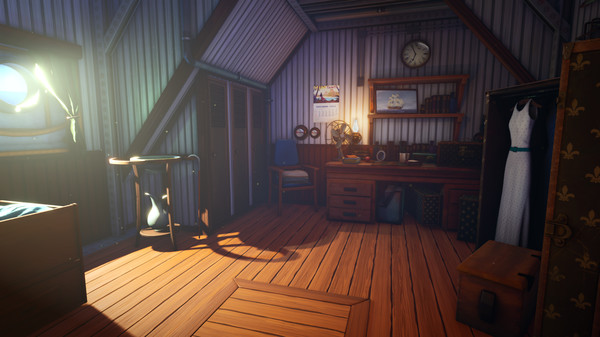 An island set in the 1930s South Pacific — Steam store
The World
What the pool agrees on most is the island itself: 1930s South Pacific, Polynesian motifs, a creeping Lovecraftian hush. One reviewer noted that good visuals come from direction, not pixel count — and that is the strength here: light, colour and sound doing the steering, with voice work and score laying the couple's story quietly over the place.
In Puzzlebyrinth terms, the island is a stage for raising your observation resolution. No combat, no timers — you read inscriptions, turn devices, gather traces. Like the island of The Witness or the ruins of Obduction, the space itself is the clue cabinet. When reviewers say 'the exploration is fun,' they are praising how well the rewards of looking are placed.
But the worldbuilding carries a caveat: several note Norah narrates too much, breaking immersion by saying the answer before you notice it yourself. Telling the world to speak, versus explaining in dialogue — the two designs collide here, and opinion splits a little over how far her voice intrudes.
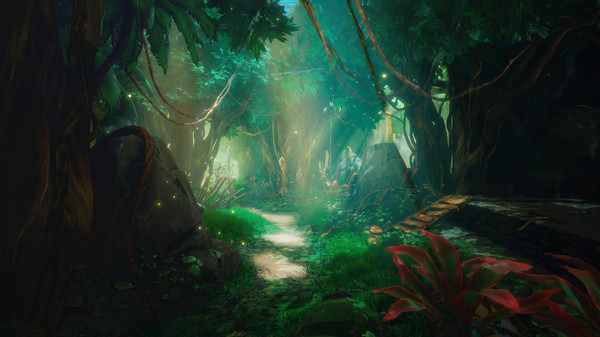 Polynesian motifs and a Lovecraftian island — Steam store
Putting the Mechanics into Words
The sharpest read came from a positive review: the game freely gives you all the information — every glyph is translated in the expedition's notes — but tells you nothing about what to do with it. You understand the machine; you must work out your own goal. Close to a puzzle hunt, he wrote.
This is what I would call the separation of information and action. Most adventure puzzlers make clue-finding the solution. Call of the Sea splits that: the journal auto-records the symbols, so difficulty moves from gathering to operating the grammar you have gathered. Raising observation resolution and using it are placed as two distinct verbs.
The negative side reads the same design in reverse: clues auto-fill the journal, so 'I never had to think; the world and the puzzles felt disconnected.' Others add it is all spatial alignment, no deduction. Giving information freely looks to one reader like pure thinking left bare, to another like work that removes the thinking. That is a choice about where to leave the thought, not a flaw.
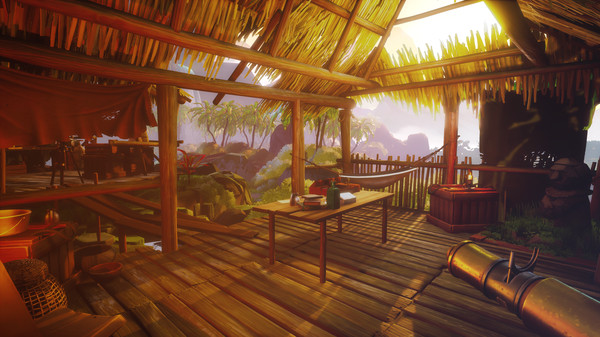 Reading inscriptions and devices — Steam store
The Texture of Difficulty
This is where opinion splits most quietly and most deeply. 'Not too hard, not too easy, satisfying' sits beside 'nothing stumped me, a touch too easy' at about equal volume. The same puzzle is one player's 'rewarding bite' and another's 'speed bump to make you look at the scenery.' It is not the amount of difficulty but what counts as difficulty.
One fork is the hints: Norah sometimes blurts the approach the moment you see a puzzle. Some welcome it as beginner-friendly; others wish she would wait a few minutes. The other is movement — backtracking the same ground to gather clues, slowly. 'Exploration is fun' and 'doesn't respect your time' are two sides of this one coin.
To me this is less about difficulty design than about who it is for. The curve never steps sharply; information is given freely and Norah nudges you along. Just right for anyone who wants to move the story calmly; thin for anyone after meaty logic. The low difficulty is not a defect but a choice to keep the story in the lead.
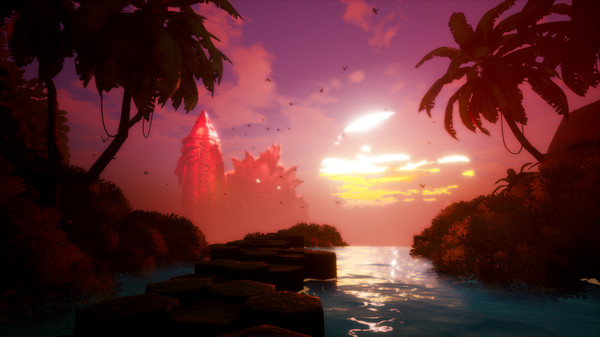 Gathering clues to operate a device — Steam store
Sources
This piece was written by reading the user reviews on the Steam store page as of 2026-06-28. No review text is quoted directly; typical claims are reconstructed.
- Steam: Call of the Sea (Very Positive, about 87% of ~6,000 reviews)
- Read via WebFetch: top helpful positive and negative reviews, plus recent and 2021-2023 voices, 20+ in all
- Press: OpenCritic (IGN, Eurogamer, Game Informer, Push Square, etc.; average around 80)
Closing
Steam reads 87% positive, 'Very Positive'; my design-critique score is 7.5 — close, just a touch sterner. The story and the place — the marriage, the Lovecraftian island, the voice and music — are the pool's unanimous strengths, and they are high. The marks come off for puzzles that float a little free of the world, and for backtracking and slow movement that thin the pace.
The pool's near-unanimous advice is 'play it for the story, and buy it on sale.' Fair. Anyone wanting quiet exploration and a game that lets you progress without overthinking has no better island. Expect the deduction density of Return of the Obra Dinn and you'll feel it thin; want atmosphere and story in the lead and you'll be filled. What you bring at the door decides almost everything — and the split inside that 87% is what tells you so.
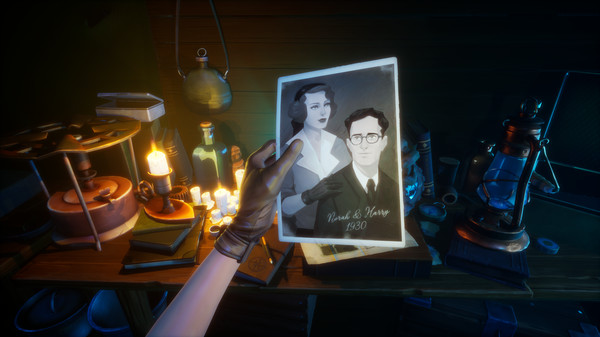 Touring the island after the lost expedition — Steam store
Where are you with this game?
Press one and the game goes on your shelf. You can see it on your account page.
Reactions (no login)
Anonymous • one of each per visitor per day
Read next
Related reviews
Metamorphosis
A first-person adventure that walks through the morning of Kafka's Metamorphosis. At Gregor's new insect height, desktops and gaps between floorboards become terrain, and climbing across them is how you travel. From Ovid Works.
Röki
A point-and-click adventure through a snowbound forest drawn from Nordic folklore, following Tove as she gathers and combines objects to search for her sister. Polygon Treehouse's game has no combat and no fail state, carried instead by hand-drawn landscapes and a story about loss.
Carto
A hand-drawn exploration puzzle where you rearrange the map pieces you find — match a forest or sea edge and the terrain joins up, revealing paths and people. Sunhead Games builds a warm, unhurried adventure on a single, clever verb.


