REVIEW · 2020-10-27
Carto
A gentle exploration puzzle about rearranging the map to connect the world
First Impressions
Line up the helpful positive reviews and they read in one colour: charming, relaxing, cozy, wholesome, and 'the rearrange-the-map trick is clever.' Most cite the hand-drawn art, the soft music, and the warm cast, recommending it as exploration without punishment.
The qualified voices and the critics use a different vocabulary: too short, runs out of steam, repetitive, 'doesn't make the most of its central mechanic.' Nintendo Life lands at 6/10 ('repetition far too swiftly'), TheSixthAxis at 7/10 ('an afternoon's worth, don't expect to be blown away'). There's a clear step between the user heat (Steam 95%) and the critic temperature (OpenCritic 77).
Tellingly, praise and complaint often point at the same spot: one reviewer's 'gentle and soothing' is another's 'too easy.' My job is to translate where they fork, not stage a fight. For the record, Steam's English reviews sit at 95% positive (of 1,668), Overwhelmingly Positive across all languages (2026-06-27 snapshot).
 store key art — Steam store
The World
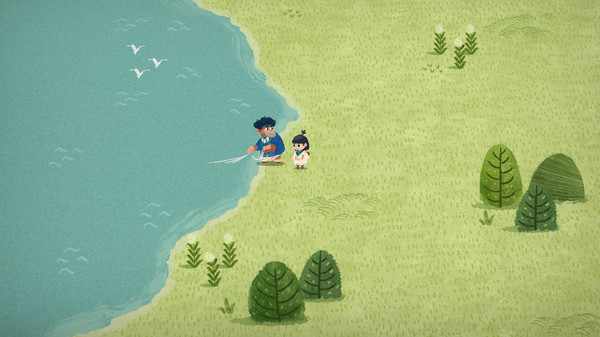
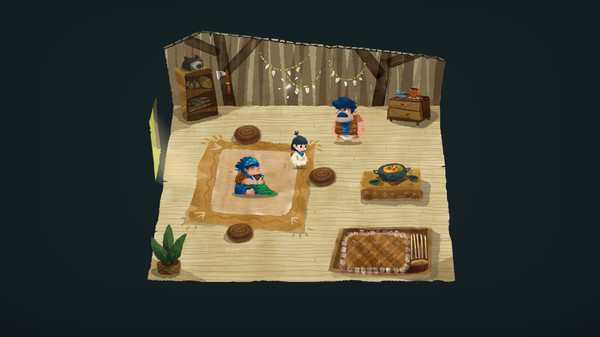
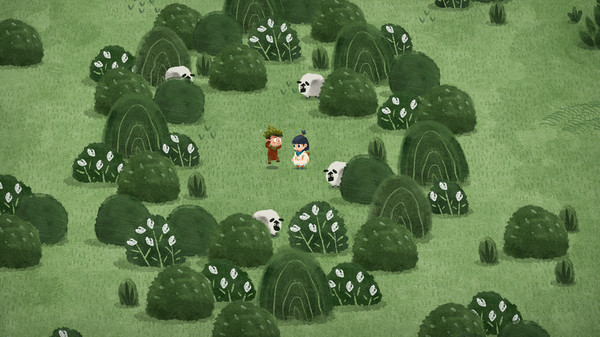
What the positive pool praises first is atmosphere, not mechanics: hand-drawn, colorful, relaxing. Several reviewers single out the warmth of the cast and how each land gets its own culture. Push Square calls the NPCs 'real warmth and charm'; PlayStation LifeStyle calls it one of the most wholesome adventures of its year.
In Puzzlebyrinth terms, the world dissolves observation resolution into story: reading terrain and matching edges is the same act as walking a place and learning it. That overlap of exploring and thinking echoes what I wrote about A Monster's Expedition.
The negative side reads the same calm in reverse. TheSixthAxis finds the story 'forgettable.' Across a short run (5-7 hours by the store's own count), 'I wanted to know the world more' and 'just the right length' sit side by side.
 the hand-drawn, colourful world — Steam store
Putting the Mechanics into Words
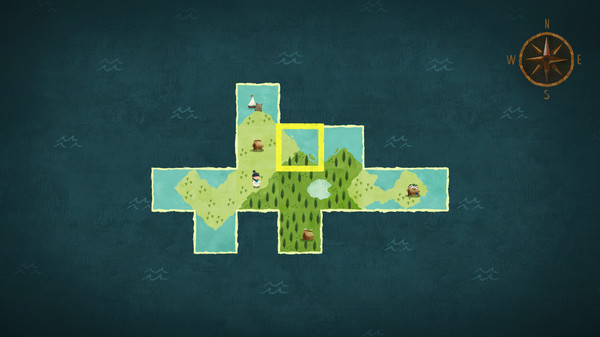
Pooling the descriptions, there's really one verb: rearrange the map pieces you find. Forest edge to forest edge, sea to sea. Match the edges and the terrain becomes continuous — paths, buildings, and people appear. Helpful reviews call it 'unique,' 'clever,' 'like Carcassonne': a board-game edge-match repurposed as editing the world itself.
This is verb subtraction in the Puzzlebyrinth sense. The action narrows to one — place a tile — and the grammar compresses to a single line: match the edge types. A small verb with a clear grammar is the same lineage as a clean puzzle like Cosmic Express. The one-line entry is exactly what the positives mean by 'approachable.'
Even the recommendations carry a caveat: 'good idea, underused.' Nintendo Life's 'runs out of steam' and TheSixthAxis's 'doesn't make the most of the mechanic' say the same thing — the rearrange verb is powerful but never extends into new grammar later on. The subtraction is done; the combinatorial explosion past it is deliberately pruned. Restraint and under-development are two faces of one design call.
 rearranging map pieces to join the world — Steam store
The Texture of Difficulty
Opinion splits cleanly. Some call it 'easy and soothing,' 'great to play with kids'; others write 'not enough bite for an adult' or 'puzzle clues sometimes vague and unfair.' Nintendo Life goes further: 'perfect for kids and novices, everyone else approach with caution.' The same ease reads as a virtue or a flaw.
To me it's distribution, not amount. Rearranging map pieces could explode combinatorially — the number of placements can be huge. Carto prunes that in advance by keeping piece counts and goals small. That's why it rarely stalls and stays gentle. The positives' 'relaxing' and the negatives' 'too easy' just read that same pruning in opposite signs.
A few spots with thin clues get tagged 'vague, unfair' — the rare under-resolved move inside an otherwise gentle curve. Want bite? The Witness. Want calm? Carto. It's a choice about who the game is for, not a defect.
 match the edges and a path opens — Steam store
Sources
Written by reading the Steam user reviews and aggregators as of 2026-06-27. No review text is quoted directly; typical claims are reconstructed.
- Steam: Carto (Overwhelmingly Positive; 95% of 1,668 English reviews; 7,183 all-language Steam-purchaser reviews; recent Very Positive at 93%)
- Read across the top helpful positives, representative qualified and negative reviews, and the recent trend (roughly flat) via Steam, plus OpenCritic (Top Critic Average 77, 79% recommend, 25 outlets): Game Informer 8/10, Push Square 7/10, Nintendo Life 6/10 across the spread
Closing
Steam's English score is 95% positive; the critic aggregate is OpenCritic 77. My design-critique score is 7.5, set between them. Editing the world by matching one terrain edge to another is genuinely new, and the clarity of the entry is excellent. Marks come off because that powerful verb never extends into new grammar and ends with its combinatorial space pruned — the critics' 'runs out of steam' is, in my words, 'grammar that never unfolds.'
Reviews put completion around 5-7 hours. The reach is clear: short of satisfying anyone hunting for bite, but well worth it for anyone who wants to wander a hand-drawn world unhurried and savour the moment an edge clicks and a path opens. If you liked the calm, compact Unpacking or the explore-as-think design of A Monster's Expedition, the taste will rhyme. The split itself tells you who it's for.
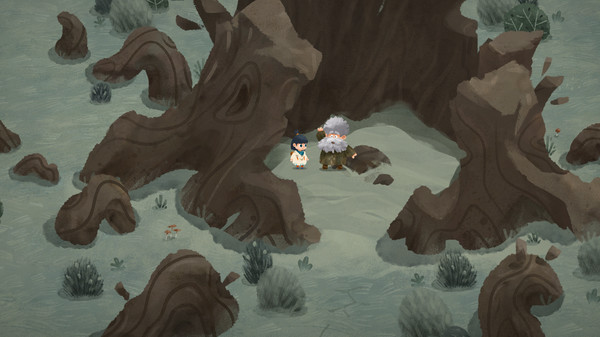 an unhurried hand-drawn exploration puzzle — Steam store
Where are you with this game?
Press one and the game goes on your shelf. You can see it on your account page.
Reactions (no login)
Anonymous • one of each per visitor per day
Read next

Related reviews
Röki
A point-and-click adventure through a snowbound forest drawn from Nordic folklore, following Tove as she gathers and combines objects to search for her sister. Polygon Treehouse's game has no combat and no fail state, carried instead by hand-drawn landscapes and a story about loss.
Call of the Sea
A first-person adventure puzzler set in the 1930s South Pacific, where Norah lands on an unknown island chasing her husband's lost expedition, reading journals and inscriptions and turning devices to unlock its secrets — Out of the Blue's Lovecraftian entry in the Myst lineage.
Metamorphosis
A first-person adventure that walks through the morning of Kafka's Metamorphosis. At Gregor's new insect height, desktops and gaps between floorboards become terrain, and climbing across them is how you travel. From Ovid Works.


