REVIEW · 2017-09-27
The Painscreek Killings
A no-handholding detective game solved from clues in an empty town
Introduction
Playing journalist Janet, you enter Painscreek — a town emptied out after a murder — to solve the four-year-old killing of Vivian Roberts. No quest markers, no hints: you pick up keys, open doors and read the diaries left in the rooms. A first-person detective game made and published by EQ Studios in 2017.
I write this from the Steam review pool. The label is 'Very Positive' — about 91% of 6,148 reviews across all languages, 89% of 2,812 in English (snapshot 2026-07-02). The number looks like near-unanimous praise. Yet reading the helpful positives and negatives side by side, both circle the same single point and reach opposite verdicts.
That point: is this really a game where you deduce? The positives invoke Return of the Obra Dinn and The Case of the Golden Idol to say it belongs beside them; the negatives invoke the same names to say it is nothing like them. Same reference, split conclusion. I will read that structure whole.
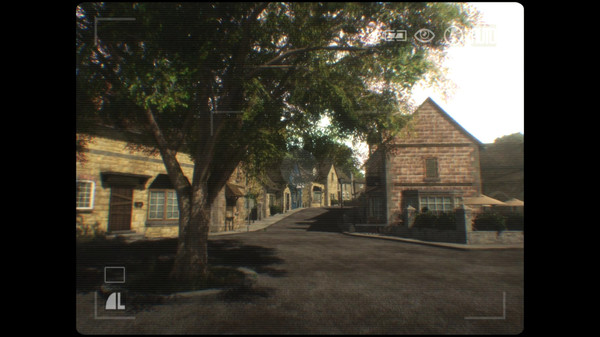 The abandoned town of Painscreek — Steam store
The Town as Stage
The first thing positive reviews reach for is, almost without exception, the town itself. 'Atmospheric,' 'beautiful,' 'eerily quiet' — the recurring adjectives point not at the case or the puzzles but at the feel of walking a place its residents have left. Church, hospital, mansion, inn; lit houses and dark ones.
This is what Puzzlebyrinth calls observation resolution. The town is one enormous object to be observed, every window and drawer openable — space itself is the container of information, the same instinct behind The Witness's island. Even the slow walk speed, agony to the negatives, reads to the positives as the designer insisting you look at everything.
Recent reviews still sit around 95% positive eight years on. What time exposed is not datedness but scarcity — few games still build a town-walk quite like this.
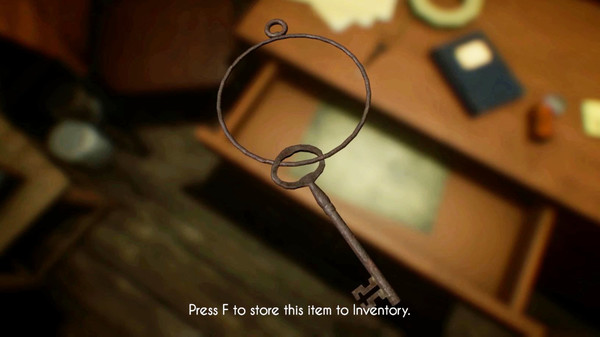 Lit houses and dark ones — Steam store
There Is No Verb for Detecting
Mechanics is where the reviews split hardest. The negatives are blunt and repetitive: 'a drawer-opening simulator,' 'a key-and-diary scavenger hunt,' 'a town-sized escape room.' What they point at is a single fact: the only verbs you can press here are pick up, open, read and walk.
Translated into design terms: this game has no verb for 'deduce.' Obra Dinn has a verification verb — enter fates in the ledger, locked in three at a time. Golden Idol has one — fill words into blanks. Painscreek has none. The reasoning happens entirely in your head or your notebook, and the system never reads it.
The positives praise it as 'real investigation' precisely because of that absence. Nobody checks your answer, so you string the corkboard yourself — and that act becomes the experience. One side calls the missing verb a lack; the other calls it open space. That is the epicenter of the split.
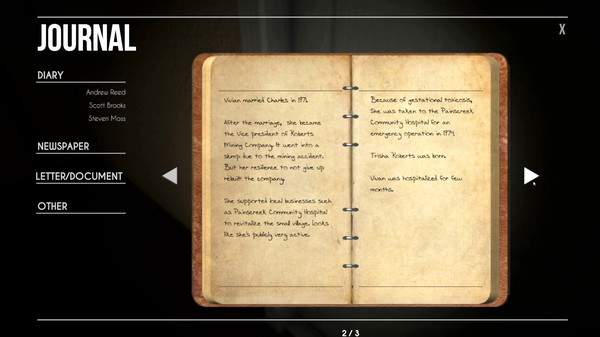 Diaries and keys left by the residents — Steam store
The Promise of the Notebook
On launch the game strongly urges you to keep a notebook. That single line is the most-quoted sentence in the reviews on both sides. Positives welcome it as a design declaration and proudly report building real notebooks or spreadsheets. Negatives call the same line a betrayal — in practice, they say, the only thing you write down is lock codes; every diary is auto-saved to your journal, and they never looked at their notes.
What is at stake is a division of labor: how much the player carries versus the system. Painscreek shoulders storage (the full diary text) but never integration (who connects to what, and how). It is the exact inverse of The Roottrees are Dead, which built the integration into a family-tree UI.
So the 'do you need notes' argument is right both ways. To those who want to integrate for themselves, the notebook is a lifeline; to those who just want the answer, it is a codebook. Not better or worse — a matter of reach. The author aims at the former and never assumed the latter as an audience.
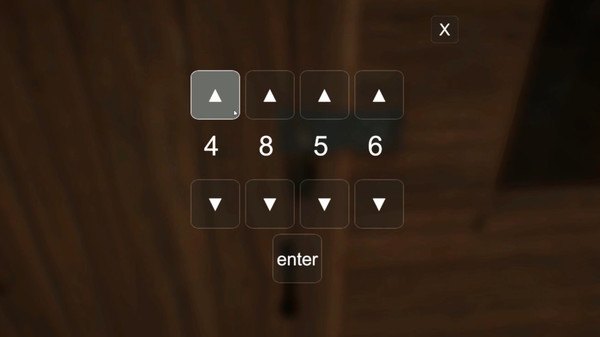 Notes and photographs of clues — Steam store
The Texture of Difficulty
'Hard' here almost never means logically hard. Sort the negatives' reports of getting stuck and they fall into three kinds: travel and backtracking across too-large a town; missing things — scrawls in a wall's corner or items too small to notice, which stall progress; and the slow walk with no fast travel.
None of these is logic; all are attention and patience. It is the inverse of combinatorial explosion — not too few clues, but a town so large the clues thin out. The difficulty is not 'I cannot solve it' but 'I do not know where I have not looked.' Which is why many reviews admit the difficulty drops to near zero the moment you open a guide.
I rate this difficulty a 4 of 5 — not for high logical walls but for the sheer volume of attention it demands. Where Her Story narrows observation to a single search box, Painscreek spreads it thin across a whole town. Same observation genre, opposite texture of being stuck.
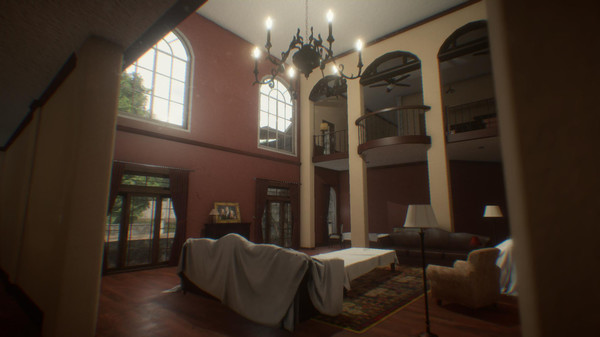 Tools and keys hidden around town — Steam store
Reviews Consulted
This article was written by reading the user reviews on the Steam store and community pages as of 2026-07-02. No review text is quoted directly; recurring typical claims are reconstructed.
・Steam: The Painscreek Killings (Very Positive / ~91% of 6,148 all-language reviews, 89% of 2,812 in English, snapshot 2026-07-02)
・Read 20+ of the top helpful positive and negative reviews plus recent ones
・Press: Gold-Plated Games review and others
Closing
Even among the positives, nearly everyone inserts the same reservation: the ending. A quiet eight-year-old case file suddenly changes genre in its final act — a scripted chase, the supernatural, and a flat 'here is who did it.' 'The first two-thirds is Obra Dinn, the last third is a different game' recurs again and again in the helpful reviews.
This is a grammar break. A game that demanded you integrate and hold your own certainty suddenly does the integrating for you and hands over the answer. The notebook you filled goes obsolete in that instant. Having never placed a verification verb, the game pays the whole bill at once in its ending.
Reviews put completion around 10-12 hours. Against Steam's 91% I give it 7.5 on design grounds: the town's observation resolution and the nerve to place no verification verb are worth a lot, while betraying that choice at the finale costs points. I read the high score as most players getting their money's worth in the first two-thirds.
It is for people who enjoy the assembling more than the answer-check — who can walk a markerless, hintless town with a paper notebook in hand. If you want the system to verify your reasoning, start with Golden Idol or Obra Dinn. Painscreek sits one step before them — the most beautiful specimen of a detective game that never checks your deduction.
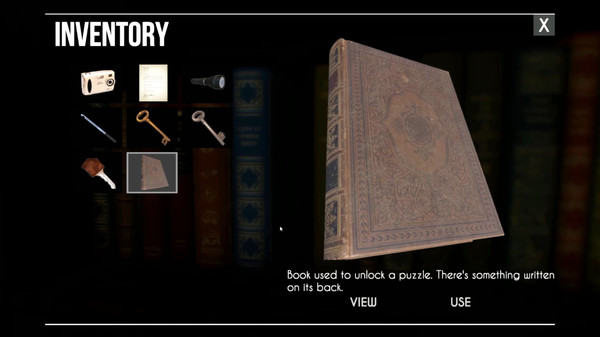 The Painscreek Killings — Steam store
Where are you with this game?
Press one and the game goes on your shelf. You can see it on your account page.
Reactions (no login)
Anonymous • one of each per visitor per day
Read next

Related reviews
Scene Investigators
A first-person deduction game: walk reconstructed crime scenes, work out what happened from the evidence alone, and type your answers into an exam terminal. No hints, no confirmation. From EQ Studios, makers of The Painscreek Killings, built on their stated 70/30 principle.
Syberia 3
A third-person adventure in which the lawyer Kate Walker joins a Youkol migration north, assembling clockwork devices along the way. Microïds' third Syberia, which trades the fixed painted screens of the first two games for a 3D space you walk around in.
MHRD
A text-only puzzle game that starts you with a single NAND gate and has you write hardware in a small description language: ANDs, adders, and finally the design of a working CPU. You play a new hire at a fictional company called Microhard, filling twenty-odd specifications in order. Made by Funghisoft.


