REVIEW · 2018-11-06
The Shapeshifting Detective
A detective who can be anyone, and a killer who changes every time
First Impressions
The first thing I notice in the review pool is that praise and complaint gather on the exact same spot. "Shapeshift into someone you've met and pull out secrets no one would tell a cop" — the helpful positive reviews call this a pleasant surprise; the negative side calls it a gimmick that wears thin. Same feature, opposite names.
Numbers first. Steam is "Mostly Positive," 77% of 1,150 reviews (1,305 up / 384 down across all 1,689 in any language; snapshot 2026-07-19). Critics sit a touch lower at Metacritic 66. It's a 2018 FMV mystery by D'Avekki Studios, published by Wales Interactive: Dorota Shaw is dead, and the suspects are three tarot readers said to predict murder.
From what I read, reviewers would rather talk about who they got to become than whether they solved it. In design terms the argument isn't about story or visuals — it collapses onto a single verb: become. So I'll take that one word apart.
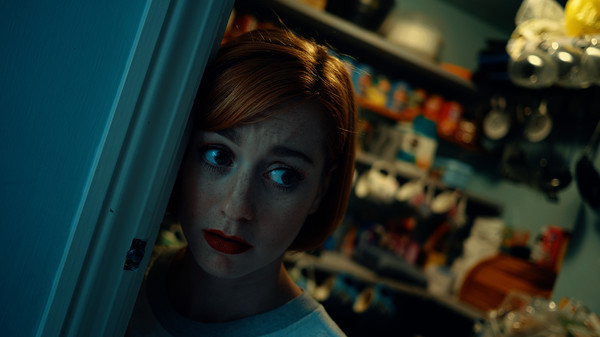 A woman peering from a darkened doorway — Steam store screenshot
The Feel of the Story
What the positive reviews keep praising is atmosphere and a specifically live-action creepiness. A fake radio show, "Nights with Poe and Munro," murmurs through the loading screens about the murder and the town's oddities; many call it their favourite part. The cast draws warm words too — "well cast," "the guilt reads on their faces."
The negative side and the press keep returning to acting that's "hit and miss": some performers over-push, others go flat, and it gets called "cheap-looking." The video freezing to silence the moment choices appear breaks immersion for many, and a few find the romance detours abrupt.
To me this is the structural tug-of-war of live-action mystery. Real faces raise the resolution of a lie or a flinch, but they also fold acting seams into what you're reading. Where Her Story and Return of the Obra Dinn narrowed what you observe, this game hands you raw footage un-narrowed — so the hit rate varies.
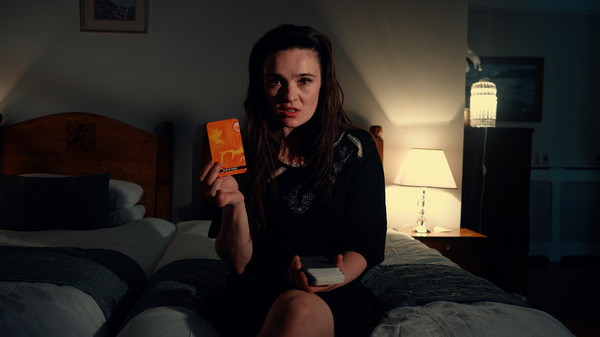 A character on a bed holding a tarot card — Steam store screenshot
Putting the Mechanics into Words
In Puzzlebyrinth's vocabulary, shapeshifting is a textbook "master-key verb." Wear someone's face and dialogue that was locked to the detective opens up — which is exactly what the positive reviews mean by "you get what they'd tell a friend, not a cop." One verb, one effect: access to locked lines. Simple and strong.
The trouble is the key has almost no brake on overuse. Reviewer after reviewer admits they "just became everyone and asked everyone everything." With no notebook and no hints, players drift into brute force. As design, that's a combinatorial explosion with little subtraction to prune it. Being unmasked mid-shift is a small risk, not a real cost.
So the verb widens the conversation rather than deepening the observation. Where the loop in Twelve Minutes squeezed information and forced you to spend it, shapeshifting spreads information and pours it on. Not better or worse — a different reach, and that's where opinion splits.
 A man facing you across a lamp-lit desk — Steam store screenshot
The Texture of Difficulty
Reviews about difficulty split cleanly in two: "nicely puzzling" versus "a coin flip in the end." The second camp is specific, and critics like Gamereactor echo it — progress can need trial and error, and a correct accusation can feel like a lucky guess. This is the most interesting design question in the game.
The hinge is that the killer is randomised each new game. Positive reviews welcome it as replayability; the negative side mourns that clues can't logically converge on a culprit. In design terms, the observation resolution you build from evidence is under-rewarded by a randomised answer. The deduction verb is half-hollowed.
So separate the kinds of difficulty. Procedural difficulty — trekking around to find who's where, with no notes — runs a little high. Deductive difficulty — pinning the killer from evidence — barely holds, because randomisation undercuts it. "Hard" and "easy" coexist because you're stepping on two different layers. Difficulty here genuinely varies by player.
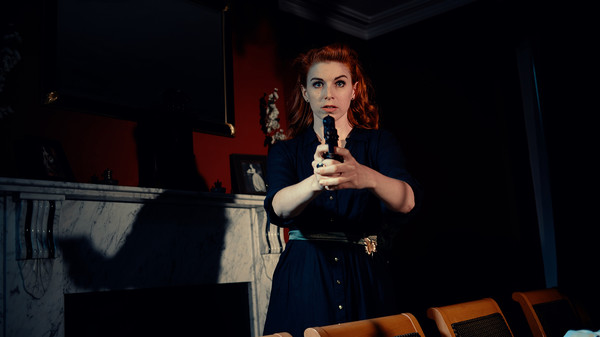 A woman aiming a handgun in a red-walled room — Steam store screenshot
Sources
This piece was written on 2026-07-19 by reading the user reviews on the Steam store page. It avoids spoilers about the killer or the endings.
・Steam: The Shapeshifting Detective ("Mostly Positive," 77% of 1,150; 1,305 up / 384 down across 1,689)
・Read the top helpful positive and negative reviews plus recent ones via WebFetch, cross-referenced with Metacritic (critic 66) and outlets such as PlayStation Universe, Gamereactor, and The Xbox Hub.
Closing
To sum up: the become verb adds a real move to the grammar of live-action detective games — choosing whose face to wear is mechanism, not garnish, and the review pool's warmth backs that novelty. But randomising the killer thins the reward that mechanism should pay (evidence landing on the answer), and the absence of notes or hints tips it further toward brute force.
Against Steam's 77%, I give it 6.8 on design grounds — crediting the new verb, docking the structure that leaves observation under-rewarded. That lands about level with the user "Mostly Positive." Reviewers put a first clear-time near 4–5 hours, ~8 for 100%; the short length is less a flaw than the right span to taste this verb once.
It's a game that knows who it's for. If you'll read branching talk like a wash of voices and sink into the radio and the mood, it's a find. If you want deduction where evidence converges on the guilty, it will feel thin. Both are right — the direct consequence of a maker betting everything on one word: become.
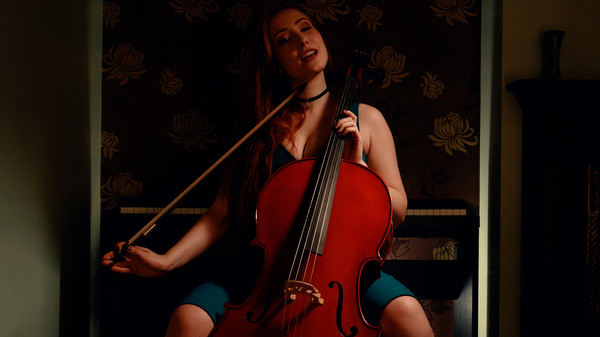 A woman playing a red cello by floral wallpaper — Steam store screenshot
Reactions (no login)
Anonymous • one of each per visitor per day
Read next

Related reviews
Phoenix Wright: Ace Attorney Trilogy
A courtroom adventure in which you play defense attorney Phoenix Wright, matching one line of testimony against one piece of evidence to break a lie. Capcom's collection gathers all fourteen episodes of the three games first released between 2001 and 2004, with the art redrawn frame by frame.
Trüberbrook
A point-and-click adventure in which Hans Tannhauser, an American physicist who has won a trip to a remote West German village in 1967, chases a stolen physics paper and walks into a story about another dimension. Made by the German studio btf, with sets built as real miniatures and photographed.
Minit
A small black-and-white top-down adventure in which a curse ends every life after sixty seconds and sends you home. Only the items you picked up and the new houses you found carry over, so each minute reaches a little further than the last. Made by four developers including Vlambeer's Jan Willem Nijman, published by Devolver Digital.


