HISTORY · 2026-09-29
Hex (1942) — The Year a Hexagon in the Corner of a Newspaper Ruled Out a Draw
Piet Hein and John Nash, two men who arrived separately at the same rule: connect your sides to win
Introduction
This is the story of a small puzzle column, printed in the corner of a Danish newspaper in 1942. A board with no settled name yet appeared in print for the first time there.
The rules are strikingly simple. On a rhombus-shaped board of hexagons, each player places stones of their own color. Whoever first links their own two opposite sides with a chain of stones wins. That is the entire rule.
Yet this simple board would later be proven, mathematically, never to end in a draw — and separately proven to be extraordinarily hard to solve. Today it is called Hex, and this piece traces how far a single line of rules carried it.
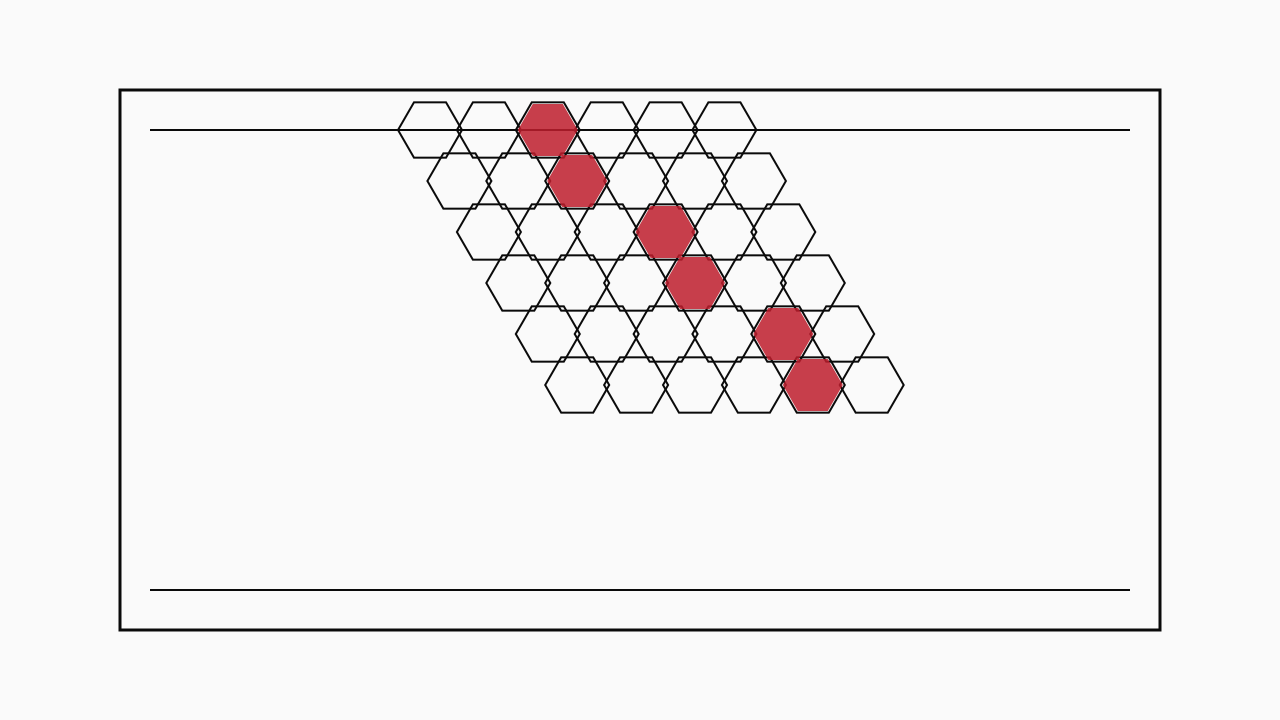 A hex board in the corner of a page, an impression (illustration, AI-generated)
The Time and Place
It first appeared on 26 December 1942 in the Danish newspaper Politiken. Its inventor was the poet and mathematician Piet Hein (1905–1996), who called it "Polygon" at the time. Denmark had been under German occupation since April 1940 — that a geometric puzzle appeared in a newspaper of that era is simply what the record shows.
Six years later, across the Atlantic at Princeton University. Between 1948 and 1949, graduate student John Nash arrived at the very same board, entirely independently of Hein. Fellow students called it "Nash," or sometimes "John" — the latter because it could also be played on a hexagonal-tiled bathroom floor.
Whether Nash truly had no knowledge of Hein's version is still debated; Princeton had Danish students at the time too. Even so, the fact remains: the same board emerged independently in two very different places — occupied Copenhagen and postwar Princeton.
In 1952, Parker Brothers marketed the game under the name "Hex," and that name has stuck ever since.
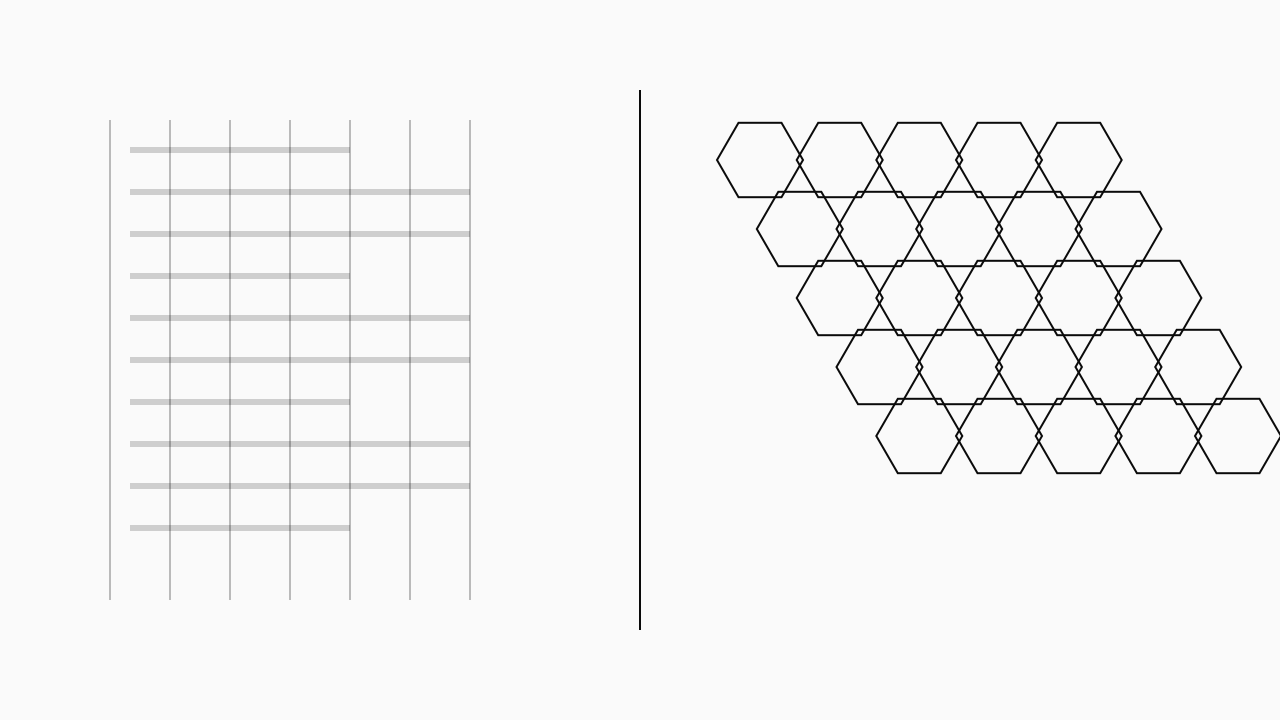 A column of wartime newsprint beside hexagonal tiles — one board, two origins (illustration, AI-generated)
Mechanics
The board is a rhombus of hexagons. One pair of opposite sides belongs to white, the other to black. Players alternate placing stones, and whoever links their own two sides with a chain of stones wins.
The game can never end in a draw: once the board fills up, a chain connecting one pair of sides is topologically guaranteed to exist. A strategy-stealing argument — that copying a later move can never hurt you — further shows that the first player always has a winning strategy (John Nash, circa 1949). The proof, notably, does not reveal what that winning strategy actually is.
"A winning strategy exists" and "the game is solved" are two different claims. In 1981, Stefan Reisch proved that Hex is PSPACE-complete. As the board grows, exhaustively computing the best move becomes effectively impossible. A one-line rule, and yet devilishly hard to solve — that is the true nature of Hex.
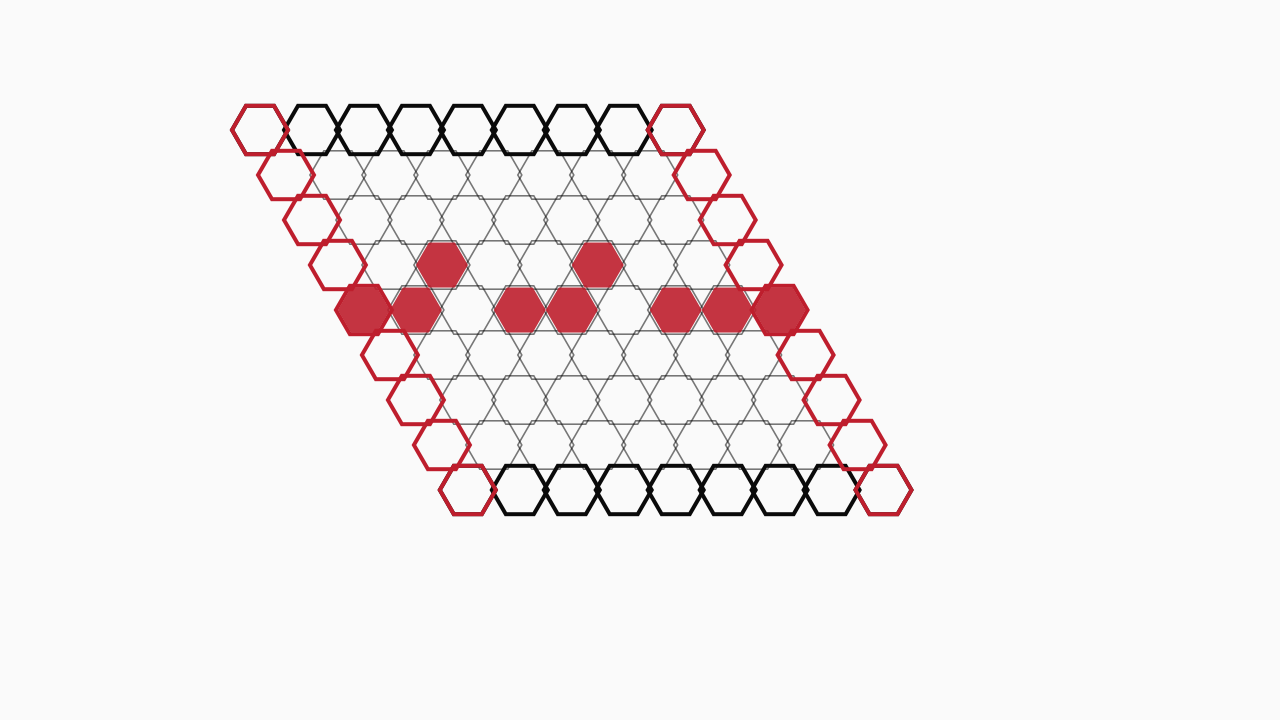 Connect your own two sides with a chain of stones to win — the structure, diagrammed (illustration, AI-generated)
Legacy
In July 1957, mathematics columnist Martin Gardner covered Hex in his Scientific American column, titled "Concerning the game of Hex, which may be played on the tiles of the bathroom floor" — a title that echoes Nash's own anecdote. The column brought Hex to a much wider audience.
Hex went on to become the founding example of what is now called the connection game genre. Game researcher Cameron Browne, in his book Connection Games, describes Hex as "the first connection game." From TwixT (1962) and Y to Havannah, and Tak (2016, devised by James Ernest and Patrick Rothfuss — a square board, but the same "connect your sides to win" grammar), that one-line rule keeps producing new games.
Around 1950, information theorist Claude Shannon and mathematician E. F. Moore built an analog machine dedicated to playing Hex: an electrical circuit with resistors standing in for edges and light bulbs for vertices, serving as an opponent in its own right. It was one of the earliest attempts to make a computer "read" a game.
In 2009, computer Hex reached a turning point when Monte Carlo Tree Search (MCTS) became the dominant approach. That same family of search techniques underlies AlphaGo, which defeated a top human Go champion in 2016 — and today, many of the AI opponents in board-game titles sold on Steam are built on that same lineage. A small board printed in an occupied newspaper eventually found its way, by a long road, onto the screens we use today.
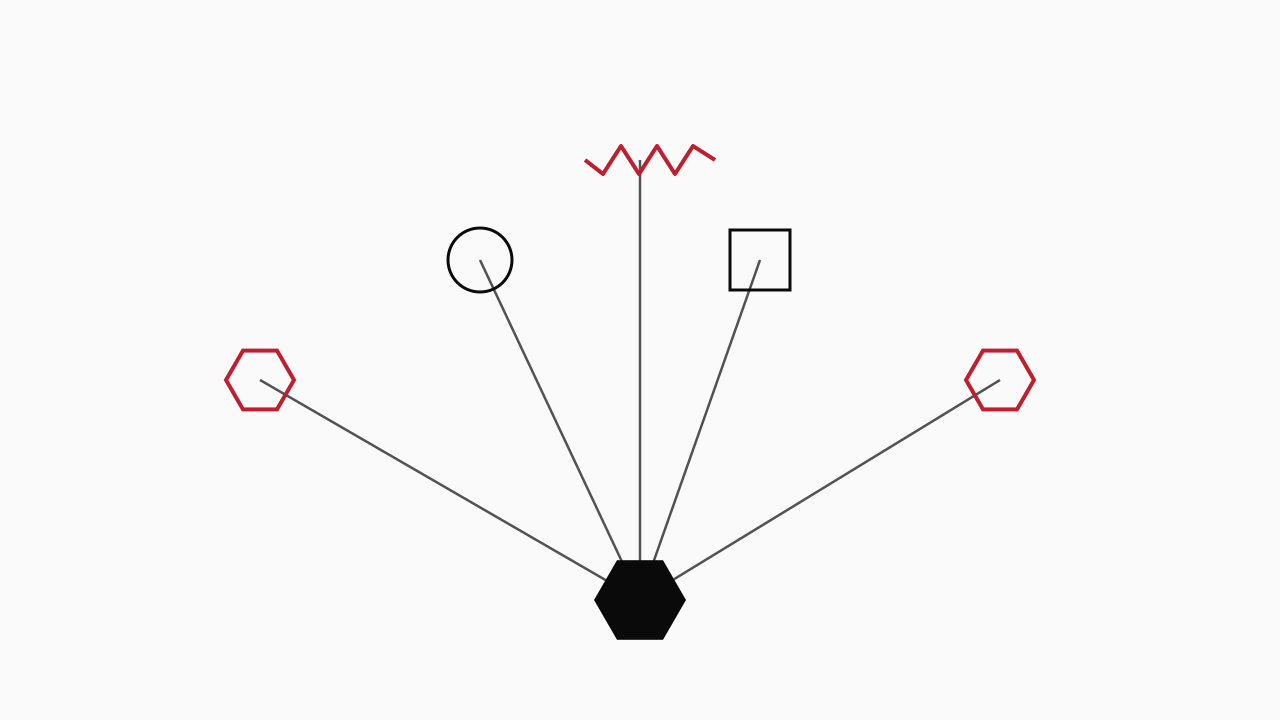 A lineage branching from one board into a genre and a line of computing research, an impression (illustration, AI-generated)
Sources
Sources referenced in this article:
・Wikipedia: Piet Hein (scientist)
・Stefan Reisch, "Hex ist PSPACE-vollständig", Acta Informatica 15 (1981) — Springer
・Scientific American: Martin Gardner, "Mathematical Games" (July 1957)
Closing
What Hex shows, historically, is that the simplicity of a rule and the difficulty of solving it are not inversely related. From a rhombus board and a one-line rule — connect your sides to win — came a proof against draws, a proof of computational hardness, and an entire new genre.
From a corner of an occupied newspaper to the bathroom tiles of Princeton: the board that Hein and Nash each arrived at separately is, more than eighty years later, still waiting for its next connection.
 A single hexagon, set down quietly (illustration, AI-generated)
Reactions (no login)
Anonymous • one of each per visitor per day
関連シリーズ
Puzzle Incident History第47回 / 全47回