TAG
#mathematics
0 reviews · 8 essays
Related essays
Nine Linked Rings (Baguenaudier) (1872) — The Year an Origin-Unknown Ring Puzzle Turned Out to Use Binary Math 81 Years Before a Telegraph Engineer Patented the Same Idea
Nine Linked Rings, or Baguenaudier: remove rings from a bar one at a time until the last one slides free. Its origin is said to be China, but nothing is settled; the earliest confirmed records are a 16th-century Chinese text and, around the same time, the writings of Italian mathematician Luca Pacioli. In 1872, Lyon mathematics enthusiast Louis Gros became the first to theorize the puzzle's solution as a binary table. The same idea was independently reinvented 81 years later, in 1953, when telegraph engineer Frank Gray patented what communications engineers now call the "Gray code." As a physical puzzle, a 1970 patent by William Keister became "Spin-Out," an early product of Binary Arts (founded 1985, now ThinkFun), still sold today. This piece follows the 150-year lineage of a single ring mechanism.
The Seven Bridges of Königsberg (1736) — The Year Euler Erased the Map to Solve a Sunday Puzzle
The answer is simple. In 1736, the mathematician Leonhard Euler proved that no walk existed that crossed all seven bridges of the Prussian town of Königsberg exactly once and returned to its start. The town's four landmasses were connected by 5, 3, 3, and 3 bridges respectively — all odd numbers. His paper, "Solutio problematis ad geometriam situs pertinentis," was presented on August 26, 1735, and published in 1741. By reducing landmasses to points and bridges to lines, Euler founded what became graph theory — the same logic taught in schools today as the rule for "one-stroke" drawing puzzles. This article traces how that 290-year-old proof still shapes the design of today's routing puzzle games, from Cosmic Express to Lyne to Mini Metro.
Peg Solitaire (1697) — The Day a Game With No Inventor Became the Math of Proving "Unsolvable"
On a cross-shaped board of pegs, you jump one peg over its neighbor and remove it, again and again, hoping to end with a single peg left. The earliest record of Peg Solitaire appears in 1697, in the French court periodical Mercure Galant under Louis XIV. No inventor is known. The popular legend that a prisoner in the Bastille devised it traces back no further than an English book from 1801, and puzzle historian John Beasley calls it unsupported by any earlier French source. In 1912 Ernest Bergholt found an 18-move solution to the classic problem; in 1982 Winning Ways for Your Mathematical Plays introduced the "pagoda function," a tool for proving certain positions mathematically unreachable. In 2007 the board resurfaced as puzzles inside Professor Layton and the Diabolical Box. This piece traces a single ruleset that has been played for over three centuries without ever needing a named inventor.
Pentomino (1965) — How Solomon Golomb's Five-Square Shape Became Tetris
In 1965, American mathematician Solomon W. Golomb published Polyominoes, a book that gathered the theory of the twelve five-square shapes known as pentominoes. The naming traces back to a 1953 Harvard lecture; Martin Gardner's column carried it to general readers in 1957; a Russian translation appeared in 1975. Then in 1984, a young Moscow computer scientist named Alexey Pajitnov, drawing on his own childhood memories of pentominoes, moved shapes on an experimental computer, and Tetris was born. This piece traces the more than thirty years it took a five-square shape to travel the world.
Henry Dudeney (1907) — Four Hinged Pieces That Turn a Triangle Into a Square
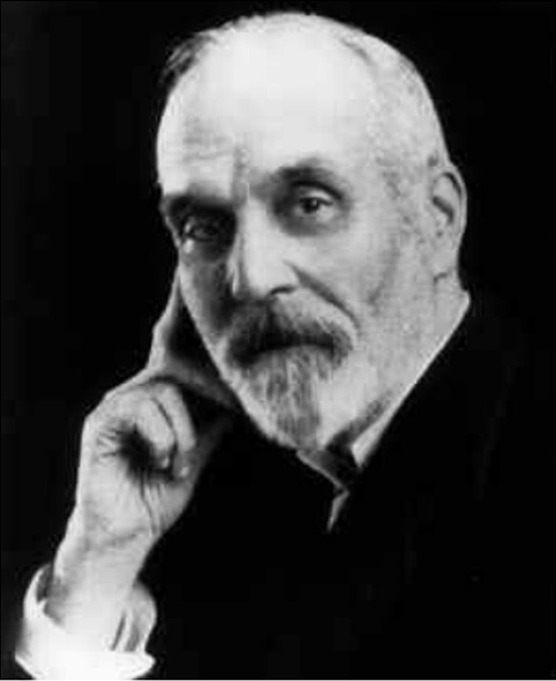
In 1907, English puzzle maker Henry Dudeney published, within The Canterbury Puzzles, the Haberdasher's Puzzle: cutting an equilateral triangle into just four pieces that reform into a square. Hinged together, the pieces could transform with a single fold, and the dissection drew attention in its day -- yet the proof that four pieces were truly minimal remained unresolved for a surprisingly long time, settled only by a 2024 computational-geometry paper. Tracing Dudeney's rivalry with Sam Loyd and his rediscovery through Martin Gardner, this piece rereads how a paper puzzle took 117 years to reach computer science.
Tower of Hanoi (1883) — The 64 Disks That Never End, and the Legacy of Recursion
In 1883 the French mathematician Édouard Lucas released a small wooden toy under the pseudonym 'N. Claus (de Siam).' Three pegs, disks of differing size, and just two rules. Yet beneath that plain surface lay the mathematics of recursion: moving n disks demands a minimum of 2^n−1 moves. This essay revisits the toy's true origin, the fabricated Benares legend in which the world ends when 64 disks are moved, and what the ideas of 'recursion' and 'state space' bequeathed to later computer science and to puzzle design today.
Rubik's Cube (1974) — A Labyrinth of 43 Quintillion States, and a Single Solution
In 1974, the Budapest architect Ernő Rubik carved a small cube as a teaching aid—and ended up placing an entire 'state space,' some 43 quintillion configurations with exactly one solved form, into the palm of a hand. This piece traces the object's precise provenance through primary and secondary sources—its 1974 invention, its 1980 global debut, and the 2010 proof that 'God's Number is 20'—and reads, as history, how an object with no screen and no power supply embodied half a century early the vocabulary modern puzzle designers now take for granted: reversibility, a unique solution, and a space to be searched.
The 15 Puzzle (1880) — The Unsolvable Move with Which Sam Loyd Fooled the World
In early 1880 a craze for the '15 Puzzle' swept America and Europe. But Sam Loyd, whom the world believed to be its inventor, was an impostor who only claimed authorship sixteen years after the craze had ended. This essay traces the box's true origin and the 1879 proof that the 'swapped 14-and-15' board Loyd staked his prize on is mathematically unsolvable, and rereads the legacy sliding puzzles left to modern digital puzzle design: the guarantee of solvability.