HISTORY · 2026-09-17
The Seven Bridges of Königsberg (1736) — The Year Euler Erased the Map to Solve a Sunday Puzzle
Four landmasses, seven bridges, and a proof of "impossible" that became the grammar of routing puzzles 290 years later
Why Was It Proven Impossible to Cross All the Bridges of Königsberg?
The answer is simple. In 1736, the mathematician Leonhard Euler proved it was futile to search for a walk through the Prussian town of Königsberg that crossed each of its seven bridges exactly once and returned to the start. All four of the town's landmasses were connected by an odd number of bridges.
This was no mere trick question. The idea of replacing bridges with "lines" and landmasses with "points" — discarding the map's shape and distances to keep only which places connect to which, and how many times — became the seed of what is now called graph theory.
I treat this single paper as one starting point of puzzle history. It predates paper logic puzzles like Numberlink or Hashiwokakero by well over a century, and its logic still lives on, in disguise, at the foundation of how modern puzzle games are designed to be solvable.
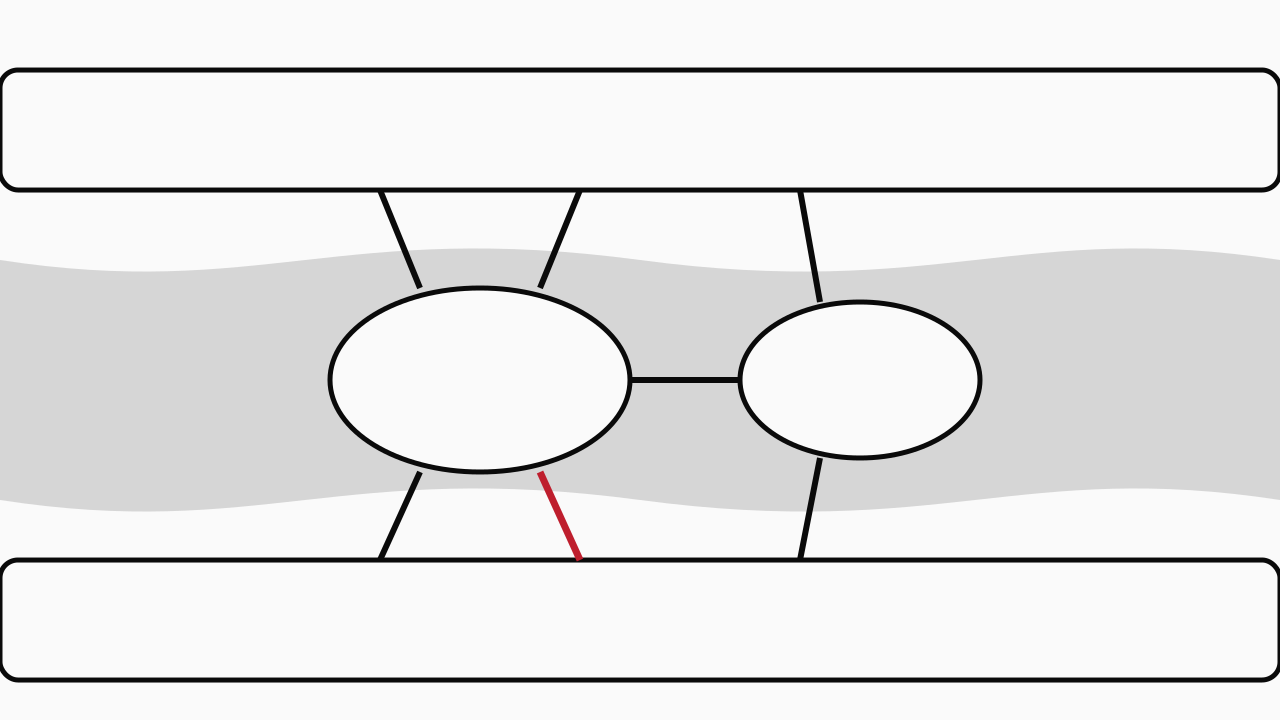 An impression of Königsberg, four landmasses joined by seven bridges (illustration, AI-generated)
What Was Königsberg Like in 1736?
The setting is Königsberg around 1736, a town in the Kingdom of Prussia. Today it is Kaliningrad, a Russian exclave on the Baltic Sea.
The town spread across two islands in the Pregel River, Kneiphof and Lomse, plus the river's north and south banks — four landmasses in all, joined by seven bridges.
Townspeople reportedly had a Sunday habit: trying to walk across all seven bridges without crossing any bridge twice. No one succeeded, and no one could explain why.
On August 26, 1735, the question reached Euler at the St. Petersburg Academy of Sciences. He recognized it as a new kind of problem — neither geometry nor algebra as then understood.
 An impression of the town divided by the Pregel River (illustration, AI-generated)
How Did Euler Prove the Walk Was Impossible?
Euler's method was elegant. He replaced landmasses with letters and bridges with lines joining them, discarding the map's shape and distances entirely. What remained was only which places connected to which, and by how many lines.
The rule he derived: if the number of bridges touching a landmass (its degree) is odd, that landmass cannot be a mid-point of the walk — it must be a start or an end. Since only two such points are available, a walk is impossible the moment three or more landmasses have odd degree.
Königsberg's four landmasses had 5, 3, 3, and 3 bridges respectively — all odd. So the answer could only be "impossible." Euler compiled this into the paper "Solutio problematis ad geometriam situs pertinentis," presented on August 26, 1735, and published in 1741.
This is the same rule taught in schools today for "one-stroke" drawing puzzles: with zero odd-degree points you can start anywhere and return to it; with exactly two, you can draw it starting at one and ending at the other; with more than two, it cannot be drawn in one stroke at all.
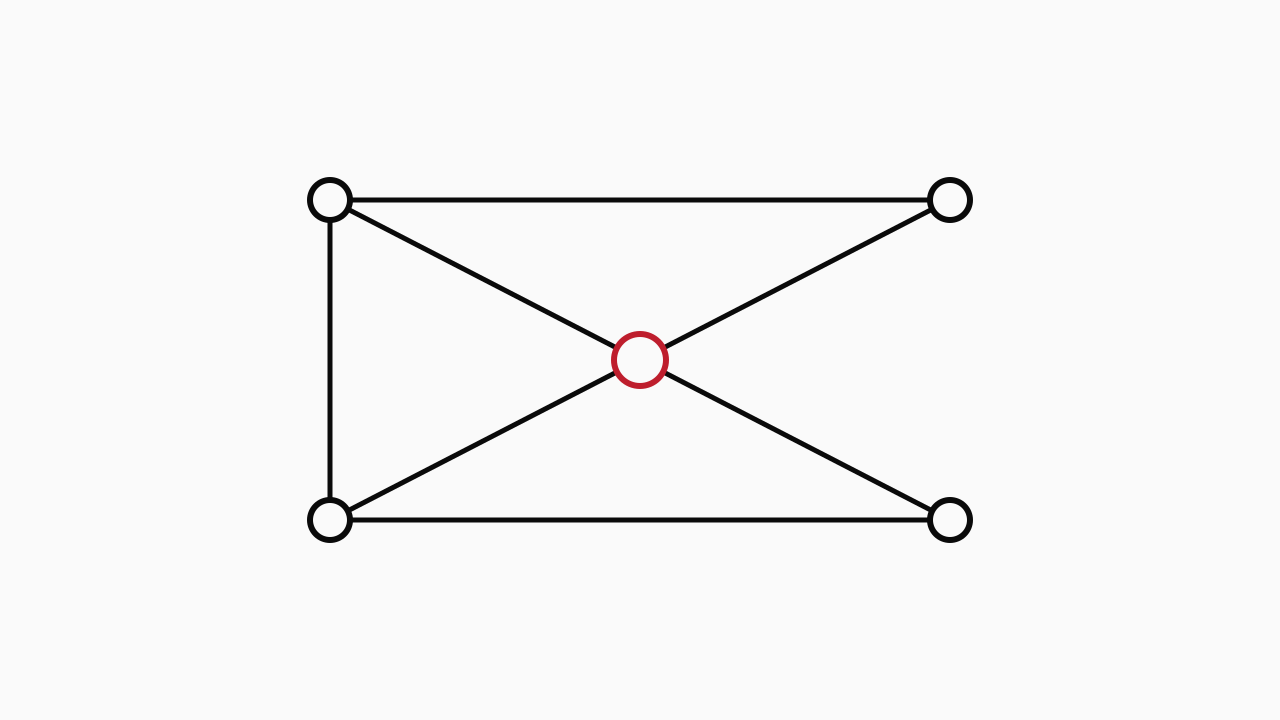 Landmasses reduced to points, bridges to lines. The red point marks a landmass with an odd number of bridges (illustration, AI-generated)
How Does This Proof Connect to Today's Puzzle Games?
The very things Euler discarded — distance and shape — turned out, over two centuries later, to be exactly what computer science needed most. Representing a board as nothing but vertices and edges now lives inside modern puzzle games, in the form of pathfinding and reachability checks.
This site's mechanic catalog has a category called "Routing & Line Drawing", where the answer is where a line goes. Nineteen games (as of 2026-09) fall under it, including Cosmic Express, Lyne, Mini Metro, and Linelight. Every one of them treats its board as a set of vertices and edges and asks which routes are valid — the same skeleton as Euler's method.
Smartphone "one-stroke" drawing puzzles use this exact condition as their solvability check. One explainer site states it plainly: "every one-stroke puzzle is built on these rules." A proof from 290 years ago is still being computed on some screen, every day.
This site has also covered Numberlink (1897), whose rule is connecting cells with lines, and Nikoli's Hashiwokakero (1990), whose rule is connecting islands with bridges. Born in different eras for different reasons, both stand on the same question: how do you connect the vertices?
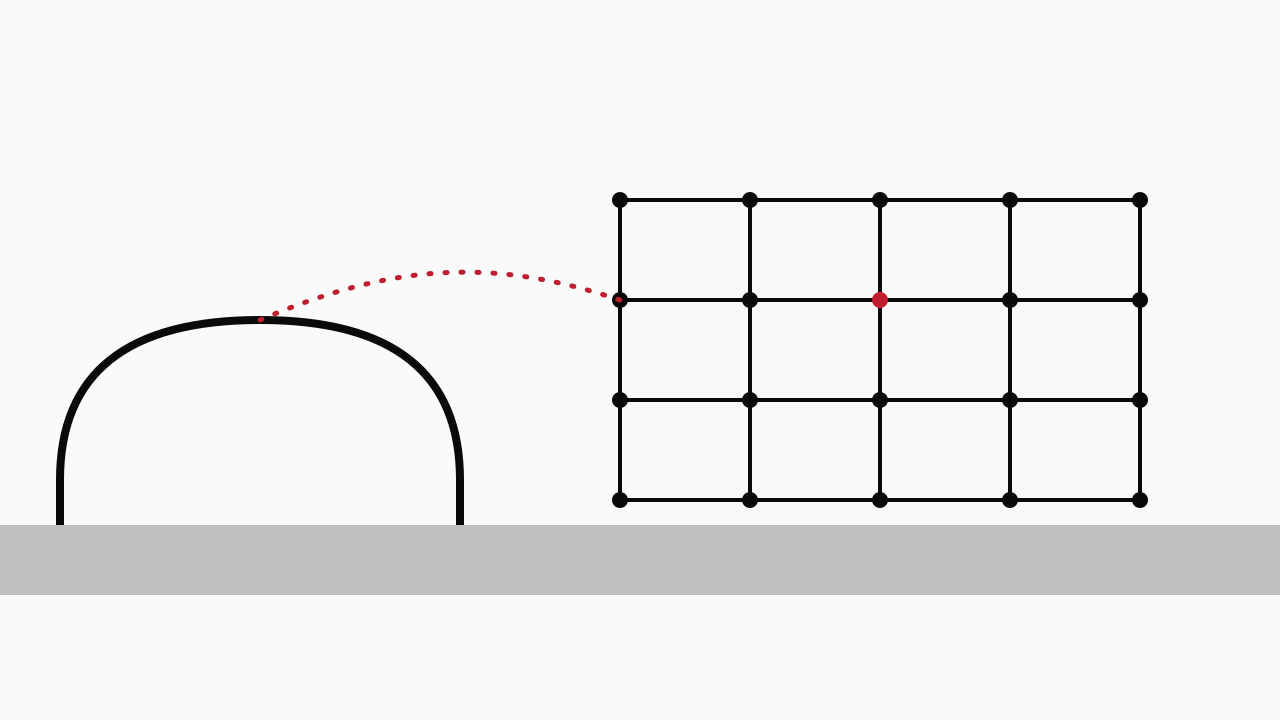 An impression of a bridge's frame carrying over into a modern routing puzzle's grid of points and lines (illustration, AI-generated)
Sources
Sources consulted for this article:
・Wikipedia: Seven Bridges of Königsberg
・Wikipedia (Japanese): One-stroke drawing (Hitofudegaki)
・Kotobank (Japanese): The Bridges of Königsberg
・Mathematical Association of America: Leonard Euler's Solution to the Konigsberg Bridge Problem
・Datawrapper Blog: What happened to the seven bridges in Königsberg?
・Amusing Planet: What Mathematics Has to Do With The Seven Bridges of Königsberg
・One Stroke: The Seven Bridges of Königsberg — How a Walk Invented Graph Theory
What Should We Take Away From This Paper?
What draws me to this paper is that its answer was not "how to solve it" but "a proof that it cannot be solved." Puzzle history usually tells us how to solve things. What Euler left behind was a procedure for stating impossibility with total rigor.
There is an ironic postscript. Königsberg was destroyed by roughly 80% in WWII bombing, and two of the seven bridges were lost and never rebuilt. Five bridges remain. The number of odd-degree landmasses dropped to two, and today's Kaliningrad actually has a walk that crosses every remaining bridge exactly once. The war changed the premise the proof was built on.
A single paper from 1736 left behind the idea of erasing the map and keeping only points and lines. That idea is still at work, in disguise, deep inside how puzzle games design their boards today.
Reactions (no login)
Anonymous • one of each per visitor per day
関連シリーズ
Puzzle Incident History第39回 / 全40回