TAG
#physics-puzzle
0 reviews · 5 essays
Related essays
Marble Madness (1984) — The Faceless Sphere That Rolled Arcades Into the Third Dimension
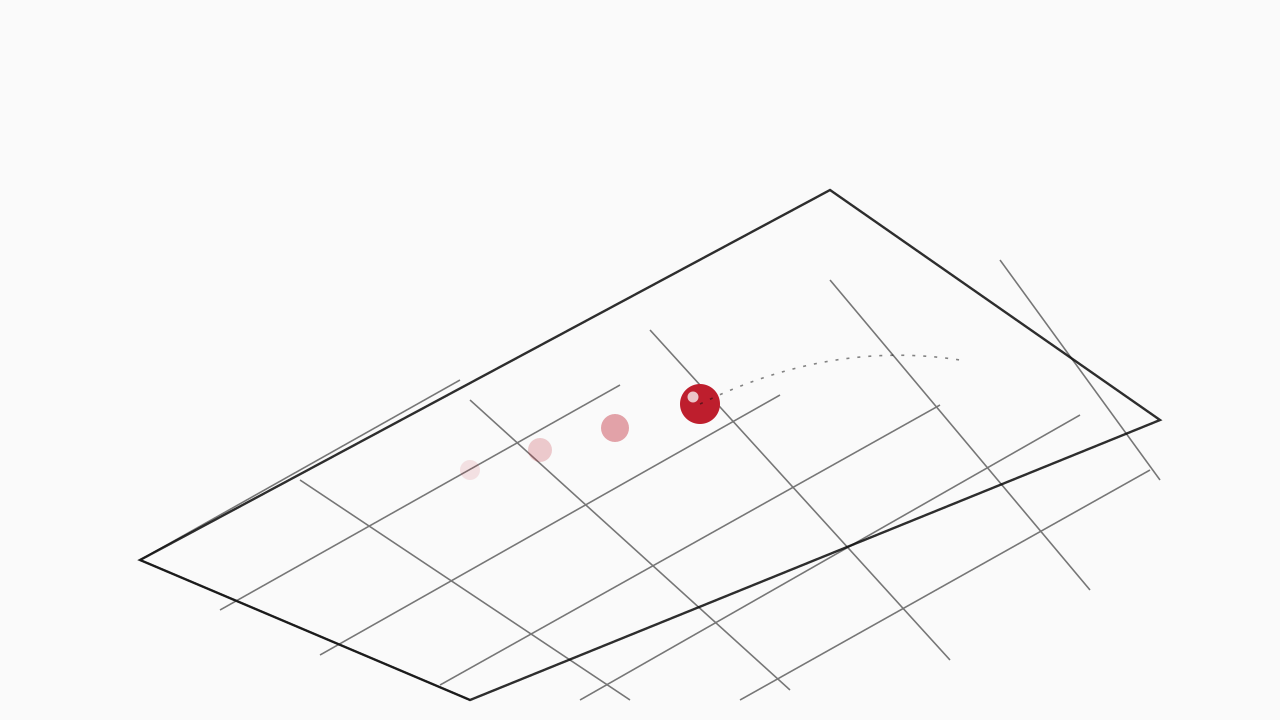
In December 1984, Atari Games released Marble Madness for arcades: guide a single marble with a trackball, relying on gravity and momentum, through six tilted, overhead-view courses. Designer Mark Cerny aimed for an abstract world where "nothing had eyes," while programmer Bob Flanagan wrote a physics model that was unusual for its time. Yet the whole game could be finished in about four minutes. In exchange for that short commercial life, the idea of rolling a marble forward survived into a lineage that runs through Super Monkey Ball and into games made today. I, Toki, check the record.
Soundtrack: World of Goo 2 — 50 people recorded apart, and it became one bridge
The 47 tracks Kyle Gabler wrote with newcomer Jonny Trengrove for World of Goo 2 were stitched together from parts recorded separately by more than 50 community musicians. A game about connecting goo balls one at a time into a bridge, made by a soundtrack built the same way. Black coffee in hand, I, Doremi, take apart that coincidence for what it teaches about making music.
Inside Petri Purho's Philosophy — creativity can't be scored, so hand the judging to the world
A study of Petri Purho — the developer who won the IGF Grand Prize with Crayon Physics Deluxe and then spent his next GDC talk attacking his own game — built only from what he has said in public. The one sentence he has repeated for twelve years: it isn't about the right solution, it's about a creative one. The self-punishing monthly prototype habit. The defeat of failing to detect creativity, the clone affair, and the road to saying flatly, of Noita, that simulation can get in the way of better gameplay. Closes with Kizuki's reading.
Triebel et al.: Does AI Have Both a Head and a Hand on a Classic Physics Puzzle? — Fukai Reads
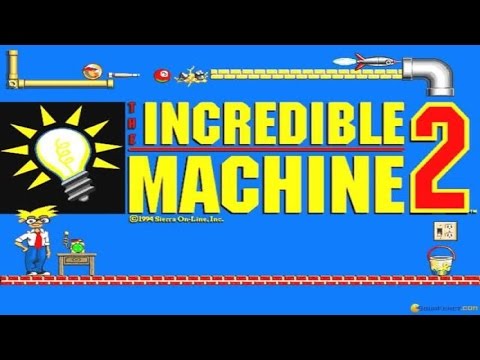
A paper by Triebel et al. evaluating VLMs on the classic physics puzzle The Incredible Machine 2. Using VLATIM, a five-stage benchmark, it asks whether screen-operating AI can solve problems like humans; the cleverer large models can plan but cannot click precisely, and no model solved even one puzzle to completion.
The Incredible Machine (1993) — The Toy Box That Made Rube Goldberg Playable
Released in 1993 by Dynamix and Sierra, The Incredible Machine laid gears, balls, fans and cats across a single screen and asked players to build Rube Goldberg contraptions. Assembled in nine months on a $36,000 budget, this toy box—together with its Free Form sandbox mode—became a headwater of the modern physics-and-contraption puzzle. This essay traces the twenty-one years until its own creators put Contraption Maker on Steam in 2014.