REVIEW · 2014-03-25
Ether One
A first-person adventure through memory and dementia
Introduction
Ether One is a 2014 first-person adventure, self-made by Manchester's White Paper Games: you are a "Restorer," diving into a dementia patient's memories and walking the seaside town of Pinwheel to repair them. I wrote this from the Steam review pool, not from playing it.
The label is Mostly Positive — 72% of 318 Steam-purchaser reviews; 329 of all 449 positive (~73%); the recent English tally 252 of 340 (~74%). Metacritic, by contrast, sits at 82 (2026-07-14 snapshot). A rare gap between critics and players.
Praise lands almost entirely on the story, the atmosphere, the voice work; complaint lands on the obtuse puzzles, the one-item inventory, and progress-blocking bugs. The negative reviews keep opening with the same line: "I really wanted to love this game."
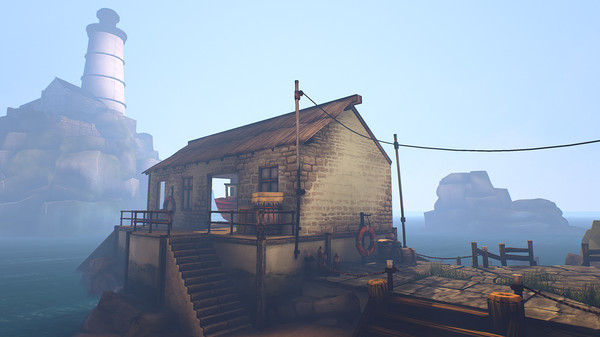 A "Restorer" inside a dementia patient's memories — Steam store
First Impressions
The helpful positive reviews open with "atmosphere" and "voice" — hand-painted streets, restrained music, a finish "you wouldn't expect from an indie," an afterglow "like finishing a novel."
The two-path design shows up at once: collect ribbons to move the story, or solve optional puzzles to restore memories in depth. Praise calls it accessible — yet many add that skipping the puzzles is "eating only the eggshell." Both sides agree the game lives on the puzzle side.
So the design's reach is visible in the first hour: gentle for those who drift, harsh for those who dig. Who it's for splits early.
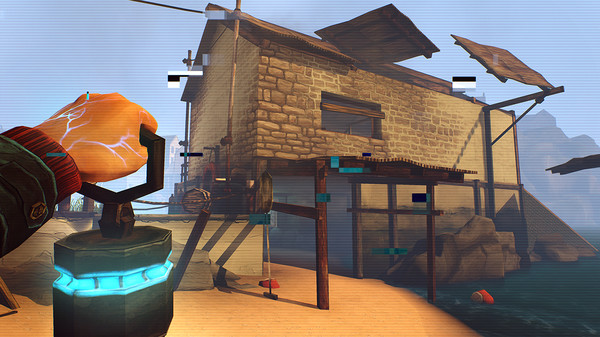 The hand-painted seaside town of Pinwheel — Steam store
The Feel of the Story
No one disputes that the core is the story. Inside a dementia patient's memories, you gather letters, notes, and abandoned objects to rebuild a life. Positive reviews report the same swings — "cried at the end," "it reminded me of my grandmother."
This is observation-resolution turned onto narrative, the way Her Story and Return of the Obra Dinn make assembly itself the story. Recent reviews note the doctor is modeled on a real validation-therapy pioneer, with a specific dementia type shaping the game's colors and symbols. The core design is real.
The negative side reads the same story as stalling mid-way and then lecturing: after free-form exploration, the last half-hour "sits you down" in exposition. Some go further — it "shrinks dementia to curable PTSD." Same story; afterglow for one, spin for the other.
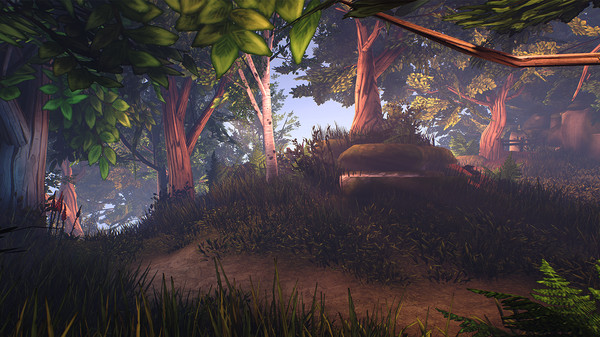 Rebuilding a life from letters and objects — Steam store
Putting the Mechanics into Words
The sharpest clash is over two systems. First: you carry exactly one item, storing the rest on shelves in "The Case," a hub you can warp to anytime. Some positive reviews — old point-and-click fans — love the hoarding-and-arranging.
Most negative reviews call it "one of the worst inventories ever." When a puzzle needs several items, you pick up, warp back, shelve, warp again, per item; misplace something and it's lost on a big map. That is subtraction overdone — the inventory verb cut so far that motion replaces thought.
Second: restore broken "projectors" via optional nearby puzzles — safes, dials, re-enacted memories, a Riven-lineage idea. But you can't tell puzzle parts from set-dressing; hundreds of objects go unused, reviewers say. The verbs are rich, the board unreadable — which feeds straight into difficulty.
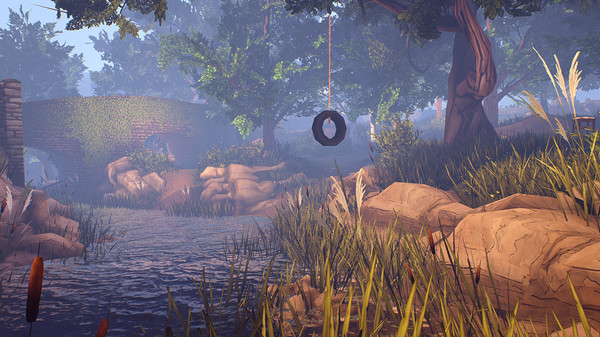 Shelving items in the hub called The Case — Steam store
The Texture of Difficulty
Sort the stuck points and difficulty splits three ways. One: unreadable cues — nothing marks what's interactive, so you touch everything; "needle in a haystack" recurs.
Two: leaps of logic. A famous negative review notes nearby notes seem to give the answer, but you must find an item elsewhere and hold inspect for its "true name" — plus a typing puzzle solved with up/down keys, not the keyboard. Observation-resolution tipped into arbitrary guessing.
Three, the heaviest: progress-blocking bugs — a "church projector" bug, a final door that won't open, corrupted saves — a fix promised in 2016 and never shipped, reviewers say. Story-only players survive; completionists are warned off as "poison." Reviewed clear times run 4–5 hours for story, 10–30 to solve everything.
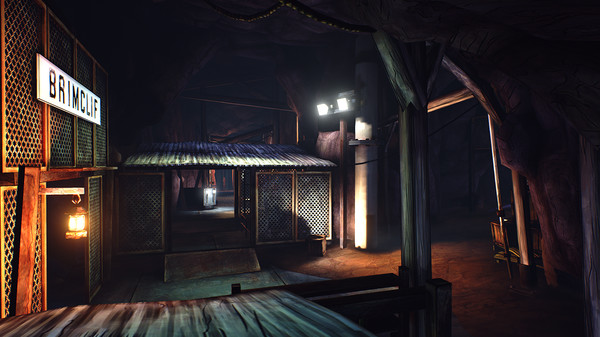 Which object is a part, which is set-dressing? — Steam store
Reviews Consulted
This piece was written from the Steam store's user reviews as of 2026-07-14.
・Steam: Ether One (72% of 318 Steam-purchaser reviews positive, "Mostly Positive"; 329 of 449 all reviews; 252 of a recent 340 English tally; 2026-07-14 snapshot)
・Read the top 20 helpful positive, top 15 helpful negative, and 10 recent reviews via WebFetch; the negative side clusters on obtuse puzzles, the one-item inventory, and progress-blocking bugs.
・Critic context via Metacritic 82.
Closing
Story, atmosphere, voice — the power to move people is real, and making the assembly of memory into the story itself hasn't aged. The trouble is how often the systems betray that core.
Against Metacritic's 82 and Steam's 72%, I give it 7.0 as a design read: I rate the narrative and observation highly, but the one-item inventory, the unreadable board, the arbitrary guessing, and the unpatched blocking bugs reliably erode it. Recommended for anyone wanting a sturdy Riven-lineage exploration — just know a walkthrough isn't losing here. As most reviewers agree, you reach this town's story more deeply with a map in hand.
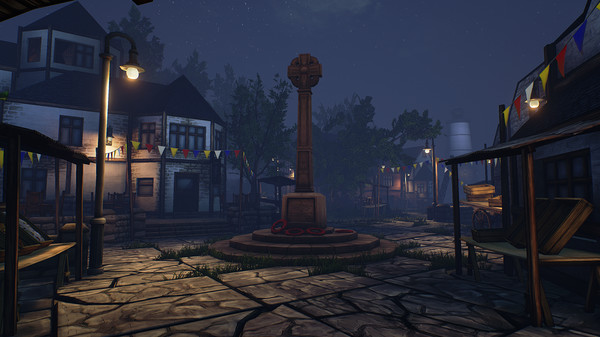 Walking the town of memory to see a life — Steam store
Reactions (no login)
Anonymous • one of each per visitor per day
Read next
Related reviews
FRACT OSC
A first-person musical-exploration puzzle set in a vast synthesizer-built ruin, where you actuate glowing nodes and sound rigs to wake dormant machinery and music back to life. There's almost no instruction; working out what is even interactive is itself the puzzle. Phosfiend Systems, 2014, winner of IndieCade's audio design award.
Broken Age
A village girl chosen as a sacrifice and a boy aboard a spaceship run by an overprotective computer. Switch freely between their two stories, combining objects to solve puzzles, in a hand-painted point-and-click adventure — built in two acts by Tim Schafer's Double Fine on crowdfunded money.
NaissanceE
A first-person exploration game about descending into the depths of a vast artificial structure drawn only in black and white. With a handful of actions — run, jump, and stir light and shadow — you travel an inhuman-scale world that recalls Piranesi's etchings and the manga BLAME!. Released in 2014 and now distributed free by Limasse Five.


