REVIEW · 2016-07-05
The Room Two
Reading the sequel — one box to a room — through 20,000 reviews
First Impressions
I write this from the Steam reviews for The Room Two. The numbers first: Overwhelmingly Positive, 97% of 20,621 reviews across all languages, and 97% of 10,172 in English (snapshot 2026-07-27). The last 30 days hold at 96%. This is less a split to adjudicate than a near-consensus to explain.
Across the helpful positives the words line up: tactile, atmospheric, and 'as good as the first.' Reviewers keep returning to one act — peering at a box, rotating it, prying it open — that Fireproof Games (reported to be a small team in Guildford, UK) first tuned on mobile.
The few reservations point at the same spots: it is short, the story is thin, and 'the PC controls can't match touch.' Tellingly, these often sit inside thumbs-up reviews; some rate it a 6 and still recommend it. The consensus carries a quiet footnote.
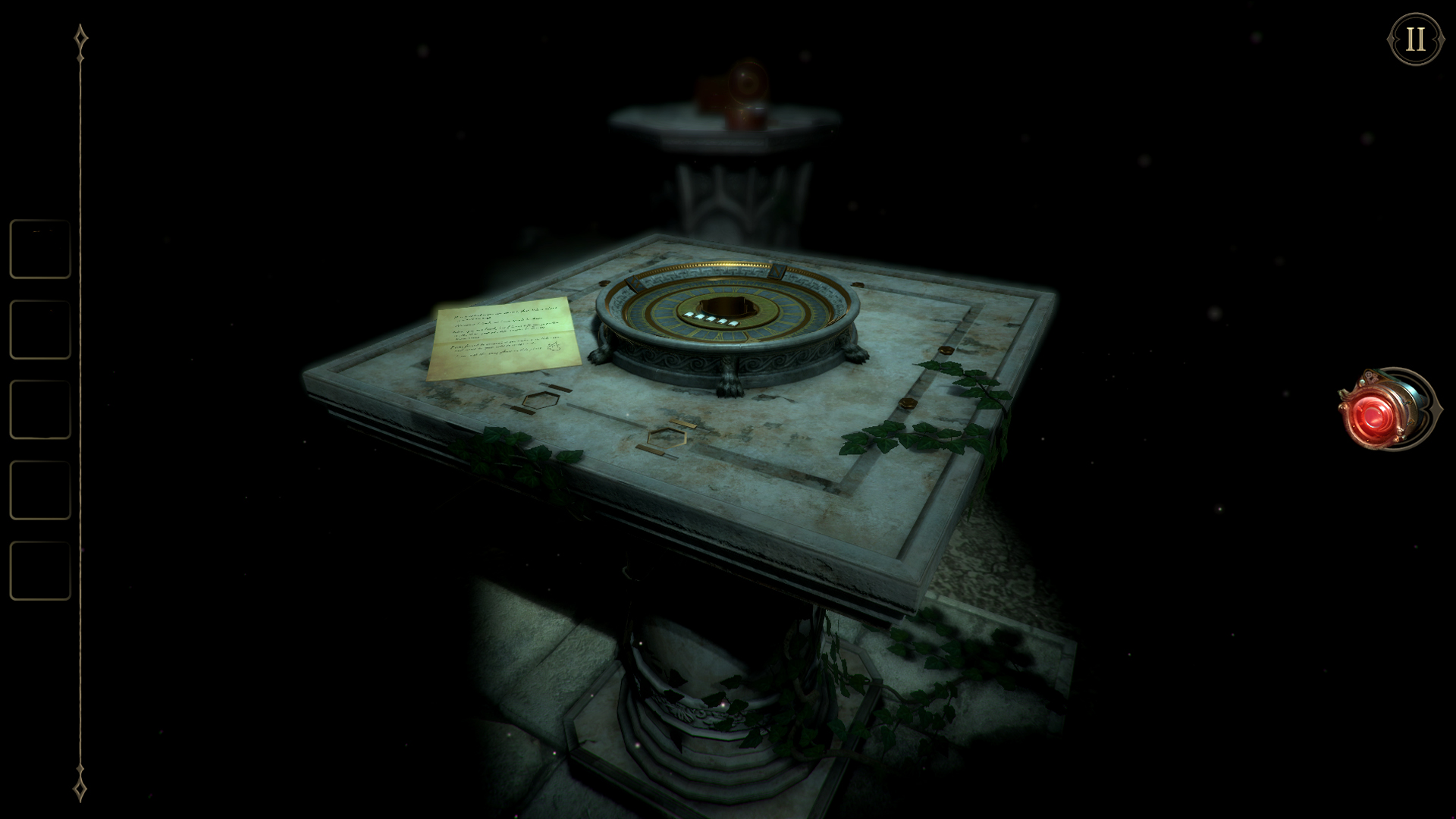 A circular mechanism on a pedestal floating in darkness, a letter beside it — Steam store screenshot
Putting the Mechanics into Words
When reviewers explain the mechanics they reach the same skeleton. The verbs are few: touch, turn, pull, and 'look' through a special eyepiece. Aim the lens and marks invisible to the naked eye surface. As one puts it, being stuck 'just means you haven't looked everywhere yet.'
That 'looking changes what you see' is exactly what Puzzlebyrinth calls observation resolution. Where most puzzles show the whole board, The Room hands you a verb that raises the resolution. The lens is not a skip button but a way to re-read the same spot. The lineage from The Room is one legible grammar built from few verbs.
The difference reviewers always name: not one box but several interlocking setpieces per room. Positives call it 'the world opening up'; a few briefly lose track of what changed. More elements, more states to observe — the nesting is the challenge.
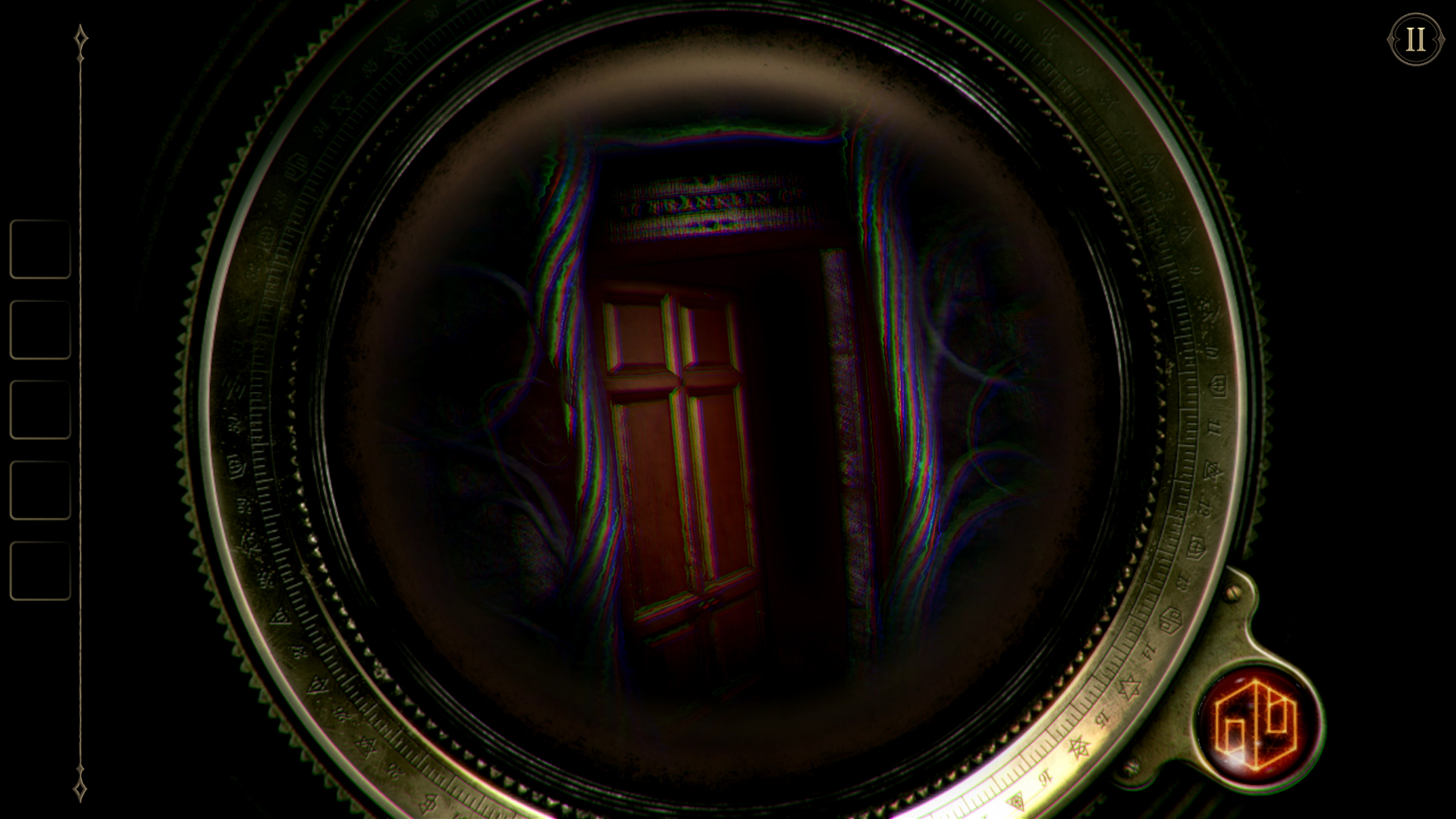 The view through the eyepiece — a doorway surfaces inside the circular lens — Steam store screenshot
The World
Alongside tactile, the word positives reach for is atmospheric. A dim study, a green-felt gaming table, a model ship in a hold — reviewers agree it runs 'darker and a little creepier' than the first. The Steam tags say Lovecraftian; most players say 'immersive' rather than 'scary.'
Sound comes up often. 'There's almost no music, and that's good,' one writes. Creaking drawers, turning keys, a weight settling on a scale — ambience and effects carry the room, pulling the player's attention to a single point.
The same darkness splits opinion. One counts the blacked-out surroundings as a focusing aid; another calls the non-interactive backdrops low-detail filler. Not better or worse — the reach of a game that bet on mood.
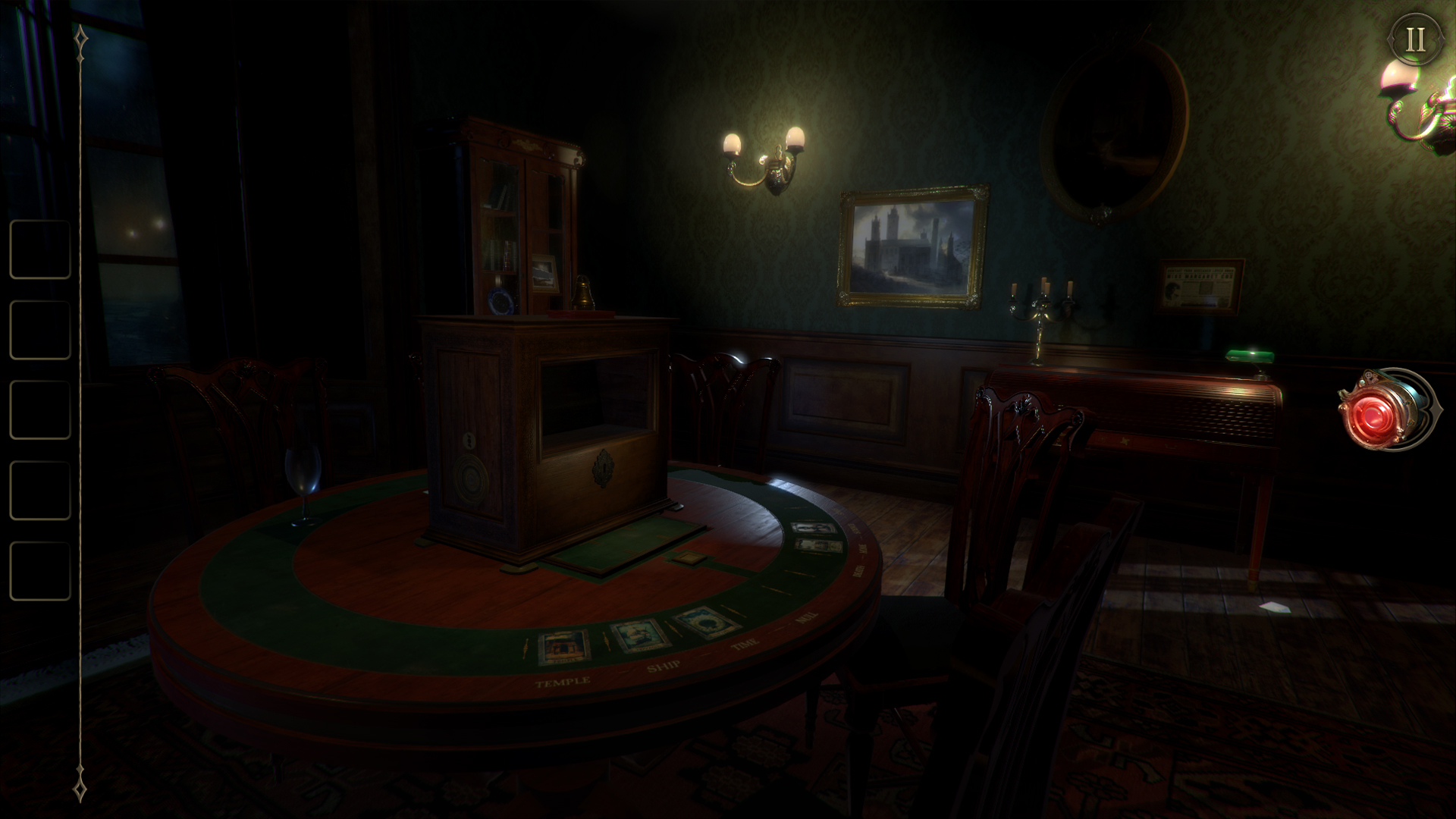 A dim parlour: a green-felt round table under wall sconces and dark wallpaper — Steam store screenshot
Design Craft
On difficulty the reviews agree, unusually calmly: 'not too hard, not too easy.' Get stuck and a hint surfaces automatically; you can switch it off. The first game's needle-thin hidden switches are fewer here, several note. Of six chapters, one is a tutorial and one is very short — about four real rooms.
This is a deliberately gentle learning curve. Tiered hints are a safety net against giving up, and a risk that dilutes the 'I solved it' feeling — which is why the negative side reads the same system as 'too easy.' Fireproof chose flow over spikes, a line that continues into The Room Three.
Length connects here. Positives say '3-4 hours, no filler, worth the price'; negatives say 'over too soon, no replay.' The same runtime looks like density or thinness. Reviews put the median completion near four hours.
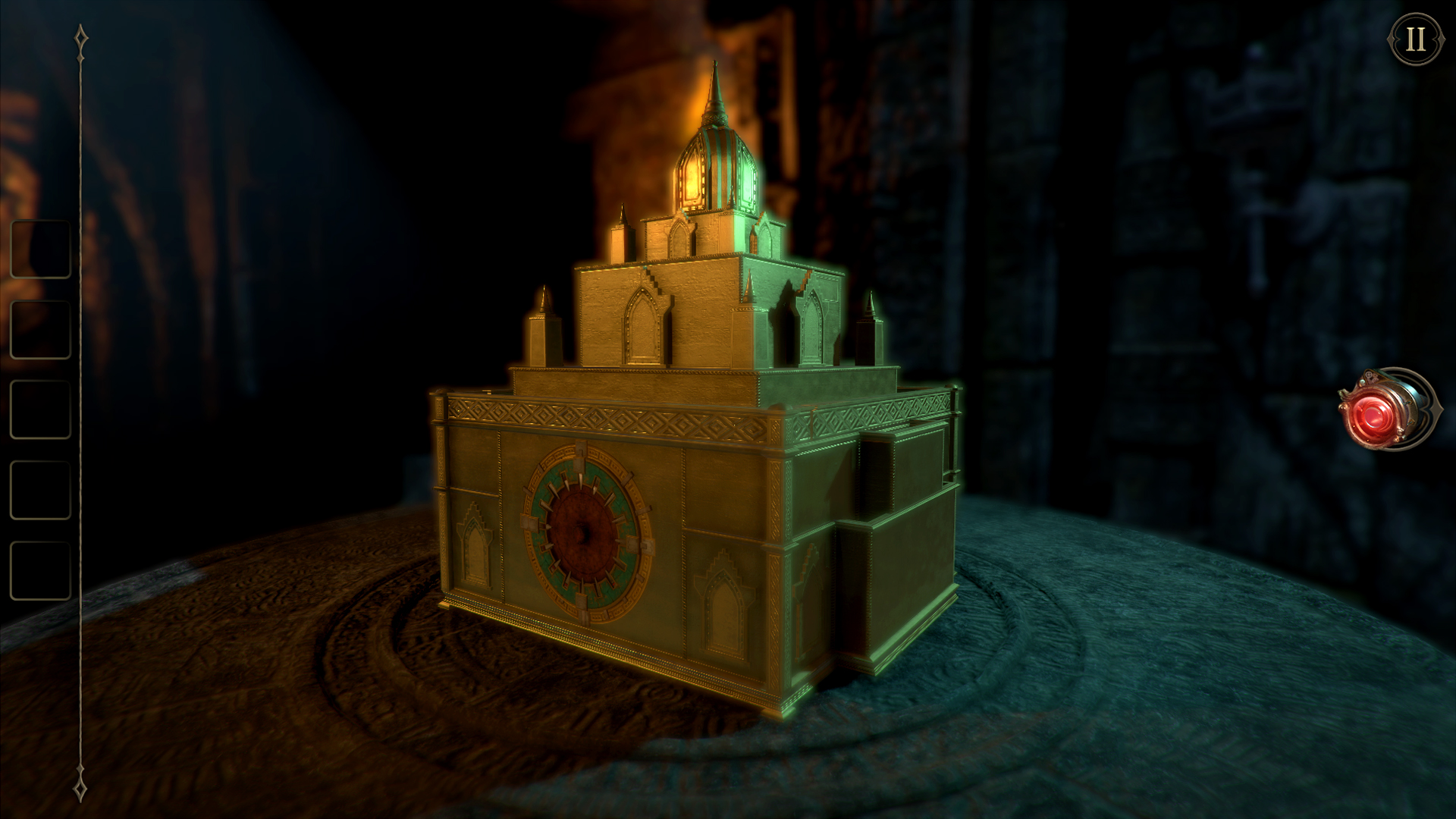 A tiered, ornate metal box perched on a stone dais in the crypt — Steam store screenshot
Place in the Lineage
Reviewers always place it in a lineage: The Room just behind, Myst-like first-person exploration further back — the 'like Myst' comparison recurs even among positives. An observation puzzle that began with one box widens to a room, then a mansion (The Room Three); this is the middle step.
The most repeated reservation is the mobile-to-PC port. 'Opening a lid with a finger felt natural; with a mouse the door keeps swinging shut.' 'The two-thumb puzzles are gone on PC.' Less a flaw than a translation of grammar — verbs written in a touch language, transliterated to a mouse, keep an accent.
Pro reviews (RPS: 'a properly interesting experience'; Game Informer reportedly 8.25) praised mood and puzzles, mostly on the mobile original. The PC user reviews add two footnotes: the control accent and the short runtime.
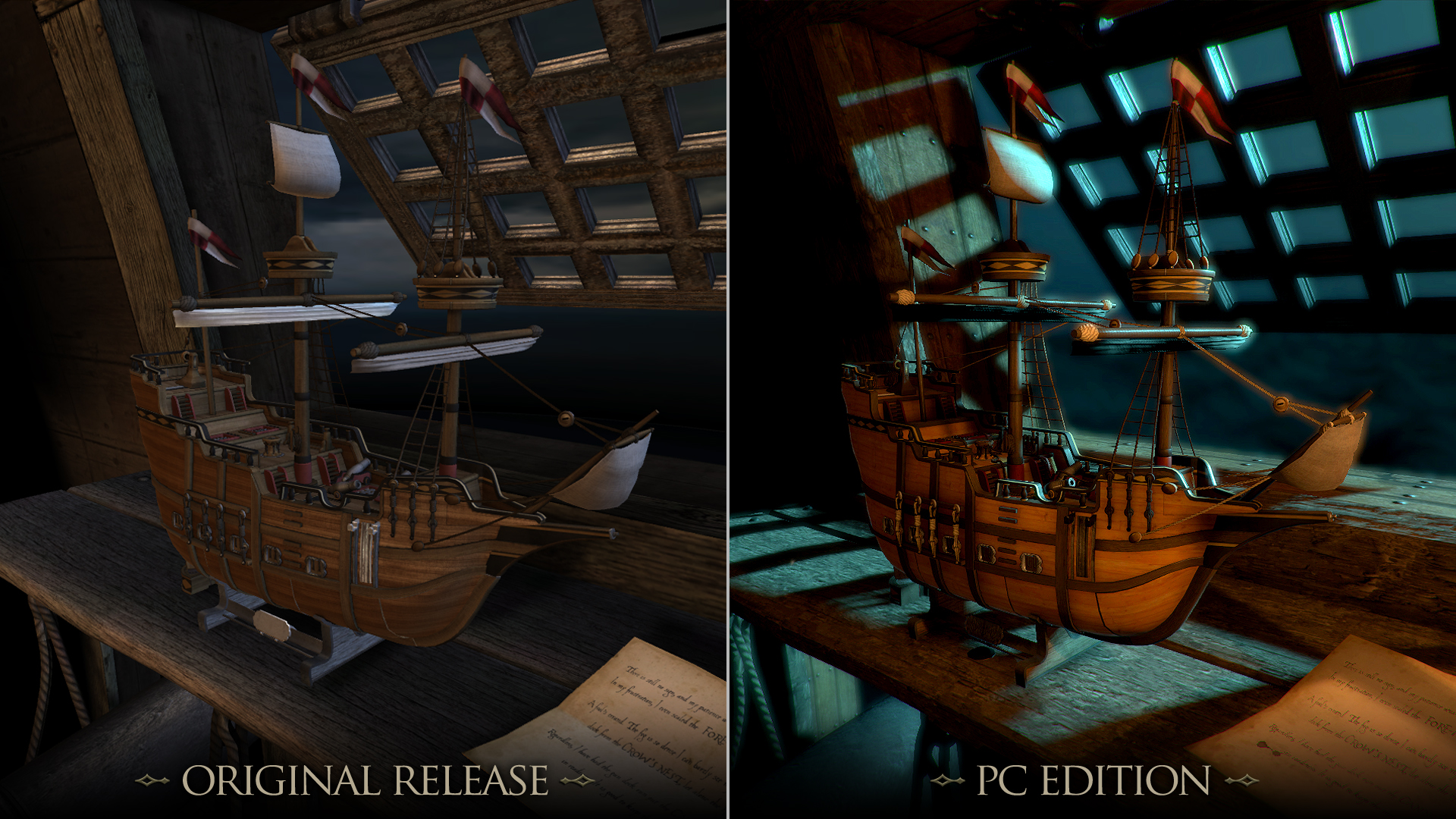 The same ship setpiece as 'Original Release' (left) and 'PC Edition' (right) — Steam store screenshot
Sources
This piece was written by reading the Steam store and community user reviews as of 2026-07-27. No review text is quoted directly; typical claims are reconstructed.
・Steam: The Room Two (Overwhelmingly Positive; 97% of 20,621 reviews across all languages, 97% of 10,172 in English; snapshot 2026-07-27)
・Read via WebFetch: roughly the top 10 helpful positives (All Time), the reservations nested inside them, and several recent reviews
・Developer, release date, genre tags and asset data cross-checked against the Steam store page and SteamDB (app/425580); professional reference: Rock, Paper, Shotgun
Closing
The Room Two doesn't divide opinion so much as carry a small footnote inside a near-consensus. Few verbs — touch and look — a lens that is pure observation resolution, and darkness that focuses attention: each underwrites the 'as good as the first' verdict, and each reservation (brevity, thin story, a mouse accent) follows from the same design.
Steam's overall is an overwhelming 97%; from a design view I give it 8.0. The way it crystallizes observation resolution into a single tool, and the gentleness of its curve, are real; the port's control accent and the thin story are genuine deductions. As a doorway into observation as a puzzle, it still works.
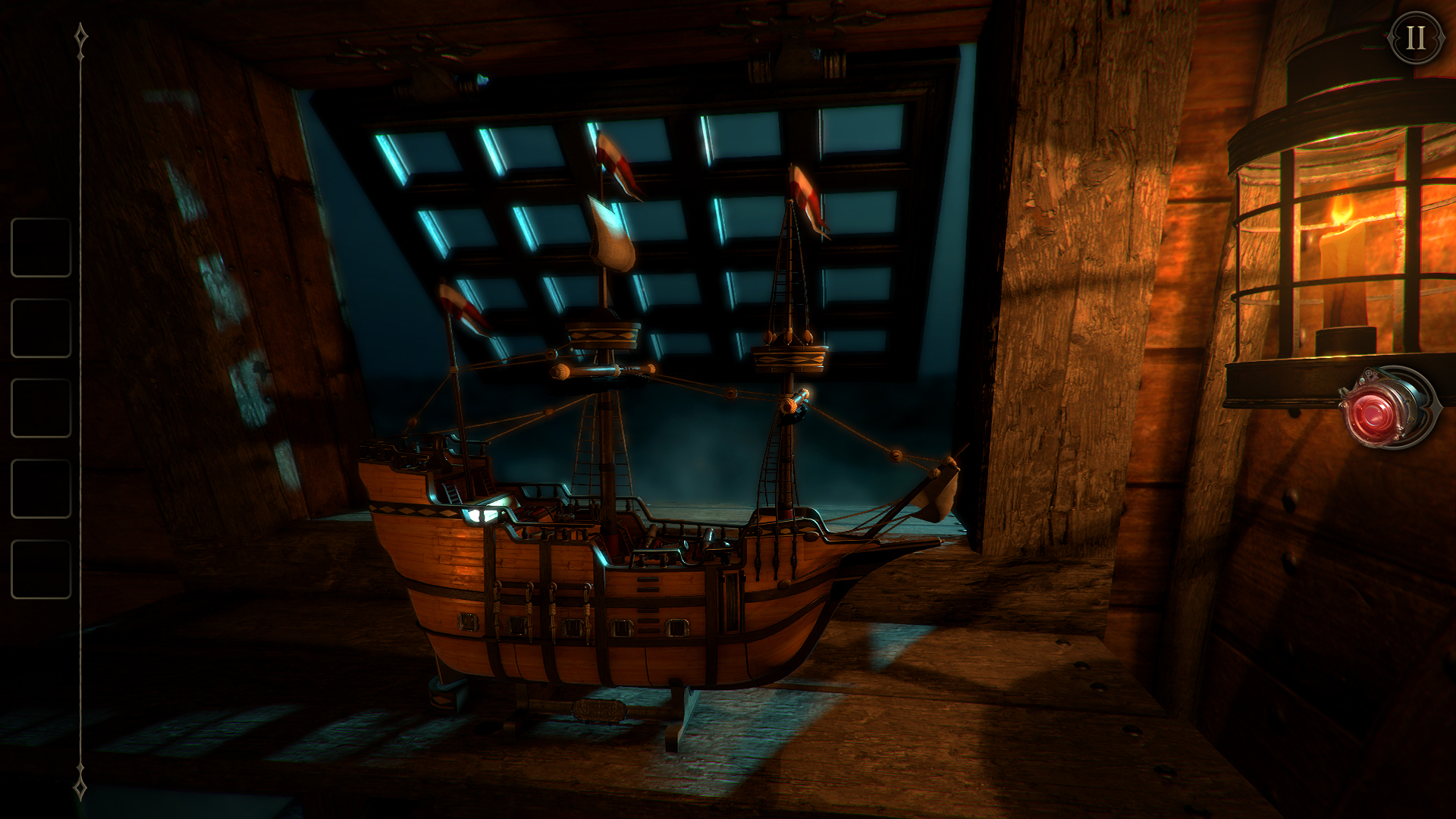 A detailed model galleon with rigged sails in a ship's hold — Steam store screenshot
Where are you with this game?
Press one and the game goes on your shelf. You can see it on your account page.
Reactions (no login)
Anonymous • one of each per visitor per day
Read next
Related reviews
The Room Three
A first-person escape puzzler set in a mansion on a remote island, where you peer through a lens at the boxes and mechanisms left by the Craftsman, uncovering hidden layers one at a time. The third Room game expands the series from a single box to a whole estate, built on one tactile verb and an eyepiece that multiplies what you can observe.
The Room 4: Old Sins
A first-person contraption puzzler set inside an old dollhouse found in an attic: open the mechanism in one room, then carry what you find to the room that is missing a piece. The fourth entry in Fireproof Games' The Room series, rebuilt for PC.
The Room
A first-person puzzler in which you peer at, rotate, and pry open a strange metal box one mechanism at a time. A special lens reveals marks invisible to the naked eye, and each box yields a smaller one within. Fireproof Games' tactile puzzle box, built around looking closely and touching.


