TAG
#escape-room
12 reviews · 5 essays
Related essays
Himitsu-bako (1894) — The Souvenir That Never Explains How to Open It
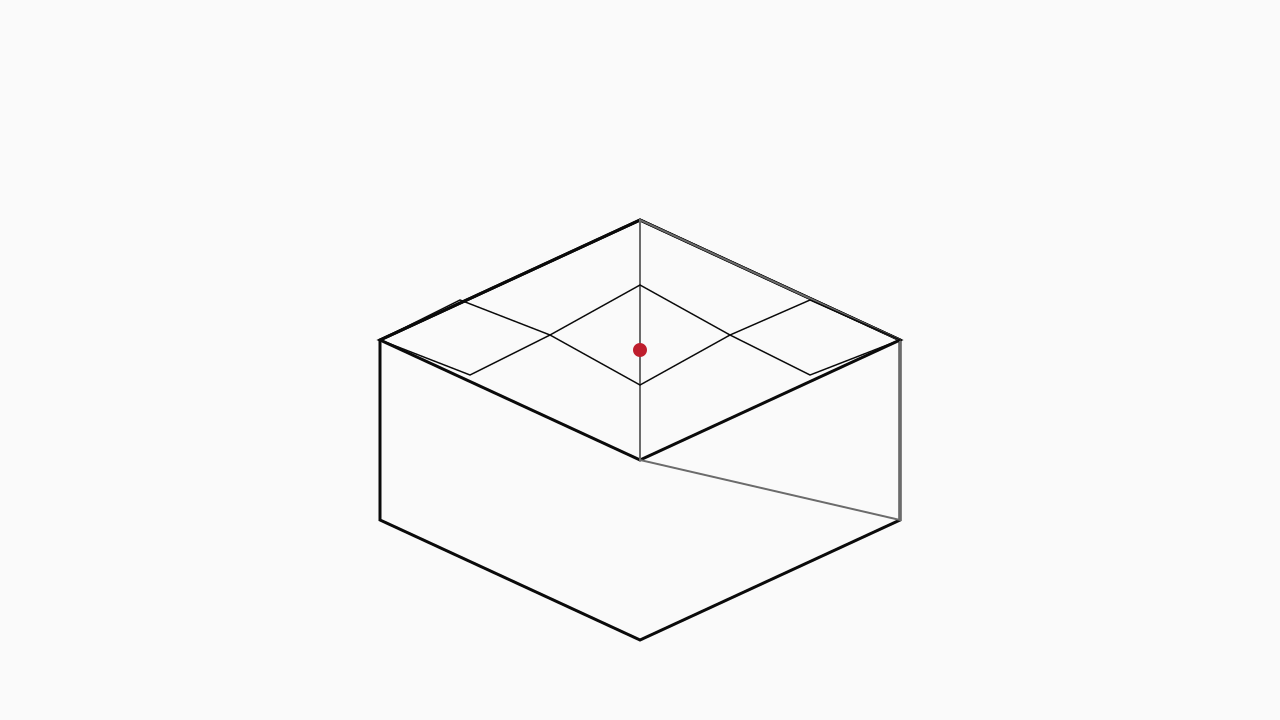
In 1894, in a hot-spring town in Hakone, a wooden box took its familiar form. Under its geometric marquetry sat a mechanism that only opened through a fixed sequence of moves — with no instructions attached. This piece traces the same design grammar found in today's escape rooms back to a single 132-year-old box.
The Real Escape Game (2007) — Two Rooms in Kyoto That Grew Into a Worldwide Locked Room
On July 7, 2007, at the Inspiblo gallery in Kyoto, Takao Kato split roughly 100 guests into 14 teams across two rooms as entertainment for the third-anniversary party of his free paper SCRAP. That night became the first installment of what would be called the 'Real Escape Game' — a phenomenon that grew into a worldwide commercial industry. Kato has testified himself that the spark was watching a staffer get hooked on web escape games. I read this night as a rare documented case of a puzzle walking out of the screen and into physical space.
Crimson Room (2004) — The Day a Red Room Made 'Escape' a World Word
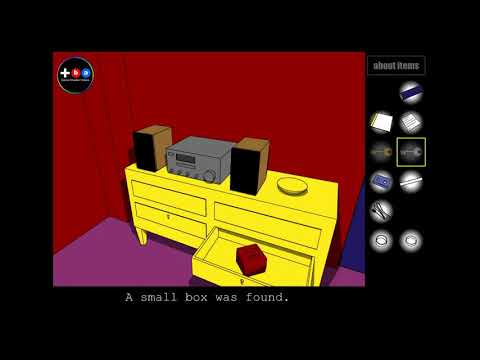
On March 4, 2004, Japanese developer Toshimitsu Takagi released a small free Flash game. You wake in a crimson-walled room, gather keys and tools, and leave through a locked door — nothing more. Yet Crimson Room spread the 'escape the room' genre worldwide, gave Asia the genre name 'Takagism' after its author, and by its instigator's own testimony triggered the world's first real escape game in Kyoto, 2007. I read this red room as a rare junction where digital play flowed back into physical space.
"Solvable" and "legible": the two criteria for escape-room design that GenEscape spells out
One piece today. I read, in the original English, "GenEscape: Hierarchical Multi-Agent Generation of Escape Room Puzzles" by Mengyi Shan, Brian Curless, Ira Kemelmacher-Shlizerman and Steve Seitz of the University of Washington (arXiv:2506.21839). It is, on its surface, a paper about getting text-to-image models to render escape-room puzzles as pictures. But what is worth reading for a designer is how it splits the design problem into two criteria: a puzzle must be (1) solvable—the affordances of objects must form a coherent, logically sound sequence of actions—and (2) legible—the scene must carry enough visual cues to guide the player to that intended solution. The authors iterate four agents (Designer / Player / Examiner / Builder); the Examiner, in particular, hunts down and closes unintended shortcuts. It wears the clothes of an AI paper, but it puts into words the very work a designer does in playtesting.
Submachine (2005) — A Door into the Subnet, and the Lineage of Flash Escape Puzzles
On 15 September 2005 the Polish cartoonist Mateusz Skutnik posted a single Flash game on his own website. It was simply called Submachine. Later renamed Submachine 1: The Basement, it became the seed of a ten-part escape-puzzle lineage. I read this hand-drawn browser work, one that never sat on Steam at the time, as a chapter in the history of escape puzzles.

Related reviews
The 7th Guest: 25th Anniversary Edition
A first-person puzzle adventure set in an empty mansion, where six invited guests and twenty-one room-sized contraptions stand between you and the house's secret. This is MojoTouch's 2019 reissue of Trilobyte's 1993 landmark, the game that showed what a CD-ROM could hold.
puzzleadventurepoint-and-clickZero Escape: The Nonary Games
Two Spike Chunsoft mystery adventures in one package: nine people are locked inside a facility and must pass through numbered doors to get out. It bundles the DS-born Nine Hours, Nine Persons, Nine Doors with its sequel Virtue's Last Reward, alternating first-person escape-room sections with branching novel sections.
mysteryadventurenarrative-puzzleMachinika: Museum
A first-person puzzle box in which you scan alien devices of unknown origin delivered to a museum, peer inside them and reprint their missing parts until they run again. A short piece from Littlefield Studio that opens seven machines one at a time, with the touch of science-fiction archaeology.
puzzleescape-roomobservationUnderground Blossom
A point-and-click escape puzzle that rides down seven metro stations through the life of a woman named Laura. You buy a ticket, search each room, and reassemble the pieces of her memory. A 2023 release from Rusty Lake, the studio behind the Cube Escape series.
puzzlepoint-and-clickescape-roomInscryption
A deckbuilding card game played across a candlelit table from Leshy, a narrator holed up in a cabin: you draw woodland-creature cards and sacrifice your own pieces to put them into play. Stand up from the table and the cabin itself becomes an escape-room puzzle. By Daniel Mullins, who made Pony Island.
puzzlemeta-puzzleescape-roomThe House of Da Vinci
A first-person escape puzzler set in Florence, 1506: in the workshop of a vanished Leonardo you use a lens that sees inside objects and a device that replays the past, opening one wood-and-brass contraption after another. Built around nesting — every solved mechanism opens into a further one — by Slovakia's Blue Brain Games, 2017.
escape-roompuzzleobservationEscape Simulator
A first-person escape-room puzzler where you move the furniture, smash the pots and pick up nearly everything you see. Solve 28 rooms designed with real-life escape room operators, alone or in online co-op, then keep going into thousands of community rooms built with the bundled editor. From Pine Studio.
puzzleescape-roomfirst-personWe Were Here Forever
A co-op-only first-person puzzle adventure in which two prisoners, held in separate parts of Castle Rock, escape by describing to each other what only one of them can see or hear. Explaining yourself over a walkie-talkie - and being misunderstood - is the mechanic. The fourth entry in Total Mayhem Games' We Were Here series.
puzzleescape-roomco-opThe Past Within
A point-and-click adventure playable only by two people at once: one stands in the Past, the other in the Future, and every puzzle is solved by describing aloud what only your own screen shows. The past is drawn in 2D, the future in 3D. Rusty Lake's first co-op-only game.
puzzleco-opescape-roomThe Room Two
A first-person escape puzzler in which you peer at, rotate, and pry open strange clockwork boxes, using a special lens to reveal hidden marks. The second Room game widens from a single box to several interlocking contraptions, from the UK studio Fireproof Games.
puzzlemysteryobservationEscape Academy
A first-person escape-room puzzle for one or two players, made by designers who build real-life escape rooms. Search each themed room, combine the scattered clues and enter the code to get out — from defusing bombs to hacking servers — wrapped in a light story about the faculty of a puzzle academy. Coin Crew Games' welcoming door into the genre.
puzzleescape-roommysteryThe Room Three
A first-person escape puzzler set in a mansion on a remote island, where you peer through a lens at the boxes and mechanisms left by the Craftsman, uncovering hidden layers one at a time. The third Room game expands the series from a single box to a whole estate, built on one tactile verb and an eyepiece that multiplies what you can observe.
escape-roommysteryobservation


