REVIEW · 2022-07-13
Escape Academy
Search, combine, escape — a co-op escape room
First Impressions
The first thing the Steam reviews impress on me is that most of the praise is about who you played with, not the puzzles themselves. Across the helpful positive reviews the recurring note is co-op: "the brainstorming with a friend is the best part." Press echoed it — Inverse called it "the best co-op experience since It Takes Two." It sits at 86% of 1,034 reviews, with the last 30 days slipping to 73% of 30 (Very Positive overall, snapshot 2026-07-23).
What interests me as a designer is that the heat is aimed at "two people talking," not difficulty. An escape room folds down to three verbs: search the room, combine the scattered clues, enter the code. As I argued in co-op puzzles and information asymmetry, splitting that search-and-combine between two people turns the board into a conversation device — one finds, the other gives it meaning. Reviewers talk about who they solved with because the design centres transmission over any one player's observation resolution.
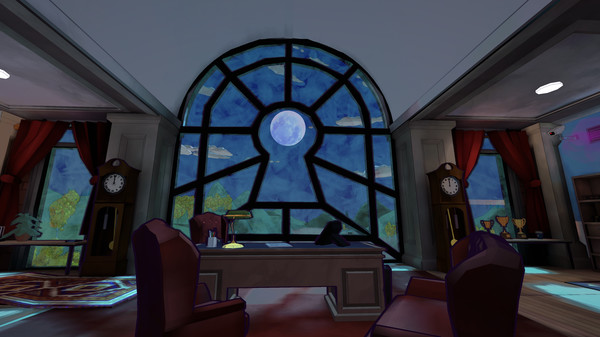 Escape Academy wide hero key art — Steam store key art
Putting the Mechanics into Words
Cross-referencing the helpful reviews with GodisaGeek's detailed write-up, the mechanics reconstruct cleanly. You pick the next room from a campus map; each arrives with a difficulty rating and a timer. You search desks and shelves, then combine number locks, wiring and ciphers to reach the exit. The materials range widely — letters, numbers, coordinates, chemicals, even a chainsaw — and reviewers agree you "rarely do the same thing twice." A tiered, visual hint system waits for anyone who stalls.
The design builds depth sideways — more kinds of puzzle — rather than downward into one system. Where The Room draws bottomless depth from prying at a single box, Escape Academy swaps its materials room by room to stay fresh. Escape rooms tame combinatorial explosion by sealing each element inside its own room, so any one room stays shallow and length comes from the count and variety of rooms. The praise "wonderfully varied" and the complaint "shallow" are two faces of the same choice: breadth over depth.
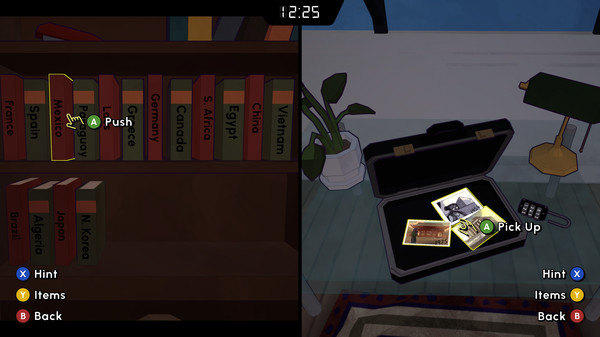 Escape Academy main store capsule — Steam store key art
The Texture of Difficulty
Difficulty is where the pool splits hardest. One camp calls it "approachable" with "a considered curve" (GodisaGeek praises the learning curve) and enjoys earning an A+. The other keeps reaching for the opposite words: "too easy throughout," "shallow — quantity, not quality," "I got A+ every time and never once failed." The same gentleness reads as a virtue to one and as a lack to the other.
As design, the split is no contradiction. The game consistently chooses never to lock anyone out: hints are always open, failure rarely costs progress, and the A+ grade is generous. The learning curve is tuned toward a safety net rather than a high ceiling. That feels warm to people laughing through it in co-op and thin to a solo player chasing a wall. Critics (Metacritic 79) foreground charm and co-op while users — the recent 73% especially — weight challenge and price; different axes, both describing the same design correctly. It's a question of reach, not quality.
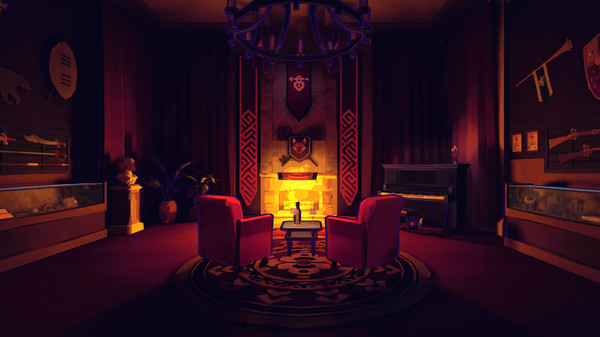 Escape Academy store header image — Steam store key art
Pacing and Length
Length divides the pool too. Most reviews put the campaign at 4-6 hours, admit a "one more room" pull, and then say it's "a little sad how soon it ends." On sale, voices line up behind the value — "five hours for five dollars, a buck an hour is fair" — while at the full $20 the negative side repeats that it's "maybe ten hours with little replay, overpriced." The recent slide to 73% may partly be price meeting expectation.
Structurally, an escape room is a one-time experience: the moment a puzzle is solved its surprise is spent, so thin replay is a trait of the genre, not a bug. Reviews put the median clear near five hours, roughly matching HowLongToBeat. The real argument isn't length but the reach of the price — placing a single-use, ~5-hour experience at $20. "No complaints on sale" is just the inverse of the full-price grumble.
 Escape Academy hero capsule — Steam store key art
The Feel of the Story
On story, reviewers are surprisingly warm. A recurring line in the top helpful reviews is that "the puzzles have their own stories," and the colourful faculty characters, doseone's music and a "Houdini-meets-Hogwarts" premise all get fond mentions. The plot is light — no deep branching or heavy themes — but the shared read is that it works as glue between the rooms.
As design, the story's job is to give the constraints a reason. "Defuse the bomb before your tea gets cold" hands the bare rule of a timer a fictional necessity. It wraps arbitrary mechanics in fiction so players follow them willingly — a different role than in games like Tangle Tower or The Case of the Golden Idol, where deduction is the story. There the plot drives the puzzle; here it frames the puzzle without gating it. That's why reviewers call the story a pleasant seasoning, never a wall.
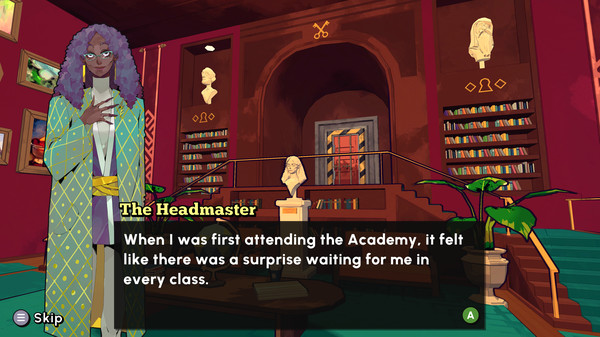 Escape Academy portrait library poster — Steam store key art
Sources
This piece was written from the Steam store page, its attached user reviews and press coverage as of 2026-07-23. Individual reviews are paraphrased, not quoted.
・Steam: Escape Academy (All reviews Very Positive, 86% of 1,034; last 30 days Mostly Positive, 73% of 30; Metacritic 79).
・Read helpful-sorted positive and negative reviews plus the most-recent posts, drawing out the recurring claims that it is "too short," "too easy," "overpriced," and that co-op is the standout.
・Critic context from GodisaGeek, used to gauge the gap between critics (charm, co-op) and users (length, difficulty).
Closing
Taken together, Escape Academy's reviews are warm and noisy, quietly split on just two points: price and difficulty. Steam sits at 86% positive; from a design standpoint I land at 7.5. Not a disagreement — the room-by-room material swaps are deftly done, but a breadth-over-depth design keeps any single room shallow, and a one-time, ~5-hour length reinforces that. I've marked those two things down.
Between the reviews and HowLongToBeat the median campaign is about five hours. At the $20 list price the "a bit pricey" chorus is persistent, while on sale satisfaction is high. I'd recommend it without hesitation to people who want to talk through a room with a friend or partner, or who are looking for a door into escape rooms — and not to solo players chasing a high, long wall. On the Puzzlebyrinth shelf, read it next to Botany Manor (bundled with it on Steam) or the mechanism-deep The Room Three, and you can see it bet on the fun of two people talking rather than on depth.
 Escape Academy library header image — Steam store key art
Where are you with this game?
Press one and the game goes on your shelf. You can see it on your account page.
Reactions (no login)
Anonymous • one of each per visitor per day
Read next
Related reviews
The Past Within
A point-and-click adventure playable only by two people at once: one stands in the Past, the other in the Future, and every puzzle is solved by describing aloud what only your own screen shows. The past is drawn in 2D, the future in 3D. Rusty Lake's first co-op-only game.
Strange Horticulture
A 2D occult deduction puzzle in which you identify each plant that arrives at your counter by matching it against an almanac and the clues you gather, then use its effects to answer customers and steer the story. Made by the UK’s Bad Viking, it unravels foggy Undermere’s mysteries with a cat and a single book.
Machinika: Museum
A first-person puzzle box in which you scan alien devices of unknown origin delivered to a museum, peer inside them and reprint their missing parts until they run again. A short piece from Littlefield Studio that opens seven machines one at a time, with the touch of science-fiction archaeology.


