REVIEW · 2021-03-23
Machinika: Museum
The developer named Myst and The Room first — and the 91% of 1,171 reviews, for and against, is written entirely on that yardstick
First Impressions
The first thing I noticed in the review pool is that neither side calls this game by its own name. Other people's names come out first. Of the two dozen most-helpful reviews I read, more than ten open with Myst, The Room or The House of Da Vinci before saying anything else.
The numbers, up front: the store page shows 91% of 1,171 reviews positive, "Very Positive", with the last 30 days at 11 reviews and 100% (snapshot 2026-09-02). SteamDB's all-language count is about 6,000 reviews at 89.6%. On the critic side, Metacritic's PC page is still waiting for four reviews, and carries a single score, 70 from Adventure Gamers.
The vote ordering is worth noting. The single most up-voted review is a negative one, and it is not about puzzles at all: it is about the phone version being free while the Steam build costs eight dollars, and about a resolution setting that cannot be changed. Reviews that score the design begin one rung below that.
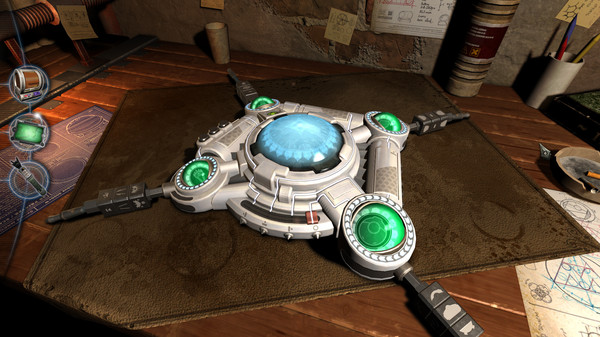 Machinika: Museum, store screenshot #1 — Steam store screenshot
Putting the Mechanics into Words
The review pool agrees on three verbs: scan, peer, reprint. A tool that lights up a device's internals, a tool that follows a gap inward like an endoscope, and a tool that reprints a missing part on the spot. One positive review puts it as three tools replacing the old habit of hoarding an inventory.
As subtraction it holds together. The traditional load in the The Room lineage was an inventory that kept growing against a board you brute-forced. Here the inventory is folded into three tools. There is no combinatorial explosion. There is also not much search space to begin with.
The question is where that narrowness shows. Exactly one device sits on the desk at any time. Seven chapters, each closing over its own device. Negative reviews report that what you learn on one device rarely pays off on the next: the board is swapped out before your resolution of observation has time to rise.
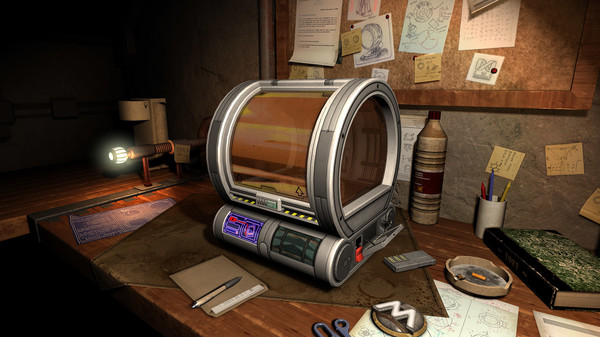 Machinika: Museum, store screenshot #2 — Steam store screenshot
Pacing
Two to four hours, seven chapters. Those are the store page's own numbers, and the playtimes in the review list mostly land between one and seven hours. Marketing and experience agree, which is rarer than it should be.
The positive side reads the brevity as a virtue: seven chapters end the game before it can repeat itself. The negative side names the same structure differently — too prescriptive, one puzzle at a time, monotonous, the boxes never connect, it feels like busywork. Same fact, opposite sign.
What caught my eye is that the flaw shows up inside the recommendations too. Two of the most up-voted positive reviews both report that touching things out of order breaks the game and forces a chapter restart. When a game is built on the assumption of a single line, a move off that line was never designed for. The brevity is a choice; this failure mode is its invoice.
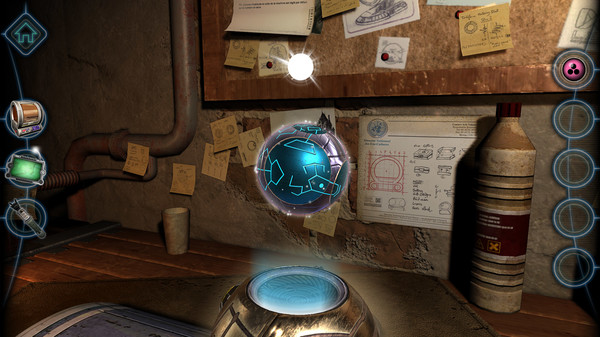 Machinika: Museum, store screenshot #3 — Steam store screenshot
Place in the Lineage
Back to the first observation. The yardstick was handed over by the developer, not picked up by the reviewers. The store description itself lists Myst as the classic and The Room and The House of Da Vinci as the recent ones.
Naming your references is sound entrance design. One line tells a reader how the game feels, and the threshold for a first look drops. Placing yourself inside a lineage is the cheapest way an unknown title can buy its first five minutes.
The cost is that the exit is fixed too, because readers then look only at the difference. The one trade review I found reaches for the same yardstick and says the game scratches the itch without reaching the same heights. Two of the three top Japanese reviews call it "a sci-fi The Room" and "a modern Room". The language changes; the ruler does not.
In design terms: naming your references converts the axis of judgement into a subtraction from the work you named. What is happening inside that 89% is not a fight between camps. It is everyone performing the same subtraction, with this game's own qualities left over as the remainder.
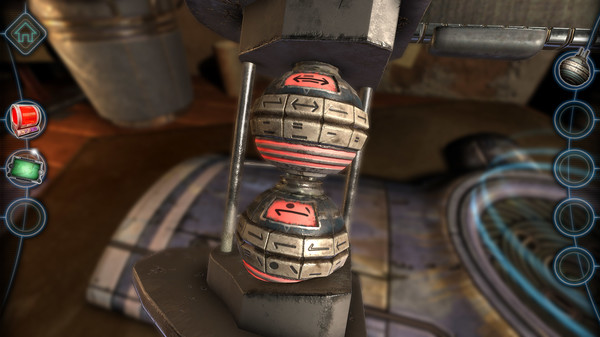 Machinika: Museum, store screenshot #4 — Steam store screenshot
What the Votes Are Not Scoring
So what is in the remainder? Alien devices of unknown origin arrive at a museum, and an archivist brings them back to life one at a time. One positive review calls the premise SCP-like. What each device was for arrives late, after you have already made it work. That ordering is a good instinct.
A Japanese review lands the sharpest hit: giving the protagonist a voice was a mistake. The boxes in The Room were silent, and the only commentary was your own. Here a narrator notices first and says it out loud. For a design that wants observation to be the play, that lowers the resolution.
Both sides agree about the ending, too. It closes on a large hook and points you at the next game — a sequel, Machinika: Atlas, does exist as a separate title. As a short work that is a coherent way to finish, but votes that wanted a box which closes on itself turn down here.
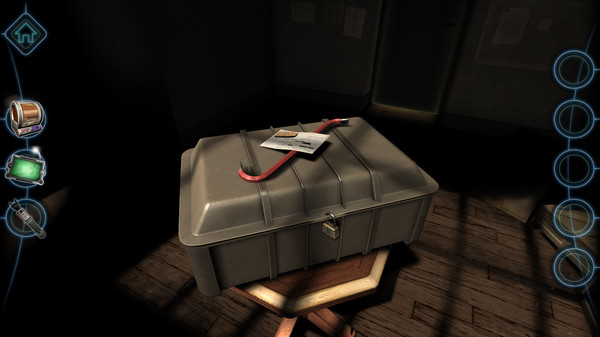 Machinika: Museum, store screenshot #5 — Steam store screenshot
Sources
This article was written from the Steam user reviews as of 2026-09-02.
・Steam: Machinika: Museum (store view: 91% of 1,171 reviews positive, "Very Positive"; last 30 days 11 reviews, 100%)
・SteamDB all-language count: about 6,000 reviews at 89.6% (the store figure is roughly the English-language slice, so both are given)
・Read: top 10 helpful positive, top 10 helpful negative, top 8 recent, top 3 Japanese-language reviews (31 in total)
・Metacritic (PC): no Metascore yet for lack of critic reviews; the only listed score is 70 from Adventure Gamers, user score 6.2 from 13 ratings
・TouchArcade "Game of the Week" (Jared Nelson, 2021-04-23)
・All images are official screenshots from the Steam store page and their URLs were verified. This environment could not reach Steam's image CDN, so their contents could not be inspected; captions therefore state only the asset type and the store listing order.
Closing
My score is 6.8, below Steam's 91%, for one reason. The thing I find most wasteful here — a serial structure in which no device throws light on another — is filed by the votes as "short and comfortable". The comfort is real, and as a short work it is competently made. But I think the depth of a puzzle box comes from returning to the box.
Who it suits is clear enough. If you have never played The Room, or you want exactly one two-hour thing tonight, this works well. If what you want is the feeling of opening the same box for the third time, four hours will not get you to the third time.
The design lesson: a reference placed at the entrance brings people in; left at the exit, it becomes the scorecard. The moment the developer led with Myst and The Room, this game's reception was going to be written as a subtraction. Joining the locked-room lineage is not settled by announcing it, but by how many times you make a player come back to the box.
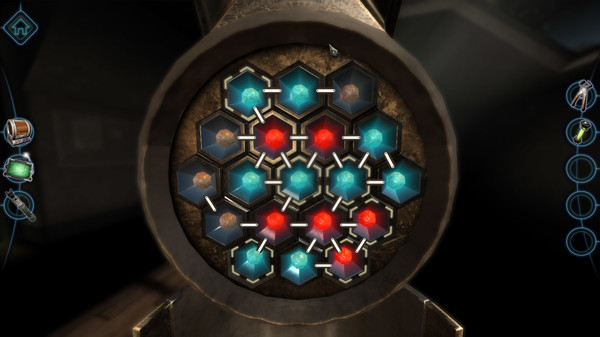 Machinika: Museum, store screenshot #6 — Steam store screenshot
Reactions (no login)
Anonymous • one of each per visitor per day
Read next
Related reviews
The Room 4: Old Sins
A first-person contraption puzzler set inside an old dollhouse found in an attic: open the mechanism in one room, then carry what you find to the room that is missing a piece. The fourth entry in Fireproof Games' The Room series, rebuilt for PC.
Genesis Noir
A hand-drawn black-and-white point-and-click adventure in which you play No Man, a watch peddler diving through the history of the universe to save his love from the Big Bang — a gunshot fired by a jealous god. Feral Cat Den built it out of tactile puzzles: turn a dial, touch a thing, see what happens.
TOEM
A hand-drawn monochrome observation-puzzle adventure in which a child leaves home with their grandmother's camera, photographs whatever the villagers and townspeople ask for, shows them the shot, and uses the stamps earned to move on to the next region — rotating the view to hunt for subjects, from Something We Made.


