REVIEW · 2022-11-02
The Past Within
Is Telling the Same as Solving? Reading the Split Over a Two-Player Puzzle
First Impressions
The Past Within is a point-and-click adventure that can only be played by two people at the same time. One stands in the Past, the other in the Future, and every puzzle is solved by describing aloud what only your own screen shows. Made and released by the Dutch studio Rusty Lake on 2 November 2022. I am writing this from the Steam review pool rather than from a playthrough of my own.
The numbers first. Of 16,620 reviews, 15,732 are positive and 888 negative; the 14,459 Steam-purchaser reviews carry the label 'Very Positive'; the 3,823 English reviews sit at 94% (snapshot 2026-08-01). The last 30 days: 90 reviews, 86%. The largest language group is not English but Simplified Chinese at 5,611, and Brazilian Portuguese (840), Spanish (608) and German (506) all reach 'Overwhelmingly Positive'.
The critical aggregate looks different. OpenCritic gives a Top Critic Average of 69, with 78% of nine outlets recommending, and the label stays at 'Fair' — more than twenty points below the users' 94%. Follow that gap and you arrive at the single question running through the whole pool: is telling your partner what you see the same thing as solving?
 The Past Within main capsule image — Steam store key art
Putting the Mechanics into Words
Across the helpful positives the recurring words are communication, teamwork and eureka. Three claims are almost boilerplate: the satisfaction comes from two people meshing rather than from individual skill; the difficulty is right for playing over a call and it ends in one sitting; it resembles a simplified Keep Talking and Nobody Explodes without the timer or the doom. Several reviews insist on voice over text chat, and for the same reason — naming a symbol out loud is faster than typing it.
The negative side reduces almost entirely to one phrase: repeat after me. The answer is not hidden behind a puzzle; it sits in plain sight on the partner's screen. The work, they argue, is transmission rather than inference. One heavily upvoted negative names the difference precisely by invoking the We Were Here series: there you must convert what you receive before it can be used, here you are told butterfly and you click butterfly.
In design terms, the game moves its difficulty off the board and into the channel. The verb is not solve but describe; the board is split across two clients, and the player's job is to load their own observational resolution into the other person's vocabulary. The trouble comes when the objects already have names. Butterfly, eight o'clock, three lines — a named symbol costs almost nothing to encode, so the channel produces no difficulty. In the terms of the grammar of solving in pairs, the asymmetry of information is there but the translation step is missing. That single step is what the two camps are arguing about.
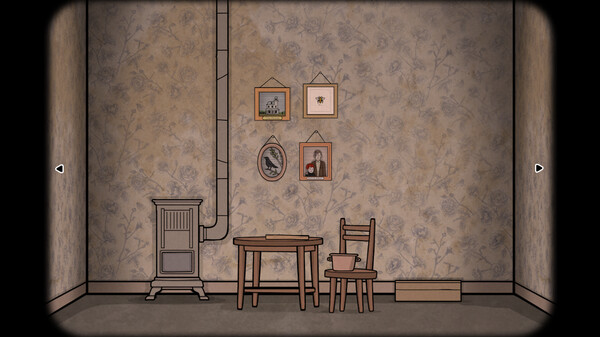 The Past Within store header image — Steam store key art
The Feel of the Story
The setting is the Rusty Lake universe and the plot concerns Albert Vanderboom's plan. The first thing positives mention is atmosphere: no jump scares yet persistently uneasy, with the music and the artwork singled out across languages. Among the most helpful Italian reviews is one that treats the game as a ritual for a couple who have followed the series together — the pleasure is less the score than finally being able to walk through it side by side.
The negatives aim at content. The goal is stated in full at the start, everything proceeds as planned, and there is no twist. Much of it restages lore the series already established, with little new. The press draws the same line: Screen Rant, scoring it 2.5 out of 5, tells newcomers to the series and anyone wanting resistance to look elsewhere.
What is interesting as design is that the split — 2D for the past, 3D for the future — serves as both a narrative and a mechanical device. Because the two views differ, speaking becomes necessary at the level of the art itself. The moment positives react to most strongly is the turn between chapters, the one place where the asymmetry works dramatically; elsewhere it settles into clerical work. Where a solo entry like Rusty Lake Paradise put its weight on the puzzle itself, this one shifts that weight onto the relationship between two players — and whether the shift lands is exactly where the pool divides.
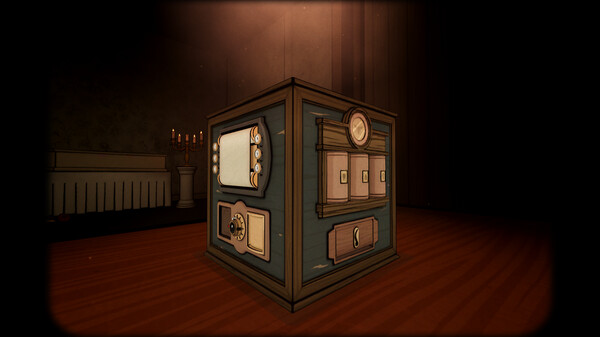 The Past Within library hero image — Steam store key art
Pacing and Length
Completion times cited inside the reviews cluster at seventy to ninety minutes for one run, while hours on record scatter from 0.3 to 8.1. The developer's own page says two chapters and roughly two hours, so the length is not being misread. The price is $5.99 — but since it is co-op only, playing it requires two copies.
That is the contested point. Much of the negative side reduces to 'the price would be fair if it did not need two copies.' What is striking is that the positives turn the same fact into a joke: the two most upvoted reviews in the pool are a call and response — a great way to spend six dollars, or twelve if you have a cheap friend, answered by 'I am the cheap friend' — with 502 and 511 helpful votes. Replay value splits too. Of the butterfly and bee modes, positives say seeing the design from the other side changes what you notice; negatives say it is the same puzzles in a different order.
As design, the length reads as a target rather than an oversight: the chapters are cut to fit a single call with no break in it. But the co-op-only decision doubles the price and adds three preconditions — a partner, a shared hour, a voice channel. In practice those three, not the brevity, are the threshold. One helpful positive also reports having to stop because of frequent flashing, so photosensitivity seems to have had little attention.
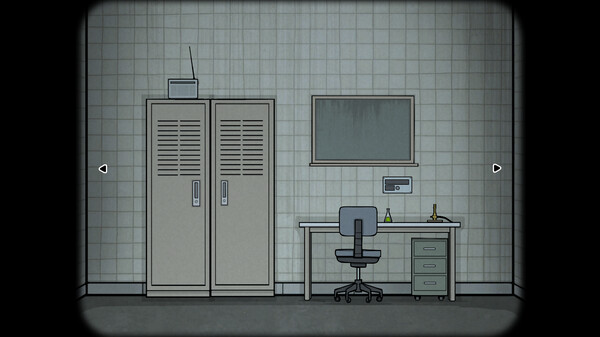 The Past Within hero capsule image — Steam store key art
Sources
Written by reading the Steam user review pool as of 2026-08-01. No review text is quoted directly; typical claims are reconstructed.
- Steam: The Past Within (Very Positive — 15,732 positive and 888 negative of 16,620 reviews; 14,459 Steam-purchaser reviews; 94% of 3,823 in English; 86% of the last 90 in 30 days; the largest language group is Simplified Chinese at 5,611)
- Read via WebFetch: the top 10 most helpful English reviews (all time), the top 10 most helpful negatives, 10 from the recent view (July 2026), and the top 10 most helpful Italian reviews — over 30 once duplicates are removed
- OpenCritic: The Past Within (Top Critic Average 69, 'Fair'; 78% of nine outlets recommend. Eurogamer Recommended; Jump Dash Roll and GameWatcher 8/10; Nindie Spotlight 7.9; DarkZero 7; SECTOR.sk 6.5; Screen Rant 2.5/5)
- SteamDB: The Past Within (release date 2022-11-02, developed and published by Rusty Lake, built in Unity, and the public asset listing)
- Note: image files could not be downloaded for visual checking in this environment, so the figures are limited to Steam official store assets whose type is certain (capsule, header and library images), with generic captions. No screenshots are used.
Closing
Between Steam's 94% and OpenCritic's 69 I put 7.5 on design grounds. The credit is for one structural idea: splitting a board across two screens and forcing what only one player can see to become language is still a young genre, and few have implemented it this cheaply or this compactly. The deduction is for the symbols laid on top of that structure. Subtraction, as in when fewer verbs make a game richer, has to be earned back on some other layer. This game chose the channel as that layer, then declined to put a translation step inside the channel.
Who it fits is legible straight from the reviews. It strongly suits anyone buying the ninety minutes spent talking with a partner, and anyone who wants to walk through Rusty Lake's world in pairs. It does not suit a player alone looking for resistance. That is a question of design scope rather than quality — the store says co-op only, both players must own a copy, right at the top, and the promise is kept.
One last note on the pool itself. A co-op-only game gets graded on the evening rather than on the game. It is no accident that the most helpful reviews include lines about showing the world how badly you and your partner communicate, or advising against it if you are both slow. Since the first real escape rooms of 2007, locked-room play has been hard to measure, and that difficulty comes straight through in Steam's aggregate. The 94% is closer to satisfaction with ninety minutes shared than to a verdict on the puzzles — which is probably where the twenty-point gap with the press comes from.
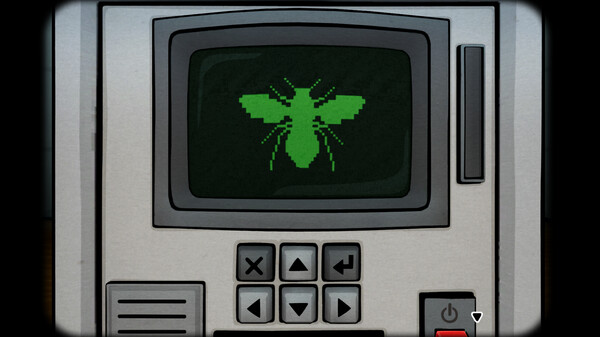 The Past Within library portrait capsule — Steam store key art
Where are you with this game?
Press one and the game goes on your shelf. You can see it on your account page.
Reactions (no login)
Anonymous • one of each per visitor per day
Read next
Related reviews
Underground Blossom
A point-and-click escape puzzle that rides down seven metro stations through the life of a woman named Laura. You buy a ticket, search each room, and reassemble the pieces of her memory. A 2023 release from Rusty Lake, the studio behind the Cube Escape series.
We Were Here Forever
A co-op-only first-person puzzle adventure in which two prisoners, held in separate parts of Castle Rock, escape by describing to each other what only one of them can see or hear. Explaining yourself over a walkie-talkie - and being misunderstood - is the mechanic. The fourth entry in Total Mayhem Games' We Were Here series.
Machinika: Museum
A first-person puzzle box in which you scan alien devices of unknown origin delivered to a museum, peer inside them and reprint their missing parts until they run again. A short piece from Littlefield Studio that opens seven machines one at a time, with the touch of science-fiction archaeology.


