REVIEW · 2017-03-24
Zero Escape: The Nonary Games
A two-game package whose length is praised and resented in the same words
First Impressions
The positive and the negative reviews are pointing at the same thing: length. One side calls it density, the other calls it padding. From the Steam review pool I read, almost the entire split sits on that single axis.
The numbers first. The store page shows 94% positive across 3,983 reviews ("Very Positive"), with 88% across 67 reviews in the last 30 days, as of 2026-09-03. The all-language tally is wider: 92.9% of 7,251. On the critic side, OpenCritic lists 34 reviews averaging 85, with 91% recommending.
What is worth noticing is the playtime attached to the negative votes: 45 hours, 67 hours, 78 hours. These are not people who bounced off. They finished both games and still turned the thumb down. That makes for good material.
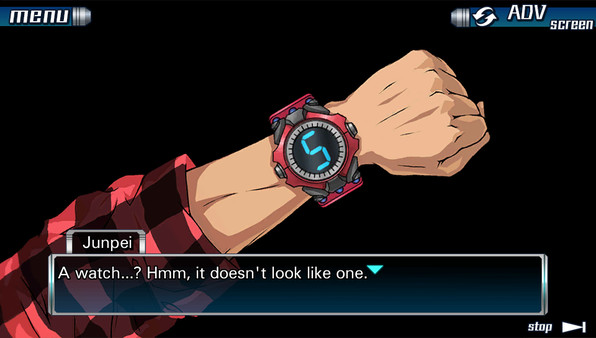
 Zero Escape: The Nonary Games, store screenshot #1 — Steam store screenshot
The Feel of the Story
Across the helpful positive reviews the recurring words are "twists", "mind-blowing", "thought provoking". One of them says the writer wishes they could erase their memory and start over. That line describes the shape of the experience better than any score does.
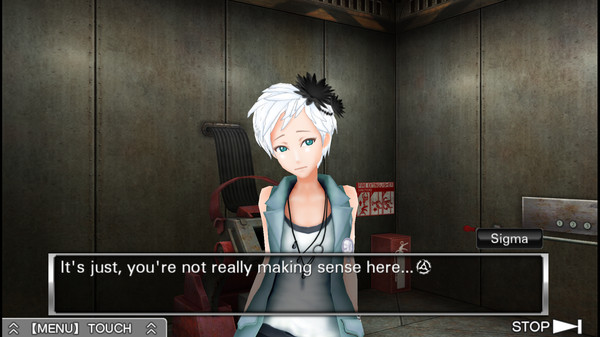
The negative side uses a different vocabulary entirely: "long-winded", "bloated", "filler". One review lays out worked examples of how far a simple scene gets stretched, counting the times characters restate the same fact to each other.
Read as design, this is a question of where information is stored. The clues that should sit in the reader's hands sit instead in the characters' mouths. As I argued in the notebook piece, a mystery changes texture depending on where it parks your memory. Here it parks it in dialogue.
 Zero Escape: The Nonary Games, store screenshot #2 — Steam store screenshot
Putting the Mechanics into Words
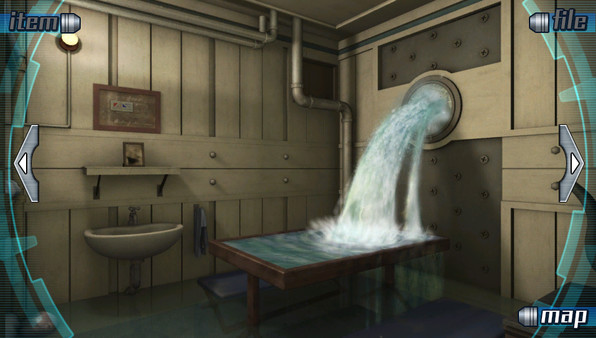
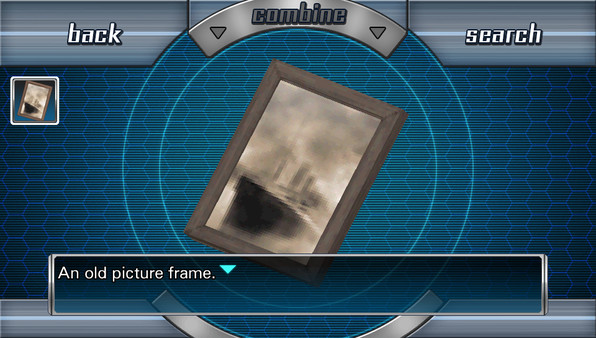
The escape sections run on a small set of verbs: look, pick up, combine, enter a number. That is the standard grammar of escape rooms and puzzle boxes, with nothing new bolted on.
One positive review is refreshingly honest about this. The writer expected a visual novel and found "an old school point and click adventure game" underneath. The store's own tag list leads with Visual Novel, so the surprise is built into the marketing.
The difficulty is not combinatorial. Rooms hold few objects and the inventory never explodes. People get stuck because they missed one number on one wall. Unlike The Room, what is tested here is observation resolution, not mechanism.
 Zero Escape: The Nonary Games, store screenshot #3 — Steam store screenshot
Design Craft
The second game draws its branches as a single navigable chart and lets you jump straight to any point on it. That turns replay from "start over" into "pick a different branch", and it is the package's real invention.
The review pool splits on it in the usual way. Positive reviews say the replaying never becomes a chore. Negative ones say the required order forces them to open a guide. Same mechanism, opposite sign.
I read the chart as an overworld. As I wrote in the overworld piece, a puzzle game feels very different depending on whether it gives a stuck player somewhere else to go. The chart makes that escape route visible — and then locks parts of it, which is exactly where the irritation comes from. The same studio's later AI: The Somnium Files keeps the chart and loosens the locks.
 Zero Escape: The Nonary Games, store screenshot #4 — Steam store screenshot
Pacing
Playtimes in the review pool cluster between roughly 30 and 80 hours, with a median around 45. Even for two games, that is a lot of reading.
The positive side accepts the length as a premise. One review just says play them in order; another tells you to take notes on "key dates / codes / people". They agree the game asks work of the reader and consider that fair.
The negative side is not attacking the length but the density inside it: the same explanation delivered three times, banter that stalls the plot, ellipses that carry no information. There is also a port question — the first game was rebuilt from two screens down to one, and several reviews say the rewritten lines read awkwardly as a result.
 Zero Escape: The Nonary Games, store screenshot #5 — Steam store screenshot
Reviews Consulted
This piece was written from the Steam user reviews as they stood on 2026-09-03.
・Steam: Zero Escape: The Nonary Games (store view: 94% of 3,983 positive, "Very Positive"; last 30 days: 88% of 67)
・All-language tally: 6,737 of 7,251 positive (92.9%).
・Read the top 10 helpful positive, top 10 helpful negative, and 8 most recent reviews.
・OpenCritic: Zero Escape: The Nonary Games (34 reviews, average 85, 91% recommend)
・Images are Steam store screenshots. The captions are deliberately generic because this environment could not open the image files directly.
Closing
I land on 7.6, below Steam's 94%. The reason is narrow: the second game's word count was never subtracted. The lines that did not need writing take up the largest share of the hours.
The chart survives that complaint. After it, branching games had little excuse for hiding their branches. Return of the Obra Dinn with its verdict table and Her Story with its search box belong to the same family: devices that move the player's memory outside their head.
Who it suits is clear enough. Readers with patience for a long novel, who enjoy writing codes down on paper. Anyone who wants to sleep on a hard puzzle will find the escape rooms too light. At $29.99 for roughly 45 hours across two games, several recent reviews call it a steal on sale.
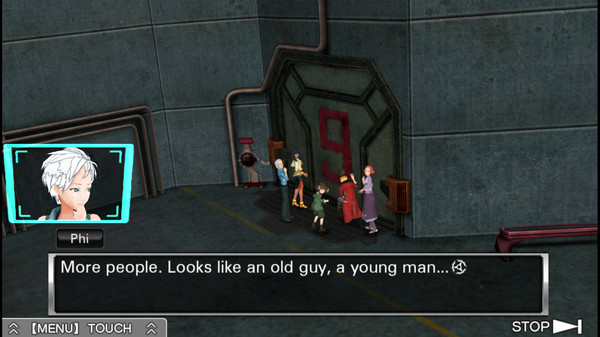 Zero Escape: The Nonary Games, store screenshot #6 — Steam store screenshot
Where are you with this game?
Press one and the game goes on your shelf. You can see it on your account page.
Reactions (no login)
Anonymous • one of each per visitor per day
Read next

Related reviews
AI: The Somnium Files
A detective adventure set in near-future Tokyo, in which a one-eyed police detective works a serial murder case alongside the artificial intelligence housed in his prosthetic eye. First-person investigation scenes alternate with third-person 'Somnium' dives into a suspect's dream, where a six-minute budget must be spent to open Mental Locks, and an in-game flowchart lets you walk the branches toward several endings. Written and directed by Kotaro Uchikoshi of the Zero Escape series, from Spike Chunsoft.
Phoenix Wright: Ace Attorney Trilogy
A courtroom adventure in which you play defense attorney Phoenix Wright, matching one line of testimony against one piece of evidence to break a lie. Capcom's collection gathers all fourteen episodes of the three games first released between 2001 and 2004, with the art redrawn frame by frame.
Thimbleweed Park
A point-and-click adventure about a 1987 small-town murder, switching between five characters — two FBI agents, a ghost, a foul-mouthed clown and an aspiring game developer. Its nine-verb SCUMM-style interface was rebuilt for modern machines by the creators of Maniac Mansion and Monkey Island.


