SERIES
Single-Verb Design
Adding verbs makes games more complex. But cling to a single verb and the combinatorial space unexpectedly opens up. From 1982 Sokoban to today's A Monster's Expedition, we trace the northern extreme of verb minimalism.
Related Essays
- Sokoban (1982) — The 44-Year-Old Prototype of Meta-Puzzles
In 1982, Hiroyuki Imabayashi of Thinking Rabbit released Sokoban. Forty-four years later, walk-and-push is still the bedrock of Baba Is You and Patrick's Parabox. Reading the lineage backward from period context.
- When Fewer Verbs Make a Richer Game — The Lineage of Subtractive Design
Sokoban, Snakebird, Stephen's Sausage Roll, A Monster's Expedition, Bonfire Peaks. A maker's-eye survey of subtractive design, the lineage that deepens difficulty without adding verbs, built around one question: why does less become more?
- The Verb of Rolling — A Design Grammar for Rolling-Motion Puzzles (from Bloxorz to Stephen's Sausage Roll)
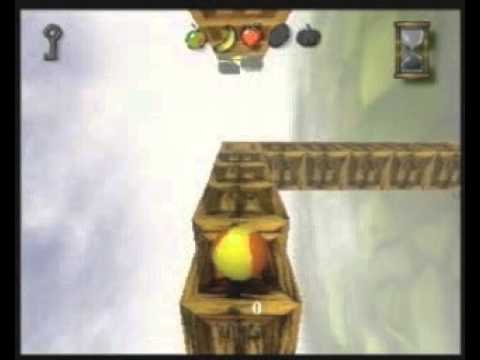
A single verb—rolling—adds a dimension of facing to position and builds a deep state space without adding levels. From Kula World to Stephen's Sausage Roll, a design reading of rolling-motion puzzles.
- The Verb of Laying Track — A Design Grammar for Routing Puzzles (from Trainyard to Railbound)
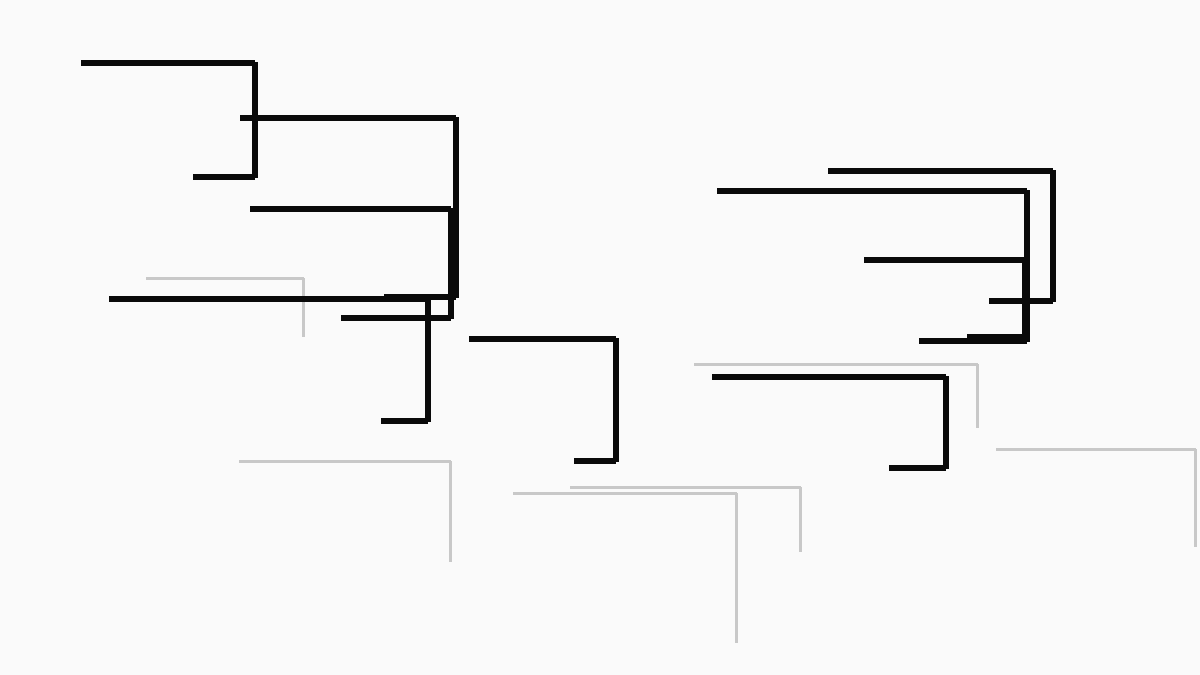
Routing puzzles rest on one structural idea: the separation of planning from execution. No train moves until the track is finished, and once it runs you cannot intervene. From Pipe Mania's time pressure to Trainyard's static drawing, Cosmic Express's single line, and Railbound's junctions, this essay rereads the verb of laying track as design grammar.
- Flipping Gravity as a Verb — The Grammar of Puzzles Where Down Changes
VVVVVV, And Yet It Moves, Manifold Garden, Etherborn. I trace how the verb of flipping gravity — moving the one assumption players never question, which way is down — widened from a discrete whole-screen flip into continuous, surface-bound gravity.
- The Verb of Pushing — What Sokoban Invented by Removing "Pull"
Sokoban's minimal grammar of push-only, no-pull invented the deadlock as a form of difficulty. A design reading of the pushing verb through three heirs: Sokobond, Baba Is You, and Patrick's Parabox.
- The Verb of Cooperating With Yourself — A Puzzle Design Grammar From Cursor*10 to The Swapper
Cooperating with yourself is a more abstract verb than walking, pushing, or rolling. Comparing Cursor*10, The Swapper, and World 5 of Braid along two axes — how many selves can exist, and how many can be controlled at once — reveals what it takes for this verb to carry an entire game.
- Lighting as a Verb — The Grammar of Puzzles Where Light Rewrites Existence
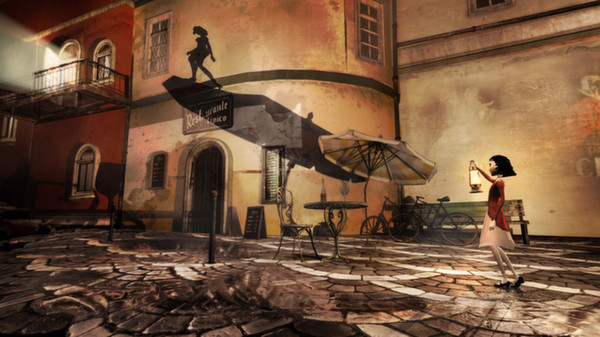
Closure, Contrast, Lightmatter, and Creaks all turn on the same single verb — lighting something — yet make it mean four entirely different things: existence, movement, life and death, or an enemy's true form. I compare them as one verb-minimalism case study.
- The Verb of Overlaying — When Two Images Become One Meaning
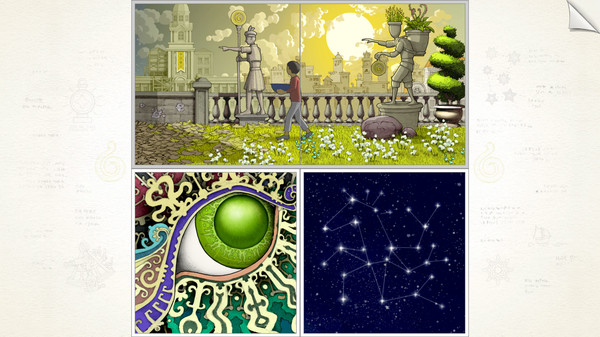
Gorogoa, Moncage, and Storyteller each give the player a trivial verb — move, rotate, place — yet the answer never lives in that verb. It lives at the seam where two images touch. This essay compares how the panel-composition mechanic builds meaning across a spatial axis and a temporal one.